
急速冷凍櫃
在活動前進行烹煮冷卻與批次冷凍,讓生產作業可配合配送時程提前完成,而不必集中在活動當天。
活動廚房是必須配合固定供餐時間完成搭建、運作與拆除的廚房。設備通常在場地條件尚未完全確定前就要選定,供電也往往是臨時配置,而且尖峰需求集中在單一時段,而非分散於整個營業日。
外燴在活動當天出問題,通常都有可預見的原因。場地方只表示供電充足,卻未提供實測數值;多台設備同時啟動,而上游保護裝置無法承受合併後的啟動負載。對使用拖車或帳篷廚房的餐飲作業而言,容錯空間比固定式餐廳更小,因為配電盤屬於場地方,而非外燴業者。
活動廚房、宴會作業、臨時廚房及餐車反覆面臨的挑戰:
活動餐飲很少只採用單一設備系列。一般配置涵蓋六種用途:
在活動前進行烹煮冷卻與批次冷凍,讓生產作業可配合配送時程提前完成,而不必集中在活動當天。
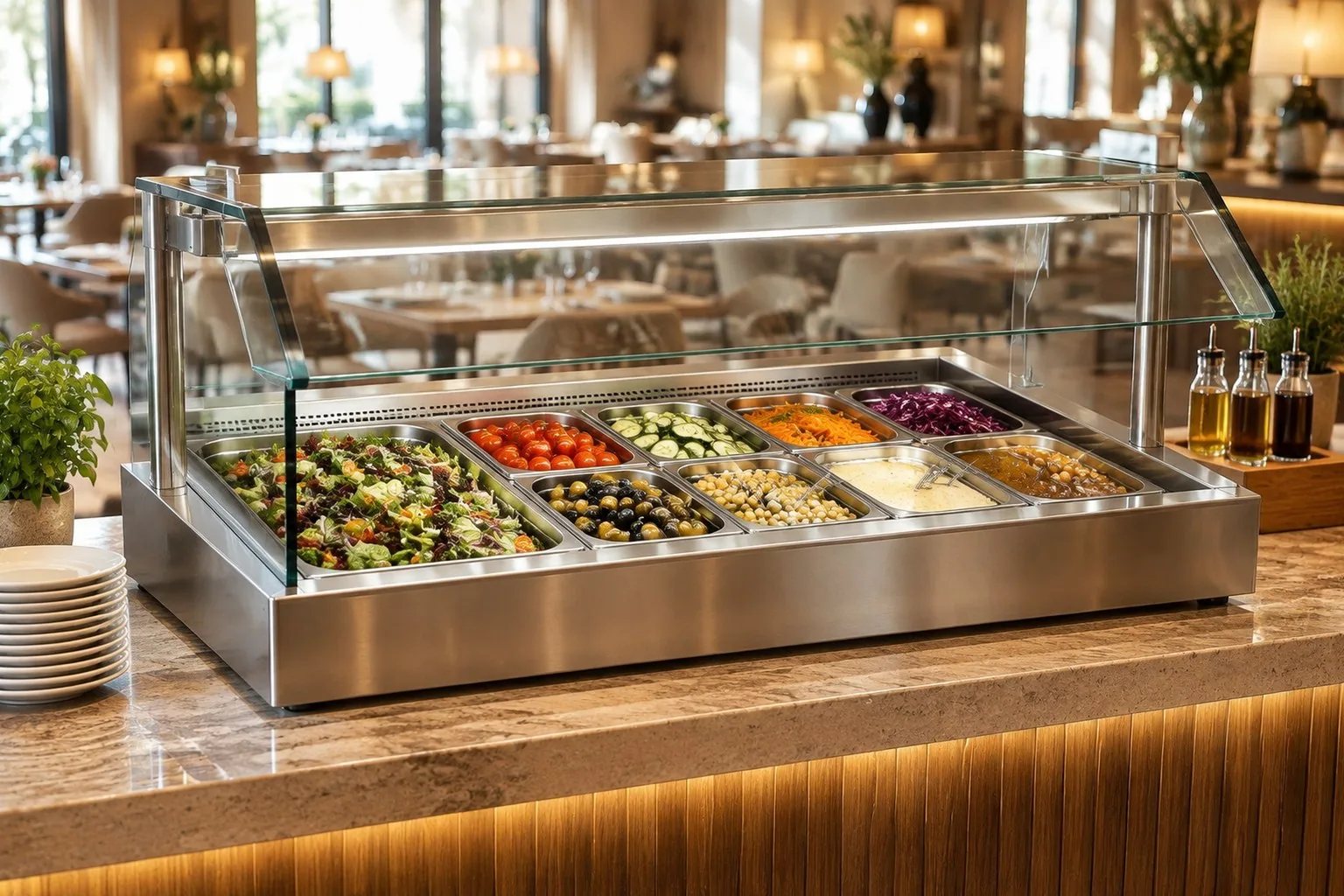
配有食材盤與玻璃防護罩的冷藏工作台,適用於自助餐、沙拉及賓客可自行取用食材的自助式餐線。
用於中央製備廚房的大量冷藏與冷凍儲存,並可在需要臨時或可遷移式儲藏空間時採用模組化配置。
可安裝於臨時工作檯下方、餐車廚房內,或地面空間有限之供餐檯內的緊湊型冷凍冷藏設備。
供餐線與備餐區使用的直立式儲存設備,包括以單一占地空間同時存放冷藏與冷凍產品的雙溫機型。
在場地進行最後組裝與擺盤的冷藏工作檯面,適合工作檯空間通常最為有限的場合。
活動與宴會專案的地點會變動,因此應依活動當天的實際場地條件,以書面記錄下列資訊。
| 所需作業能力 | 每場活動的產品重量或食材盤數量、產品放入時的狀態,以及生產至供餐之間的可用時間。詢問所需作業能力,而非僅詢問冷藏櫃尺寸,並計入場地布置時一次搬運的負載量。 |
|---|---|
| 場地供電條件 | 電壓、頻率、相數、插頭類型、迴路容量,以及多台設備同時開機時的啟動安排。這些屬於場地實際條件,須依各專案確認。 |
| 設備安裝位置的環境條件 | 室內或室外、帳篷下、烹調線旁或發電機旁。應在最繁忙時段測量實際條件,並依各專案確認。 |
| 散熱與通風 | 確認從櫃內排出的熱量去向,以及設備需要多少散熱間距。對於狹小的臨時空間,必須在配置確定前完成相關規劃。 |
| Transport and handling | Doorway and lift widths, ramp gradients, castor size and floor surface on the route into the venue. Confirm the access route rather than quoting the equipment list alone. |
| Access and operating routine | How often the unit is opened, by staff or by guests, and whether it stands in public view. Solid doors, glass doors and drawers behave differently under that use. |
| Drainage and cleaning | Where defrost water goes in a temporary kitchen, and how the unit is cleaned between events. Confirmed per project. |
| Utilities and documentation | Water, drainage, ventilation and the destination market documentation package, confirmed per project. |
請提供活動或合約概況,包含用餐人數與服務時段、每場活動裝載的產品重量與烤盤數量、產品的進貨狀態、各設備位置測得的环境溫度、現場可用的電力供應、進入場館的通道、除霜水的排水計畫、公用設施以及目標市場。針對移動式廚房,請補充車輛尺寸與固定安裝限制。針對宴會作業,請補充批次大小以及生產與供餐之間的時間。
SHEHOPE 總部位於中國廣東佛山,透過共享製造系統運作,擁有超過 20 年經驗、20,000 m² 生產設施、四條生產線、年產能約 50,000 台以及 ISO 9001 品質系統。OEM 與 ODM 專案可涵蓋電壓、插頭、內部配置與標誌標示,最終電氣配置依型號與市場確認。典型生產規劃為 15-30 天,依型號、數量、季節與客製化範圍確認,保固條款依專案確認。關於同一工作流程的固定式版本,請參閱飯店與餐飲及餐廳與中央廚房,關於生產如何管控,請參閱品質。
Batch chilling and freezing ahead of an event, specified from load weight, entry condition and the time the production plan allows.
Refrigerated self-service and buffet counters where guests load and unload the unit directly.
Bulk chilled and frozen holding at the production kitchen before the event dispatch.
Compact storage under a temporary bench or in a food truck galley where floor area is measured in centimeters.
Reach-in and dual-temperature storage at the service line and the loading point.
Refrigerated assembly and plating surfaces at the venue, where bench space is usually the constraint.
The equipment is chosen before the site is fully known. The electrical supply belongs to the venue, the ambient changes from event to event, the drainage route is improvised, and the load arrives in two movements around one service window. The selection questions are the same, but the answers have to be confirmed for the specific venue rather than taken from the production kitchen.
Both arrangements are used, and both need the same inputs: voltage, frequency, phase, available circuit capacity, and the starting arrangement when several units are switched on together. Supply quality and the starting current of the compressors matter more in a temporary installation than in a fixed kitchen, so the arrangement is confirmed per project.
A refrigerated counter with ingredient pans and a glass guard is the working position for a buffet or salad line, because the operator or the guest reaches into it directly. A closed storage cabinet is built for holding product between services. Using one for the other duty means the unit is worked outside the pattern it was selected for.
Treat the movement as part of the specification. Give the door widths, lift dimensions, ramp gradients and floor surfaces on the route, and decide whether the unit stays on castors or is lifted. Handling protection, latch and door retention, and the condition of panels and castors over repeated moves are all confirmed per model and per project.
There is no standard ratio, because the answer follows the event size, the menu and the time between production and service rather than a floor area. Send the covers per event, the dish list with the products held at each station, the pan count and the loading window, and the formats can be mapped against that list.