
直立式廚房冷凍冷藏設備
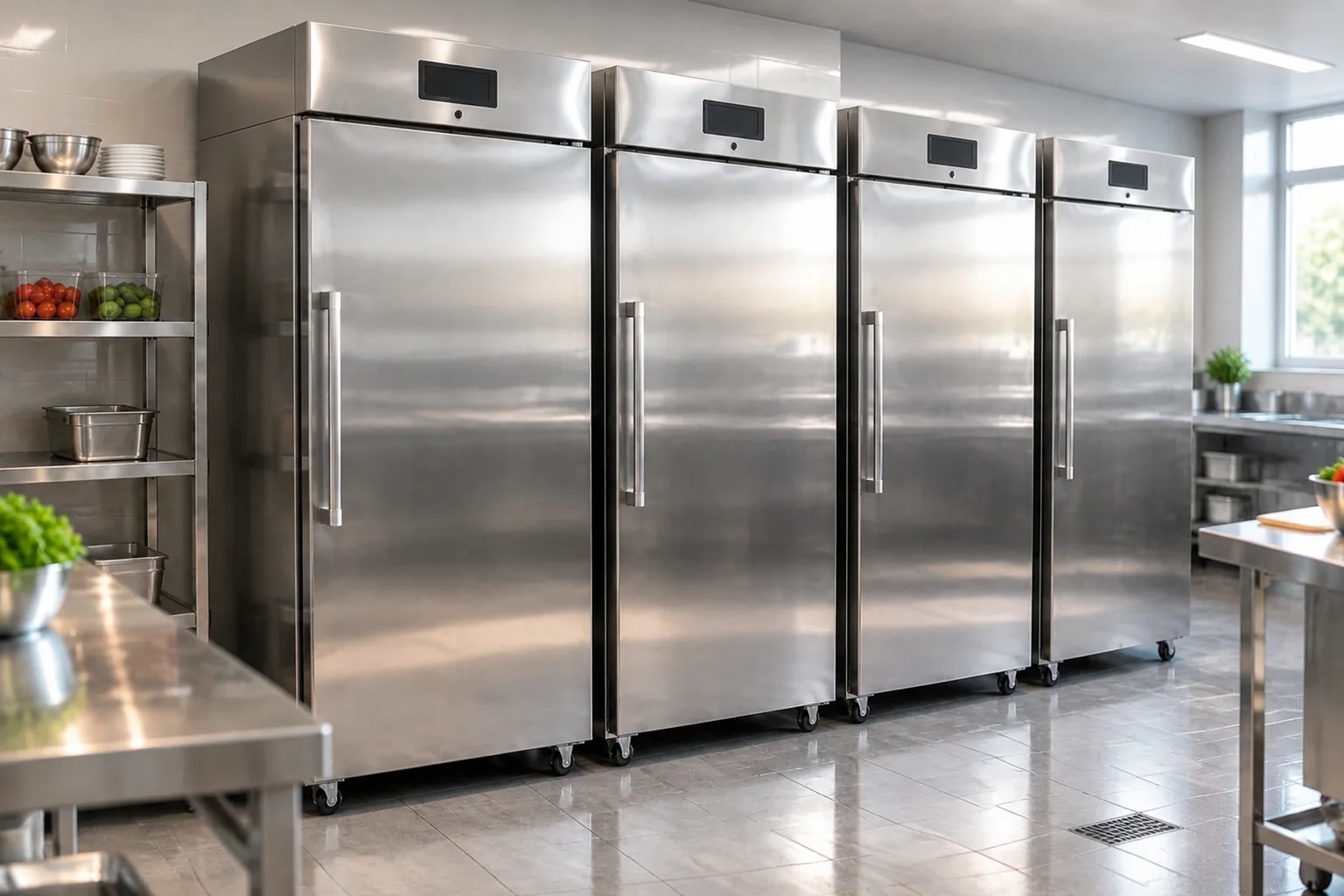
沿生產區牆面配置的直立式冷藏櫃與冷凍櫃,包括以單一占地空間滿足兩種儲存條件的雙溫機型。
機構餐飲依照不能變動的時程運作。數百份或數千份餐點必須在固定時段內送出,菜單按週期重複,食品安全作業程序則以書面記錄並接受稽核。冷凍冷藏設備應依據這套作業程序規劃,而不是按營業尖峰日規劃。
學校、醫院及員工餐廳很少選錯櫃體類型。他們通常按一般日用量選擇容量,卻在最關鍵的日子使用:送貨延遲、一般菜單與特殊膳食服務重疊,而且同一台直立式冷藏櫃的門由三個不同班次反覆開啟。設備並非在某一瞬間超載,而是在沒有記錄恢復時間的情況下反覆裝入物品,導致現場受稽核的作業程序與設備實際可容納的量不符。
機構餐飲專案中反覆出現的壓力包括:
機構廚房通常會在收貨、生產、組裝及供餐環節搭配六大設備系列:
沿生產區牆面配置的直立式冷藏櫃與冷凍櫃,包括以單一占地空間滿足兩種儲存條件的雙溫機型。
大量冷藏與冷凍儲存的容量應依送貨週期及每日供餐數量計算,而不是依儲藏室的樓地板面積決定。
用於熟食產品的批次急速冷卻與冷凍,應根據批次重量、放入時的狀態及作業程序允許的時間選定規格。
設於生產與裝盤工作站的冷藏組裝及分餐檯面,包括加高式配料槽機型。
用於自助取餐區及供餐線的冷藏櫃檯,由學生、病患或員工直接將食品放入及取出設備。
適用於供餐區、特殊膳食廚房,以及病房或衛星備餐間的精巧型儲存設備,滿足無法容納全高櫃體的空間需求。
機構專案通常依據書面規格表進行審查,因此在推薦機型前,應以書面方式確認以下資料。
| 供餐數量與供餐時段 | 每次供餐的餐點數量、每日供餐次數,以及可用於製作、保溫保存及裝盤的時間。供餐時段通常是主要限制條件。 |
|---|---|
| 收貨週期 | 送貨頻率、每批到貨量,以及儲存設備必須銜接的間隔。以這些條件計算大量儲存容量,比依據平面圖更可靠。 |
| 冷藏與冷凍配置比例 | 確認哪些產品需冷藏、哪些需冷凍,以及哪些產品會在兩者之間轉換。這項比例將決定各類櫃體所需的數量。 |
| 批次急速冷卻需求 | 依據現場食品安全計畫,確認熟食批次重量、放入時的狀態,以及產品進入儲存前所允許的時間。 |
| Ambient at the unit position | Measured temperature where the cabinet stands during the busiest hour, not at the kitchen door. Confirmed per project. |
| Access format and staff routine | Solid doors, glass doors and drawers, plus shelf and tray organization, matched to how the shift actually loads and unloads the unit. |
| Cleaning, drainage and inspection access | Drainage route for defrost water, cleaning access behind and beneath units, and the positions inspectors need to reach. |
| Utilities and documentation | Voltage, frequency, phase, ventilation and the destination market documentation package, confirmed per project. |
請提供每餐服務的餐點數量、服務次數、服務時段長度、菜單週期、收貨週期與單次收貨量、冷藏與冷凍的分配比例、烹調生產的批次重量與進料條件、各設備位置實測的環境溫度、備餐區與儲藏室的佔地面積與進出限制、排水與通風配置、公用設施以及目標市場。若專案為招標案件,請提供設備明細表與圖面修訂版,以便依據同一套文件進行審查。
SHEHOPE 總部位於中國廣東佛山,透過共享製造系統運作,擁有超過 20 年經驗、20,000 m² 生產設施、四條生產線、年產能約 50,000 台,並具備 ISO 9001 品質系統。OEM 與 ODM 專案可涵蓋電壓、插頭、內部配置與標誌標示,最終電氣配置依型號與市場確認。典型生產規劃為 15-30 天,依型號、數量、季節與客製化範圍確認,保固條款依專案確認。關於同一排程的儲存方面,請參閱冷藏與配送以及餐廳與中央廚房。品質系統的詳細內容列於品質與認證項下。
Reach-in and dual-temperature cabinets that carry day-to-day production storage along the kitchen wall.
Bulk chilled and frozen storage sized from the delivery cycle and the daily meal count.
Batch chilling and freezing of cooked production where the routine defines the target and the time window.
Refrigerated assembly and portioning surfaces at the production and plating stations.
Servery and self-service counters where diners reach into the unit during a compressed service window.
Compact storage for diet kitchens, serveries and satellite pantries where a full-height cabinet will not fit.
Work back from the delivery cycle and the meal count rather than from the size of the storeroom. Take the meals per service, the products held chilled and frozen, the delivery frequency and drop size, and the interval the store has to bridge between deliveries. That interval, not the room area, decides the required volume.
It depends on the production plan. Where cooked batches have to reach a defined condition before they enter storage, a planned chilling or freezing step belongs in the routine, and the unit is then specified from batch weight, entry condition and the time available. Where all production is served on the day, the duty may not exist at all.
Separation is a storage-position question rather than a capacity question. Separate cabinets or clearly divided compartments, identified containers and a fixed storage layout are what make the routine workable during a service window. The arrangement is agreed per site with the people who run the food-safety documentation.
Datasheet, dimension drawings, electrical data, refrigerant information, manual and spare-parts list are the usual review set. Test records and certificate files depend on the exact model and the destination market, so the documentation scope is confirmed per project before it is relied on in a tender.
Control, display, alarm and data-logging functions vary by model, so the available scope is confirmed per model and per project. It is worth separating what the equipment records from what the operator must record, because the site's own documented routine is usually what is inspected.