
Beverage Display Coolers
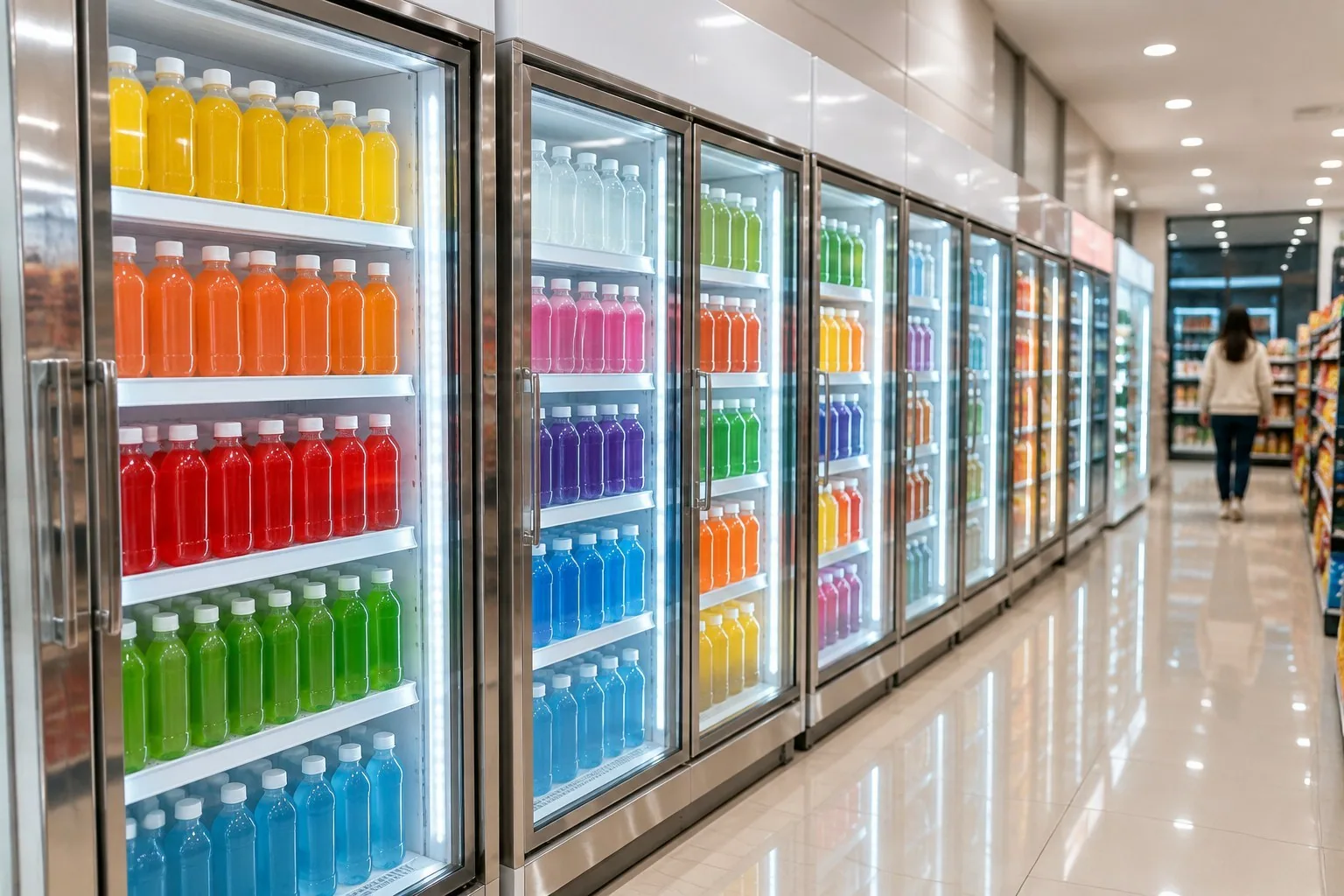
Glass-door drink coolers for bottled and canned ranges, positioned for self-service or back-bar service.
A coffee shop, bar or drinks counter is a service operation with a small back of house. Milk, syrups, garnishes and prepared food move through a short workflow, and the cabinets behind the counter have to keep up during the busiest two hours rather than across an average day.
Beverage service concentrates load into short periods. A morning coffee rush, a lunch service and an evening bar shift each open the same cabinets many times, and a unit that holds condition on a quiet morning can fall behind when the counter is busy.
The problems that repeat in cafe, bar and drinks-counter projects:
A cafe, bar or drinks counter typically combines six families:
Glass-door drink coolers for bottled and canned ranges, positioned for self-service or back-bar service.
Counter-height display for cakes, pastries and desserts where the customer chooses from the case.
Storage directly under the service point for milk, syrups and prepared items in use during service.
Visible frozen display for ice cream, frozen desserts and packaged take-home items.
Refrigerated preparation surfaces where sandwiches, salads and garnishes are assembled at working height.
Service-counter or wall cases for food-to-go, deli items and prepared food sold over the counter.
These inputs change the recommended configuration. Send them as measured values rather than an approximate memory of the site.
| Service position and counter height | Back-bar, front-counter and self-service positions imply different cabinet formats, door types and working heights. Confirm the counter drawing first. |
|---|---|
| Opening rate during peak service | How often the unit is opened in the busiest period, and by how many staff. This is often the difference between two similar models. |
| Door, drawer or open display | Access format changes how much cold air leaves the cabinet. Drawers suit frequent small withdrawals and back-bar service. |
| Measured ambient at the position | Declared performance is stated at a defined ambient condition. Coffee equipment, ovens and people all raise local temperature. |
| Product mix | Packaged drinks, milk, prepared food, cakes and frozen desserts do not share one holding condition. Display temperature is confirmed per model and per product plan. |
| Counter run and footprint | Available depth under the counter, aisle width behind the bar and pull-out space for cleaning are site constraints, confirmed per project. |
| Drainage and ventilation | Condensate, spillage and wash-down water need a route to drain, and heat rejection needs air movement in compact back-bar areas. |
| Utilities and market documentation | Voltage, frequency, phase and the destination market documentation package are confirmed per model and market. |
Send the counter layout and service positions, the product list for each cabinet, the measured ambient at each position, the opening pattern during peak service, the counter run and available depth, the utilities and drainage arrangement, and the destination market. Operations that also run a kitchen should add the station list and the prep tasks so counter and back-of-house refrigeration can be reviewed together.
SHEHOPE is based in Foshan, Guangdong, China, and works through a shared manufacturing system with more than 20 years of experience, a 20,000 m² production facility, four production lines, an annual capacity of approximately 50,000 units and an ISO 9001 quality system. OEM and ODM projects can cover voltage, plug, interior layout and logo marking, with the final electrical configuration confirmed per model and market. Typical production planning runs 15-30 days, and warranty terms are confirmed per project.
Glass-door drink coolers for bottled and canned ranges, positioned for self-service or back-bar service.
Counter-height presentation for cakes, pastries and desserts chosen at the counter.
Storage under the service point for milk, syrups and prepared items in active use.
Visible frozen display for ice cream, frozen desserts and packaged take-home items.
Refrigerated assembly surfaces where sandwiches, salads and garnishes are prepared at working height.
Service-counter and wall cases for food-to-go, deli items and prepared food sold over the counter.
Plan from the service positions, not from the counter length. List what has to be within arm's reach at each position during peak service, then add the storage that is restocked between services. Send the counter drawing with the working positions marked and the formats can be matched against it.
They are different duties. A beverage display cooler is built around packaged drinks for visibility and fast access, while milk and prepared food need their own holding condition and a food-safe interior arrangement. Where the counter is short, plan the split by product rather than by available space.
Match the case to the product plan and the counter height. A countertop case takes less depth, a floor-standing case holds more presentation area, and refrigerated and ambient sections can be combined. Display temperature and glass treatment are confirmed per model and per product mix.
It matters more than most sites expect. Espresso machines, grinders, glass washers and people all raise the temperature in a compact back-bar area, and an undercounter unit there works in a warmer position than one in a storeroom. Give the measured temperature at the position during the busiest hour.
Ask for the datasheet, dimension drawing, electrical data, refrigerant information, manual and spare-parts list. Certificate files and market documentation are confirmed per model and destination market, and warranty terms are confirmed per project.
Send the layout, menu or product mix, target temperatures and site conditions. We reply with the equipment list and the questions that still need answers.