
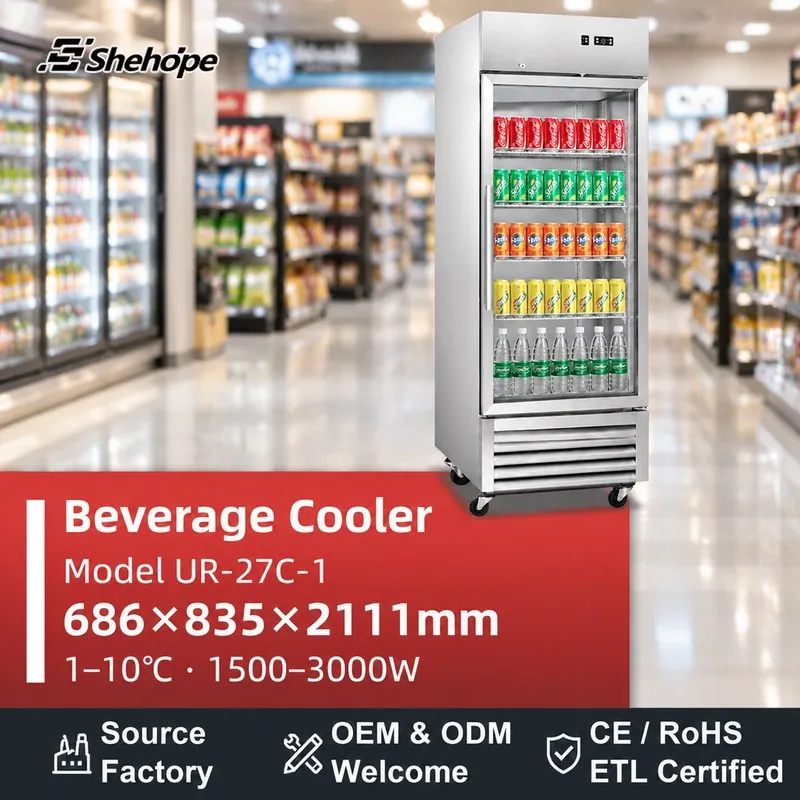
Beverage display coolers with glass doors
A beverage display cooler is a self-service sales fixture: glass doors, shelf pitch set for bottle and can heights, and air distribution that keeps the front row as cold as the back. This family covers slim single-door reach-ins through multi-door upright drink coolers, including narrow formats for tight aisles. Door count, product envelope and how often the door opens decide the configuration.
Typical use
- Convenience, grocery and forecourt retail drinks aisles.
- Cafes, quick service restaurants and takeaway counters selling packaged drinks.
- Hotel lobbies, breakfast areas and buffet rooms where guests self-serve.
- Gyms, offices, canteens and staff rooms with high-throughput cold drink demand.
- Distributor showrooms and wholesale counters that display a drink range.
- Event, stadium and cinema retail points with narrow or temporary footprints.
Confirm before ordering
- Door count, door type and hinge side
- Usable volume and shelf pitch
- Product envelope and loading pattern
- Design ambient class and installation position
- Cooling format, defrost and condensate handling
- Interior lighting and door frame finish
- Voltage, frequency and plug configuration
- Refrigerant and market compliance documents
Configurations we build in this family
Drawn from our own product catalogue. Final specification is confirmed per model and destination market.
| Door / drawer formats | single door, double door, four door |
|---|---|
| Temperature classes referenced | -10 °C |
| Catalogue items in this family | 9 (configuration confirmed per project) |
Model range at a glance
Every model in this family, sorted by size. Prices are FOB reference prices from our current listings.
| Model | Temperature range | Doors | Voltage | Reference price |
|---|---|---|---|---|
| UR-54C-2 | 1°C To 10°C | Double Doors | 110-120V (Single-Phase) | from US$720 |
| UR-27C-1 | 1°C To 10°C | Single Door | 110-120V (Single-Phase) | from US$456 |
| UR-78C-3 | 1°C To 10°C | Triple Doors | 110-120V (Single-Phase) | from US$696 |
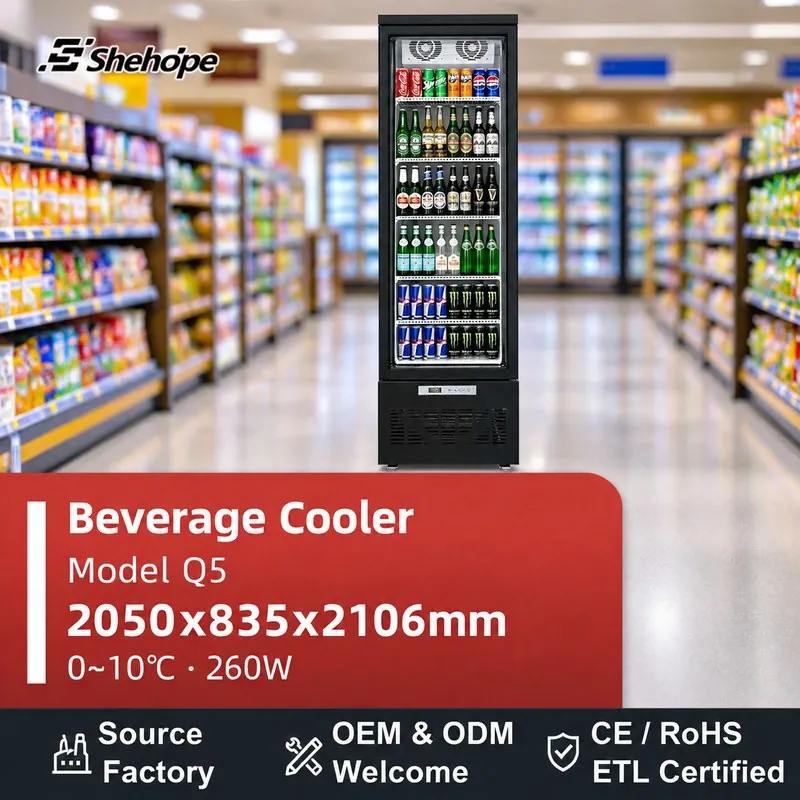
| Q5 | 0°C To 10°C | Single Door | 220-240V (Single-Phase) | from US$267 |
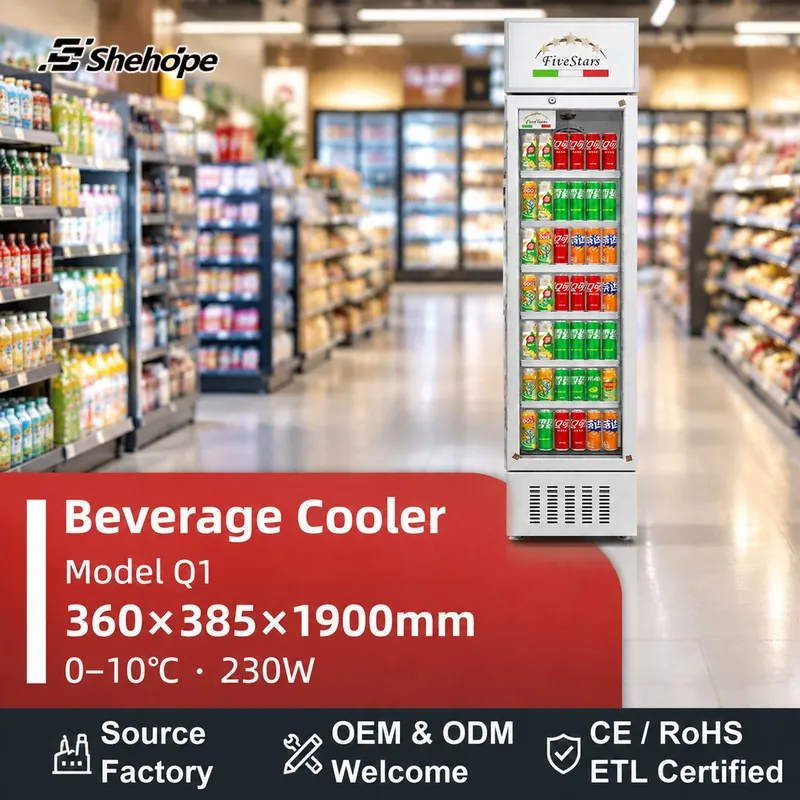
| Q1 | 0°C To 10°C | Single Door | 220-240V (Single-Phase) | from US$141.60 |
| Q4 | 0°C To 10°C | Single Door | 220-240V (Single-Phase) | from US$282 |
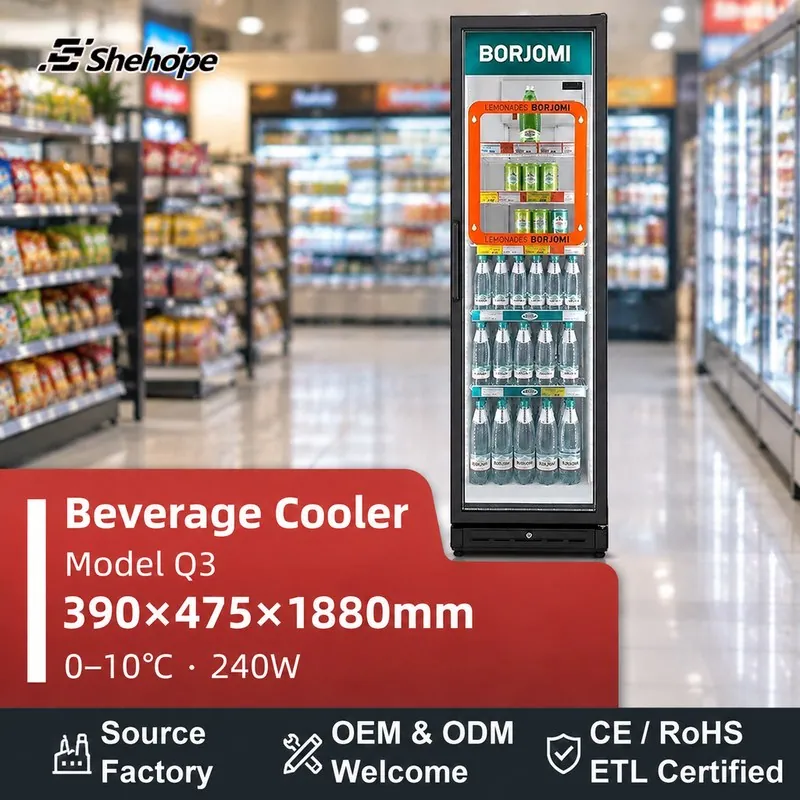
| Q3 | 0°C To 10°C | Single Door | 220-240V (Single-Phase) | from US$261.60 |
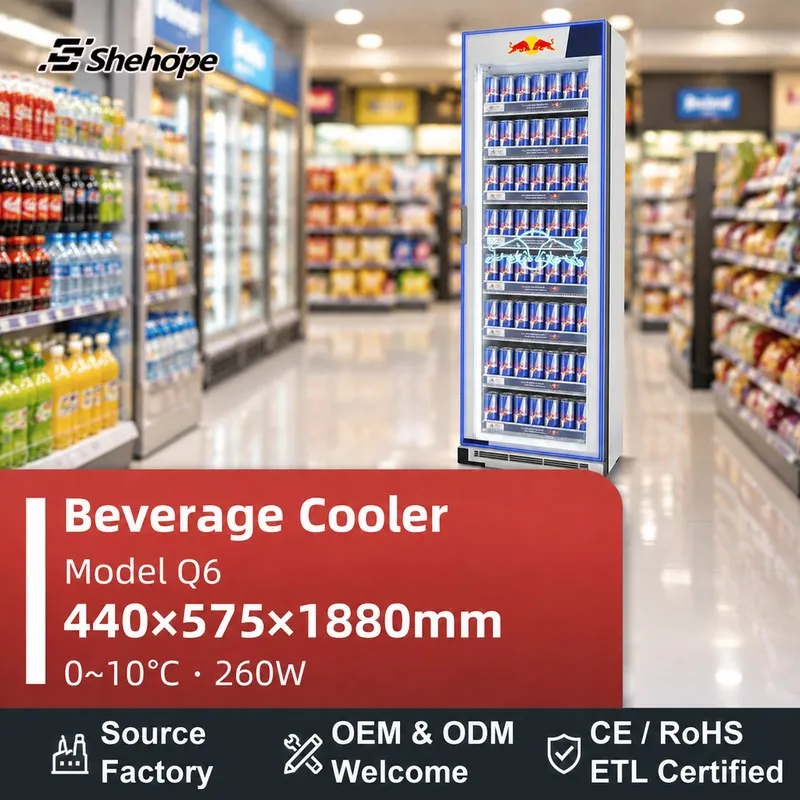
| Q6 | 0°C To 10°C | Single Door | 220-240V (Single-Phase) | from US$261.60 |
| Q2 | 0°C To 10°C | Four Doors | 220-240V (Single-Phase) | from US$141.60 |
The highlighted row is this page. Confirm the configuration, voltage and documents for your market in the quotation.
Catalogue items in this family
9 catalogue items photographed for this family.
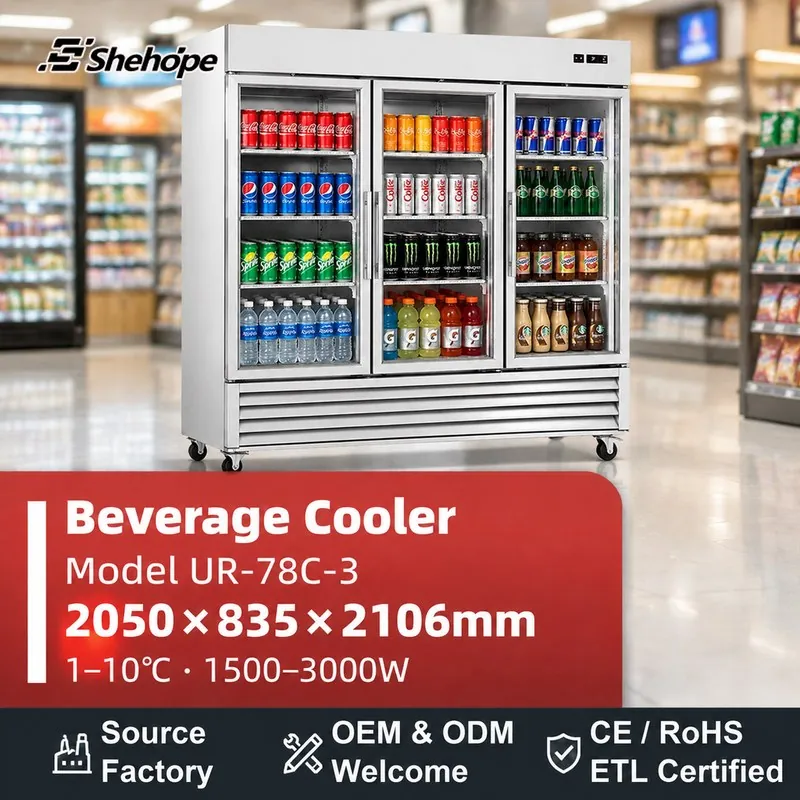
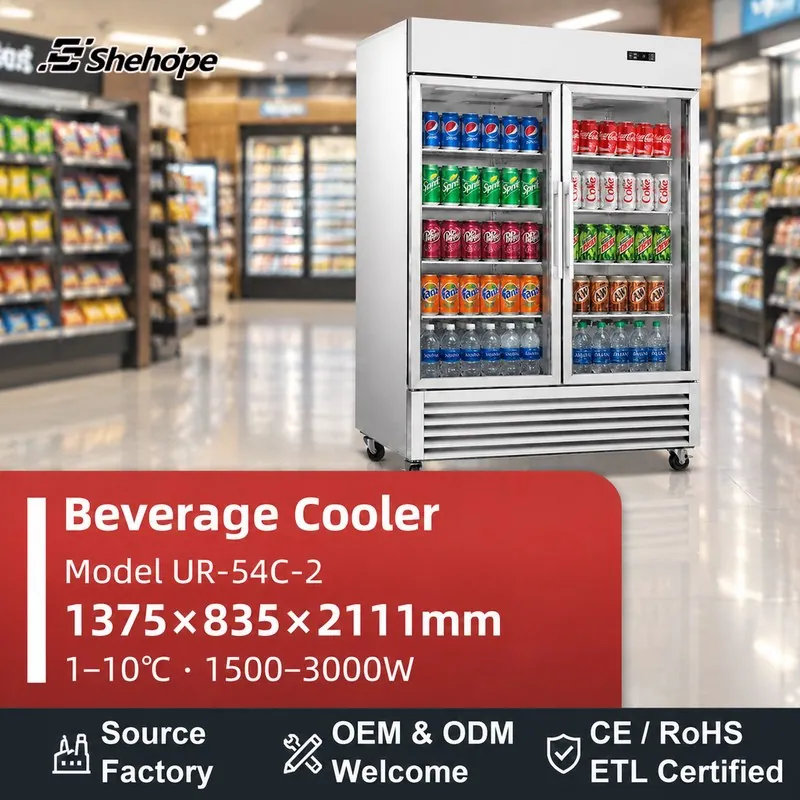
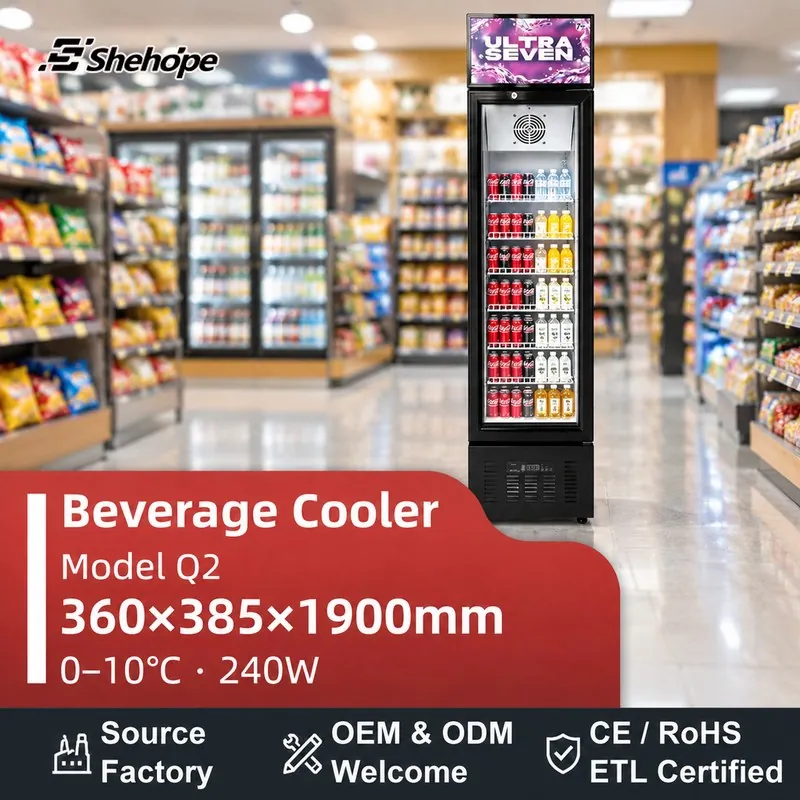
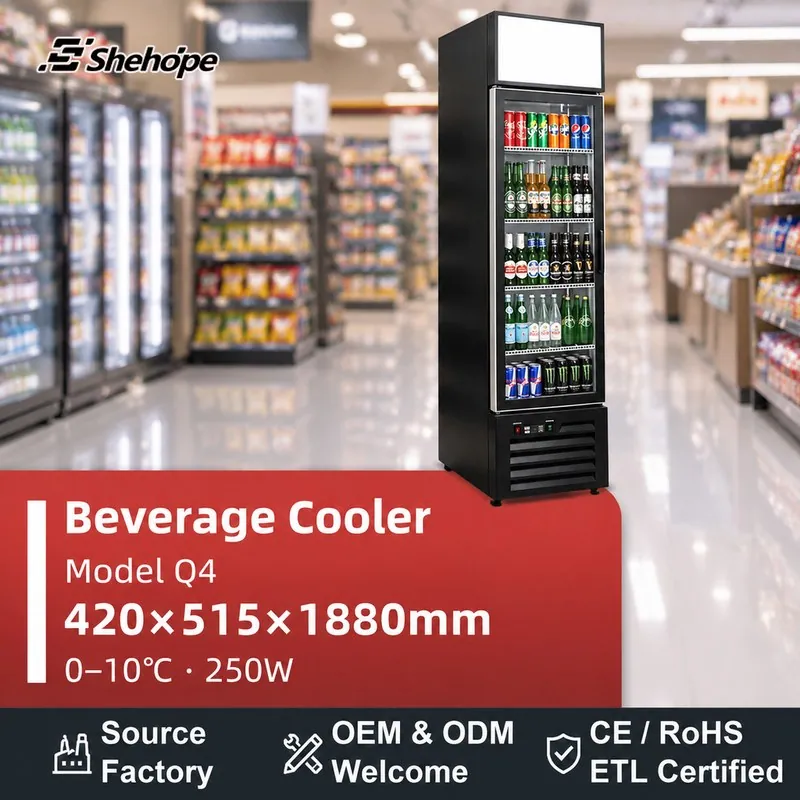
How this family is configured
Door count, width and aisle planning
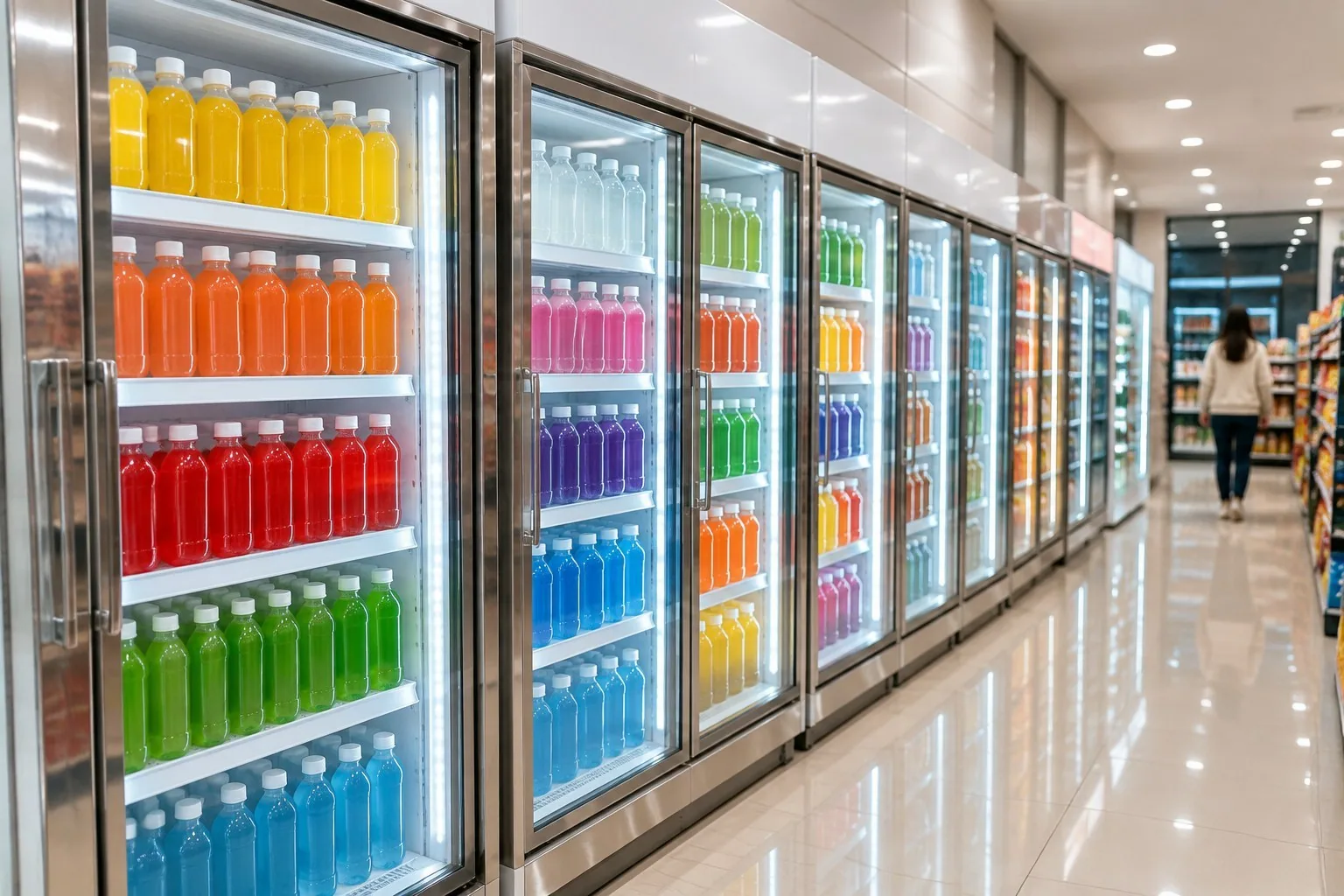
Door count follows the aisle and the range, not the volume alone. A slim single-door cooler fits a narrow gap between fixtures or at the end of a counter, and it is often enough for a focused drink range. Multi-door cabinets hold more facing and reduce the number of times staff open a door to reach the back, but they need aisle width for the door swing and for shoppers to stand clear. Confirm the hinge side, whether doors are self-closing, and whether the glass is single or double glazed. Check the height of the fixture against the sight line from the entrance and against any shelving above it. Ask how the door frame is finished, because a retail drinks fixture is looked at all day and the frame shows wear. Door count, width and hinge arrangement are confirmed per model, and the aisle the case opens into should be measured before the order is placed.
Shelf pitch and product envelope
Beverage coolers are specified around the container, so send the container. Confirm the tallest bottle or can, the diameter of the widest pack, and whether product is displayed in trays, on shelf strips or loose. Shelf pitch is then set so each level clears the tallest item on it, and the load line keeps product behind the air return. Overloading is the most common cause of warm drinks at the front: product stacked past the load line blocks the air path and the shelf above it. Ask whether shelves are adjustable without tools and how many positions the cabinet offers, because a range that changes seasonally needs that flexibility. Check whether the bottom of the cabinet is used for cases or crates and whether the floor of the cabinet is reinforced for that load. Product envelope, shelf pitch and load limits are confirmed per model and per range plan.
Cooling format, ambient conditions and recovery
Ask how the cabinet cools before comparing capacities. Fan-assisted cooling distributes air through the shelves and recovers faster after the door closes, which suits a busy drinks fixture opened continuously during peak hours. Confirm where the evaporator sits and how defrost is handled, including where melt water goes and how the tray or drain is reached for cleaning. Then state the ambient conditions where the case will stand: near a shop entrance, in direct sun, beside a coffee machine or in an unheated stockroom, each environment produces different behavior. If the plan moves from a chilled aisle to a warm front-of-store position, say so at the quotation stage. Confirm how quickly the cabinet is expected to recover after a full restock, and whether staff load warm stock straight from a delivery. Ambient class, recovery expectations and the achievable range are confirmed against the selected model.
Front-of-house finish, branding and compliance
In retail, the fixture is part of the shop front, so the visible specification matters. Confirm the door frame material and color, the interior lighting, the shelf finish and how the base and sides are paneled. LED lighting inside a glass door case affects how labels and packaging read, and it also adds heat inside the cabinet, so ask which lighting is fitted. Logo marking by silk screen or laser engraving can be included in an OEM project, together with market-specific voltage and plug configuration. Ask how the glass is cleaned and whether the door gaskets are replaceable without special tools, since a worn gasket shows up as condensation on the door. Request the compliance document set for the destination market and confirm it against the specific model, because certification is confirmed per model and per market rather than for the family as a whole. Warranty terms and spare parts coverage are confirmed per project.
Questions we ask before quoting
- What is the tallest and widest container that must fit on a shelf?
- How many facings are needed, and how wide is the aisle the door opens into?
- How often is the cooler opened during peak trading hours?
- Where will the cooler stand, and what ambient temperature reaches that position?
- Are shelves expected to change pitch when the range changes seasonally?
- Is a slim single-door or a multi-door format the better fit for the space?
- Is branding or a custom finish required?
- Which voltage, frequency and plug type does the destination market use?
Frequently asked questions
Why are drinks at the front of the cooler warmer than at the back?
Usually the load line has been crossed or the air return is blocked. Product stacked beyond the front of the shelf or in front of the return interrupts circulation, so the front row loses cold air first. Stocking to the marked line and leaving the return clear normally corrects it.
Do I need a slim single-door or a multi-door cooler?
A slim single-door suits a narrow position and a focused range, and it takes less aisle space. Multi-door cabinets hold more facings and suit a full drinks plan where shoppers serve themselves. Decide from the range plan, the facing count and the aisle width.
What temperature does a beverage cooler hold?
The set point is confirmed against the selected model, the ambient conditions at the installation position and the loading pattern. Because a drinks fixture is opened constantly during peak hours, recovery behavior matters as much as the set point, and both are confirmed per project.
Can the cooler carry our branding and market configuration?
Logo marking by silk screen or laser engraving, plus custom finishes and interior layout, can be covered in an OEM project. Market-specific voltage and plug configurations are also available. Compliance documents are confirmed per model and destination market, and warranty terms are confirmed per project.
Send the application and we confirm the model
Share the food or product being stored, target temperature, ambient conditions, available space, voltage, quantity and destination market.