
1. Commercial and market brief
Buyer profile, destination market, sales channel, target range, estimated quantity and the documentation you need.
SHEHOPE supports OEM and ODM projects for distributors, importers and private-label brands. The work is configuration-driven: what changes is the model, the electrical build, the interior layout and the documents that travel with the shipment.
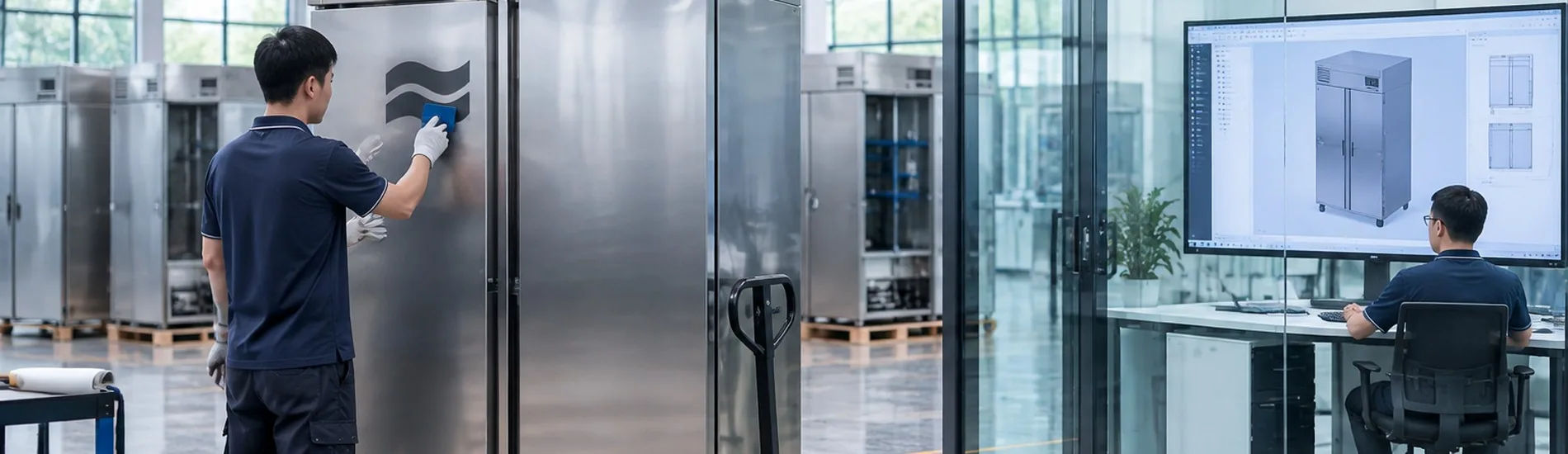
Customization is reviewed family by family and confirmed in writing before any sample is built. The table below shows the areas where OEM and ODM requests are most often raised, and what the buyer needs to provide for each one.
| Product configuration | 3D CAD design and development, model selection, dimensions, door or drawer format and temperature zones. Required from you: application, available footprint, target temperature and ambient conditions. |
|---|---|
| Electrical | Market voltage, frequency, phase, plug type or hard wiring. Final electrical configuration is confirmed per model and the applicable market approval. |
| Refrigeration | Cooling method, refrigerant, defrost arrangement, controller and wide-climate or tropical configuration for high-ambient sites. Required from you: design ambient temperature and site conditions. |
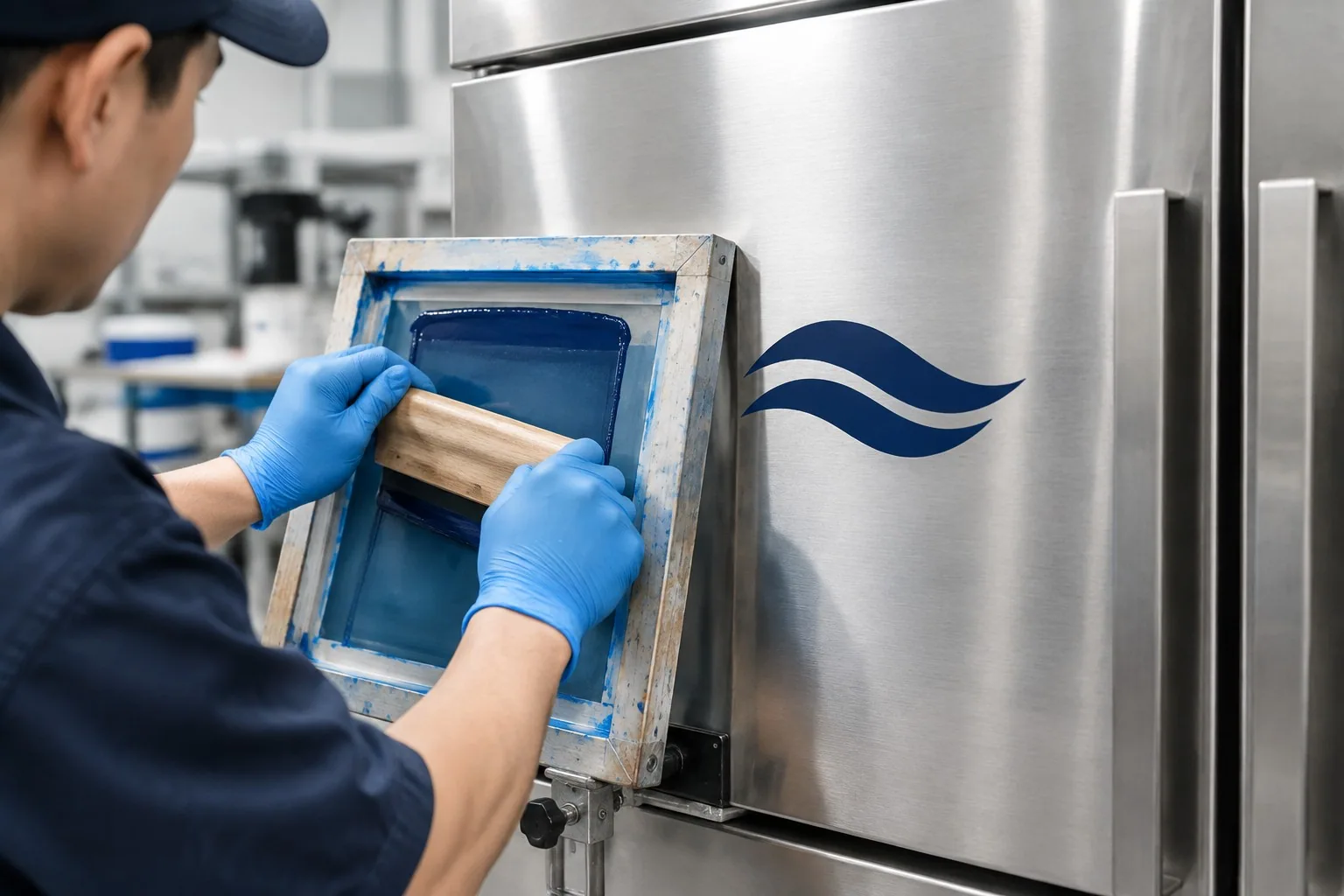
| Branding | Logo marking by silk screen or laser engraving, rating label, color, carton print and manual cover. Required from you: artwork files, placement instructions and confirmation of trademark rights. |
| Interior layout | Shelving, rack and internal layout changes to match your trays, pans and service geometry. Required from you: loaded tray or pan dimensions and the way staff will load and unload the unit. |
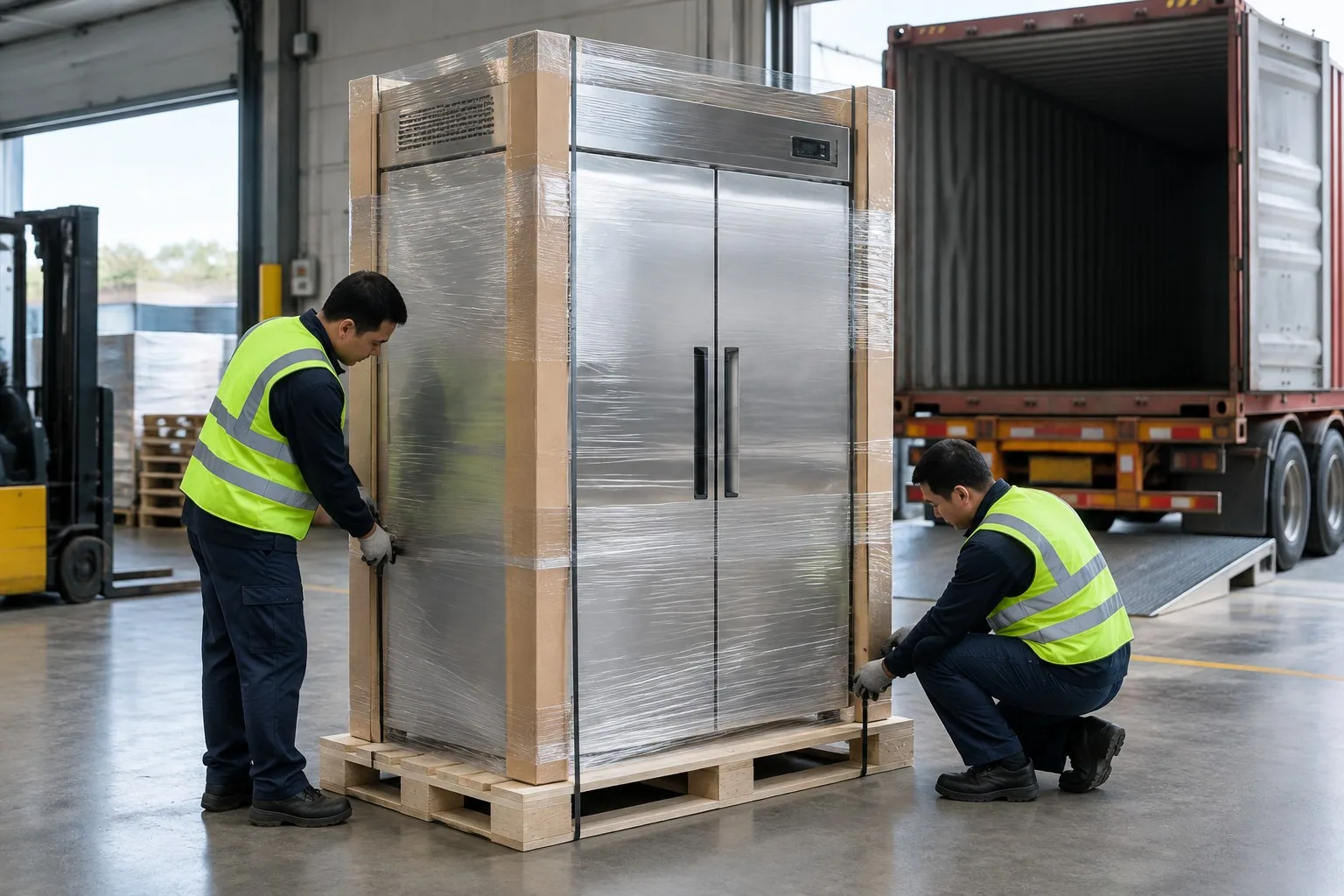
| Packing | Export-grade fumigation-free wooden pallet packing, with pallet size, marking and stacking limits agreed per order. |
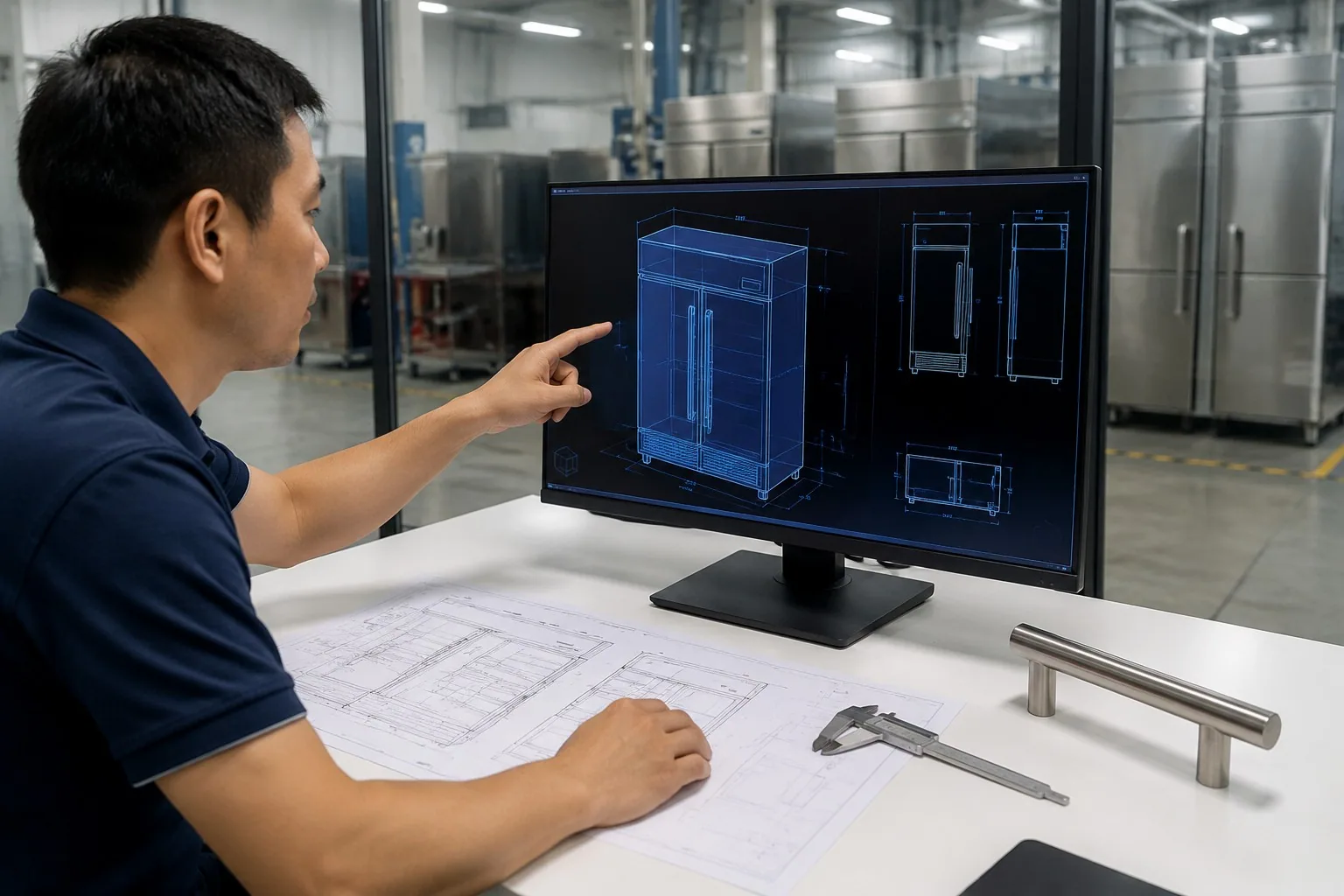
The sequence is deliberately front-loaded. Decisions recorded at the beginning are what keep a project predictable at the end.
Buyer profile, destination market, sales channel, target range, estimated quantity and the documentation you need.
Model matrix, electrical build, operating conditions, cooling arrangement, interior layout and any deviation from the standard configuration.
The buyer agrees the acceptance criteria, then approves the sample against them: performance, finish, labeling, packing and revision control.
Units are built to the approved specification, and inspection is recorded against that same document rather than against a sales description.
Shipment documents, service files and the agreed spare-parts package are released with the order.
Custom work runs on the same manufacturing system as the standard catalog rather than in a separate workshop. The shared 20,000 m² facility operates more than ten production lines with annual capacity up to 50,000 units, panel parts are cut by CNC laser, cabinet structures use high-pressure polyurethane integral foaming for insulation, and approved units are assembled on a standardized production line. That matters for an OEM project in two ways: the configuration change is applied to a process that already exists, and the capacity to absorb a project-size order does not have to be created for the order. Customized units leave on export-grade fumigation-free wooden pallet packing unless the order specifies otherwise.
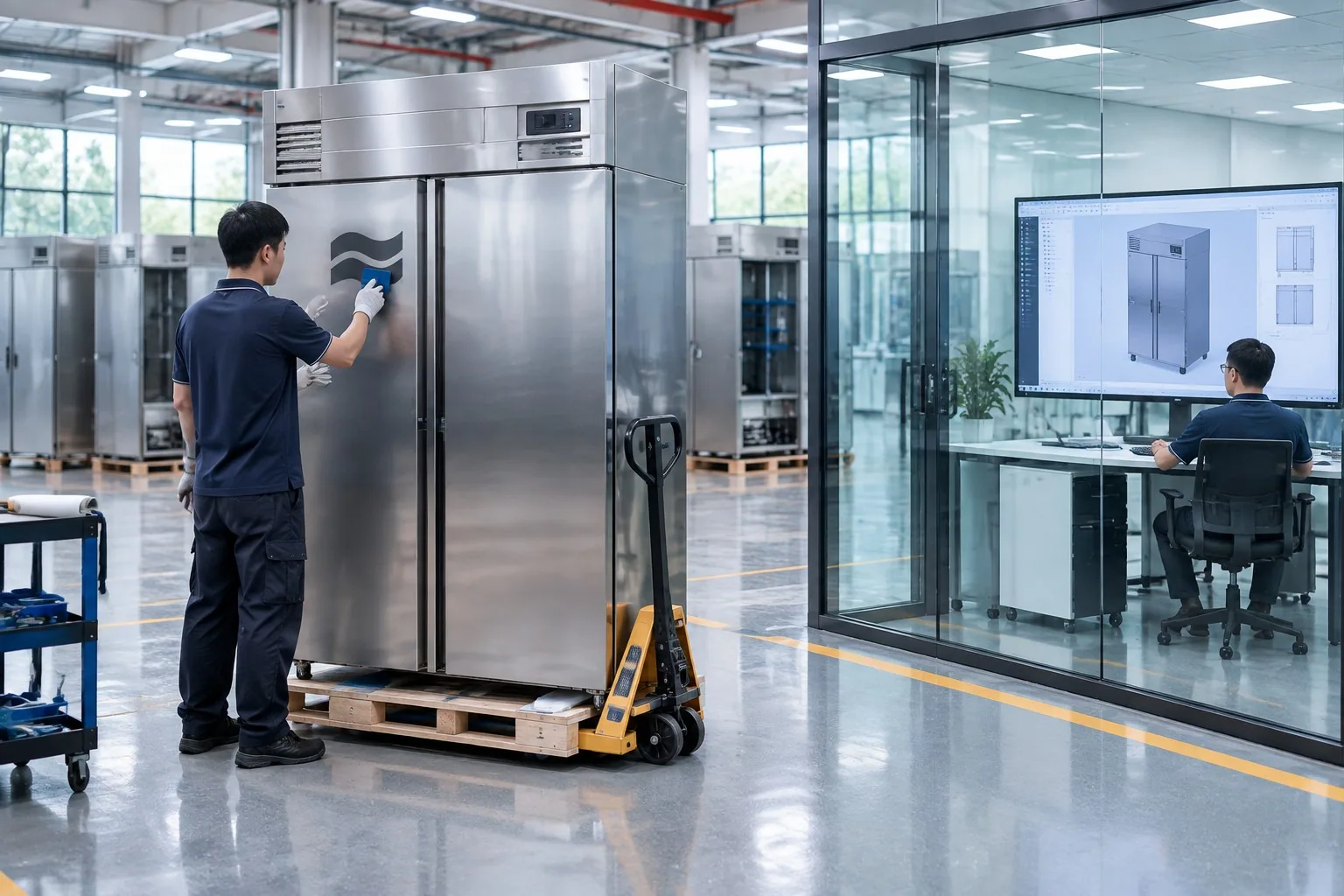
Electrical configuration is one of the first items to settle, because it affects the compressor, controller and wiring rather than only the cable end. Send the destination market, the supply available at site, the frequency, the phase and the plug or hard-wiring requirement. Where a market requires specific documentation, send the document type and the responsible party early so it can be checked during configuration review instead of after production. Final electrical configuration, applicable certificate scope and test coverage are confirmed per model and destination market.
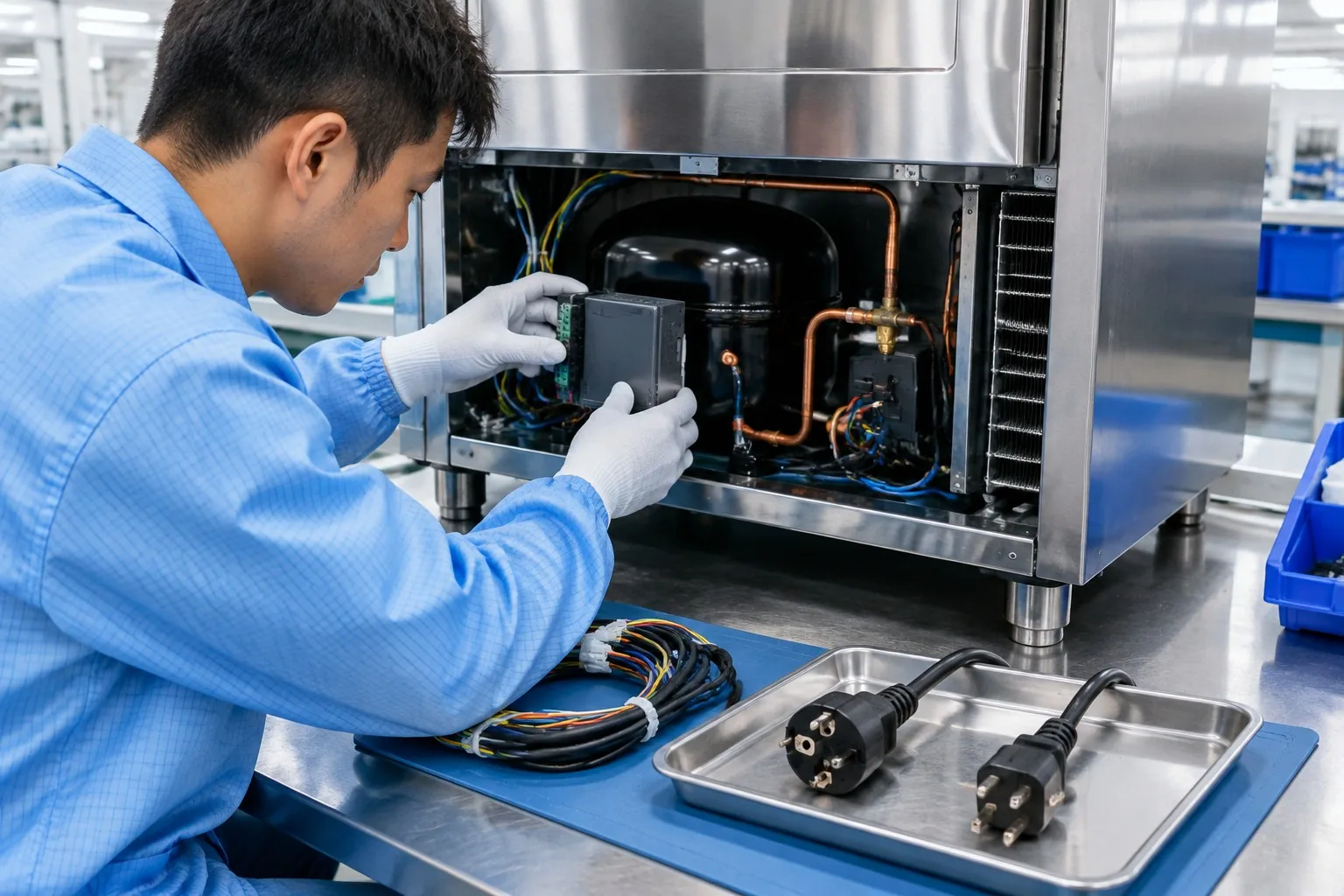
Logos are applied by silk screen or laser engraving; the method is chosen against the panel material and the wear the unit will see in service. Rating labels, manuals, cartons and pallet marks follow the same approved artwork set, so the machine, the label and the box carry one consistent identity. Buyer artwork must arrive as production-ready files, and the buyer confirms that it holds the rights to the marks used. Finished units can be packed on export-grade fumigation-free wooden pallets, which keeps packing compliant for markets that restrict solid-wood packing without adding a separate treatment step. Final packing depends on product family, quantity and route, and is confirmed in the order documents.
A quotation is only as specific as the brief behind it. Send the items below and the first technical answer can be a configuration review rather than a request for more information.
Destination market and buyer type (distributor, importer, private label, project contractor), sales channel and required documents.
Application, product or food stored, target temperature, design ambient, available footprint and power supply.
Interior layout, logo and artwork, color, packing and any deviation from the standard model.
Estimated quantity, whether a sample is required, and the target arrival window. Typical production planning is 20-30 days, confirmed against model, quantity, season and customization.
Minimum order quantity depends on the model, the configuration change and the order volume, so it is confirmed per project rather than published as one site-wide figure. Where a change requires new tooling, the tooling scope and its effect on unit cost are stated in the quotation before the order is placed. Payment terms, warranty terms and spare-parts policy are commercial matters confirmed in the quotation and sales contract, and are not committed on this page. If a request falls outside what the shared manufacturing system can support, SHEHOPE says so at review stage rather than after sampling.
Yes, OEM and ODM projects are supported. The review covers model selection, electrical build, refrigeration configuration, interior layout, logo, packing and the documents you need for your market. Scope is confirmed per project, so start by sending the model or application you have in mind.
Destination market, application and product, target temperature, design ambient conditions, available footprint, voltage and frequency, estimated quantity, logo or artwork requirements, packing requirements and the documents you need. With those details the next step is a configuration review rather than a general quotation.
Market-specific voltage, frequency, phase and plug configurations can be discussed for OEM projects. The final electrical configuration is confirmed per model and the applicable market approval, because the supply requirement affects components beyond the cable end.
Wide-climate and tropical configurations are available for high-temperature environments. Because performance depends on the design ambient temperature and the site conditions, model-level ambient and test data is confirmed before any performance figure is quoted.
The approved specification, artwork and acceptance criteria are recorded first. The sample is then reviewed against those criteria, covering performance, finish, labeling, packing and revision status. The signed sample and the approved documents become the reference for the production run and for inspection.
Finished units can use export-grade fumigation-free wooden pallet packing. Pallet size, marking and stacking limits are agreed per order, and the final packing specification depends on product family, quantity and shipping route.
Share the food or product being stored, target temperature, ambient conditions, available space, voltage, quantity and destination market.