
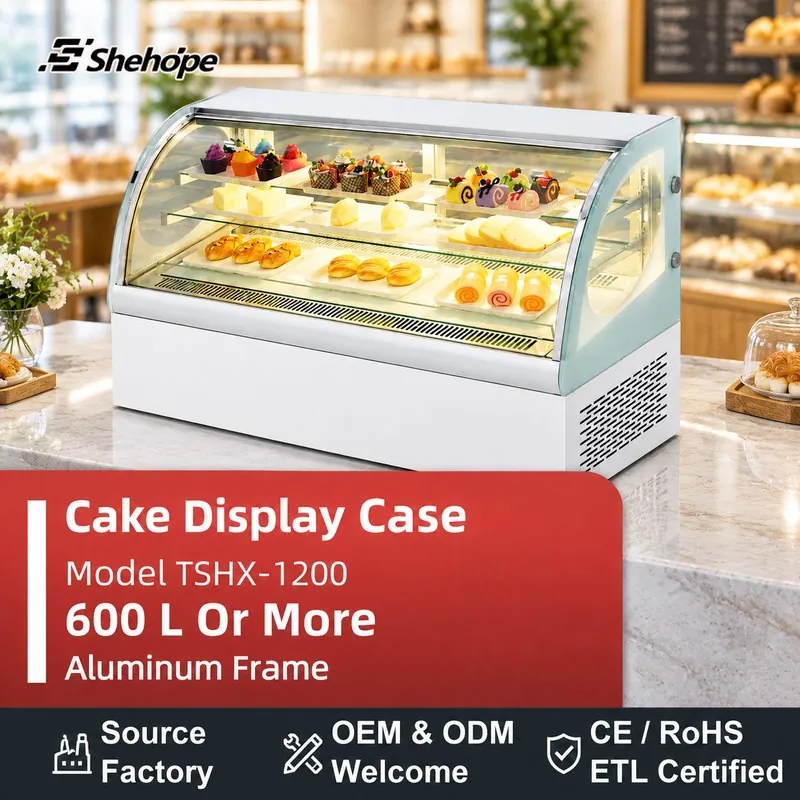
Cake display cases and countertop merchandisers
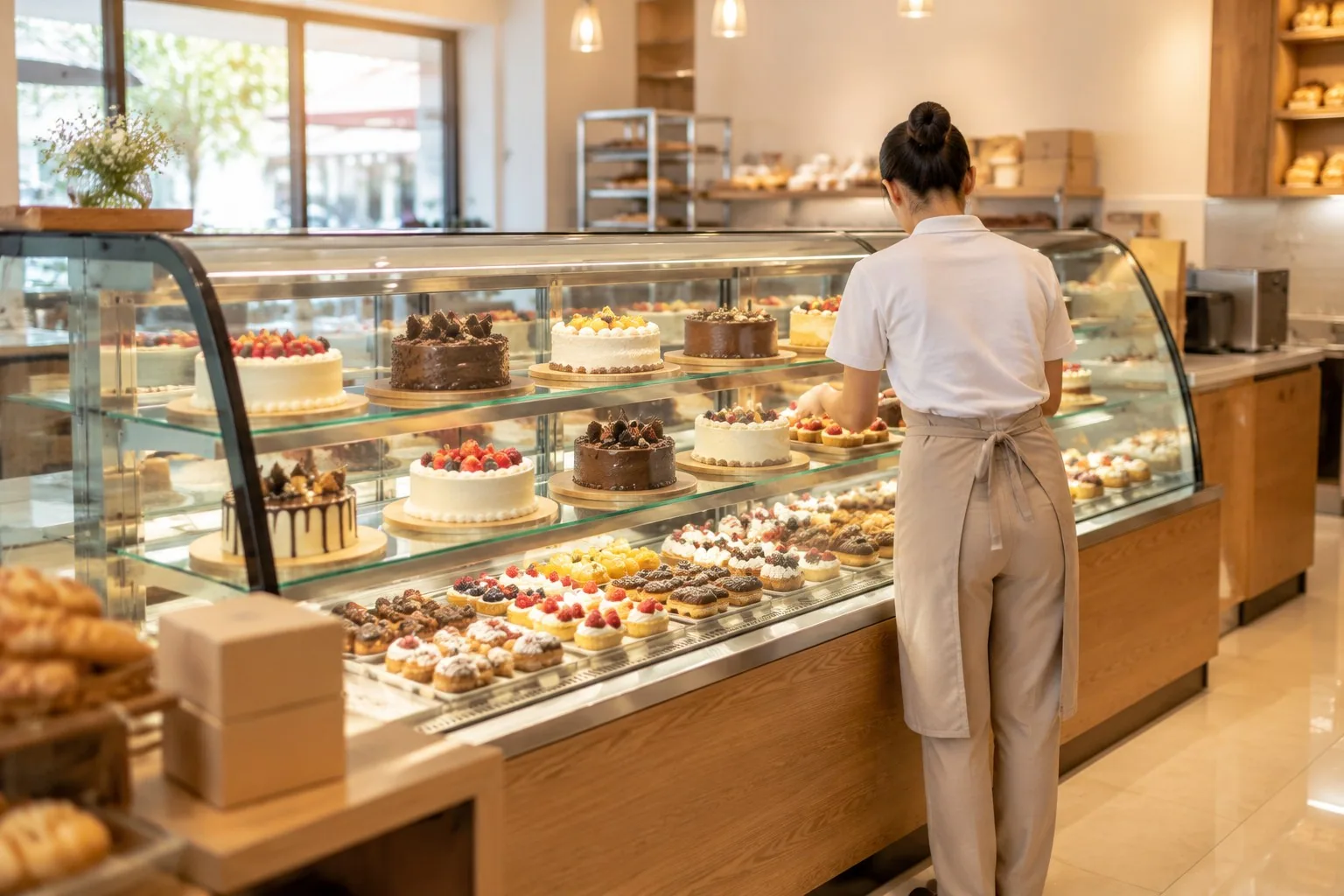
A cake display case sells the product while it holds it: glass on the front and sides, access from the staff side, and an interior that keeps creams, fillings and glazes stable through the trading day. This family covers countertop and floor-standing cake merchandisers, countertop display cases with straight or curved glass, and rear sliding or swing door formats. Shop layout, loading routine and how long product stays on display drive the choice.
Typical use
- Bakery and patisserie retail counters where whole cakes and slices are sold from display.
- Dessert counters in cafes and restaurants that need product visible from the guest side.
- Hotel lobby and buffet pastry displays where appearance and access both matter.
- In-store bakery corners in supermarkets and grocery retail.
- Seasonal or event counters that need an additional chilled display position.
Confirm before ordering
- Format (countertop or floor-standing)
- Front profile, glass type and door arrangement
- Usable display volume and shelf count
- Chilled or ambient holding duty and product mix
- Lighting and anti-fog specification
- Voltage, frequency and plug configuration
- Refrigerant and market compliance documents
Configurations we build in this family
Drawn from our own product catalogue. Final specification is confirmed per model and destination market.
| Door / drawer formats | four door |
|---|---|
| Catalogue items in this family | 35 (configuration confirmed per project) |
Model range at a glance
Every model in this family, sorted by size. Prices are FOB reference prices from our current listings.
| Model | Temperature range | Doors | Voltage | Reference price |
|---|---|---|---|---|
| TSHXJG900 | — | Four Doors | 220 V | from US$276 |
| ZJHK-1200 | — | Four Doors | 220 V | from US$258.75 |
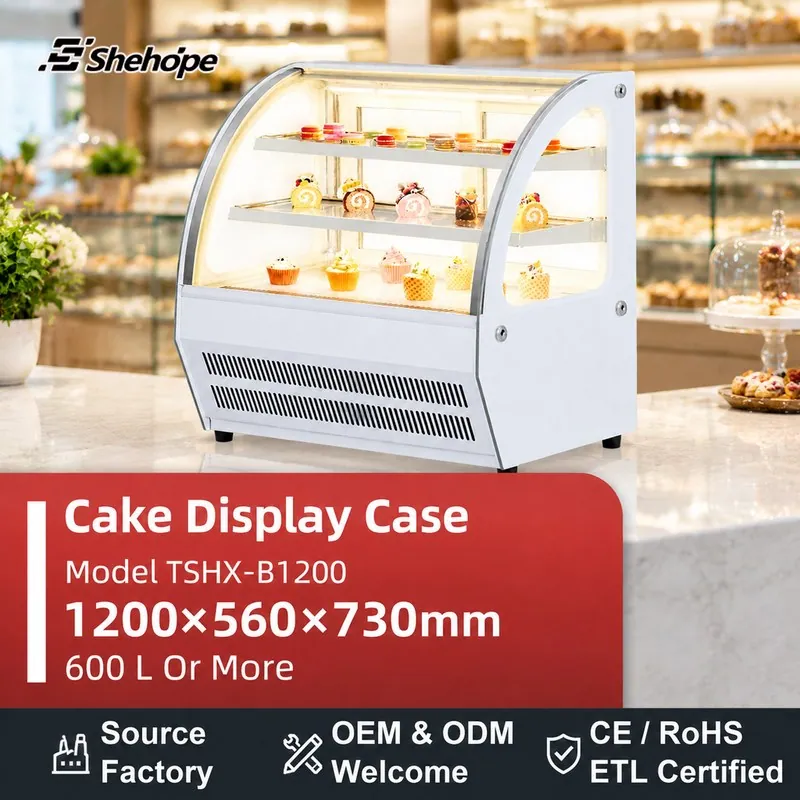
| TSHX-B1200 | — | Four Doors | 220 V | from US$351 |
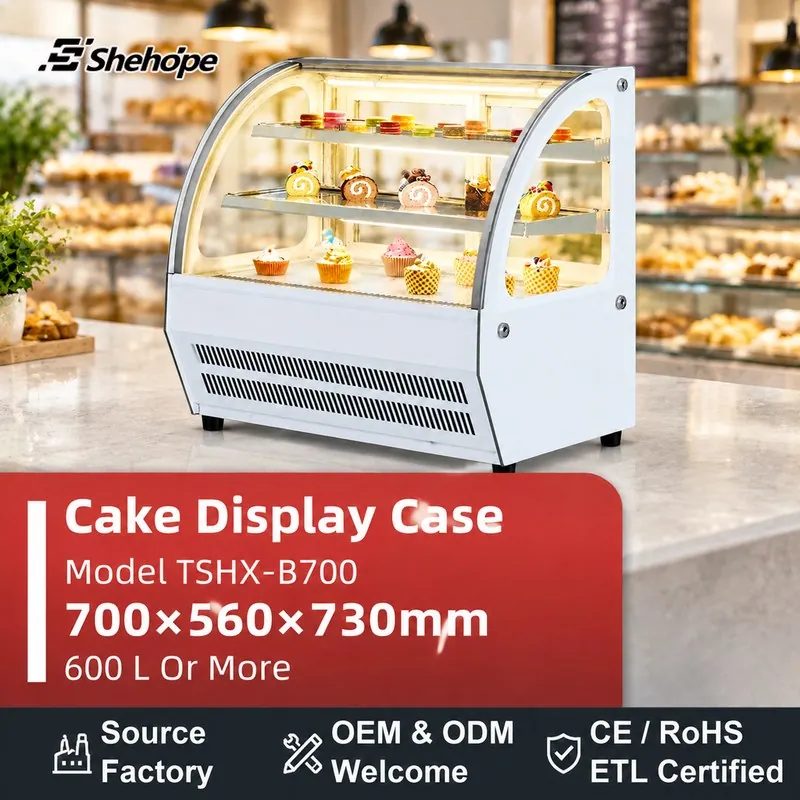
| TSHX-B700 | — | Four Doors | 220 V | from US$293.25 |
| TSHXJG900 | — | Four Doors | 220 V | from US$292.50 |
| LDHH-1800 | — | Four Doors | 220 V | from US$422.62 |
| LDHH-900 | — | Four Doors | 220 V | from US$362.25 |
| TSHX900 | — | Four Doors | 220 V | from US$273 |
| LDHH-1200 | — | Four Doors | 220 V | from US$379.51 |
| TSHX-1200 | — | Four Doors | 220 V | from US$258.75 |
| TSHXQ-900 | — | Four Doors | 220 V | from US$292.50 |
| ZHHKJG-900 | — | Four Doors | 220 V | from US$292.50 |
Plus 23 more models in this family — ask us for the full list.
The highlighted row is this page. Confirm the configuration, voltage and documents for your market in the quotation.
Catalogue items in this family
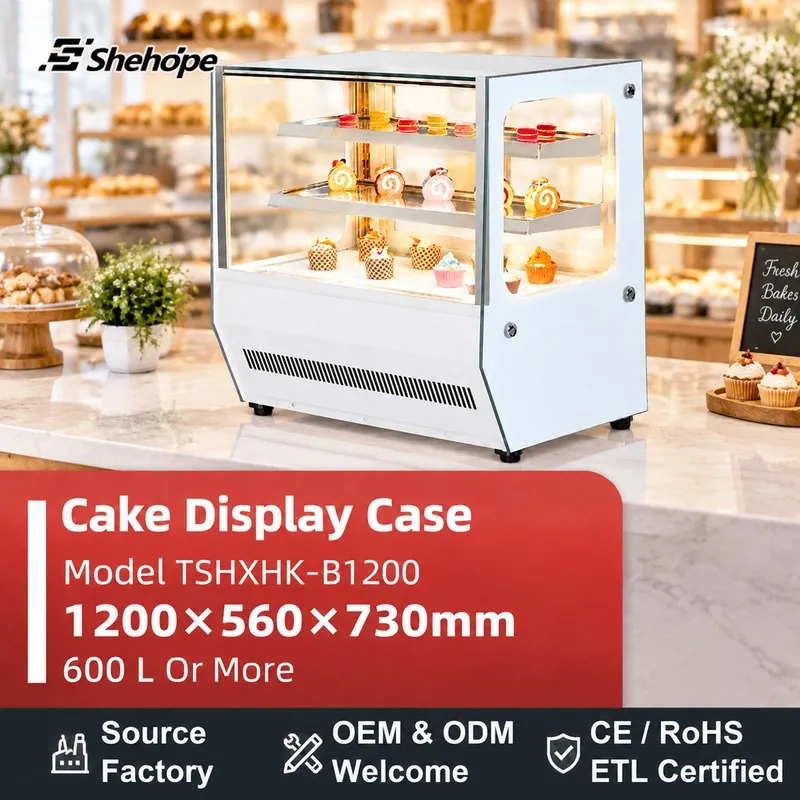
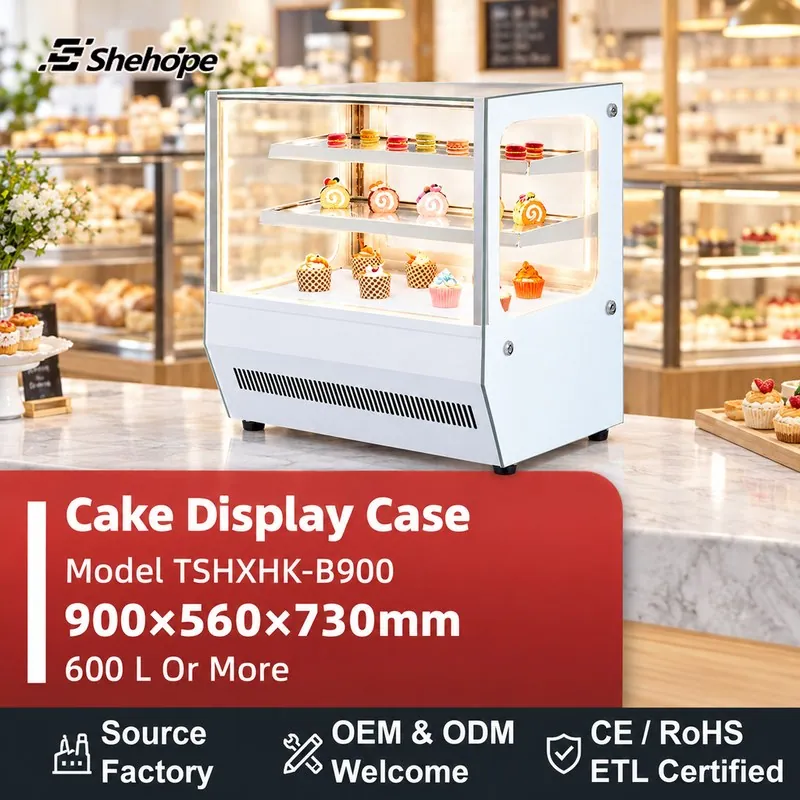
35 catalogue items photographed for this family.
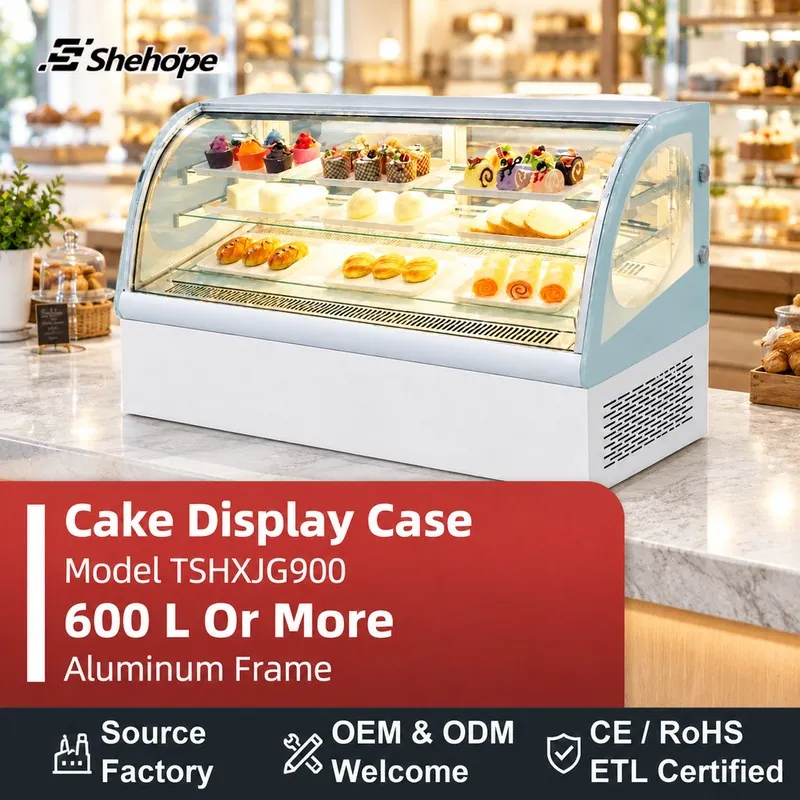
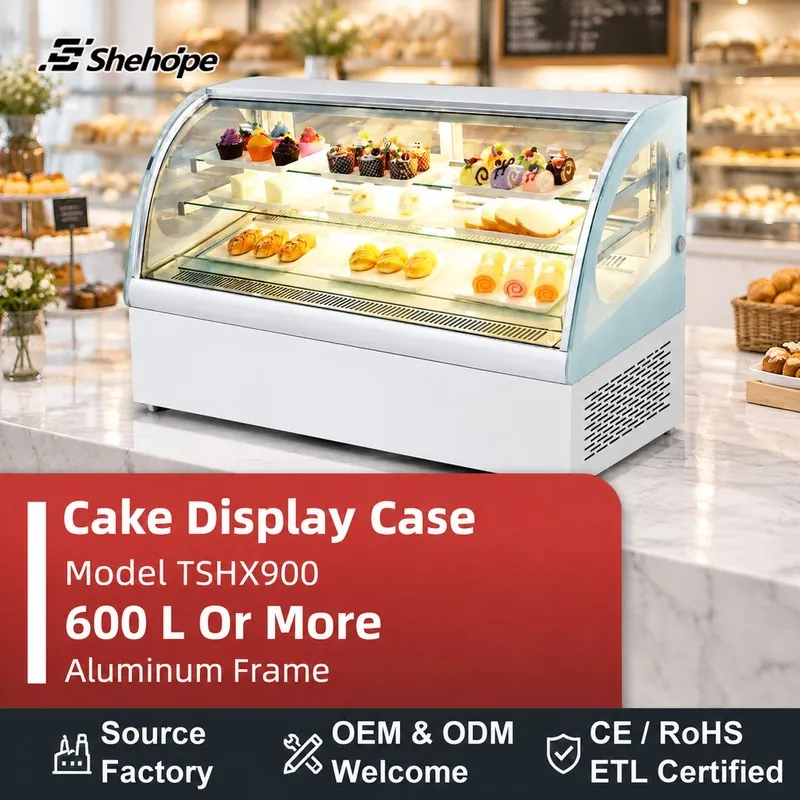
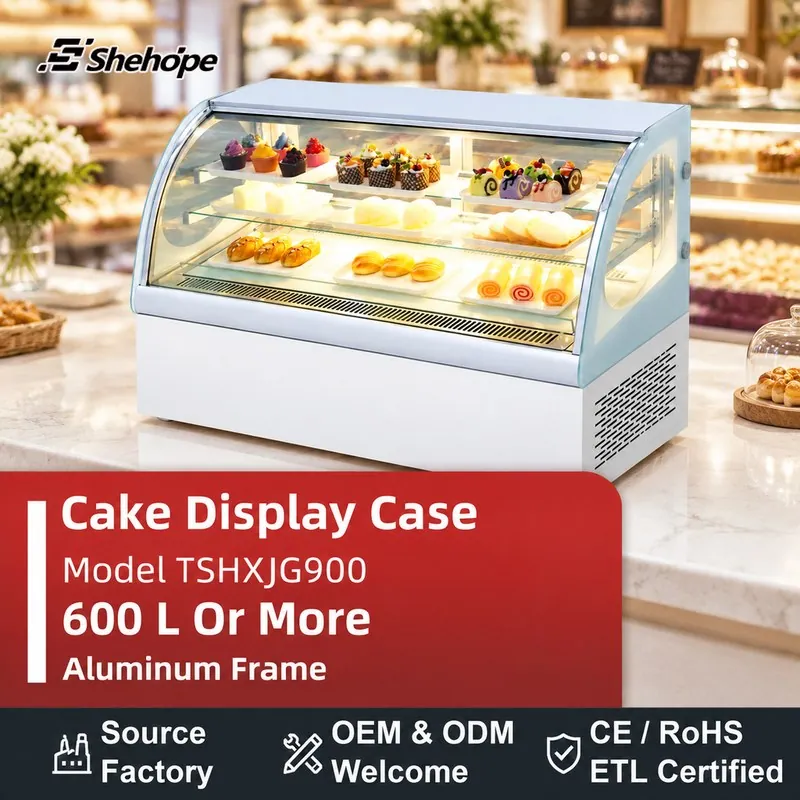
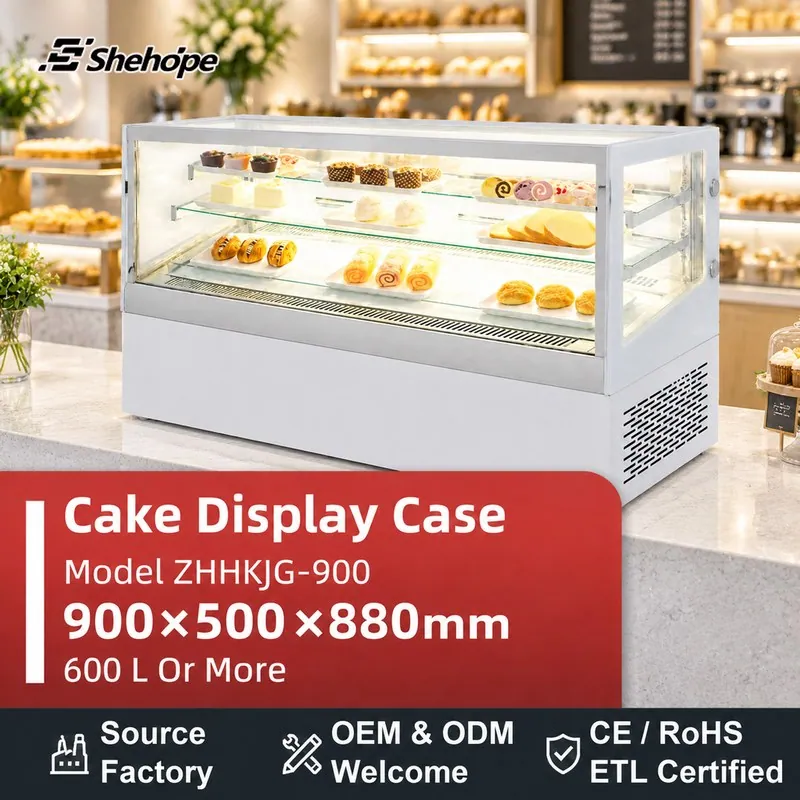
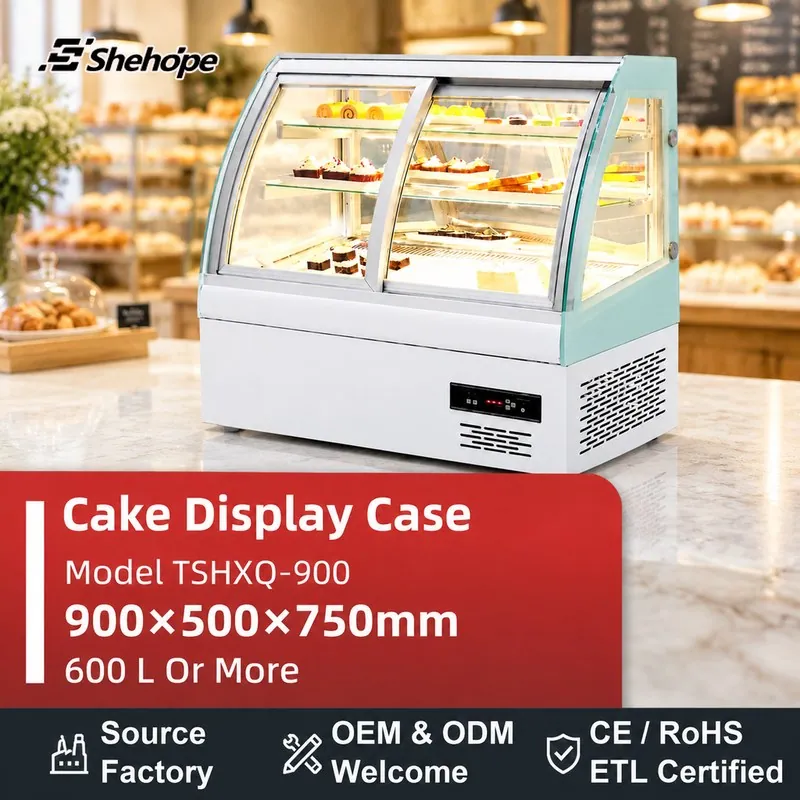
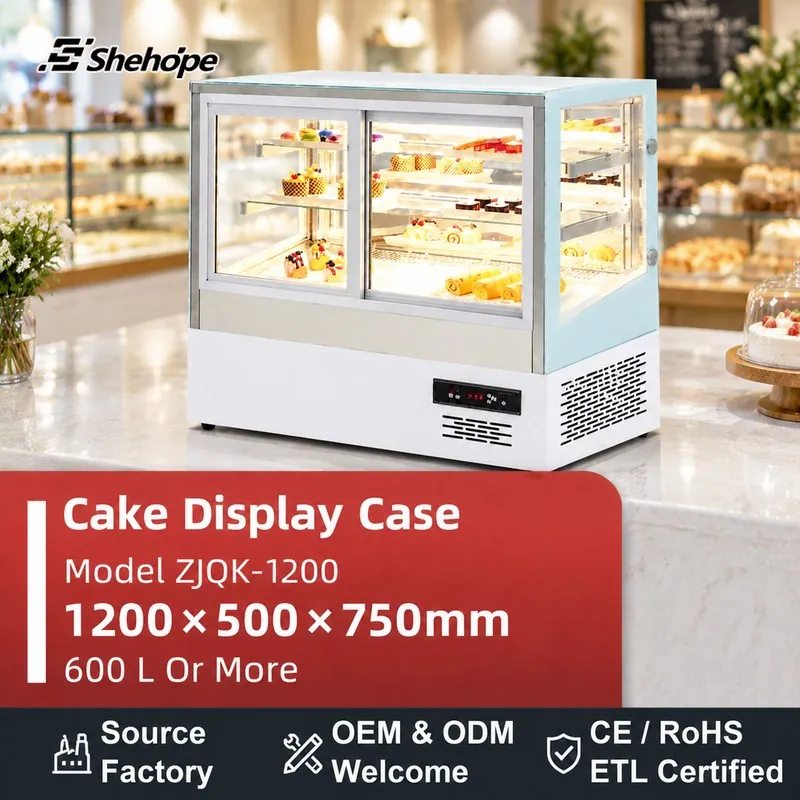
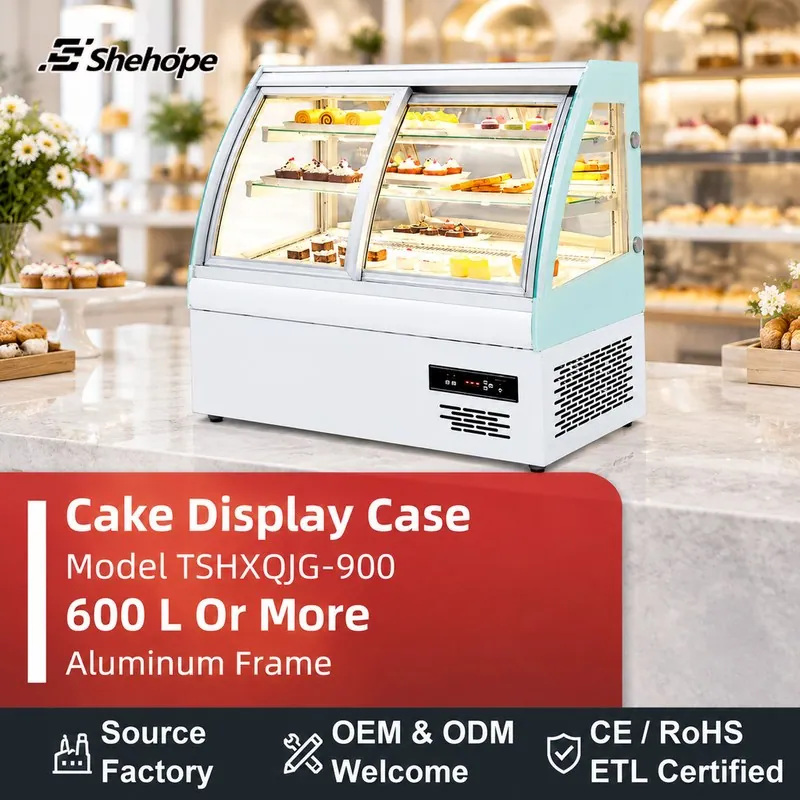
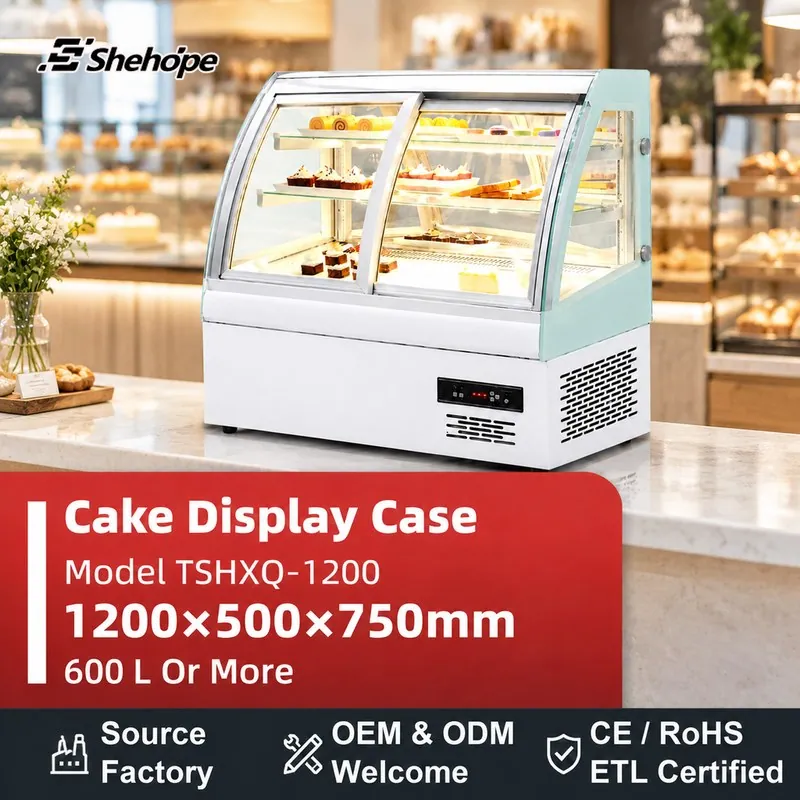
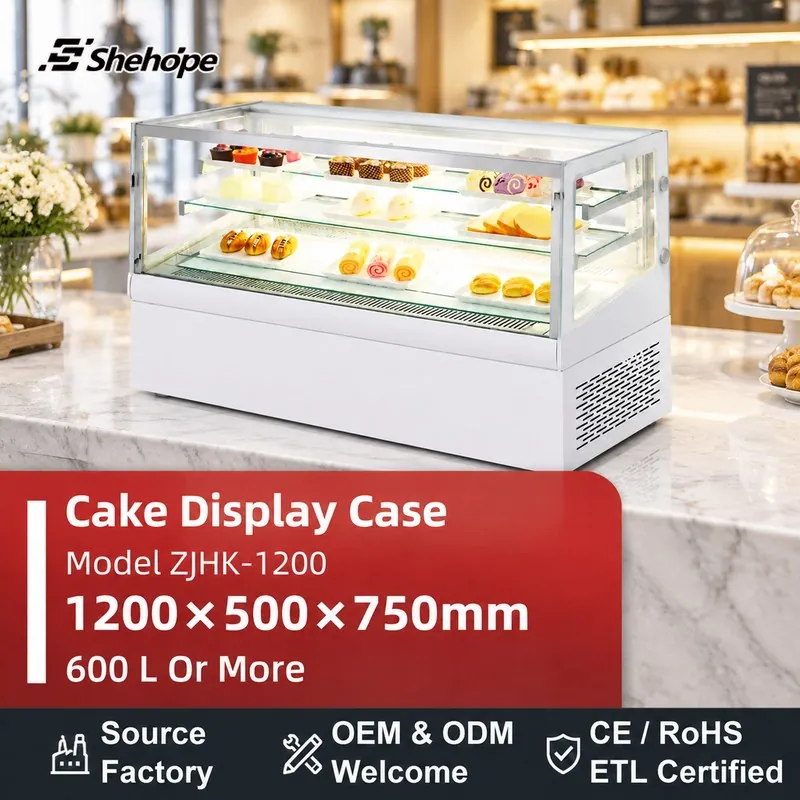
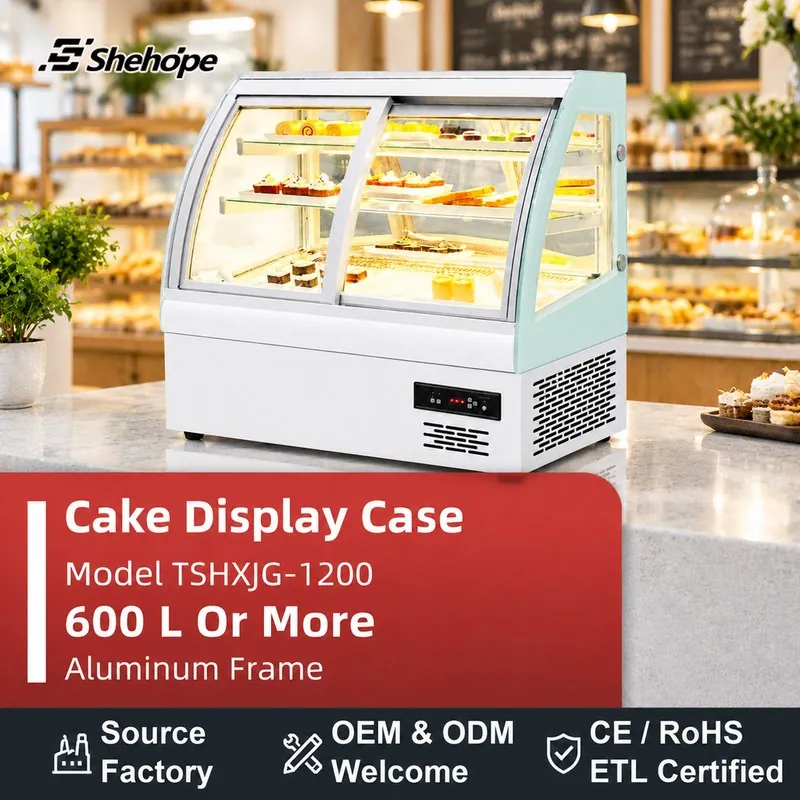
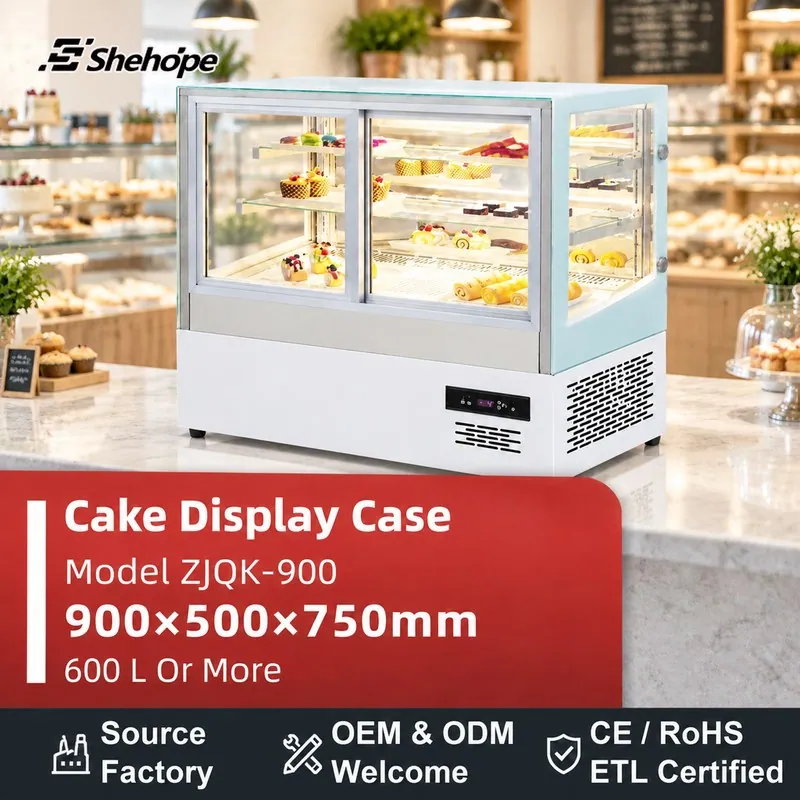
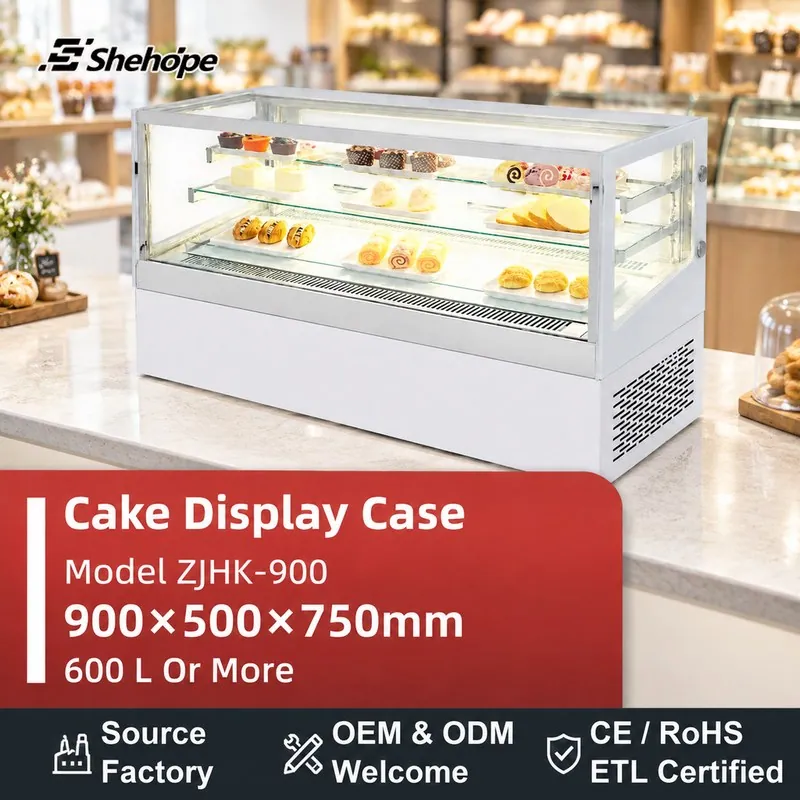
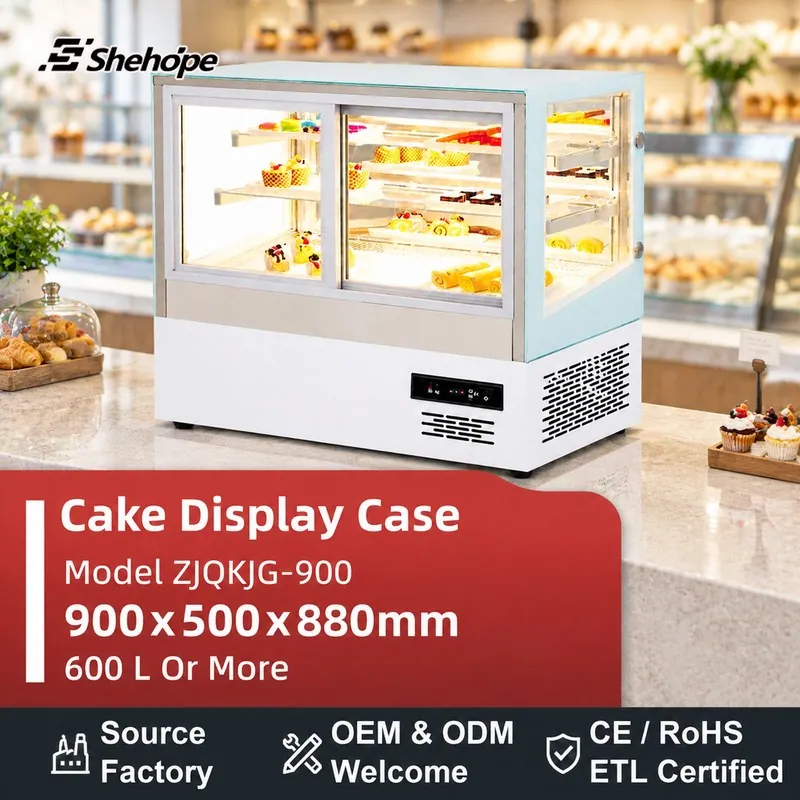
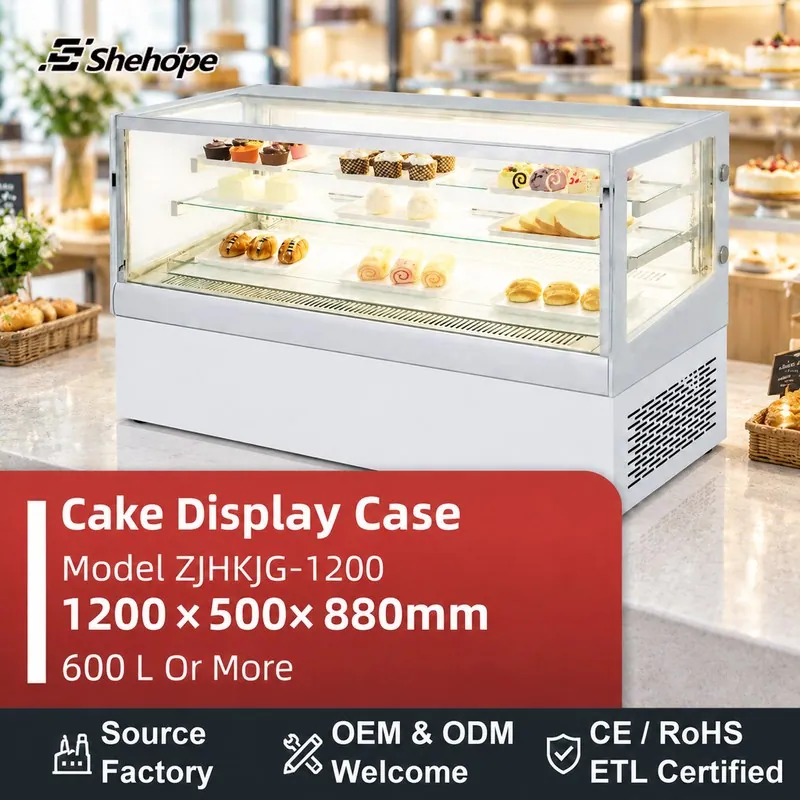
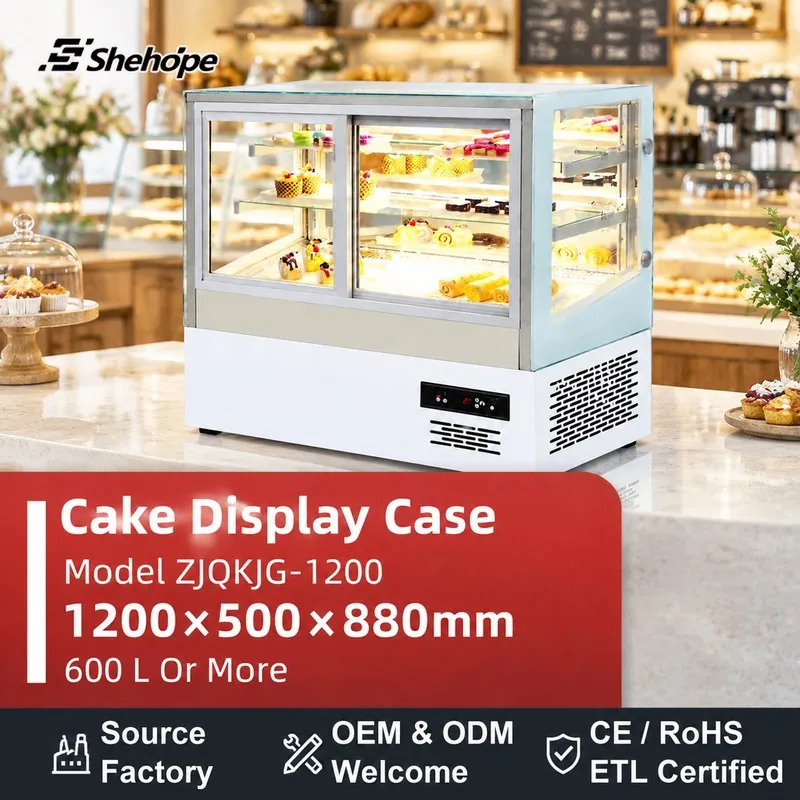
How this family is configured
Footprint, height and sight line
Measure the sales floor before comparing models. A countertop case fits on an existing counter and keeps the shop flexible, but its display volume is limited and the counter must carry the loaded weight. A floor-standing case provides more shelf levels and a taller glass front that reads from across the shop, at the cost of permanent floor space. Confirm the customer sight line from the entrance and from the till, because a case that is too low disappears behind a queue and one that is too tall hides staff. Check the number of display shelves, their pitch and whether glass shelves can be removed for cleaning. LED lighting inside the case affects how cream and glaze colors read, so ask which lighting is fitted and whether it can be specified. Also confirm which side is the customer side: a case placed against a wall needs rear access, while an island position may need access from one end only.
Access side and door type
Loading routine decides the door arrangement. Rear sliding doors let staff reach the case from behind the counter without stepping into the customer aisle, and they suit floor-standing units along a wall. Rear swing doors give a wider opening for trays but need aisle depth behind the counter. Countertop cases are often loaded from the front or the rear depending on where the staff stand, so confirm the working side rather than assuming it. Ask whether doors are removable for cleaning, whether the glass is double glazed, and how the gaskets are replaced. If the case sits next to a till or a coffee machine, check the door travel and the space needed to pull a full tray out. State how many times a day the case is opened during service, because frequent loading changes recovery requirements and can justify a different configuration.
Temperature, humidity and product mix
Not every product in a bakery display wants the same conditions. Cream cakes and fresh desserts need consistent chilled holding, while dry items such as bread, biscuits or packaged goods may sit better on an ambient shelf and can suffer from being chilled. Chocolate and decorated products are sensitive to swings in temperature and humidity, which show up as bloom or condensation on the glass. Confirm the product mix with the supplier, then decide whether one chilled case is enough or whether the display should combine a chilled section with an ambient section. Ask how the case behaves when the shop door opens repeatedly on a hot day, whether the glass has an anti-fog treatment, and how defrost water is managed. Set points, achievable range and humidity behavior are confirmed against the selected model, because they depend on model, ambient conditions, product load and door use.
Glass, lighting and finish
The visible finish is part of the specification, not decoration. Curved glass gives a wider view of the product but costs more to replace and needs care during transport; straight glass is simpler to clean and to align. Confirm the frame material and color, the base finish, and how the case sits against the counter or floor. Anti-fog or heated glass keeps the front clear in humid shops, and the lighting choice affects both product appearance and heat load inside the case. Ask whether the top surface is usable as a small work area or must stay clear, and whether the case needs a night cover to reduce load when the shop is closed. On cleaning, confirm which surfaces are stainless, which are coated, and which chemicals the finish tolerates. Custom logo marking by silk screen or laser engraving can be covered in an OEM project, and market-specific voltage and plug configurations are confirmed per project.
Questions we ask before quoting
- Which products go in the case, and do they all need the same holding conditions?
- Is the case countertop or floor-standing, and how much floor space is available?
- Which side do staff load from, and how much aisle depth is there behind the counter?
- How many shelves and what product height must be visible to customers?
- How often is the case opened during a trading day?
- What is the shop ambient temperature and humidity, and does the entrance door open frequently?
- Is anti-fog glass or a night cover needed?
- Which voltage, frequency and plug type does the destination market use?
Frequently asked questions
Can one case hold both cream cakes and dry bakery items?
Cream and fresh desserts need consistent chilled holding, while some dry products keep better at ambient conditions. If both must sit in one fixture, the display is usually split into a chilled section and an ambient section. List the product mix in the inquiry so the configuration can be reviewed against it.
What temperature does a cake display case hold?
The set point is confirmed against the selected model, the product mix and the shop conditions rather than published as one number for the family. Ambient temperature, opening frequency and the load in the case all affect the achievable range, so they are part of the specification discussion.
Countertop or floor-standing: which should I choose?
Countertop cases suit small ranges and flexible layouts, and they use an existing counter. Floor-standing cases give more shelf levels and a taller display, which reads better from a distance, but they commit permanent floor space. Decide from the range you must show and the sight line from the entrance.
Can the case be branded and configured for my market?
Logo marking by silk screen or laser engraving can be included, and OEM projects can cover market-specific voltage and plug configurations. Compliance documents are confirmed per model and destination market, and warranty terms are confirmed per project.
Send the application and we confirm the model
Share the food or product being stored, target temperature, ambient conditions, available space, voltage, quantity and destination market.