
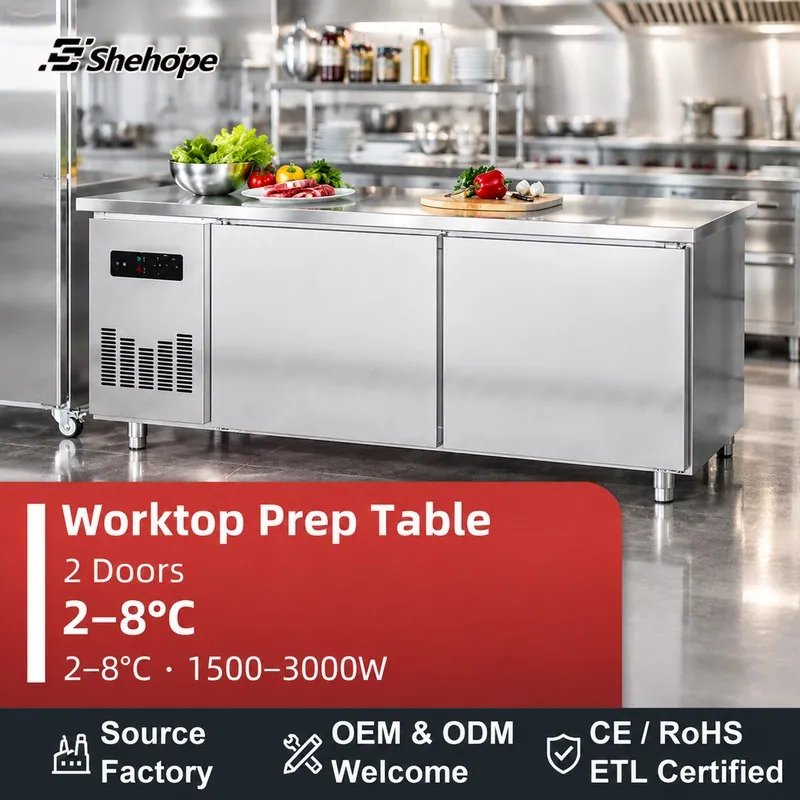
Refrigerated prep tables and worktops for commercial kitchens
A refrigerated prep table puts the work surface and the cold store in the same footprint, so preparation and holding happen at one station. This family covers worktop chillers and worktop freezers, undercounter workbenches, drawer units, and pizza or salad preparation tables with a raised pan counter. Configuration follows the workflow at the station, not the cabinet alone.
Typical use
- Sandwich, salad and cold-plate assembly stations in restaurant and hotel kitchens.
- Pizza preparation lines where ingredient pans sit in a raised counter with a sneeze guard.
- Milk tea, dessert and beverage counters that need chilled storage directly under the work surface.
- Butcher, deli and central-kitchen benches where drawers keep tools and small stock within reach.
- Bakery and pastry benches used to hold fillings, creams and pre-portioned dough during production.
- Undercounter chiller or freezer positions beneath an existing counter where no cold room is available.
Confirm before ordering
- Duty (chilled, frozen or dual zone)
- Cabinet format and door or drawer arrangement
- Working surface dimensions and height
- Usable internal volume and shelf or pan layout
- Cooling format and defrost method
- Voltage, frequency and plug configuration
- Refrigerant and market compliance documents
- Ambient temperature class and installation clearance
Configurations we build in this family
Drawn from our own product catalogue. Final specification is confirmed per model and destination market.
| Widths in this family | 1.8 m, 1.2 m, 1.5 m |
|---|---|
| Capacity classes | 520 L, 380 L, 470 L, 400 L, 490 L, 390 L |
| Door / drawer formats | double door, four door |
| Temperature classes referenced | -20 °C, -6 °C, -10 °C, -15 °C, 0 °C |
| Catalogue items in this family | 40 (configuration confirmed per project) |
Model range at a glance
Every model in this family, sorted by size. Prices are FOB reference prices from our current listings.
| Model | Temperature range | Doors | Voltage | Reference price |
|---|---|---|---|---|
| BCD-900SB | 1°C To 10°C | Four Doors | 220-240V (Single-Phase) | from US$351 |
| TUC2-C | -18°C To -22°C | Double Doors | 110-120V (Single-Phase) | from US$702 |
| TUC2-D | -18°C To -22°C | Double Doors | 110-120V (Single-Phase) | from US$702 |
| Double-door Commercial… | 2°C To 8°C | Double Doors | 220-240V (Single-Phase) | from US$999 |
| BD-900 | -6°C To -12°C | Four Doors | 220-240V (Single-Phase) | from US$351 |
| BCD-900 | 10°C To 1°C -6°C To-12°C | Four Doors | 220-240V (Single-Phase) | from US$321.75 |
| BC-900 | 1°C To 10C | Four Doors | 220-240V (Single-Phase) | from US$351 |
| BCD-900XD | 2°C To 8°C | Four Doors | 220-240V (Single-Phase) | from US$331.50 |
| 480 L | 1°C To 10°C | Double Doors | 220-240V (Single-Phase) | from US$234 |
| 1.2 m | -6°C To -20°C | Double Doors | 220-240V (Single-Phase) | from US$206.25 |
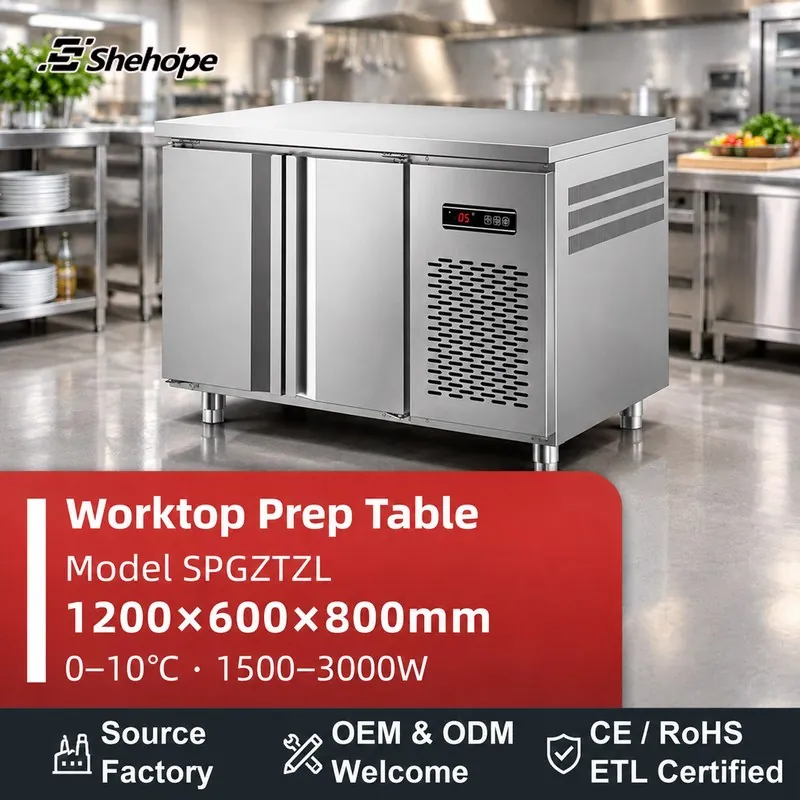
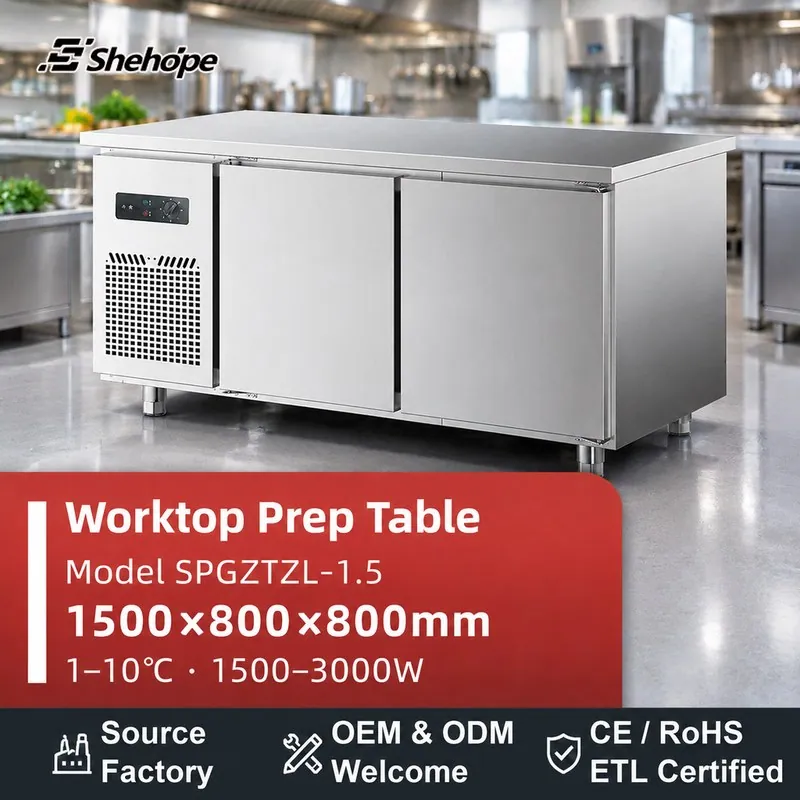
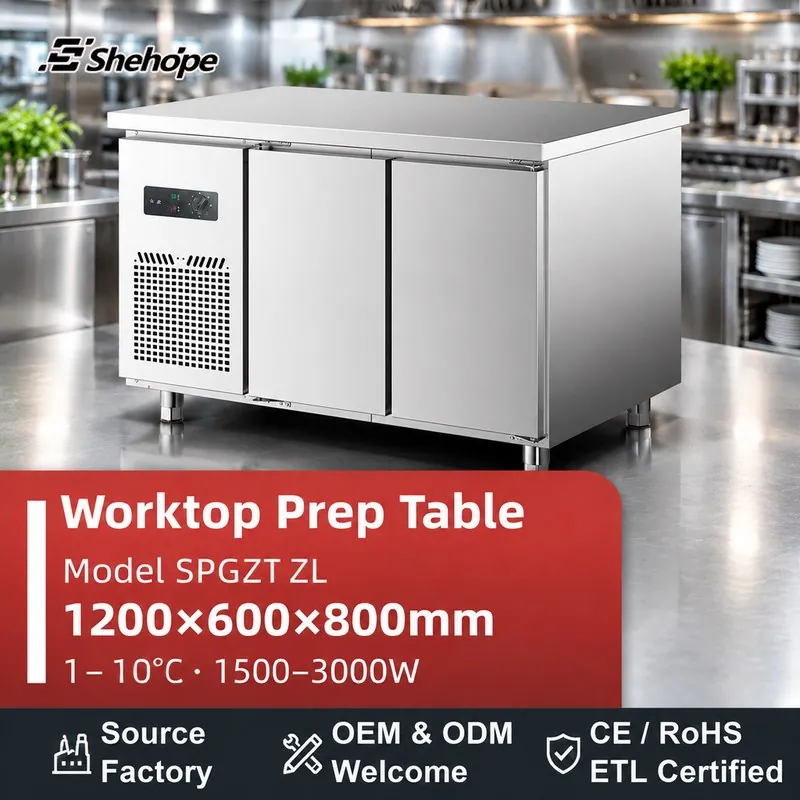
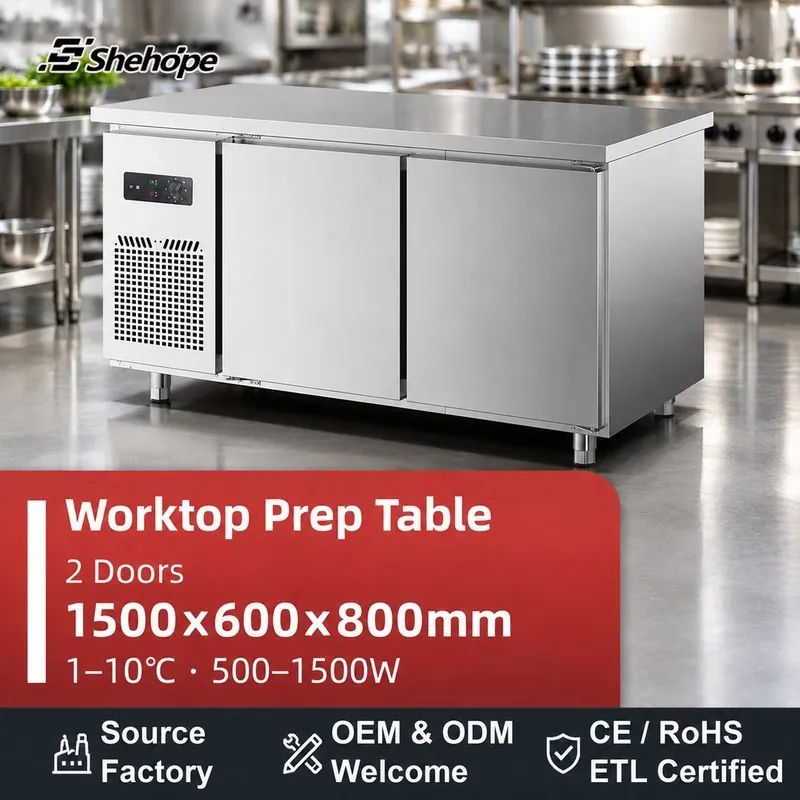
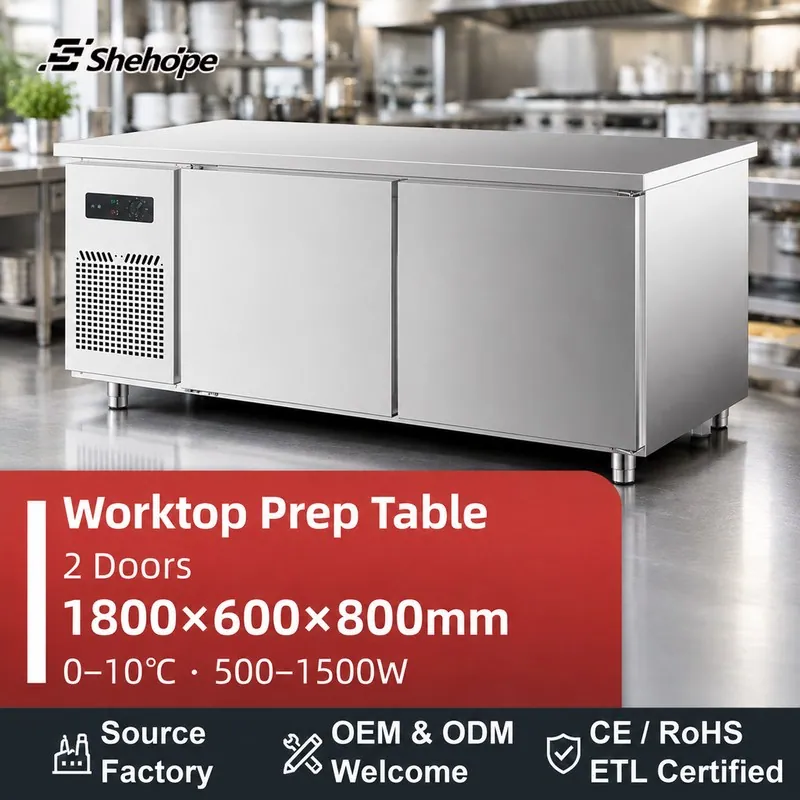
| SPGZTZL | 0°C To 10°C | Double Doors | 220-240V (Single-Phase) | from US$382 |
| SPGZTZL | 1°C To 10°C | Double Doors | 220-240V (Single-Phase) | from US$341.25 |
Plus 28 more models in this family — ask us for the full list.
The highlighted row is this page. Confirm the configuration, voltage and documents for your market in the quotation.
Catalogue items in this family
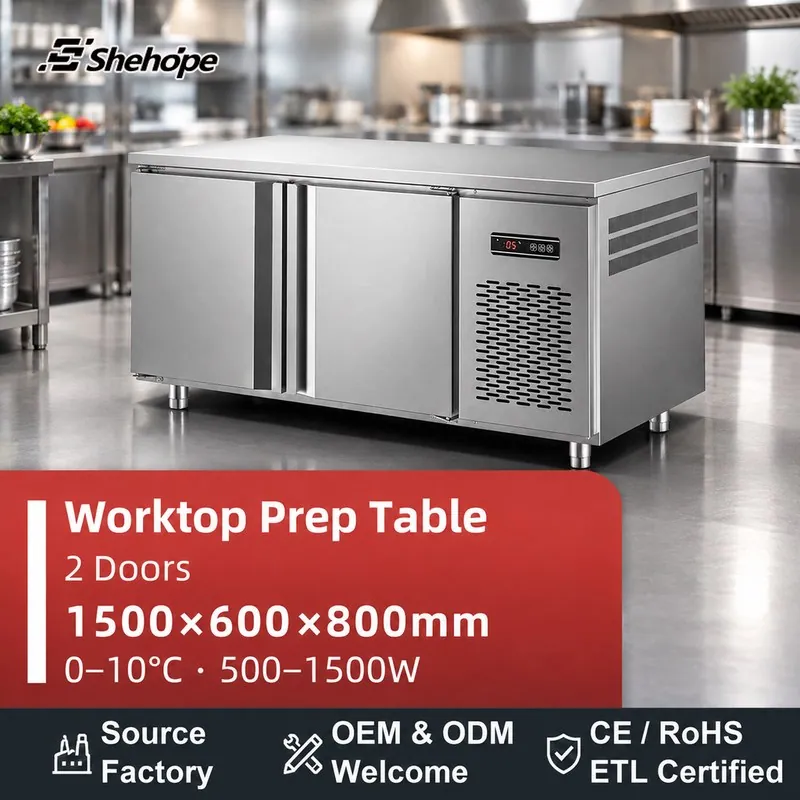
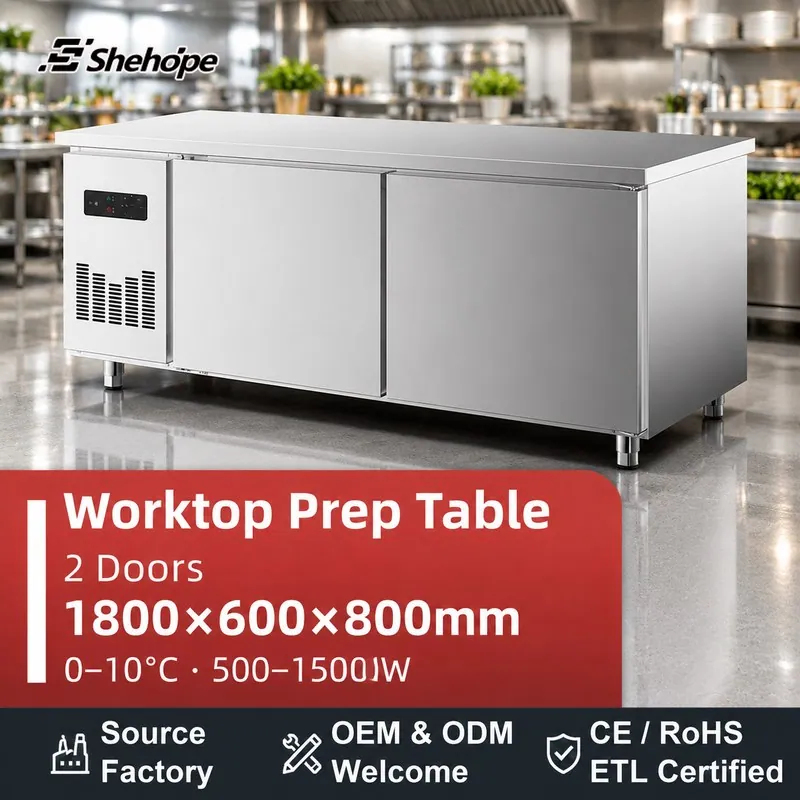
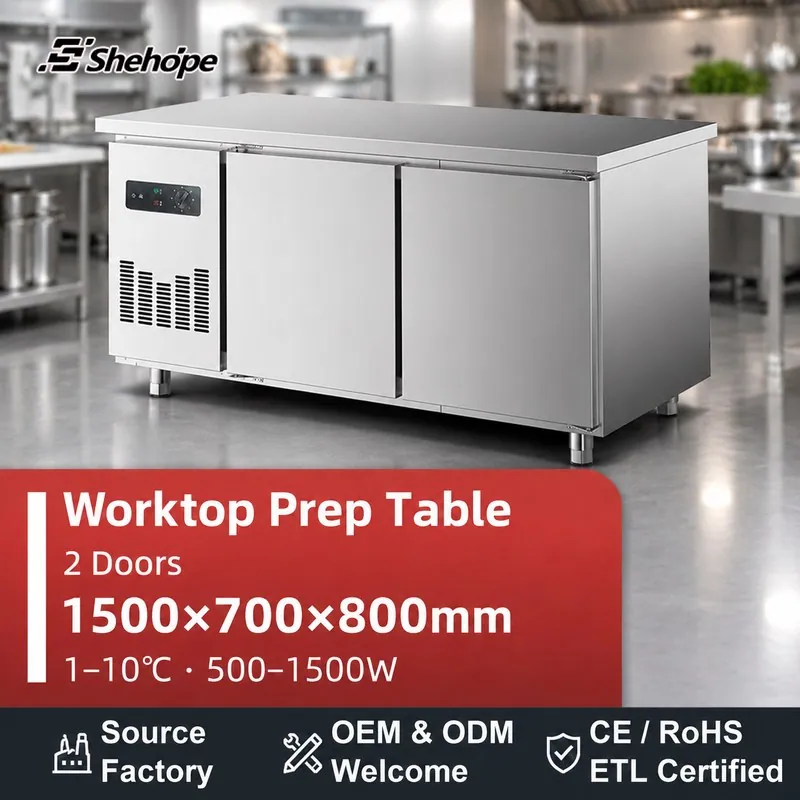
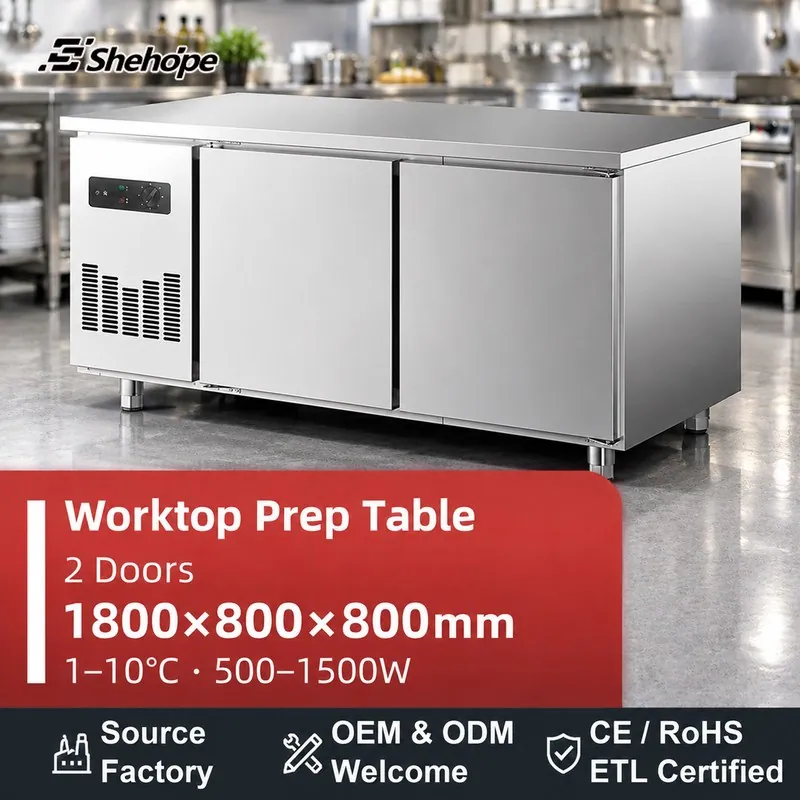
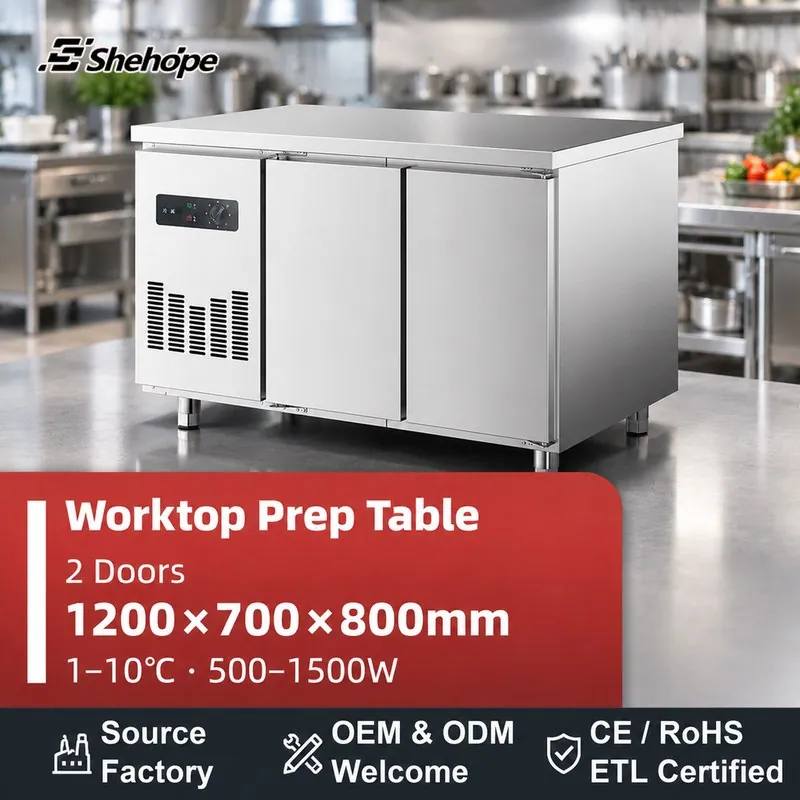
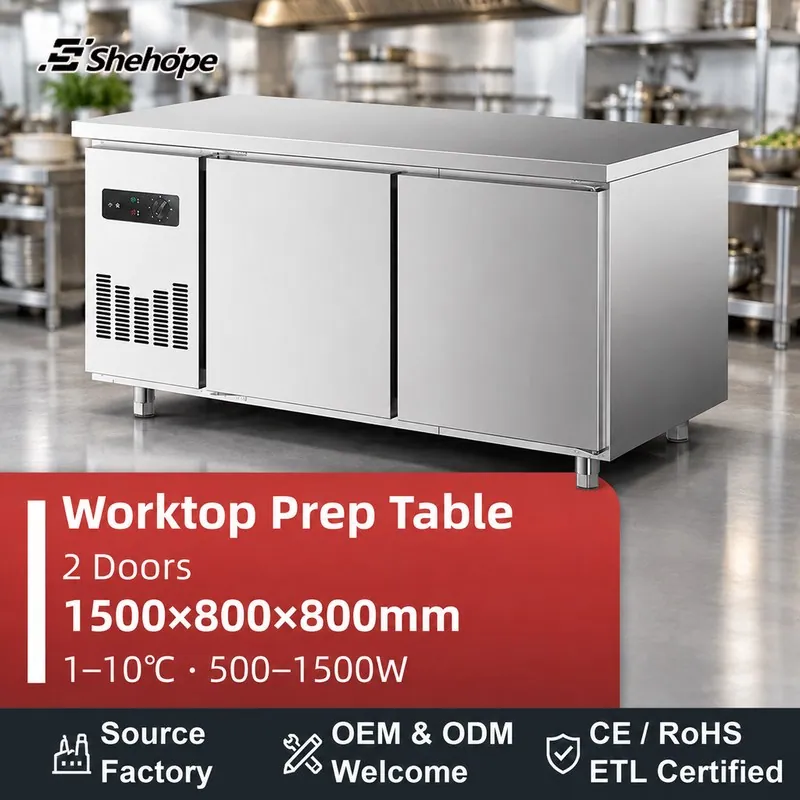
40 catalogue items photographed for this family.
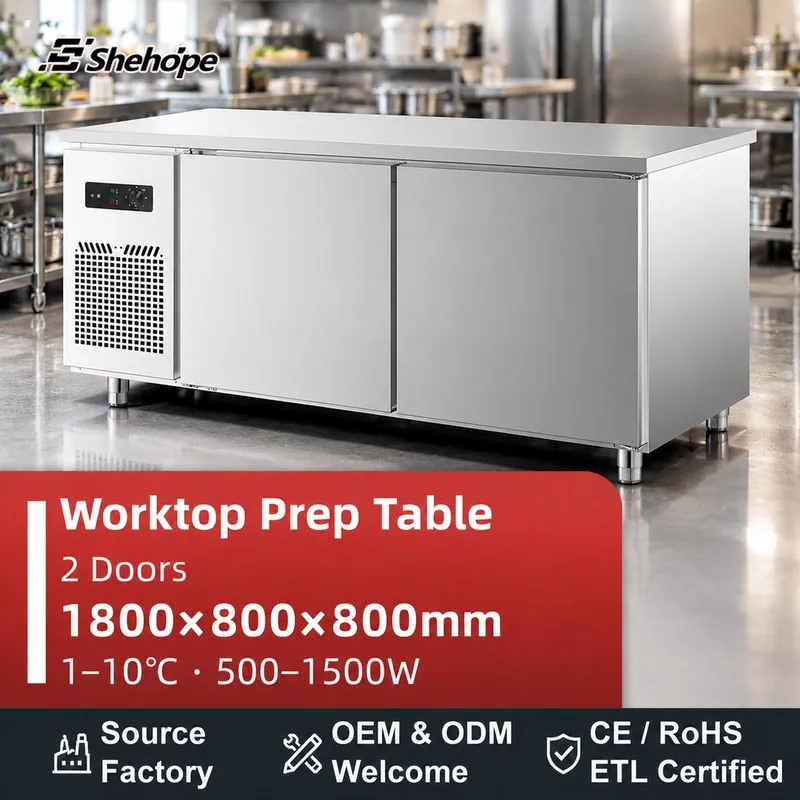
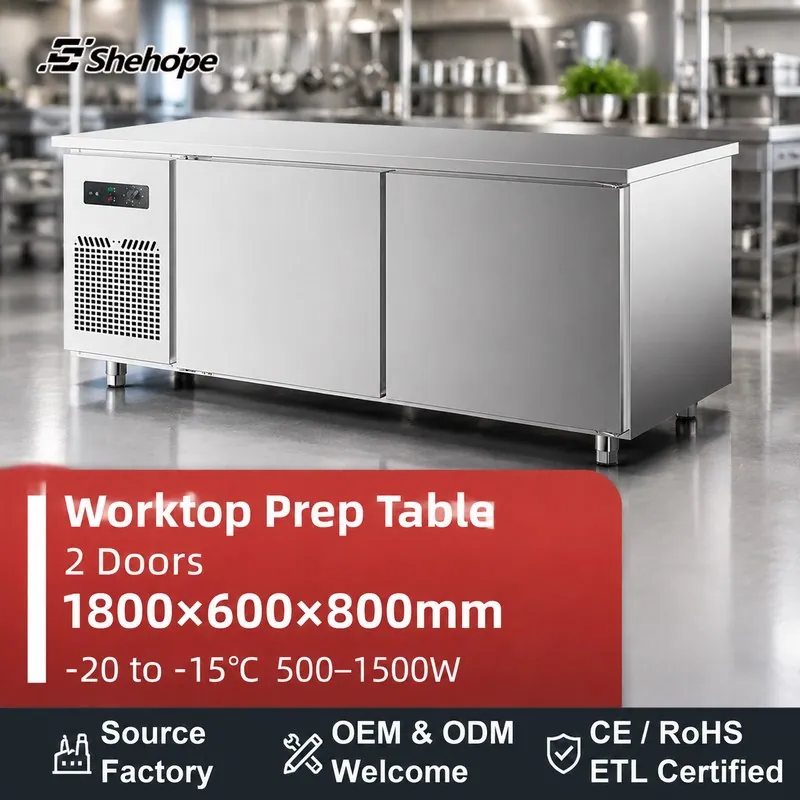
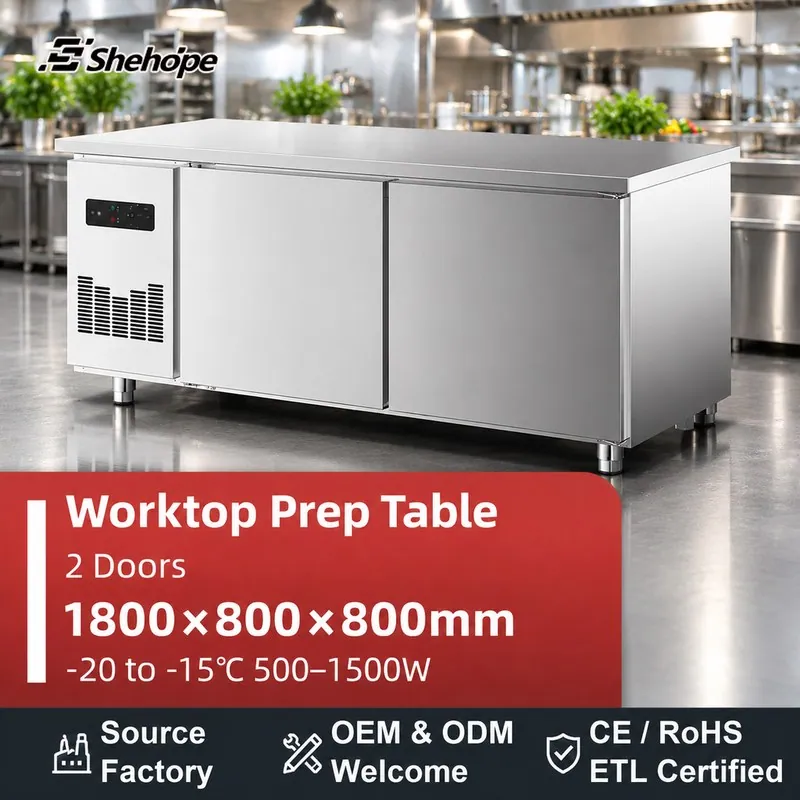
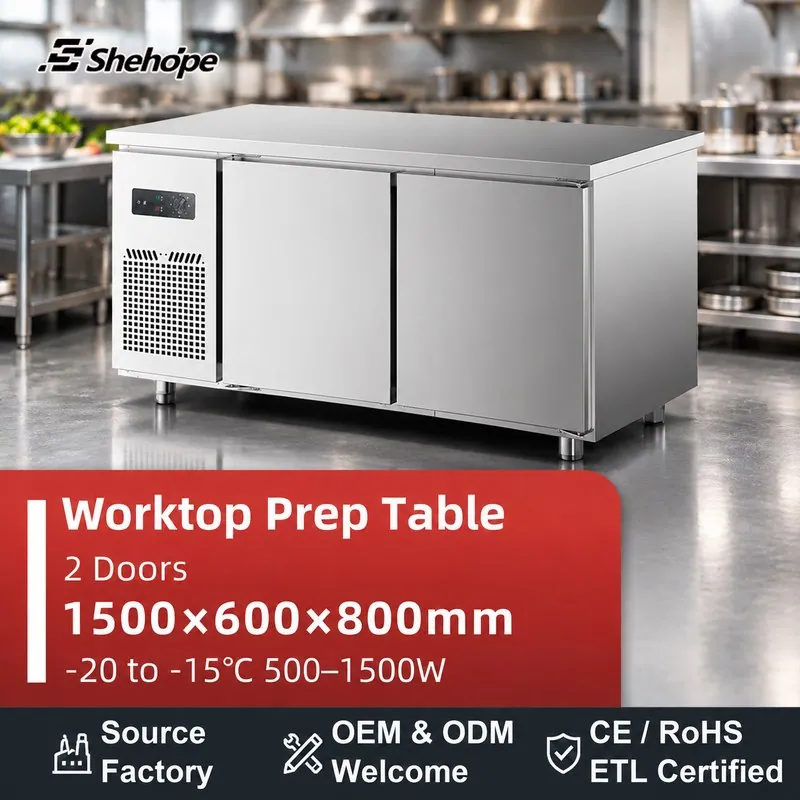
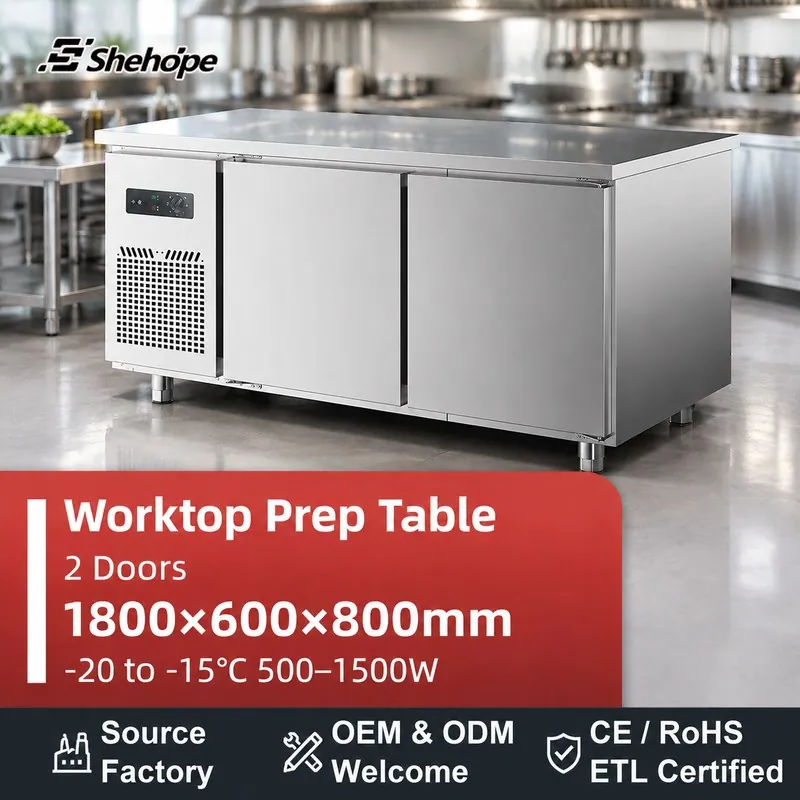
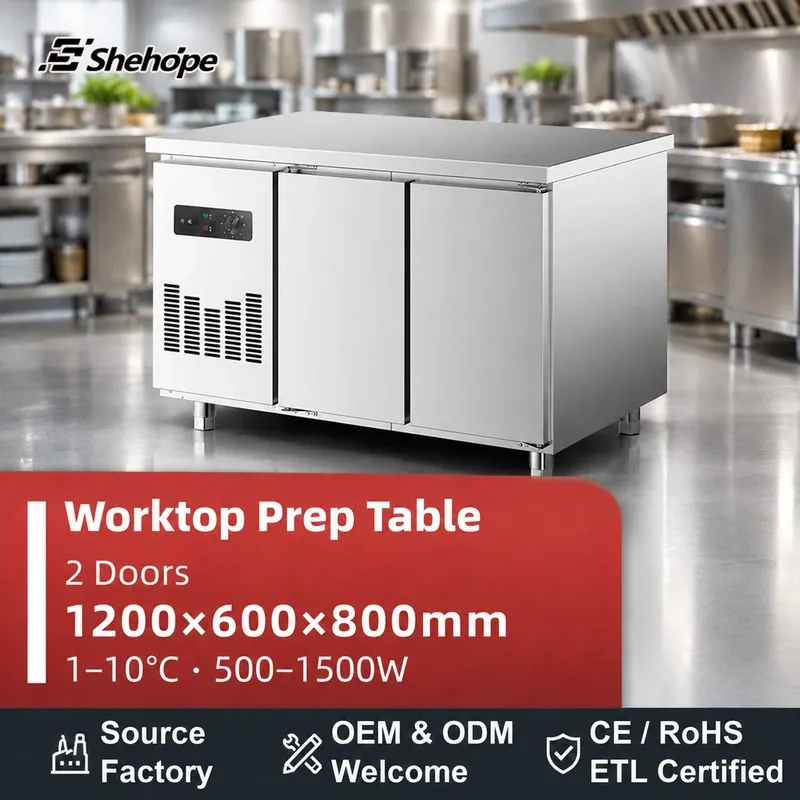
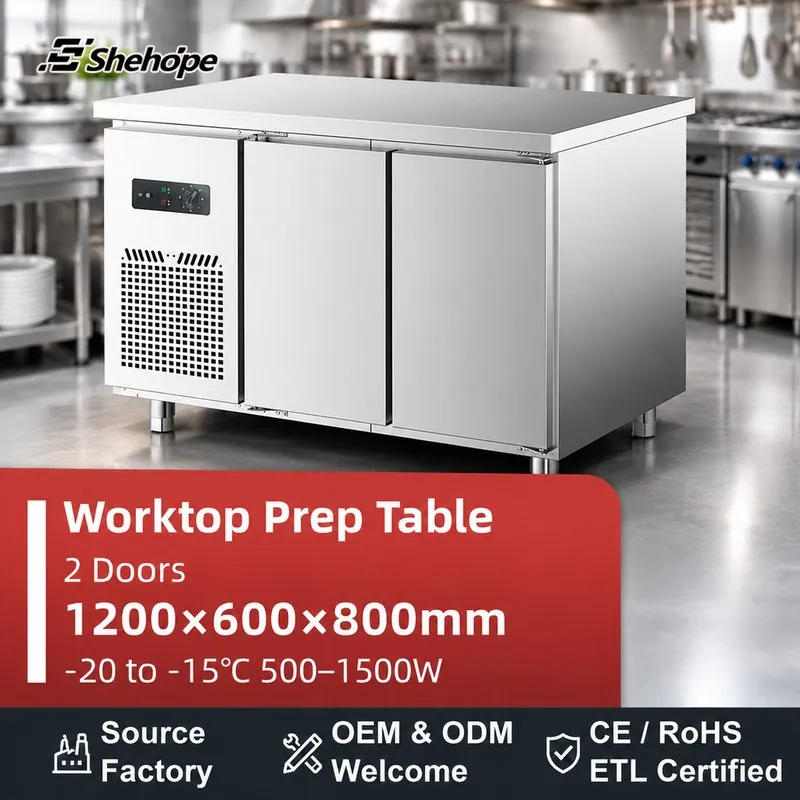
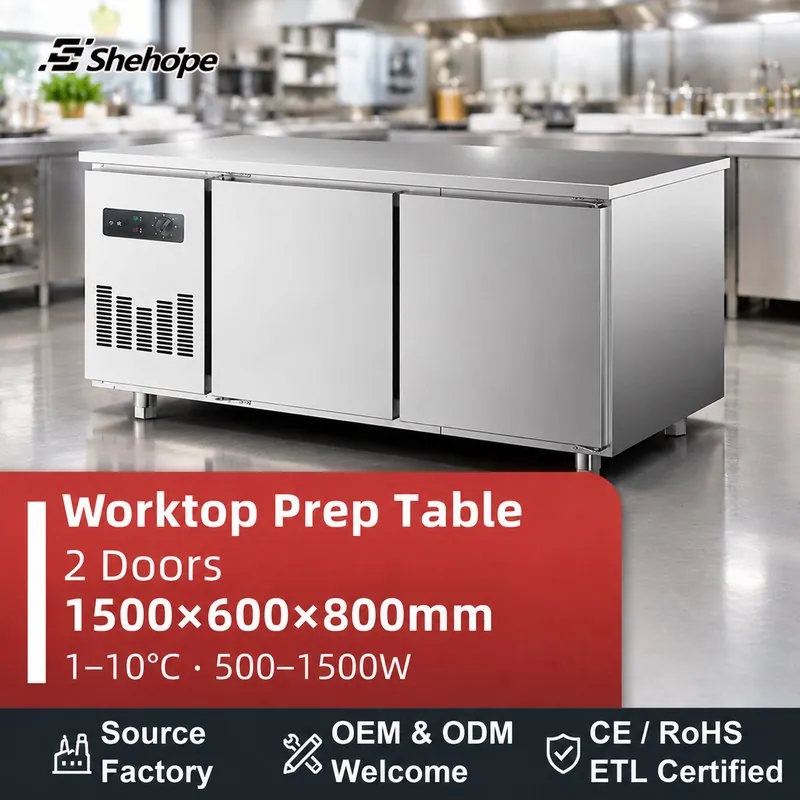
How this family is configured
Worktop surface and cabinet format
Start with the surface, because it decides the rest of the cabinet. A flat worktop gives a continuous preparation area and hides storage below, while a raised counter with a pan recess suits pizza or salad assembly where ingredient pans must stay within arm's reach. Confirm the working height that matches the surrounding line, the usable depth in front of the wall or island, and whether the table must butt directly against another unit. Ask for the surface material and edge detail, and whether the top is reinforced for chopping or for heavy loads placed on it. Drawer units trade shelf storage for single-hand access, which matters when staff reach for tools or small stock during service. Undercounter formats place the whole cabinet below the counter line, so the preparation surface comes from a separate bench. State the hygiene requirement for the internal liner and the cleaning method your team uses, because that decides corner radius, shelf finish and whether shelves come out without tools.
Cooling format and airflow path
Ask how the cabinet moves cold air before comparing volumes. Fan-assisted cooling distributes air around shelves and recovers faster after the door closes, which suits busy lines with frequent access. Direct or static cooling is simpler in construction and can reduce dehydration of wrapped or covered product, but it depends on contact and natural circulation. Confirm which format the quoted model uses rather than assuming it. Then check evaporator position and whether defrost is automatic or manual, because a manual defrost schedule has to be owned by the kitchen team. On a hot line, defrost water and condensate need a controlled path to a drain or evaporation tray, and that path must not cross a walkway. Finally, state the ambient temperature the station reaches at peak service: a unit sized for a comfortable room behaves differently beside an oven or a fryer. Wide-climate or tropical configurations are available where the model and the market review confirm them.
Chilled duty, frozen duty or dual zone
The same shell can be built for chilled holding, frozen holding or two independent zones, and duty changes the components behind the panels. A chilled prep table holds pre-chilled ingredients for assembly; a freezer version has to handle surface frost, a different defrost strategy and a drainage path for melt water. A dual-zone cabinet splits the interior into separate compartments with their own controls, which suits a station that needs both salads and frozen garnish in one footprint. Tell the supplier whether the cabinet holds product that is already cold, or brings product down from production temperature, because that is a pull-down duty and it drives compressor and control selection. Menu range, peak loading and how long product stays in the cabinet before use belong in the inquiry. Set points and the achievable range are confirmed against the selected model datasheet rather than assumed from the family description.
Installation, cleaning and service access
Plan the installation before ordering, because a prep table is often the piece that blocks its own service access. Leave clearance for air to enter and leave the condensing unit, and confirm whether the unit breathes from the front, the rear or the top. Decide between castors and fixed legs: castors help cleaning and relocation but need brakes and a level floor. Confirm the condensate route, the floor slope, and whether a floor sink or tray is available at the position. State the cleaning chemicals and frequency, because stainless grade, liner corners, gasket material and shelf finish all have to tolerate that routine. Ask which panels come off for service, where the controller and electrical box sit, and whether the condensing unit can be reached without moving the table. For export orders, confirm packing type, whether the unit ships assembled or knocked down, and the document set required for the destination market. Warranty terms and spare parts coverage are confirmed per project.
Questions we ask before quoting
- What is prepared at this station, and does the cabinet hold pre-chilled product or cool it down?
- Do you need a flat worktop, a raised pan counter, drawers, or a combination?
- What working height and surface depth must match the rest of the line?
- Which pan, tray or GN sizes must fit in the recess and inside the cabinet?
- Chilled only, frozen only, or a dual-zone cabinet with separate set points?
- What ambient temperature does the kitchen reach at peak service?
- Which voltage, frequency and plug type does the destination market use?
- Who cleans the cabinet, with which chemicals, and does the liner finish support that method?
Frequently asked questions
Can a prep table replace a reach-in refrigerator?
Usually not. A prep table is sized for working stock at the station, so the interior is shallow and opened often. Bulk or back-up stock is better held in a reach-in cabinet or a cold room, with the prep table restocked during the shift. Decide from the workflow and from the volume that has to stay within arm's reach, not from cabinet volume alone.
Which temperature range can I order?
Chilled and frozen versions are built on different component sets, so the range is confirmed against the selected model and the duty you describe. We do not publish one number for the family, because the achievable set point depends on model, ambient conditions, loading and door use. Tell us the product, the holding time and the room temperature, and the required range is confirmed in the quotation.
Can the work surface, liner or logo be customized?
Custom work can cover surface and liner details, interior shelving layout, and logo marking by silk screen or laser engraving. Electrical configuration for the destination market can also be handled in an OEM project. Each request is reviewed against the model platform before it is confirmed.
What should be included in an inquiry?
Station workflow, cabinet format, working height and surface depth, pan or tray sizes, chilled or frozen duty, ambient temperature at the station, voltage and plug type, quantity, and the destination market. A plan or photo of the line reduces the number of clarification rounds.
How is the order scheduled, and what about warranty?
Typical production planning is 20-30 days and is confirmed against model, quantity, season and customization at order review. Warranty terms are confirmed per project rather than published as a fixed period.
Send the application and we confirm the model
Share the food or product being stored, target temperature, ambient conditions, available space, voltage, quantity and destination market.