

Deli showcases and wall-mounted display cabinets
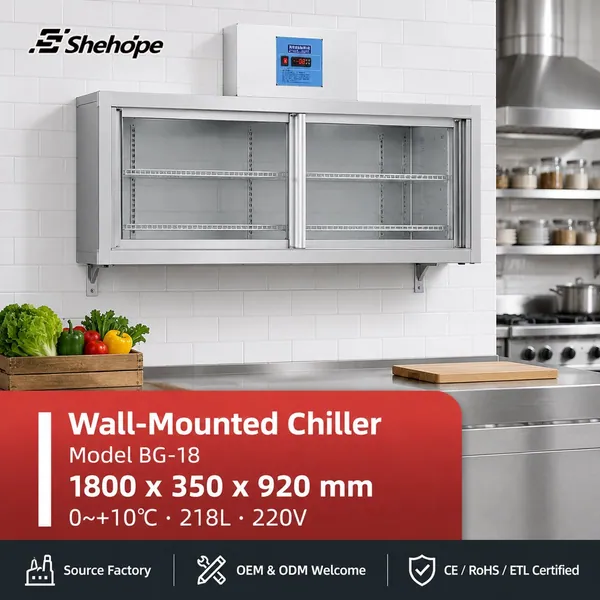
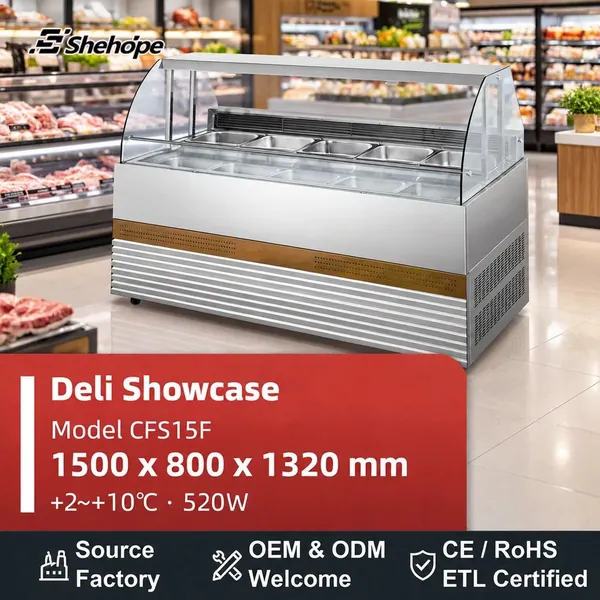
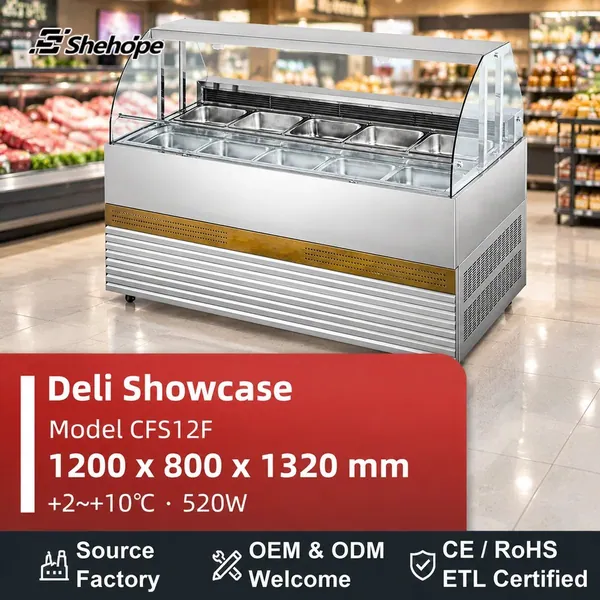
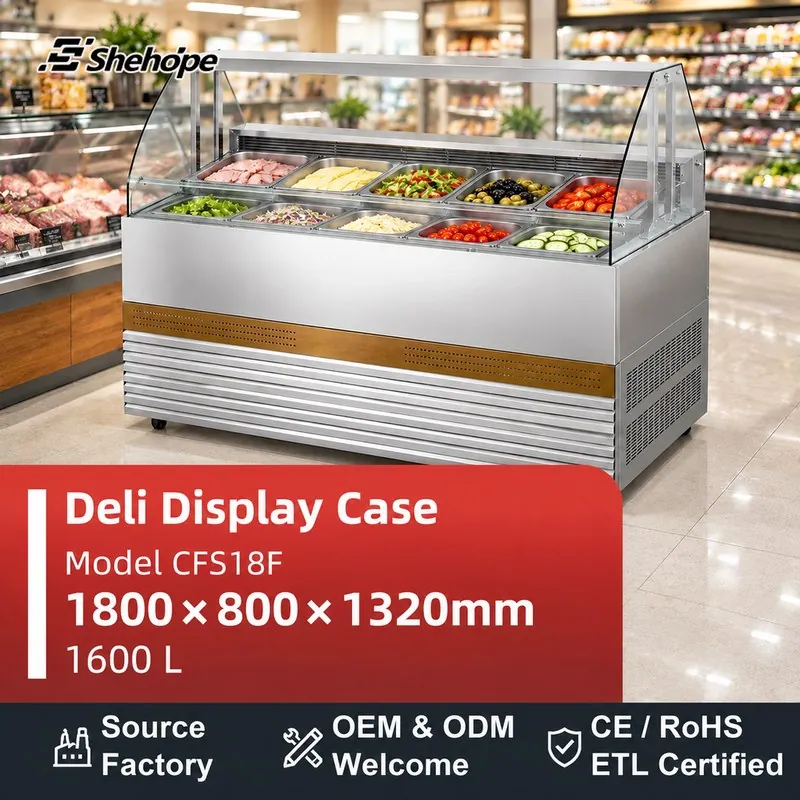
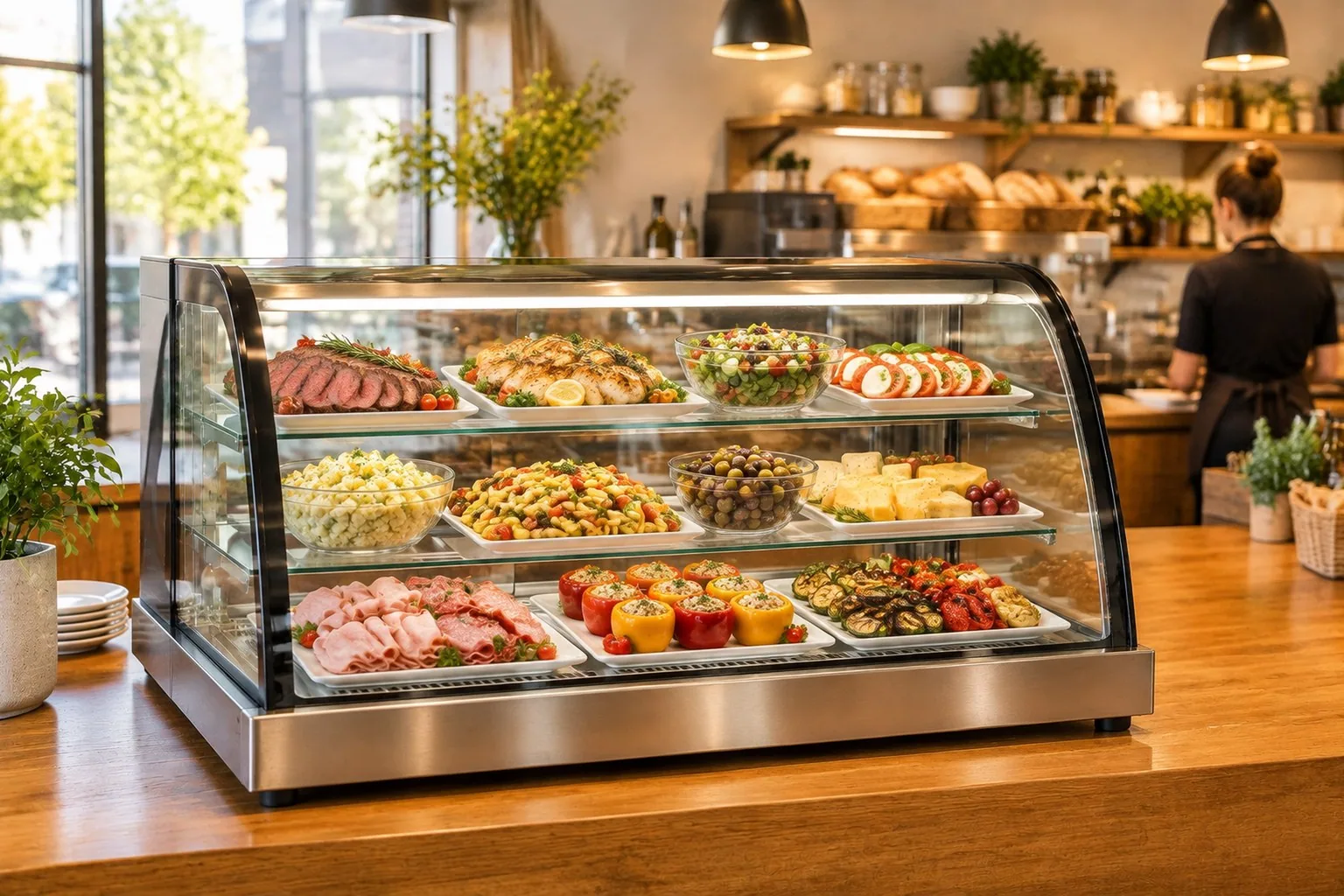
This family covers the two ways a shop displays prepared food: a free-standing deli showcase on the sales floor, and a wall-mounted cabinet fixed against a back wall. Both hold product at chilled temperature behind glass, and both are chosen from the counter length they have to fill and from how staff load them. CFS models are free-standing deli display cabinets, BG models are wall-mounted display cabinets.
Typical use
- Deli and delicatessen counters showing cooked meats, cheeses and prepared salads.
- Hot-food and takeaway shops that display trays of cooked dishes before service.
- Bakeries and pastry counters that hold savoury lines alongside ambient displays.
- Supermarket and convenience store service counters with rear or side staff access.
- Small shops that need a chilled display against a wall instead of a free-standing unit.
- Cafes and canteens displaying pre-packed sandwiches, desserts and drinks.
Confirm before ordering
- Free-standing or wall-mounted cabinet
- Width 1.2 m, 1.5 m or 1.8 m and overall height
- Door arrangement and opening direction
- Front glass type (flat, curved or angled) and glazing
- Shelf count, adjustment and interior lighting
- Temperature range and duty (holding or back-up stock)
- Voltage, frequency and plug configuration
- Refrigerant and market compliance documents
Configurations we build in this family
Drawn from our own product catalogue. Final specification is confirmed per model and destination market.
| Widths in this family | 1.2 m, 1.5 m, 1.8 m |
|---|---|
| Capacity classes | 1600 L |
| Door / drawer formats | double door |
| Catalogue items in this family | 6 (configuration confirmed per project) |
Catalogue items in this family
6 catalogue items photographed for this family.

How this family is configured
Free-standing showcase or wall-mounted cabinet
Decide this first, because it fixes where staff stand and how product is loaded. A free-standing deli showcase is loaded from the rear or the side and is usually placed on the sales floor, so it needs clear circulation space behind it and a power drop in the floor or a trailing supply that does not cross a walkway. A wall-mounted cabinet is fixed to the wall and its access follows the door arrangement on the front or the end. Confirm the wall construction and whether it can take the loaded weight as a cantilever, since a cabinet fixed to a lightweight partition needs a different fixing than one on a solid wall. State the counter length to be filled, the working height of the staff, and whether the cabinet must align with neighbouring units so the run reads as one line.
Glass, lighting and product visibility
Display performance is decided by the glass, the shelf set and the light. Confirm whether the front is flat, curved or angled, and whether the glass is single or double glazed: double glazing reduces condensation on humid shop floors but changes the visual depth of the case. Ask how the shelves are positioned and whether they are adjustable, because shelf pitch decides how many rows of product are visible from the customer side. Interior lighting should be specified for the product being shown, and the light source should not sit where it warms the top row. For chilled display, ask how condensate on the glass is managed in a humid room. The finish of the interior, the shelf material and the edge detail are all visible to the customer, so they belong in the specification rather than being left to the standard build.
Temperature holding and access pattern
State what the cabinet holds and how long it stays there before it is sold. A display case holding pre-chilled product that is served within the day has a different duty from one that stores back-up stock. Confirm the achievable range against the selected model, and ask how quickly the cabinet recovers after the doors are opened during a busy service. The number of doors and the direction they open decide how staff reach product without standing in the customer's way. Ask whether the cabinet is designed for a service counter with staff behind it, or for self-service where the customer opens the door. Ambient conditions matter as much as the set point: a cabinet next to a hot-food unit or under a sunny shop window works harder than one in a shaded aisle.
Installation, cleaning and export details
Confirm the power supply available at the position, the plug type for the destination market, and whether a dedicated circuit is required. Leave clearance for air to enter and leave the condensing unit and confirm the direction it breathes, because a cabinet pushed flush against a wall or a neighbouring unit can starve its own condenser. Plan the condensate route and confirm whether a drain is available or an evaporation tray is used. Ask which panels and shelves come out for cleaning without tools, and which cleaning chemicals the glass, gasket and interior finish tolerate. For export orders, confirm packing type, whether the unit ships assembled or knocked down, and the document set the destination market requires. Warranty terms and spare parts coverage are confirmed per project.
Questions we ask before quoting
- Does the display stand on the sales floor or fix to a wall?
- What counter length must the cabinet fill, and what height suits the staff?
- How is product loaded, from the rear, the side or the front?
- How many shelf rows must be visible to the customer?
- What does the cabinet hold, and how long does product stay in it?
- What ambient temperature and humidity does the shop reach, and is the position sunny?
- Which voltage, frequency and plug type does the destination market use?
- Who cleans the glass and interior, and with which chemicals?
Frequently asked questions
What is the difference between a deli showcase and a wall-mounted cabinet?
A deli showcase is free-standing on the sales floor, so it needs circulation space behind or beside it for staff access. A wall-mounted cabinet is fixed against a wall and trades that circulation space for a shallower footprint. The choice follows the layout of the shop and the way product is loaded and served, not cabinet volume alone.
Can one cabinet be used for both chilled and frozen display?
No. Chilled display and frozen display are built on different component sets and defrost strategies, and the glass and lighting are specified differently. The achievable range and the duty are confirmed against the selected model and the product you intend to show.
Which temperature range can I order?
The range is confirmed per model rather than published as one number for the family, because the achievable set point depends on model, ambient conditions, loading and how often the doors are opened. Tell us the product, the holding time and the shop conditions, and the required range is confirmed in the quotation.
Can the width, finish or logo be customized?
Custom work can cover cabinet width and height, interior shelving layout, glass and finish options, and logo marking. Electrical configuration for the destination market can also be handled in an OEM project. Each request is reviewed against the model platform before it is confirmed.
What should be included in an inquiry?
Shop layout and counter length, free-standing or wall-mounted, loading side, shelf rows needed, product and holding time, ambient conditions, voltage and plug type, quantity, and the destination market. A plan or photo of the counter reduces the number of clarification rounds.
Send the application and we confirm the model
Share the food or product being stored, target temperature, ambient conditions, available space, voltage, quantity and destination market.