
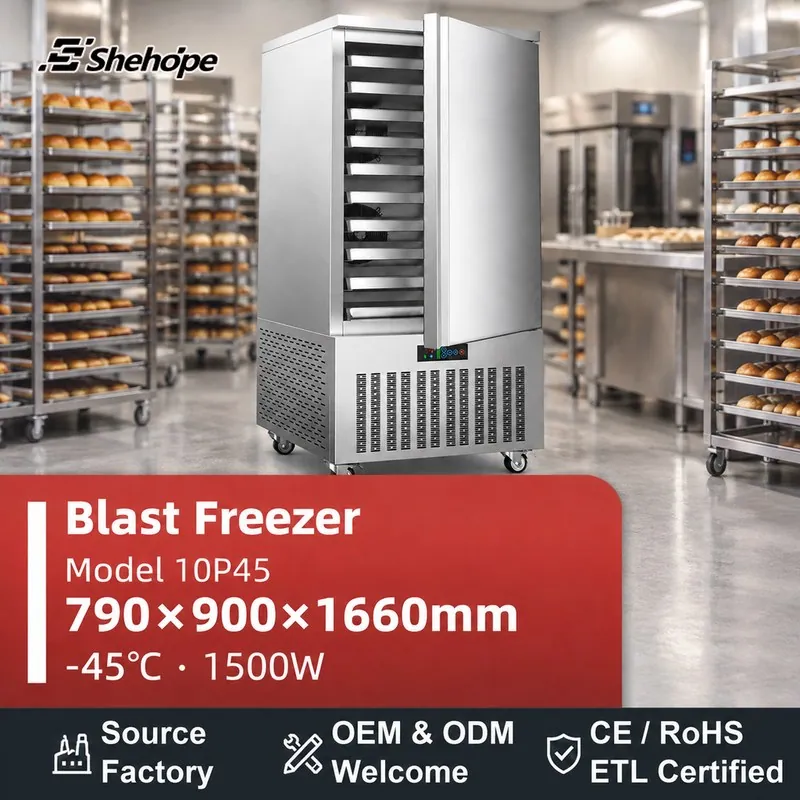
Blast freezers for bakery, seafood and prepared-food production
A blast freezer pulls product through the freezing range quickly so texture, yield and shelf life survive the process. This family covers cabinet and walk-in style blast freezers, single and double door formats, and trolley or tray loading for bakery and prepared-food production. Batch size, product thickness and the time available between production and storage decide the specification.
Typical use
- Par-baked and unbaked dough, laminated pastry and viennoiserie before transfer to frozen storage.
- Cooked prepared meals and portioned dishes in central kitchens and food factories.
- Seafood, dumpling and dim sum production lines that freeze in batches.
- Ice cream, dessert bases and fillings that must set quickly after production.
- Bakery and pastry plants that freeze part of a shift to smooth peaks between production and delivery.
- Food processing operations that need a hardening step before product goes into a cold room.
Confirm before ordering
- Batch size, tray or rack format
- Product thickness and required core temperature
- Target cycle time and shift pattern
- Cabinet or walk-in chamber configuration
- Airflow, defrost method and condensate handling
- Control, probe and alarm functions
- Voltage, frequency and dedicated circuit requirement
- Refrigerant, ambient conditions and market compliance documents
Configurations we build in this family
Drawn from our own product catalogue. Final specification is confirmed per model and destination market.
| Door / drawer formats | single door, double door |
|---|---|
| Temperature classes referenced | -45 °C, -80 °C, -40 °C |
| Catalogue items in this family | 18 (configuration confirmed per project) |
Model range at a glance
Every model in this family, sorted by size. Prices are FOB reference prices from our current listings.
| Model | Temperature range | Doors | Voltage | Reference price |
|---|---|---|---|---|
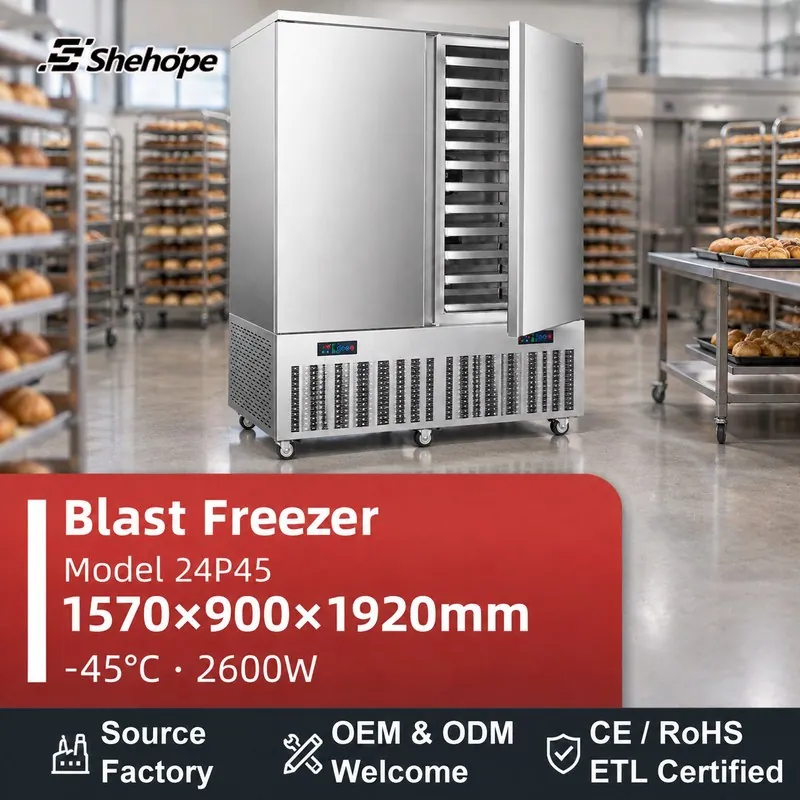
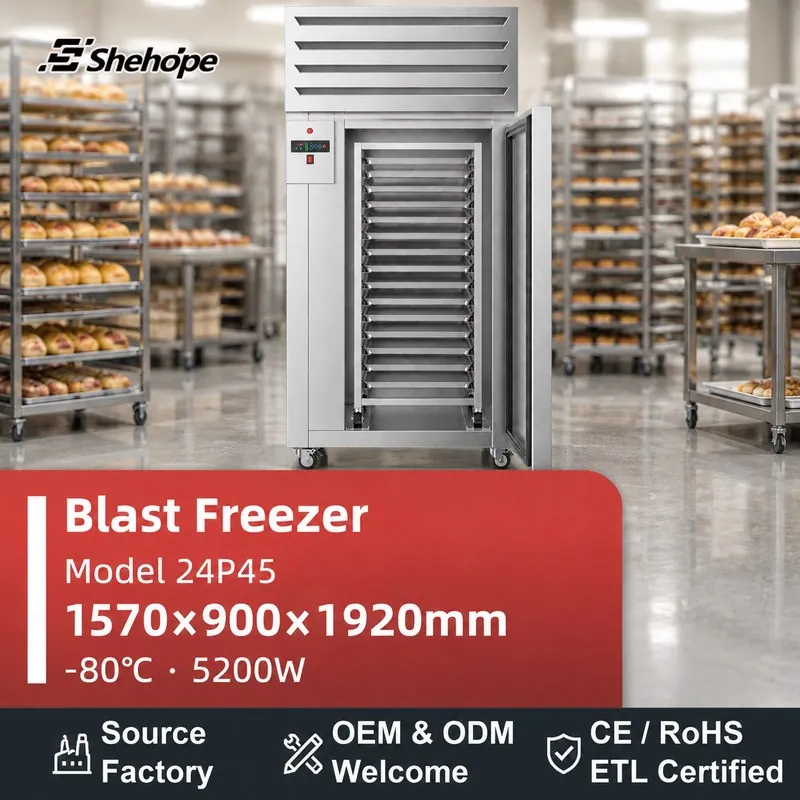
| 24P45 | -80°C | 15P80 | 380-480 V (Three-Phase) | from US$3,795 |
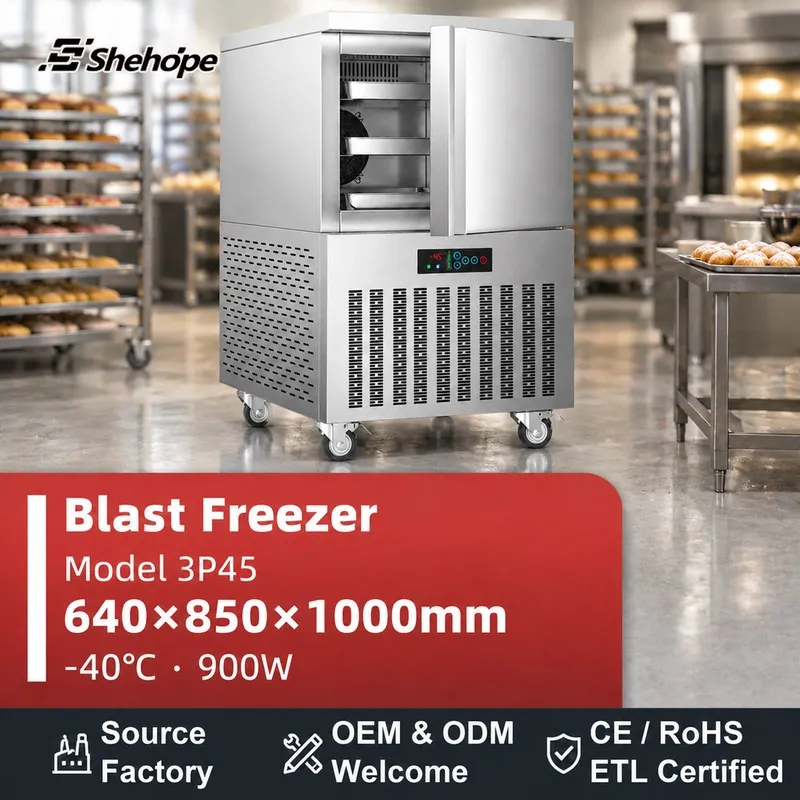
| 3P45 | -40 | Single Door | 220-240V (Single-Phase) | from US$690 |
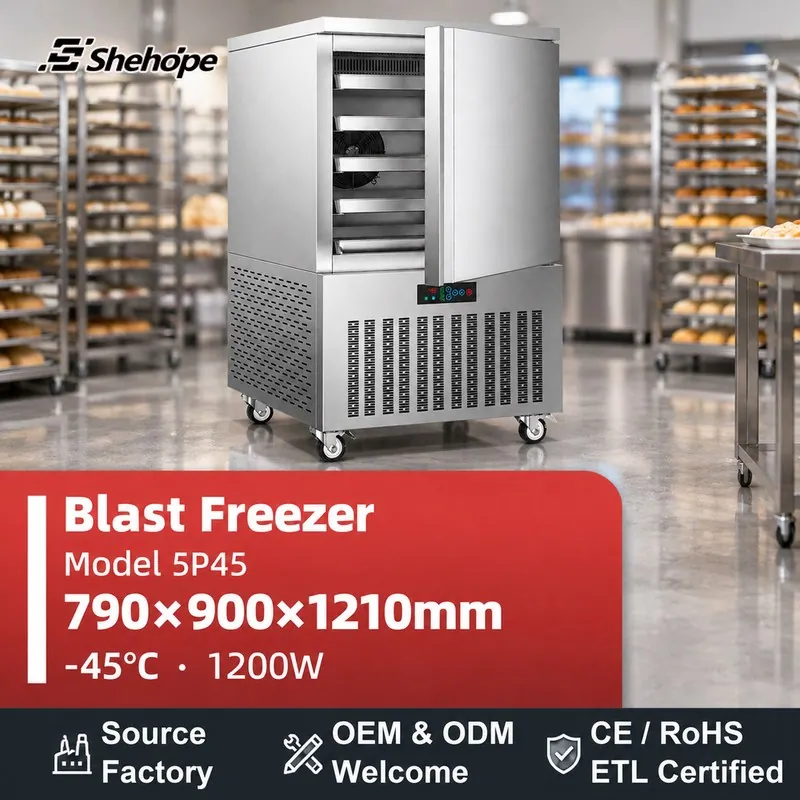
| 5P45 | -45 | Single Door | 220-240V (Single-Phase) | from US$1,035 |
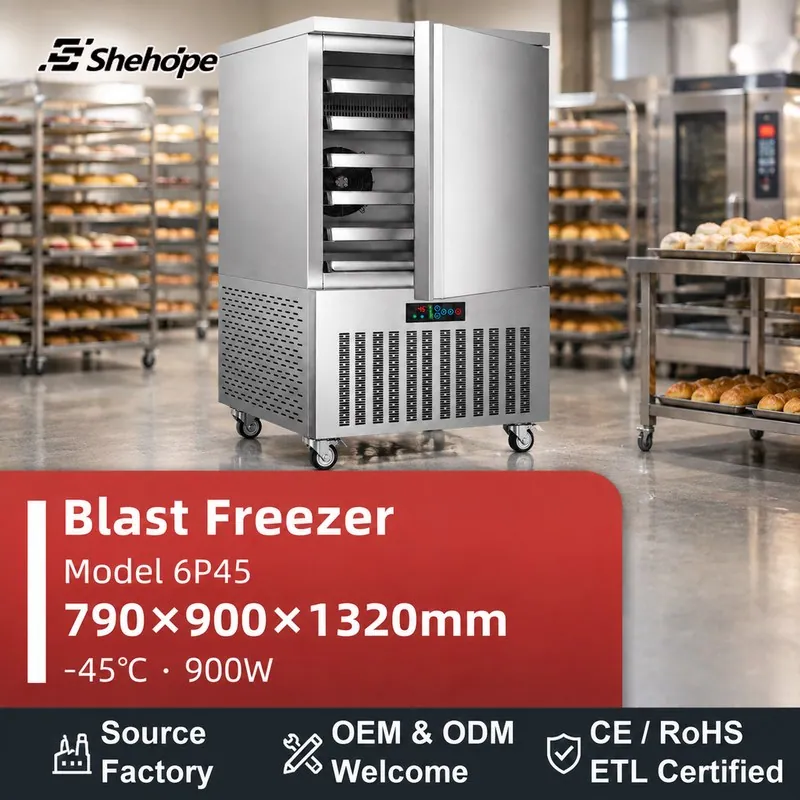
| 6P45 | -45 | Single Door | 220-240V (Single-Phase) | from US$1,121.25 |
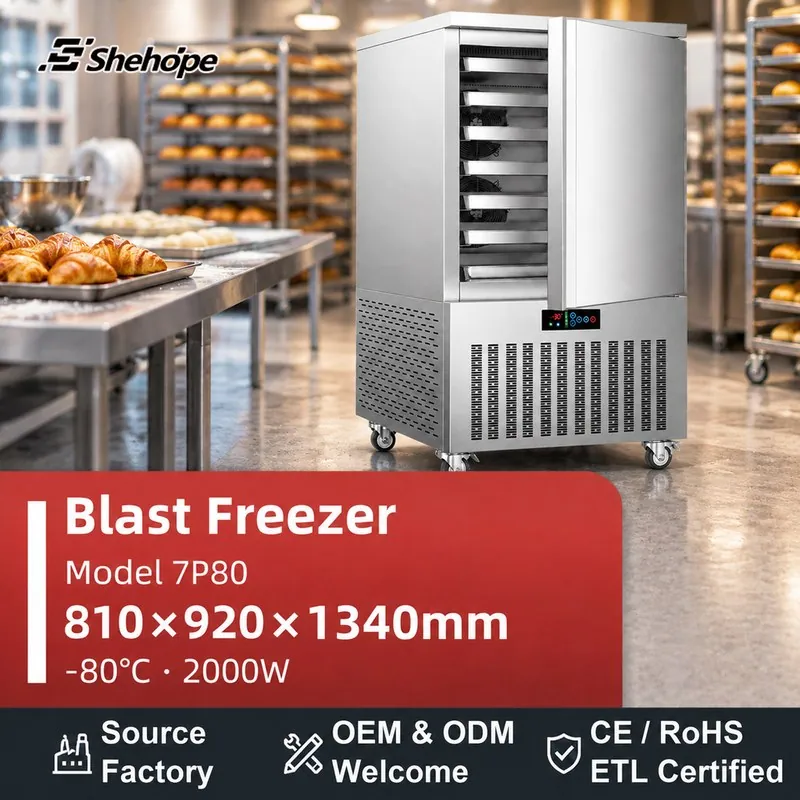
| 7P80 | -80°C | Single Door | 220-240V (Single-Phase) | from US$2,415 |
| 10P45 | -45°C | Single Door | 220-240V (Single-Phase) | from US$1,852.50 |
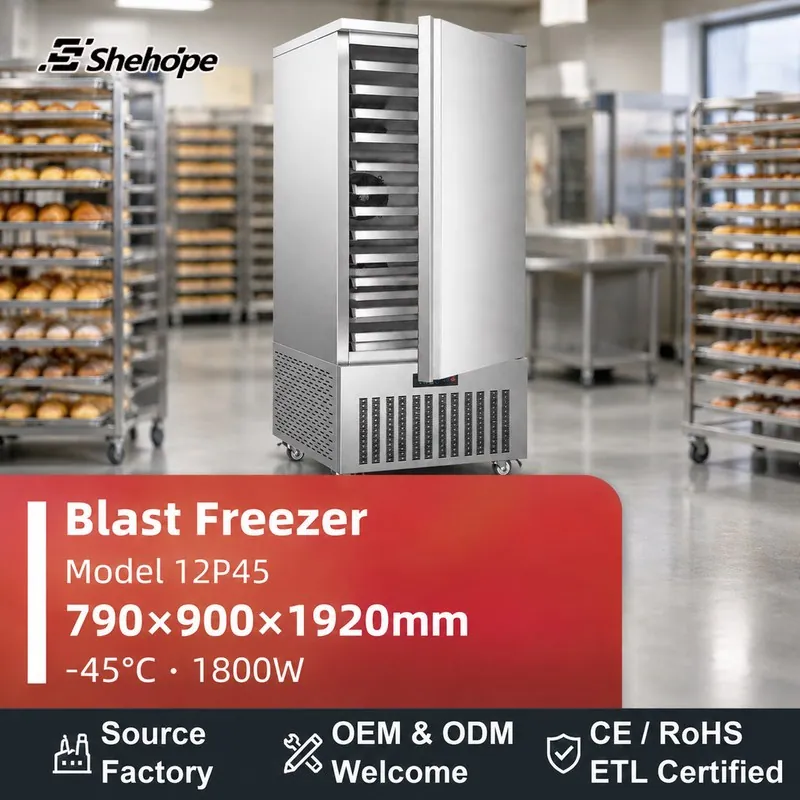
| 12P45 | -45°C | Single Door | 220-240V (Single-Phase) | from US$1,852.50 |
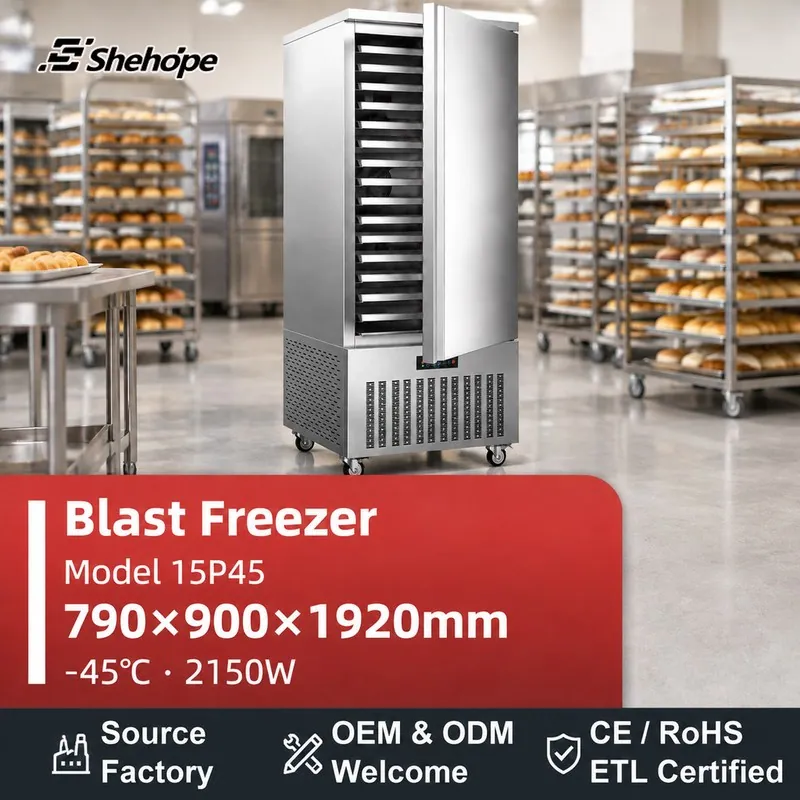
| 15P45 | -45°C | Single Door | 220-240V (Single-Phase) | from US$1,725 |
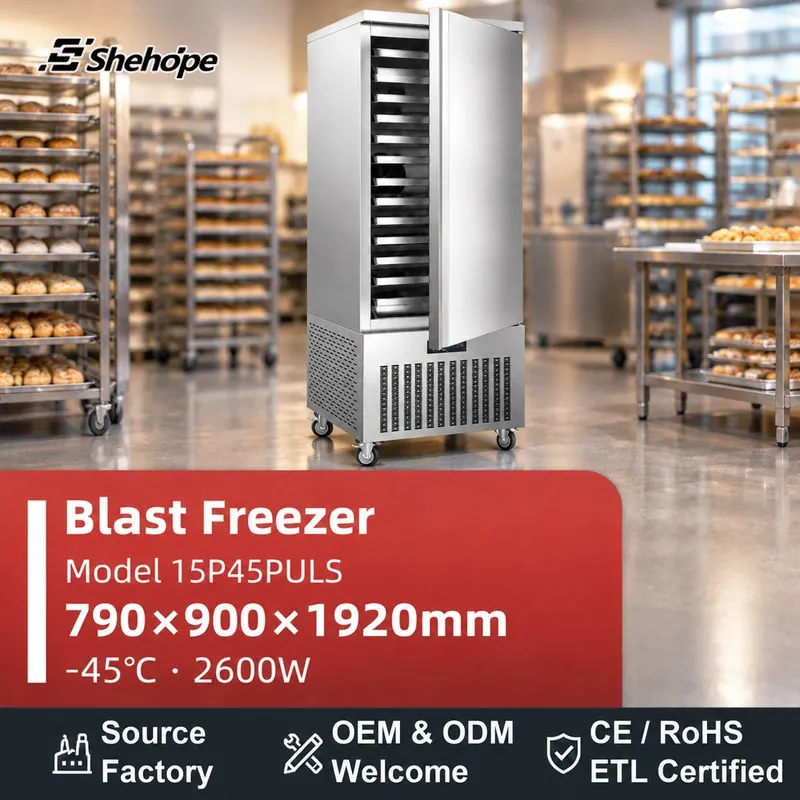
| 15P45PULS | -45°C | Single Door | 220-240V (Single-Phase) | from US$1,897.50 |
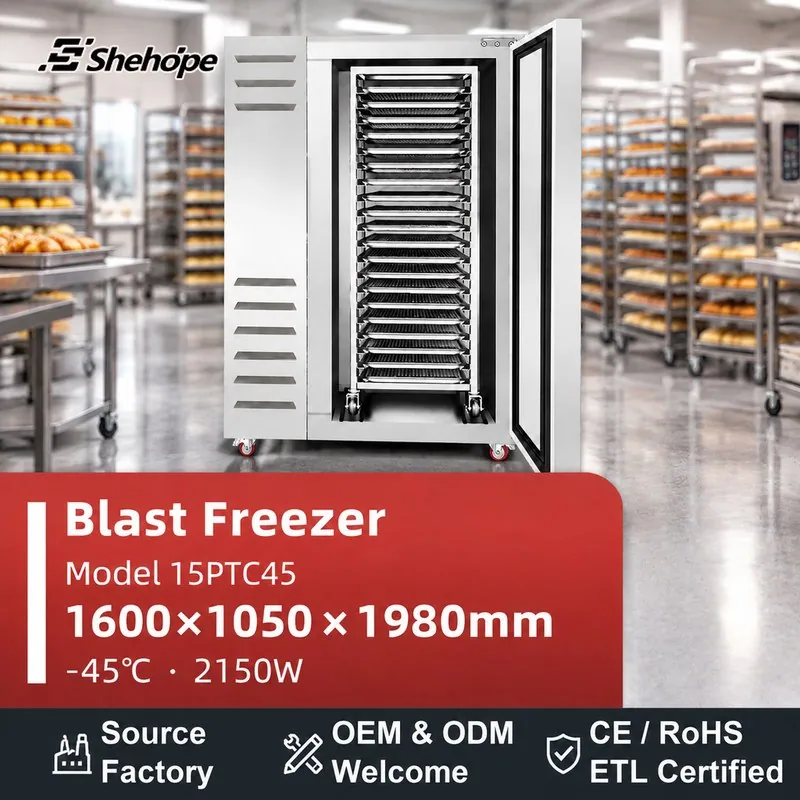
| 15PTC45 | -45°C | Double Doors | 220-240V (Single-Phase) | from US$2,415 |
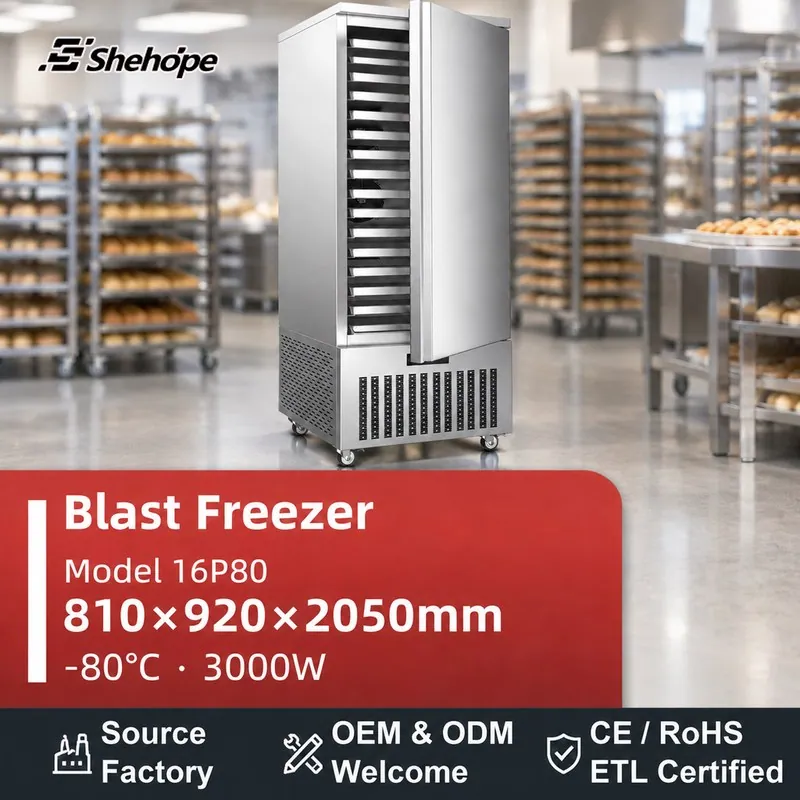
| 16P80 | -80°C | Single Door | 220-240V (Single-Phase) | from US$3,510 |
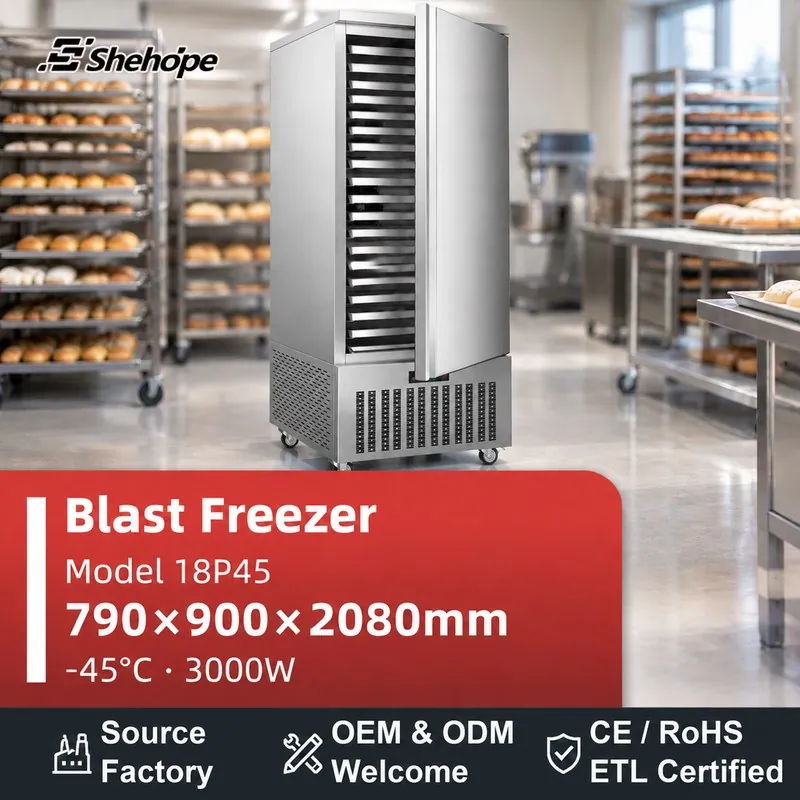
| 18P45 | -45°C | Single Door | 220-240V (Single-Phase) | from US$2,242.50 |
Plus 6 more models in this family — ask us for the full list.
The highlighted row is this page. Confirm the configuration, voltage and documents for your market in the quotation.
Catalogue items in this family
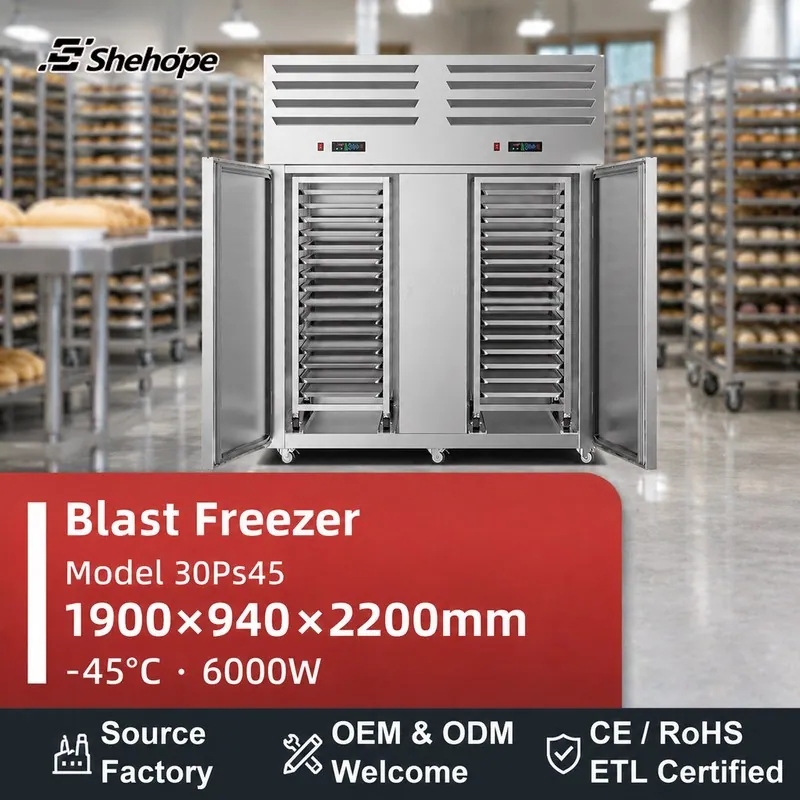
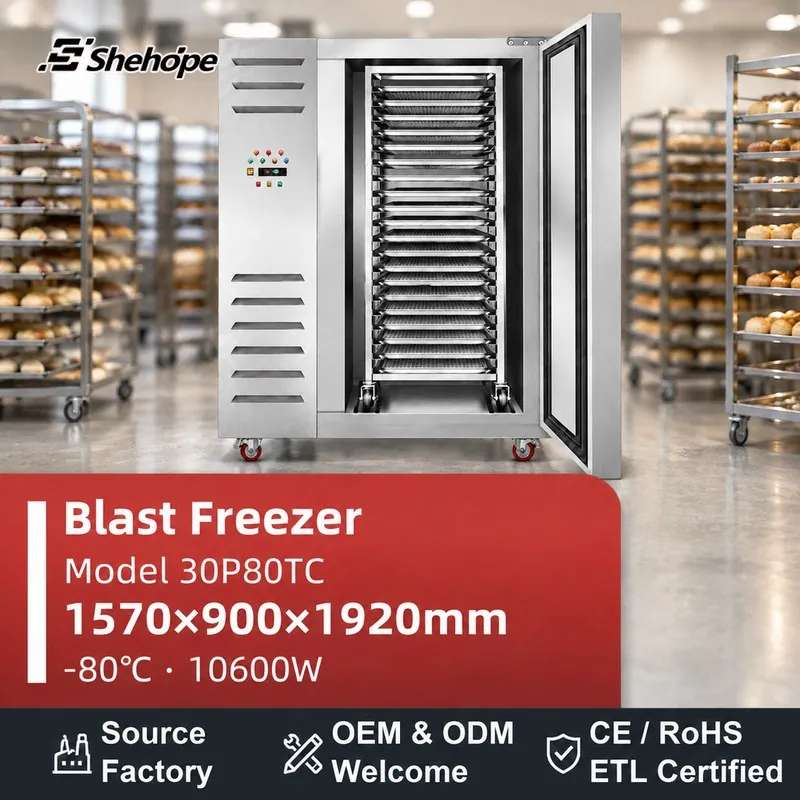
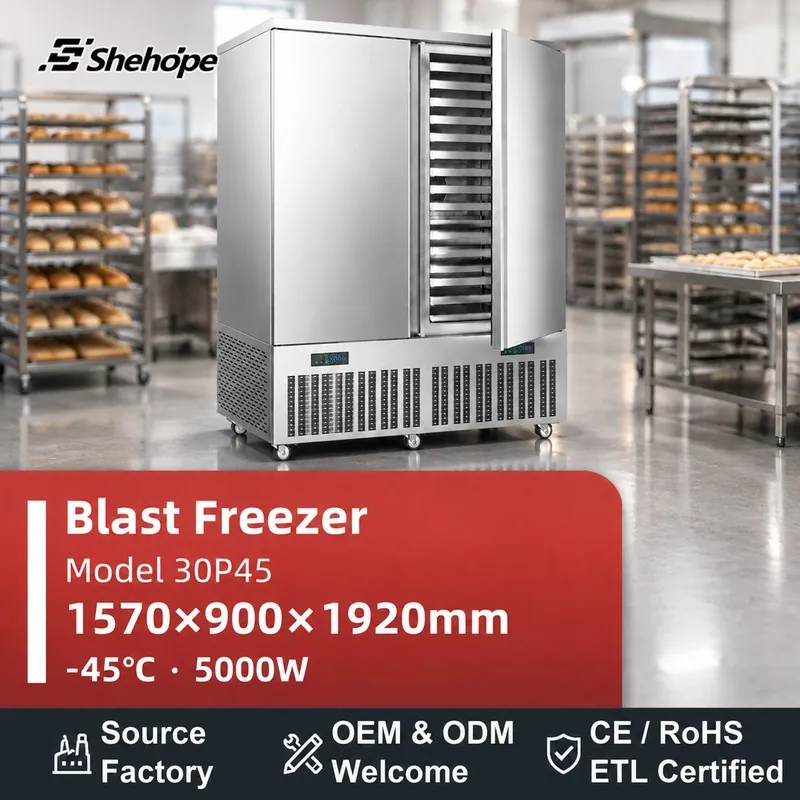
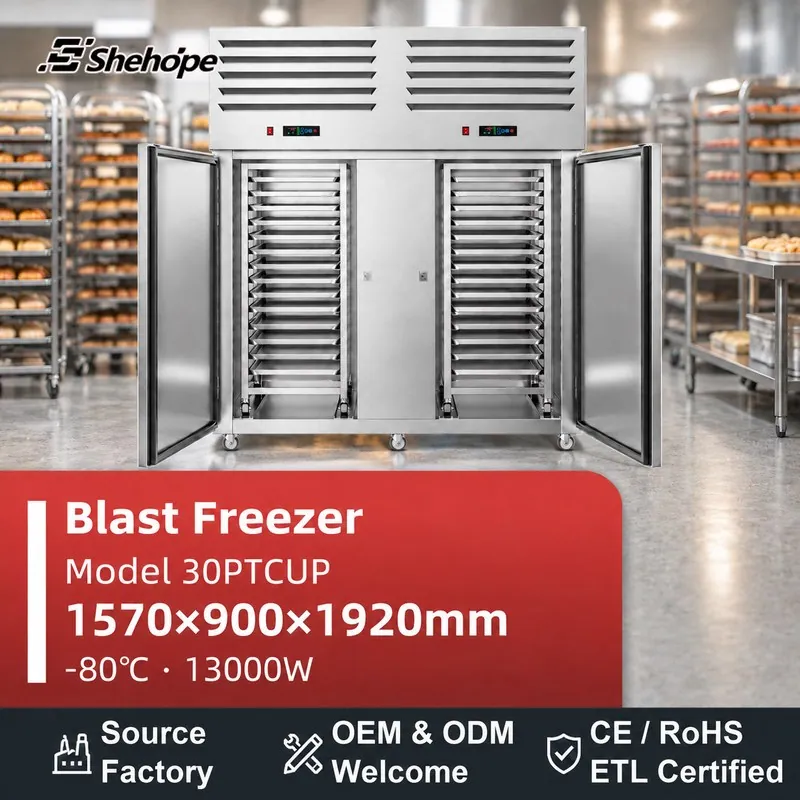
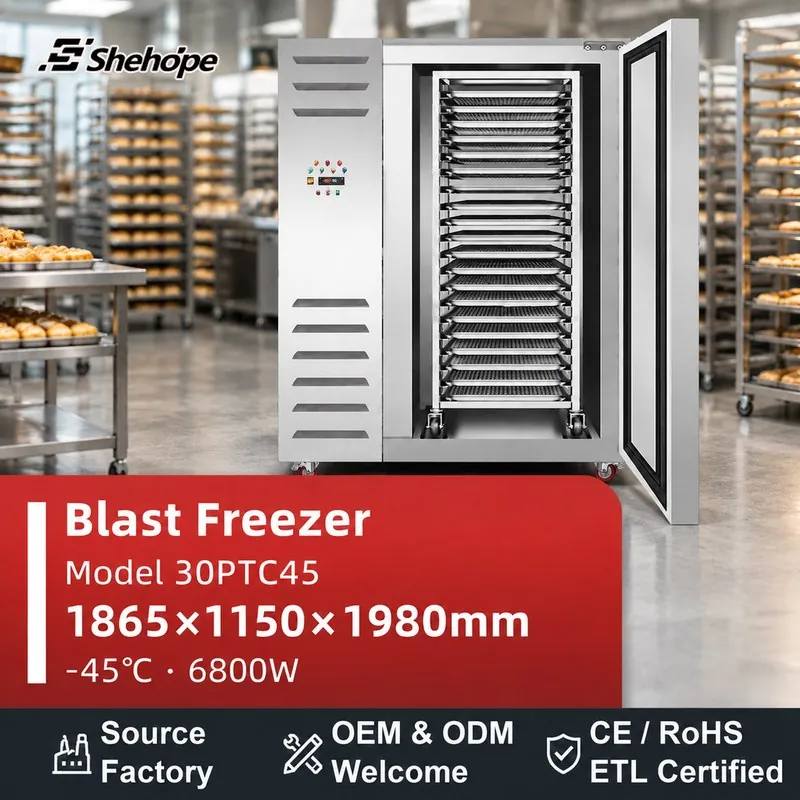
18 catalogue items photographed for this family.
How this family is configured
Batch size, product thickness and cycle planning
Blast freezing is planned backwards from the batch. State how much product goes in per cycle, how it is arranged, and how thick the thickest piece is, because thickness controls how long the core takes to reach the target. Then state the cycle time you need between taking product off the line and moving it into storage: a production shift that finishes at a fixed hour sets a hard constraint. Confirm the target condition, usually a core temperature, and whether it is checked with a probe and logged. Loading pattern matters as much as tonnage; product stacked against the evaporator or piled over the air return will slow the whole batch. Ask how the batch is loaded and unloaded, whether on trays, racks or trolleys, and how long the door stands open during transfer. Cycle time, batch weight and achievable core temperature are confirmed per project from your data.
Cabinet or walk-in configuration
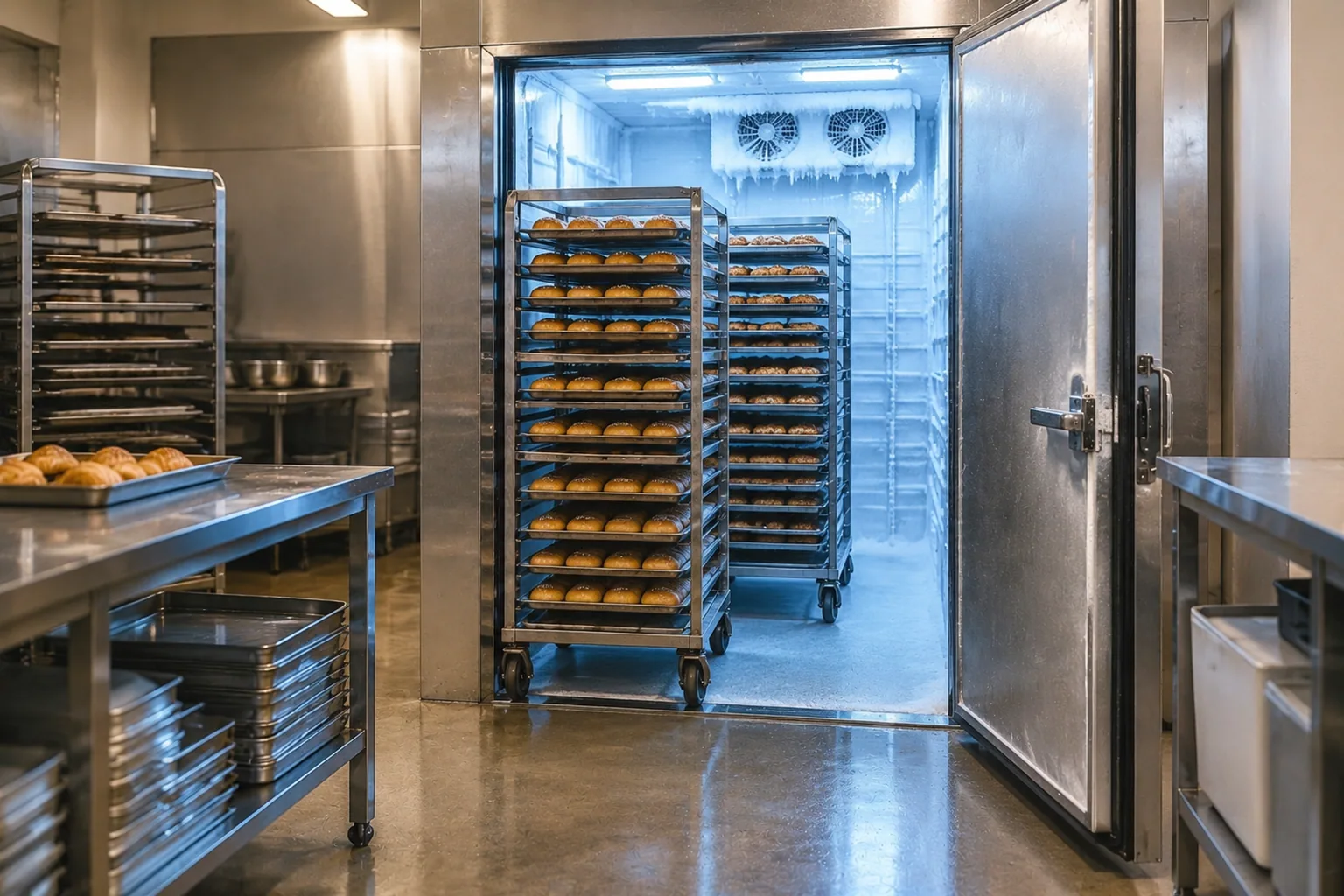
Blast freezers in this family are built both as insulated cabinets with a door and as walk-in chambers, and the choice follows the loading method. A cabinet suits tray batches loaded by hand or from a rack, and it fits into an existing production room. A walk-in chamber lets a trolley or rack roll straight in, which removes handling steps and protects product during transfer, but it needs floor space, headroom and a floor that carries the loaded trolley. Confirm the door opening width, threshold detail and whether a ramp is needed. For freezer duty, floor insulation and a vapor barrier are part of the discussion, because floor ice is difficult to correct later. Check ceiling height against the rack you intend to use, and confirm whether the chamber is assembled on site from panels or delivered pre-built. Panel build-up, door type and chamber boundaries are confirmed per project.
Airflow, loading pattern and frost control
Fast freezing depends on air reaching every product surface. Ask how air is distributed through the chamber, where the evaporator sits, and what clearance the manufacturer expects between product and the air path. Then design the loading routine around it: leave gaps between trays, do not stack above the load line, and never park warm product in front of the return. Frequent door openings during a cycle add humidity, which turns into frost on the coil and slows the next batch. Confirm the defrost method, how often it runs, and whether defrost pauses the cycle or runs between batches. Melt water needs a drain path that does not freeze, which is why cabinet and chamber floors are specified with the defrost arrangement in mind. If operators will load at the end of a shift, ask whether the controller supports a start delay or program selection, and whether the cycle can be monitored from outside the room.
Controls, storage handover and site services
A blast freezer is only useful if product moves into holding storage at the right moment. Confirm how the controller signals the end of a cycle, whether it uses a core probe or a time-based program, and whether alarms are visible from the production floor. Plan the handover route to the storage freezer or cold room so product does not wait in a warm corridor. Ask whether the condensing unit is integral or remote, because remote units move noise and heat out of the production room but add pipe runs and site work. State the ambient temperature of the production area, the electrical supply available, and whether a dedicated circuit is required. If the blast freezer runs beside other heat sources, say so. Refrigerant selection, electrical configuration and the document set for the destination market are confirmed per model and per project, and warranty terms are confirmed per project.
Questions we ask before quoting
- How much product per batch, in what trays or racks, and how thick is the thickest piece?
- What core condition must be reached, and how is it verified and logged?
- How much time is available between production and transfer into storage?
- Do you load by hand, from a rack, or by rolling a trolley into a walk-in chamber?
- What is the door opening width and headroom available at the installation point?
- What ambient temperature does the production room reach?
- Is the condensing unit integral, or does it need to be remote?
- Which voltage, frequency, refrigerant rules and compliance documents apply in the destination market?
Frequently asked questions
How do I size a blast freezer?
From the batch, not from the room. Batch weight, product thickness, the arrangement on trays, the target core condition and the time window between production and storage are the inputs. Send those and the achievable cycle is confirmed against a specific model rather than assumed from a family description.
Can a standard freezer be used for blast freezing?
No. A storage freezer holds product at temperature and is sized for holding load, while a blast freezer is built to remove heat quickly from a defined batch. Using holding equipment for production freezing usually lengthens the cycle and affects product quality.
What temperature can the blast freezer reach?
Achievable chamber and core temperatures depend on the model, the batch, the loading pattern and the ambient room, so they are confirmed against the selected model and your production data. We do not publish one figure for the family.
How is the order scheduled?
Typical production planning is 20-30 days and is confirmed at order review against model, quantity, season and any customization. Site preparation, panel assembly and commissioning arrangements for walk-in chambers are also confirmed per project.
Send the application and we confirm the model
Share the food or product being stored, target temperature, ambient conditions, available space, voltage, quantity and destination market.