

A pizza prep counter carries a topping rail at working height, a worktop for stretching and dressing, and a cabinet below for dough and back-up stock. This guide covers the three decisions that follow: the rail, the top and the duty.
Stone or stainless: choosing the worktop
The worktop decides how the station feels for the whole shift, and the two options behave differently.
A stainless worktop is the default: durable, easy to clean and unaffected by a wet cloth. It is also a poor place to stretch dough for long, because dough tends to stick and the surface takes on the cold of the cabinet below. Bakers work around it with flour and a scraper, which is fine at low volume and tiring at volume.
A stone worktop, typically granite or a similar slab, holds a stable surface temperature and releases dough cleanly with light flouring. It also adds weight and needs care with acidic toppings and cleaning chemicals, so confirm the material per model.
- Consider the dough process first: hand-stretched, pressed or machine-sheeted.
- Check the working height against the people who will use the station.
- Confirm whether the worktop removes for cleaning.
The pan recess and the topping rail
The rail is a layout decision before it is a refrigeration decision.
The topping rail holds ingredient pans in a recess cut into the counter top. The recess is cut for GN pan footprints, so the pan sizes define the layout: six or eight slots across, with the pan depth deciding how much ingredient is on display. Specify the grid and the pan depth together with the recess, because a recess cut for one pan family will not seat another cleanly.
Rail width follows the menu. A pizzeria running a short topping list needs fewer slots than one offering a build-your-own menu, and every slot is a pan to fill, rotate and clean. Decide the ingredient list first, then count the slots it needs.
Rail depth and the working position of the pans matter as much as the count. Pans set too deep put the ingredient below the rim and out of sight; pans set too shallow expose product above the cold air.
How the rail behaves with the lid open
An open rail is a refrigerated display with a crowd of people standing next to it.

The topping rail is cooled either by cold air circulated from the cabinet's refrigeration system or by its own evaporator. Either way the rail sits open to the kitchen through service, so it holds product rather than pulling it down, working against ambient air and heat from the oven line.
That is why the lid matters. A rail with a lid or roll cover recovers its temperature between orders faster than an open one, because the cold air stays where it was generated. On a busy pass the lid is open more than it is closed, so the practical questions are how quickly the rail returns to its holding range once the lid is shut, and how the product surface behaves while it is open.
Keep the pans shallow and top them up rather than filling them to the brim, and never let product sit above the rim, where the cold air cannot protect it. As performance cannot be judged from a headline figure, ask for the behaviour of the model at a stated ambient with test data.
Cabinet duty below: holding or pull-down
What happens in the cabinet depends on what you put in it, and when.
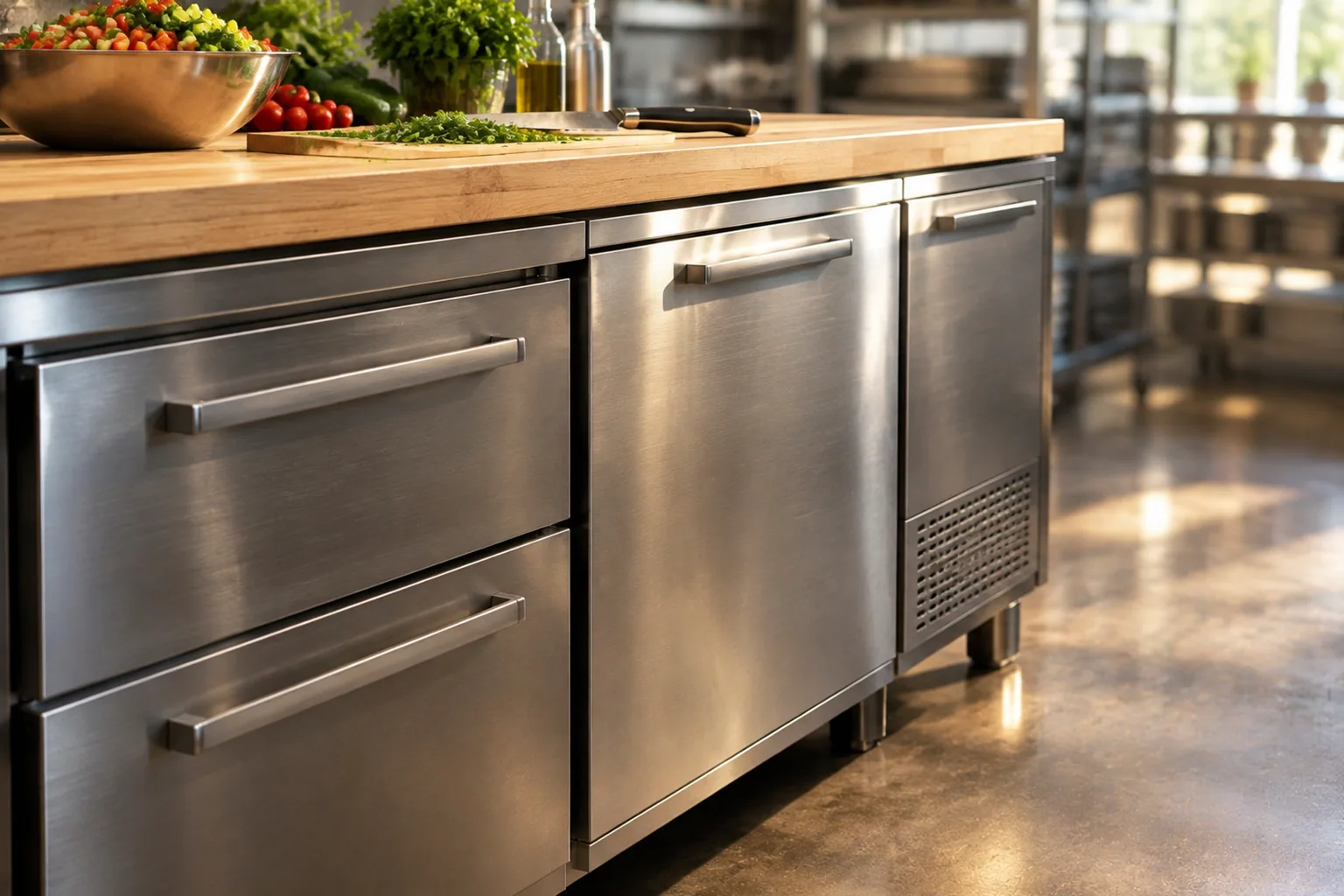
The cabinet under a pizza prep counter is usually asked to do two different jobs. The first is holding: keeping dough, cheese, sauce and prepared components at a stable temperature through the shift. The second is pull-down: bringing a batch of freshly prepared dough or warm components down before service. A cabinet specified for holding will not necessarily pull a warm load down quickly.
Decide which job the cabinet actually has before choosing it. If the kitchen proves dough and chills it in the same cabinet, or holds large volumes of cheese, the duty matters more than the rail. Where the cabinet is not the right place for a warm load, the answer is a separate blast chiller or dough retarder.
Temperature ranges, cabinet volume and the pan or tray configuration are confirmed per model.
Flour, cleaning and standing beside the oven line
Flour is the specific enemy of a pizza prep counter, and the oven line is its neighbour.
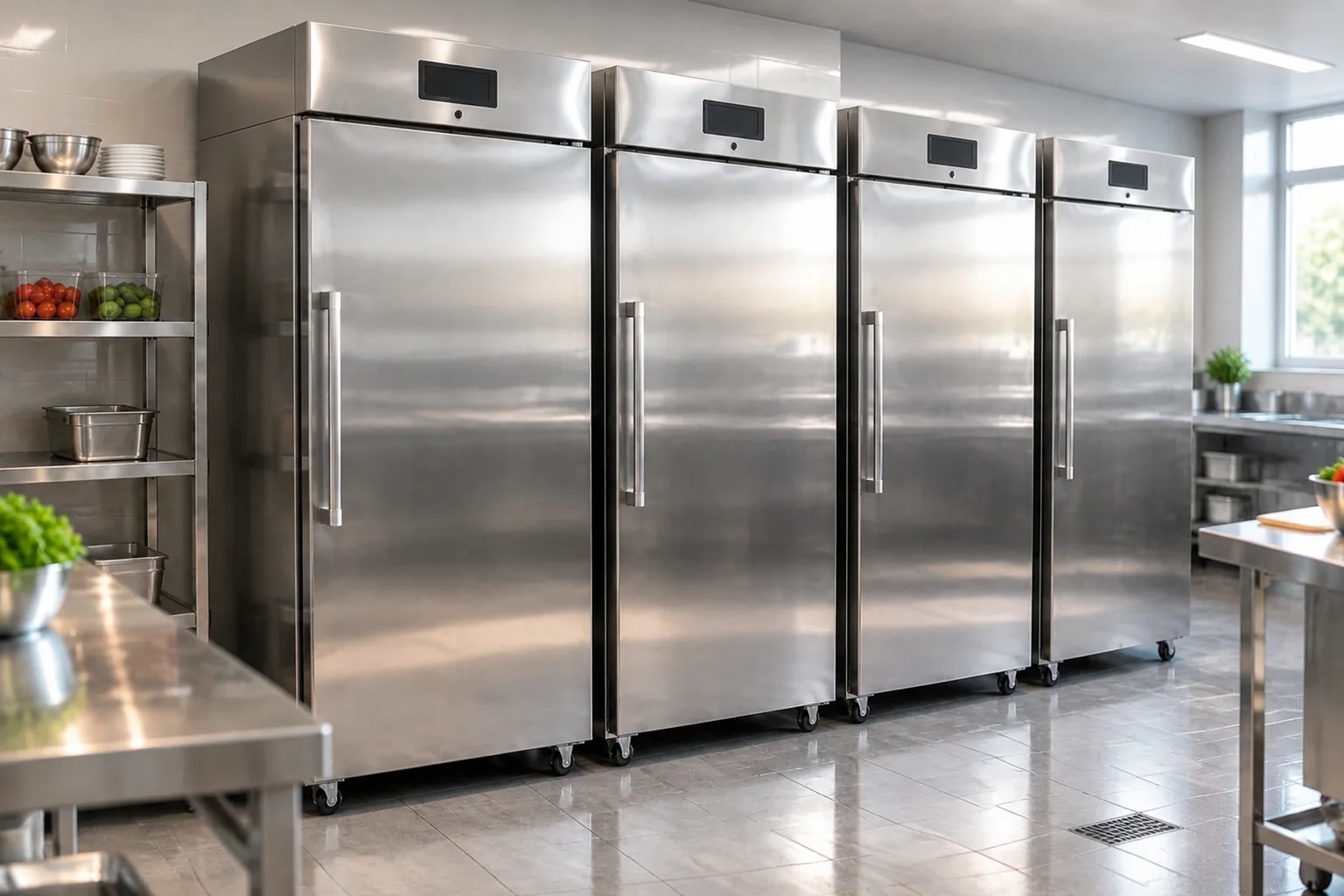
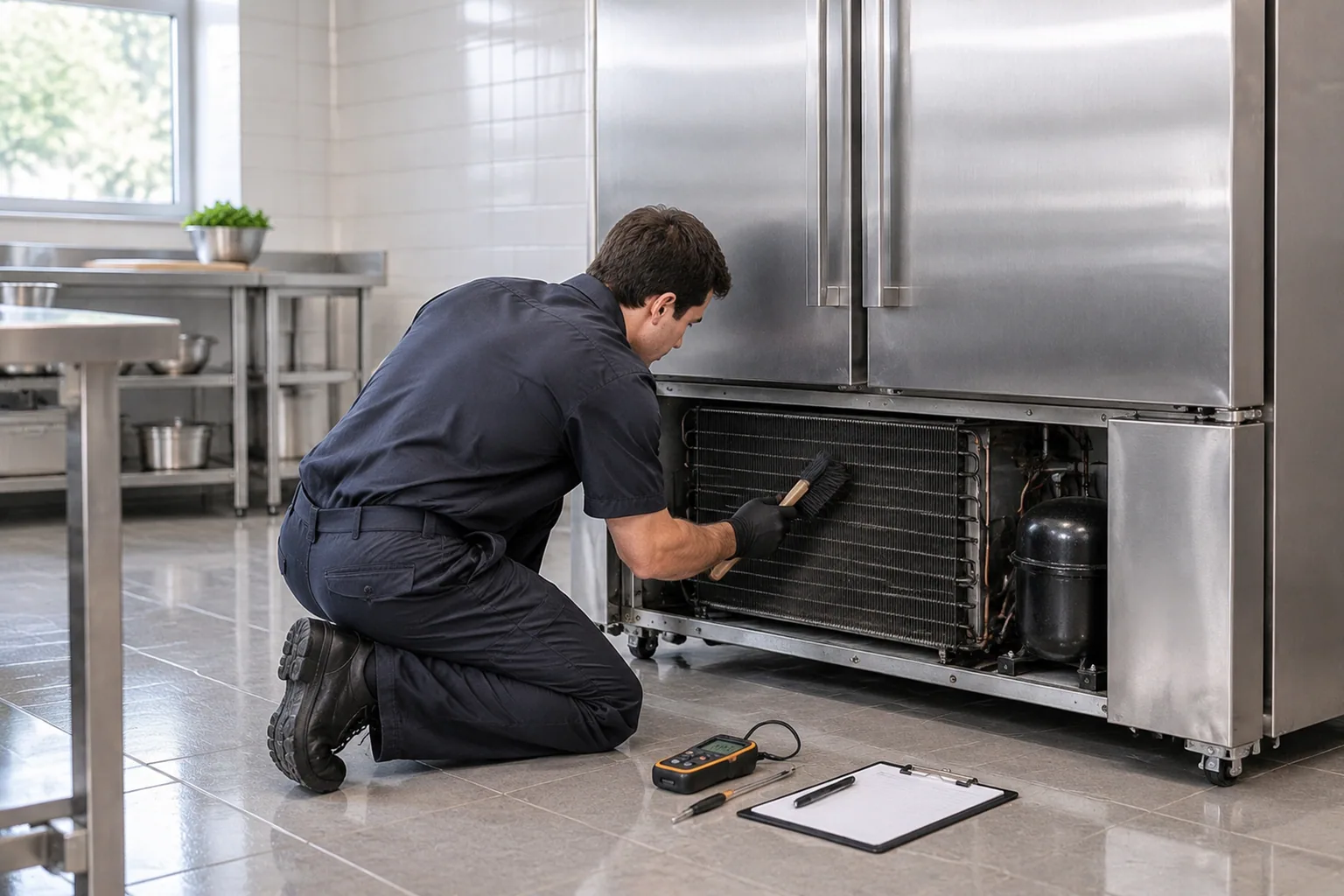
Flour is fine, airborne and sticky once it meets moisture. It settles on the rail gasket, in the pan recess and on the condenser coil, where it mixes with grease to form a mat that stops the coil rejecting heat. That is the most common reason a pizza prep counter stops holding temperature, and it is a cleaning problem rather than a refrigeration fault. Brush down the worktop and rail at the end of each shift rather than wiping flour into the recess, clean the drainage points, and put the condenser coil on a defined cleaning interval.
The unit also sits in the hottest working position in the kitchen. Radiant heat from an open oven mouth and the ambient of a working pizzeria land on the cabinet and the rail at once, so the refrigeration system removes that heat as well as the heat from the food it holds.
Keep dough in the cabinet rather than on top of it, in closed containers spaced so air can move between them. If the site runs hot, raise it at the inquiry stage rather than after installation: a wide-climate configuration may be available, and the ambient the model is rated for is confirmed per model.
What to confirm before ordering a pizza prep counter
Use these parameters as the agenda for the inquiry.
| Worktop material | Stone or stainless, with the working height. |
|---|---|
| Pan recess and rail | GN pan footprints the recess accepts, slots and pan depth. |
| Rail cooling and cover | How the rail is cooled, and the lid arrangement. |
| Cabinet duty and range | Holding or pull-down duty, with the range for the model. |
| Usable volume | Internal volume with the shelf and pan layout you will use. |
| Cooling and defrost | Cooling method, defrost type and condensate handling. |
| Ambient rating | The condition the model is rated for, matched to the oven line. |
| Dimensions and clearances | Length, depth and height, plus airflow and service clearances. |
| Materials | Stainless grade for food-contact and non-contact surfaces. |
| Electrical configuration | Voltage, frequency and plug type for the destination market. |
| Accessories | Castors or legs, locks, covers and spare pans. |
| Documents and packing | Datasheet, drawings, packing and applicable compliance documents. |
Ask which parameters can be changed for your project. Custom interior shelving, custom logo marking and market-specific electrical configurations fall within OEM project scope, while the refrigeration platform is usually fixed by model.
Documentation, compliance and the buying decision
Compliance paperwork belongs to a model and a market, not to a catalog.
Request the compliance documentation applicable to the exact model and destination market. Certificates and declarations are confirmed per model and per market and are not uniform across a product family.
SHEHOPE manufactures commercial refrigeration, including pizza and prep counters, in Foshan, Guangdong, China, within a shared manufacturing system with 20 or more years of experience. For buyers importing under their own brand, OEM and ODM projects can cover 3D CAD design and development, custom logo marking by silk screen or laser engraving, custom interior shelving and layout, and market-specific voltage and plug configurations.
One last decision belongs before the order rather than after it: how the station will be monitored during service. The reading that matters is the one taken at the rail and inside the cabinet at defined intervals, recorded with corrective action if it falls outside limits.
Frequently asked questions
Stone or stainless steel for the worktop?
Stainless is durable and easy to clean, but dough sticks to it and the surface takes on the cold of the cabinet below. A stone top holds a stable temperature and releases dough cleanly with light flouring, at the cost of weight and more care with cleaning chemicals.
How many topping rail slots do we need?
Start from the ingredient list the menu uses, then count the slots it needs rather than the maximum the rail can hold. Every slot is a pan to fill, rotate and clean through the shift. Rail width and pan footprints are confirmed per model.
Can the topping rail hold product with the lid open?
The rail holds product that is already cold rather than pulling warm product down, and it works against kitchen ambient while open. Keep pans shallow, keep product below the rim, and close the lid between orders.
Is the cabinet below a holding cabinet or a dough chiller?
It depends on the duty the model is specified for. Holding duty keeps prepared components stable through service; pull-down duty brings a warm batch down before service. State the duty in the inquiry and confirm the range for the model.
How does flour affect the counter?
Airborne flour settles on gaskets, in the pan recess and on the condenser coil, where it combines with grease and blocks heat rejection. Brush down rather than wiping flour into the recess, and clean the coil on a defined interval.