
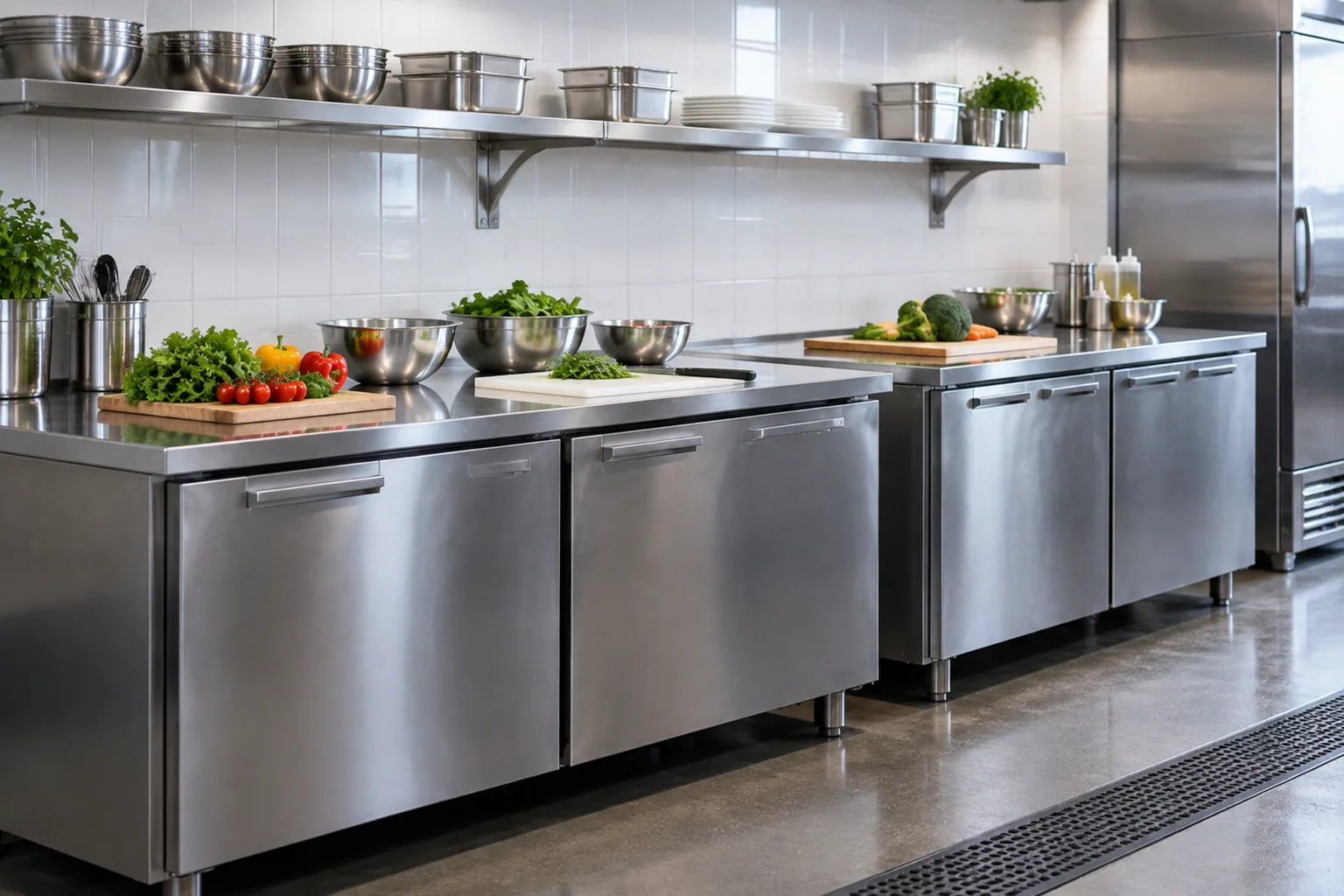
A refrigerated prep table is the equipment a cook touches most often during service. It is a work surface and a refrigerator in one frame, so a specification mistake shows up twice: as an awkward workstation and as a temperature problem. This guide covers the format decision, what cooling and defrost choices mean in practice, and what to confirm before ordering.
What a refrigerated prep table does in a production line
It keeps working stock within arm's reach of the person doing the prep. That is the entire design intent.
A prep table is not a storage room. It holds the ingredients for the current shift at the current station, not bulk inventory. When buyers treat it as extra pantry space, the cabinet is loaded beyond what its airflow design can recover, and the temperature at the food surface drifts. The usual split is a cold room or walk-in for bulk stock and a prep table for current use.
The failure mode to design against is door openings. In a busy service a prep table door or drawer can be opened many times per hour, so recovery time after those openings matters more than the number printed on the controller. Ask how the cabinet behaves under repeated openings, and check the answer against your kitchen's ambient conditions.
Match the format to the workstation
The format follows from what the station actually does. Worktop materials and rail layouts vary by model, so confirm the exact configuration per model.
Worktop prep table
A flat stainless work surface over a refrigerated cabinet, for a station that needs both cutting space and chilled storage directly below.
Undercounter refrigerator
No work surface of its own. It slides under an existing bench, which suits kitchens that are already fitted out or need a shallow footprint.
Drawer units
Each drawer holds a separate ingredient group and only the drawer in use is opened, which reduces cold-air spill compared with a full-height door.
Pizza and salad prep tables
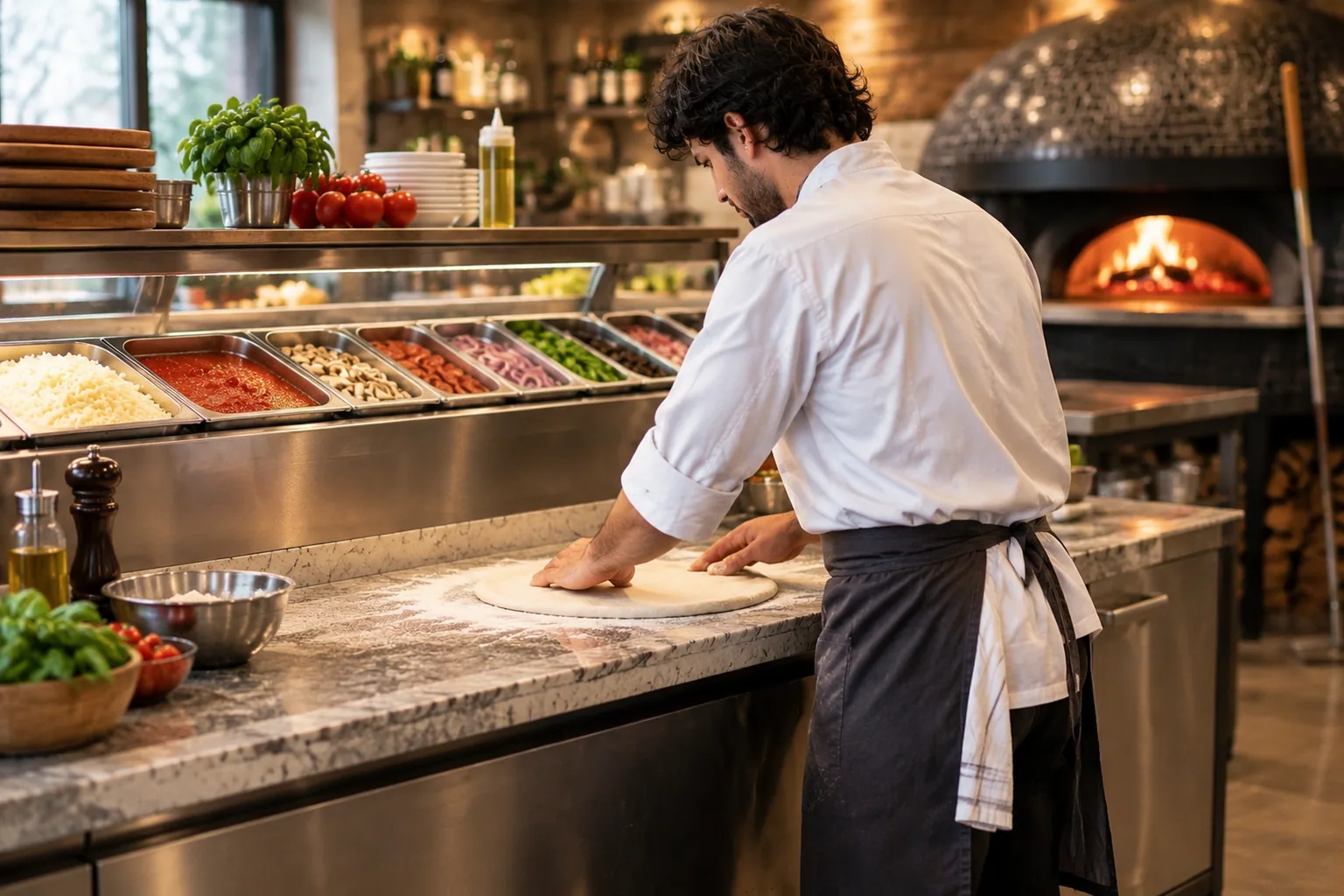
A raised rail keeps topping or salad ingredients visible and within reach, with a guard where local hygiene rules require one. Whether the rail is cooled independently of the cabinet depends on model.
Freezing workbench
For stations working with frozen product, or holding duty colder than a standard refrigerator. Duty and temperature range are confirmed per model, not assumed from the family name.
Cooling method, defrost and ambient conditions
These three parameters decide whether the unit holds temperature in your kitchen, not on a datasheet.
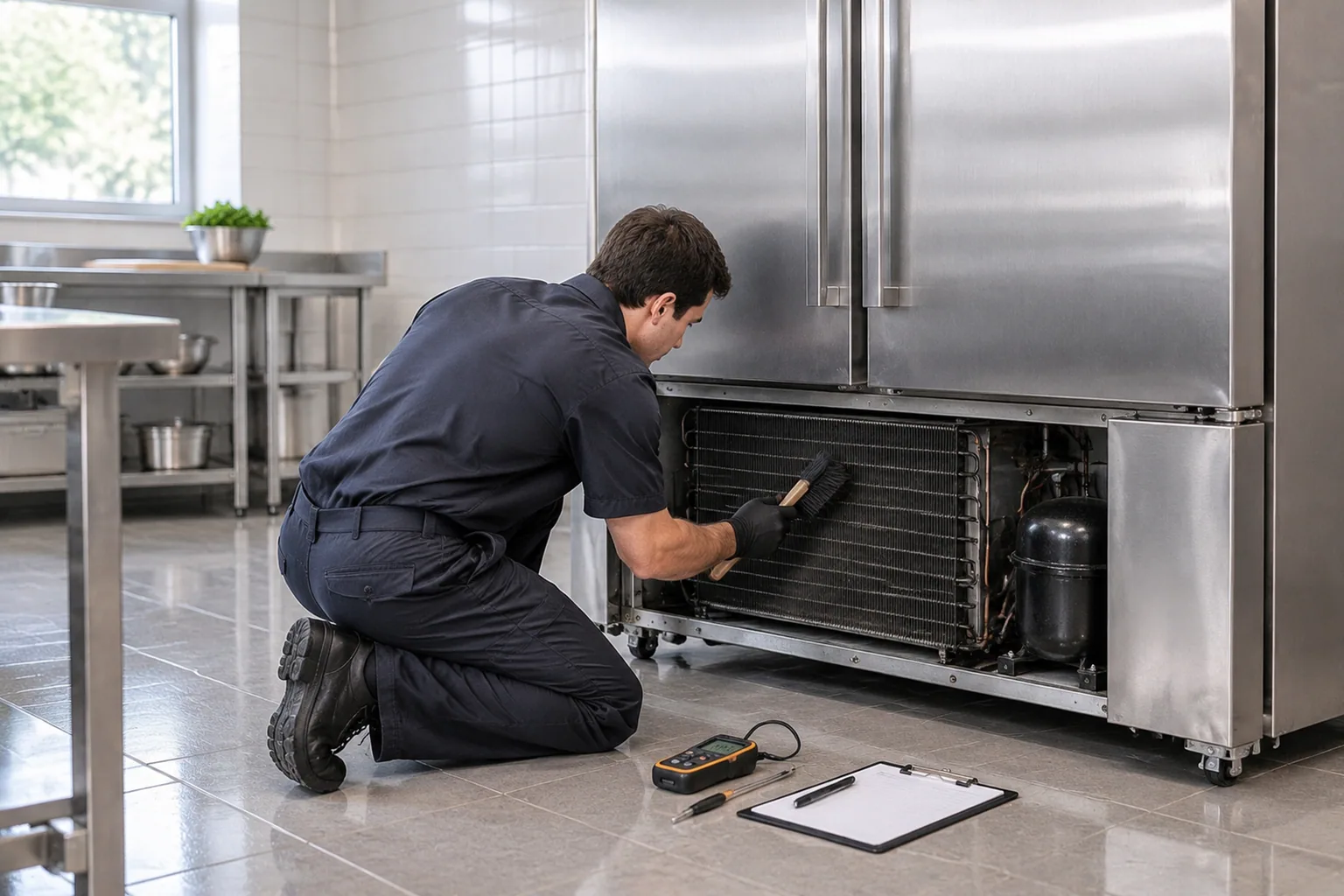
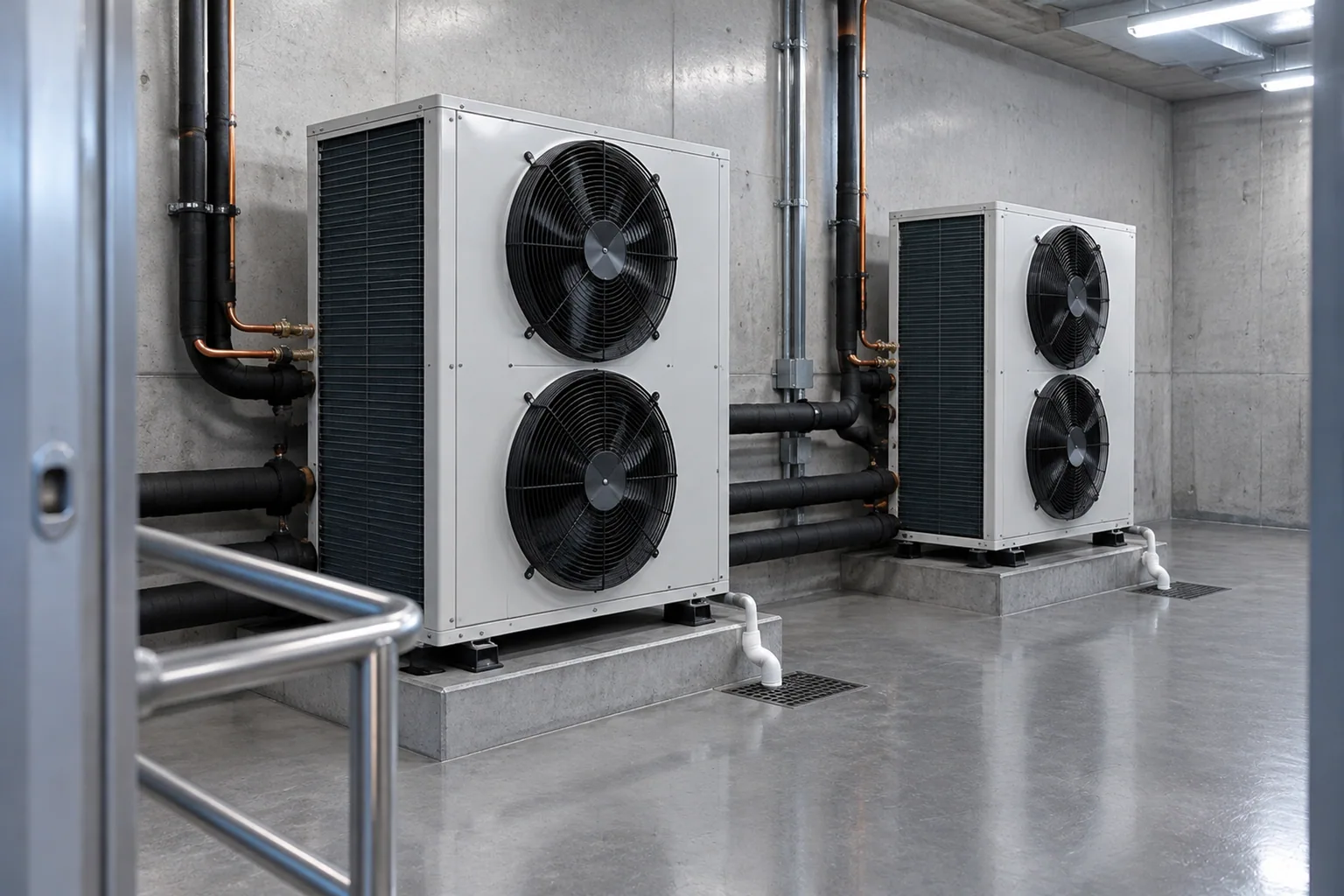
Air cooling circulates cold air through the cabinet and generally gives a more even temperature across shelves and a faster recovery after openings. Direct cooling uses a static evaporator with less air movement, which can suit products that would dry out under a strong draft. Availability of either method depends on model, so state which one you need when you request a quotation.
Defrost matters as much as cooling. Automatic defrost runs a timed or demand cycle and needs a route for the melt water. Confirm the defrost type and where the condensate goes; a unit that drains onto the floor is an operational problem, not a refrigeration problem.
Ambient conditions are the most common reason a correctly sized unit underperforms. A hot, humid kitchen demands more from the condensing unit than a mild environment. If your site runs hot, say so at the inquiry stage and ask about a wide-climate or tropical configuration; availability is confirmed per project and requires the model-level ambient condition and test data before any performance figure is quoted.
Hygiene by design
Cleanability is a specification item, and it is where low-cost units are usually weakest.
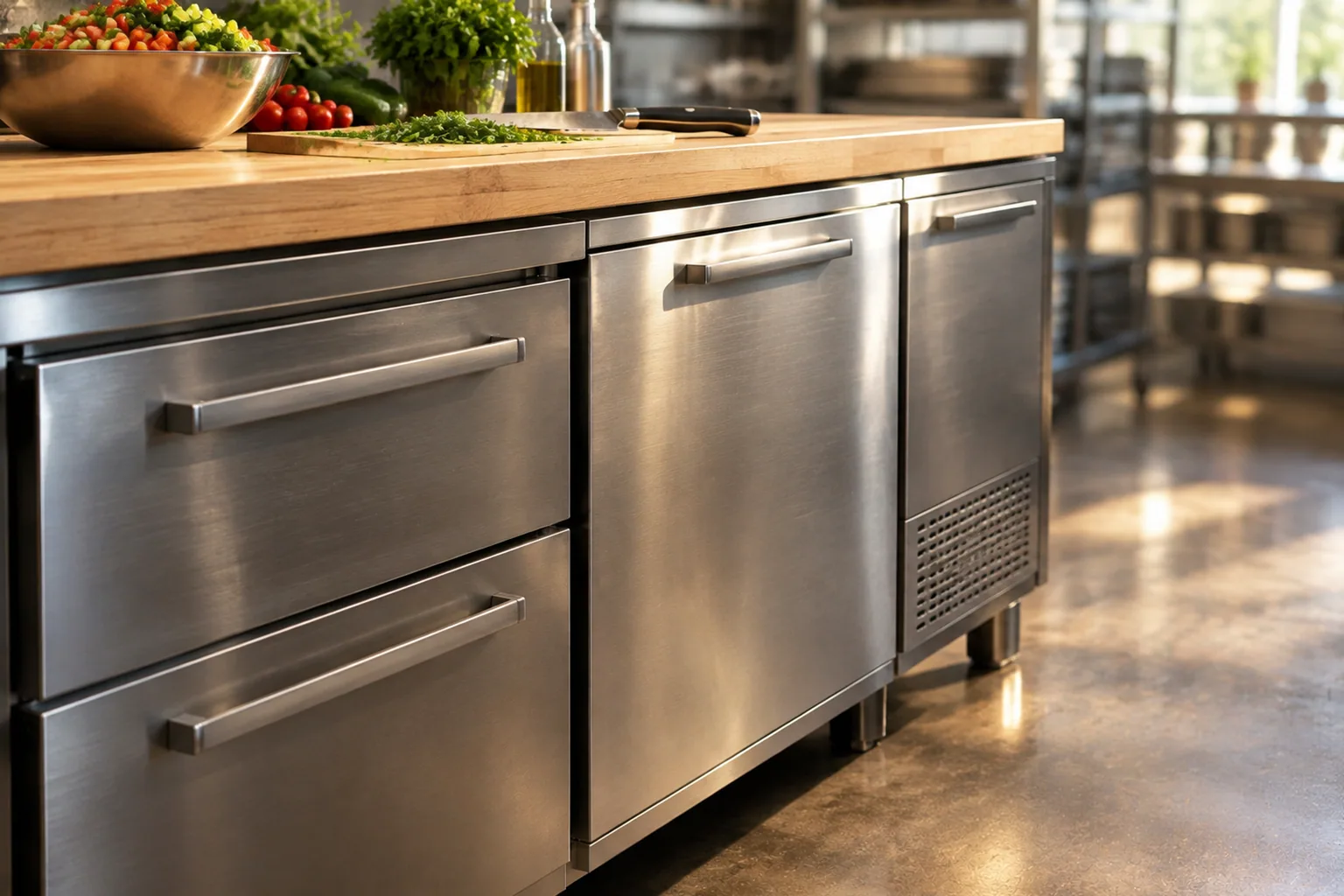
Confirm the stainless grade used for food-contact surfaces and the grade used for the cabinet body. They are not always the same, and the difference matters in wet, salty or acidic environments, so ask for the grade in writing on the model datasheet. Look for removable door gaskets that can be cleaned and replaced without tools, rounded internal corners that do not trap debris, and a cover or lid option for a raised rail that holds product between services.
Decide how the unit will be monitored before you buy it. Most food-safety plans require a temperature check at defined intervals, so choose a controller that makes the reading easy to take and log.
What to confirm before you place a prep table order
Use this list as the basis of the inquiry. Every line is a parameter name, not a fixed value; values are confirmed on the model datasheet and per project.
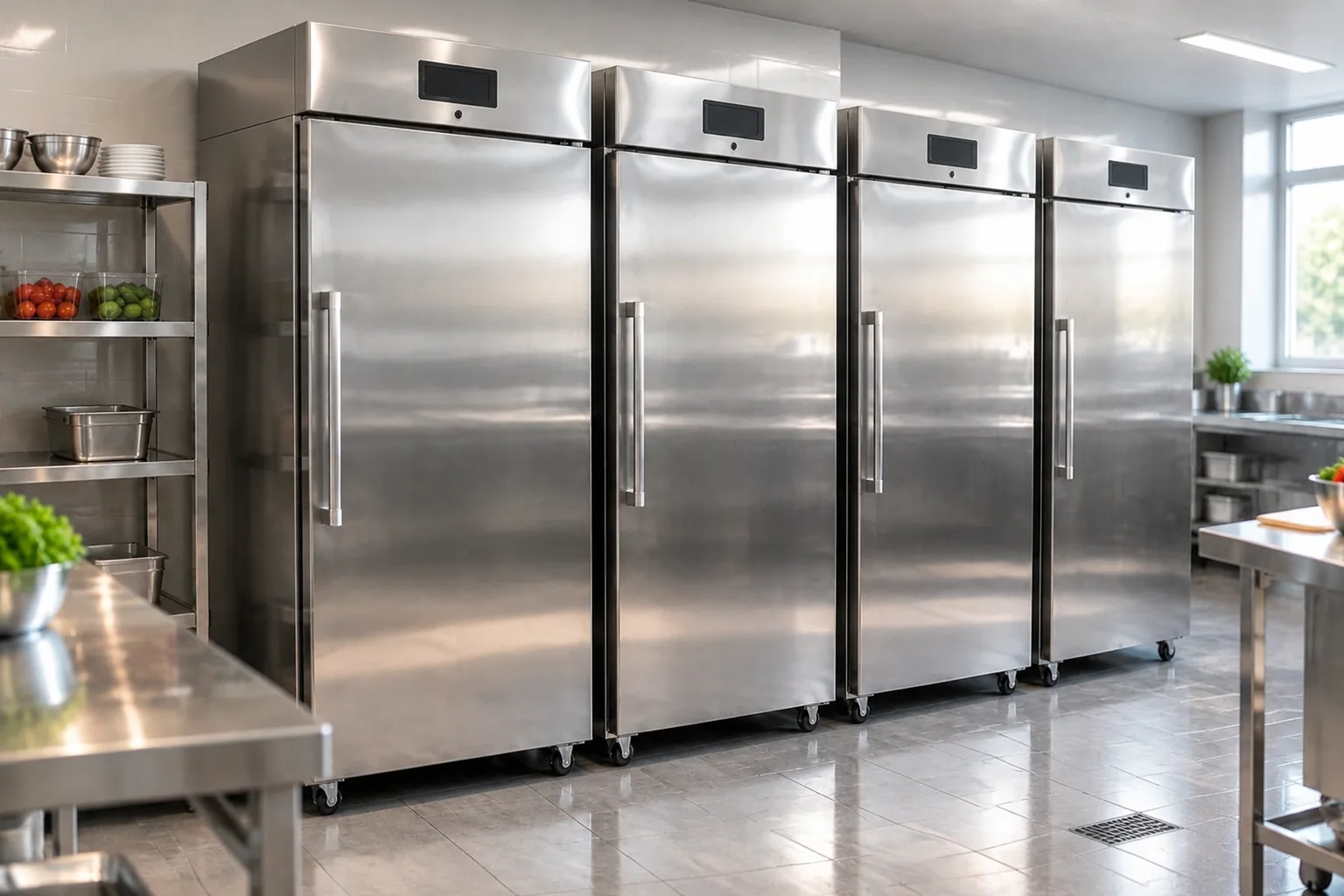
| Format and family | Worktop prep table, undercounter, drawer unit, pizza or salad prep table, or freezing workbench. |
|---|---|
| External dimensions | Width, depth, height and work surface height, checked against the real station footprint. |
| Internal volume | Usable cabinet volume and the pan, shelf or drawer configuration you need. |
| Duty and temperature range | Refrigerator duty or freezer duty, with the range for the exact model. |
| Cooling and defrost | Air cooling or direct cooling, defrost type and the condensate path. |
| Electrical configuration | Voltage, frequency and plug type for the destination market, per model. |
| Refrigerant | Refrigerant type and charge, confirmed on the model datasheet. |
| Materials | Stainless grade for food-contact and non-contact surfaces, plus worktop material. |
| Ambient rating | The ambient condition the model is rated for, matched to your kitchen. |
| Accessories | Castors or legs, locks, shelves, pan rails, guards and covers. |
| Compliance documents | CE, CB or RoHS documentation as applicable to the model and destination market. |
| Packing and lead time | Export packing, container loading plan, and normal production planning of 20 to 30 days, confirmed per project. |
Two questions cut through most of the ambiguity. Ask for the model datasheet and a dimensioned drawing, so fit is verified before the order rather than on arrival. Then ask which parameters are fixed by the platform and which can be changed for your project, because that answer determines what is worth negotiating.
Documentation, customization and who you are buying from
Compliance paperwork belongs to a model and a market, not to a catalog.
Request CE, CB or RoHS documentation for the exact model and destination market. Certification is confirmed per model and per market; it is not uniform across a product range. SHEHOPE manufactures commercial refrigeration, including prep tables and worktops, in Foshan, Guangdong, China, within a shared manufacturing system with 20 or more years of experience, a 20,000 m² facility, more than ten production lines, annual capacity of approximately 50,000 units and an ISO 9001 quality system.
For buyers importing under their own brand, OEM and ODM projects can cover 3D CAD design and development, custom logo marking by silk screen or laser engraving, custom interior shelving and layout, and market-specific voltage and plug configurations. Final electrical configuration depends on the model and the applicable market approval.
Frequently asked questions
Is a prep table a refrigerator or a freezer?
Both duties exist in the family. A standard prep table is refrigerator duty, while a freezing workbench is built for a colder holding duty. The temperature range for the unit you are buying is confirmed on the model datasheet, so ask for that document rather than assuming from the family name.
Should I choose drawers or doors?
Drawers organize ingredients by task and expose only the section in use, which reduces cold-air spill during service. Doors give a larger single compartment and lower cost per liter of volume. Many small ingredient groups suit drawers; trays and larger containers suit doors.
Can the unit be built for our voltage and plug type?
Market-specific voltage and plug configurations can be covered in OEM projects. The final electrical configuration depends on the model and the applicable market approval, so give the destination country and site supply at the inquiry stage and confirm the result per project.
Which documents should we request before ordering?
Ask for the model datasheet, a dimensioned drawing, the accessory list and the compliance documentation applicable to the model and destination market. Certificate scope and applicable models are confirmed from the certificate files, so a general catalog claim is not sufficient.
How long does production take?
Normal production planning runs 20 to 30 days. The confirmed lead time depends on the model, order quantity, season and the amount of customization, so it is confirmed per project rather than quoted as a fixed number.