
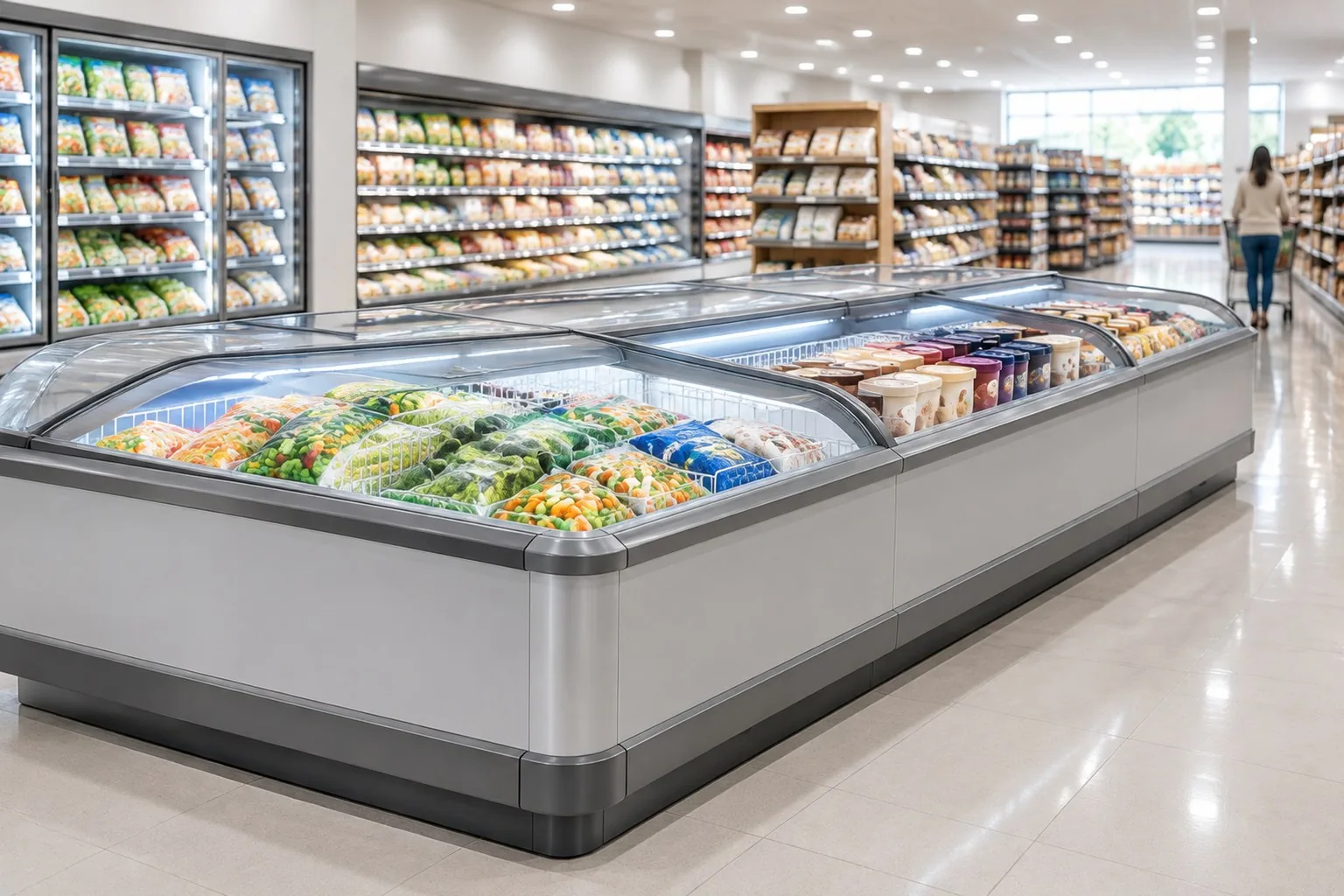
An island display freezer is a low chest that shoppers walk around rather than reach into from one front. The cabinet has no back, the aisle around it is part of the display, and product goes in from above through sliding glass lids. This guide covers cabinet types, the aisle they need, the well layout, defrost and lid condensation, heat rejection and the loading routine.
An island display freezer is an aisle decision first
The cabinet has no back, so the space around it carries the merchandising.
An island presents product from above. The shopper stands at the edge of the well, looks down through the lid and takes the pack, so the cabinet works from every side that faces an aisle. The format's cost is floor area: all open sides are display faces, and the aisle has to serve both the shopper who has stopped and the traffic that wants to pass.
Islands suit frozen categories the shopper already knows and buys in volume, and they suit a promotional face at the end of a run. Because the shopper reads the top of the cabinet rather than a tall glass front, signage, price cards and lid-top presentation do the selling work that a glass door does on a wall cabinet.
Straight cabinets, end cabinets and the walk-around run
Run geometry decides how shoppers move and where the impulse position sits.
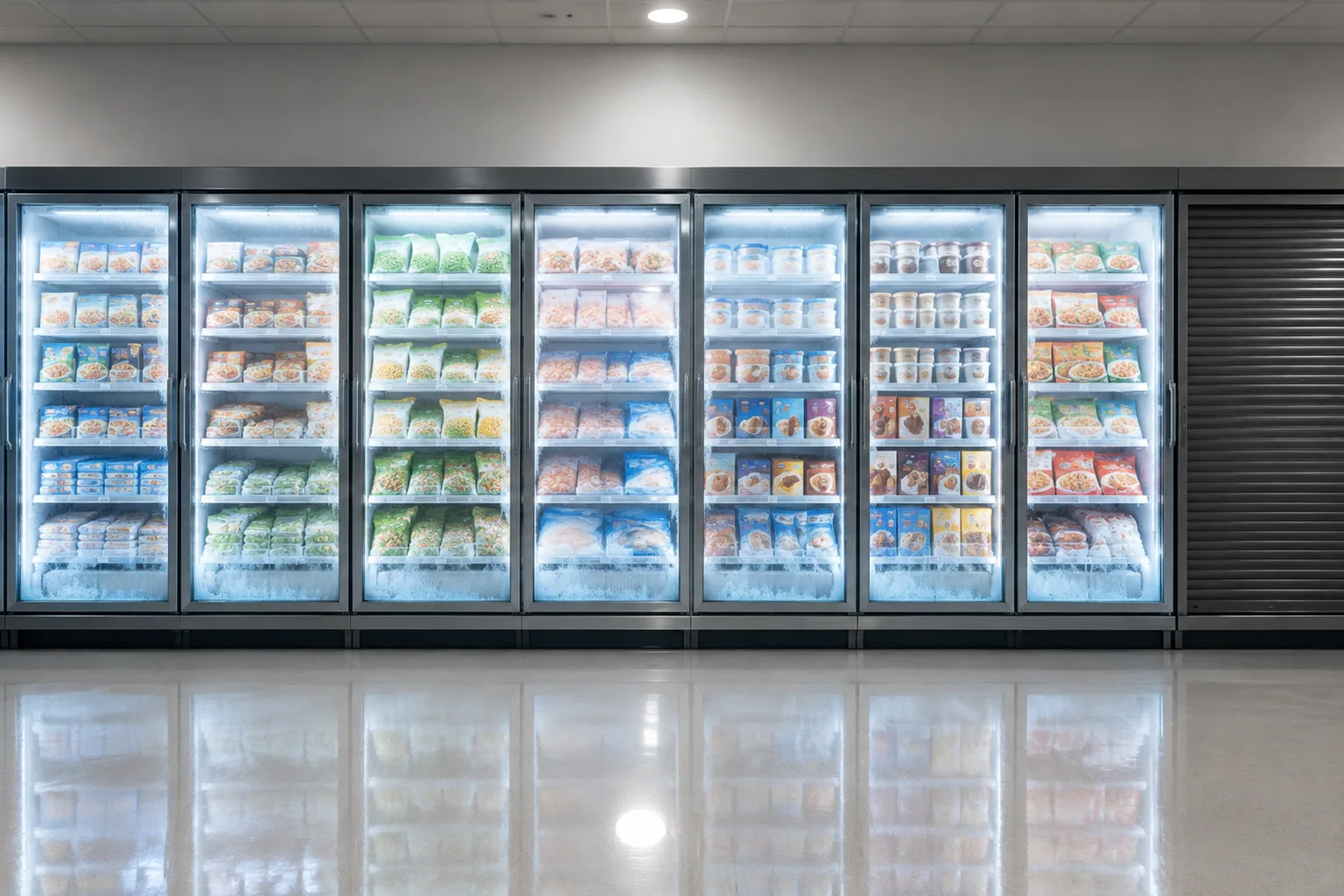
Straight cabinets are the building block. In a line they form a long display face; set back to back, one block of floor carries two aisles. The shopper walks the run and reads the lids, so the run rhythm and the aisle rhythm are the same decision.
End cabinets close the end of a run and turn to face cross traffic, which makes them the most noticed position in a frozen aisle and the natural home for the line you want seen first. Their footprint, lid travel and clearance differ from the straight unit, so take them from the drawing for that model.
- Straight cabinets form the run and set the aisle rhythm.
- End cabinets close the run and present to the cross aisle.
- Back-to-back runs double the display face from one block of floor.
Ask for a run drawing that shows the cabinets in sequence, the join details, the trim line and the position of each lid. When lid heights differ along a run, the aisle reads as untidy and shoppers leave lids partly open.
Aisle width, traffic and sight lines
Width comes from the traffic the aisle carries, not from the cabinet alone.
Four questions set the aisle. Who passes along it, and what are they carrying. Who loads the cabinet, and with what. Can one shopper stand at a lid while another gets past with a trolley. And is this aisle also a route to another part of the store, carrying traffic with no interest in the frozen range.
At the cabinet, a shopper stands at the lid, slides it open, looks down and takes the pack with a trolley parked beside them. Add a second shopper at the next lid and the aisle has to absorb both, plus anyone walking through. That combination, not the cabinet footprint, is what the aisle is sized against.
Sight lines differ from a wall-cabinet aisle. An island is low, so the approaching shopper sees the cabinet top and the lids; plan overhead signage and lid-top price cards with the layout.
If stock travels down the same aisle shoppers use, decide whether loading happens outside trading hours or the aisle absorbs the interference, because that changes how often lids stand open.
Aisle widths are confirmed against your layout standard and the cabinet's dimensioned drawing, including the lid clearance.
Sliding glass lids, baskets and drawers
The well is where the merchandising plan meets the hardware.
Sliding lids are usually glass panes running in tracks, so the well opens a section at a time. What matters daily is how easily a pane slides, whether it stays where it is put, whether it lifts out for cleaning, and how the track and gasket cope with crumbs and frost. A lid that is awkward to slide is a lid that gets left open.
Dividers split the well into category zones and baskets raise slower lines towards the top where a shopper can see them. Deep space below a basket suits bulk packs, while a drawer at the end of a run holds small, high-value lines that would otherwise sit out of sight.
Plan by depth as well as by width. The row nearest the walkway is read first; the rows behind it are read only if the shopper stops and looks. Put the lines you want noticed in the near row, and let the far rows carry depth rather than promotion.
- Baskets and dividers zone the well by category and by pack size.
- Drawers suit small, high-value lines that vanish in a deep chest.
- Parts that lift out without tools shorten the daily clean.
- Lid configuration, basket range and divider positions are confirmed on the model drawing.
Defrost, lid condensation and where the heat goes
Moisture and heat both end up in the aisle around the cabinet.
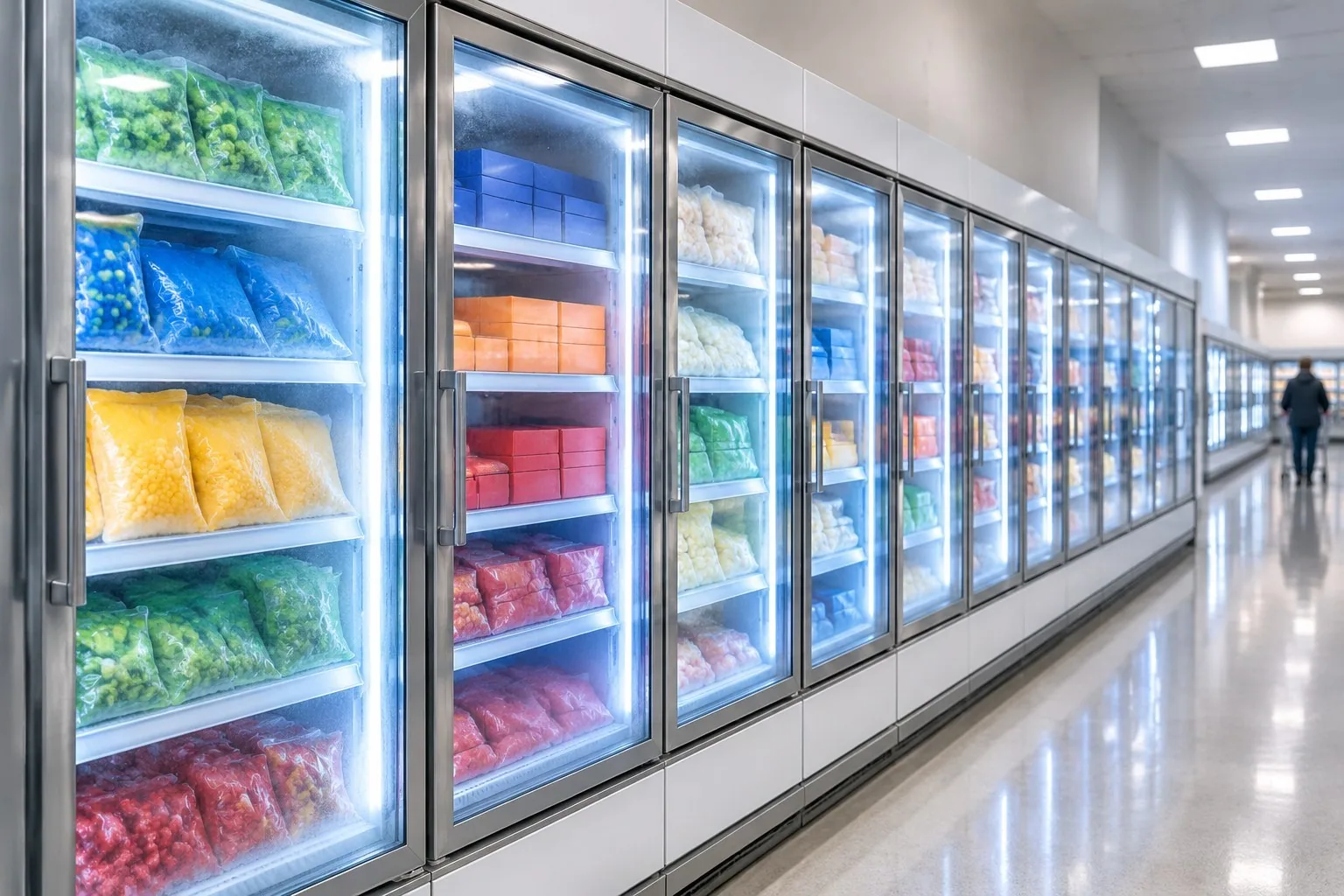
A frozen cabinet runs defrost cycles to clear ice from the evaporator, and the melt water goes either to a site gully or into a tray where it is evaporated. Defrost type and drain route are confirmed per model, and the question belongs before the floor is laid, because adding drainage later is a store works job.
Lid condensation is the visible symptom of a warm, humid store. Water vapour condenses on cold glass, and in a worse case it freezes around the lid frame and tracks; frost makes the lid stiff, and lids then start to be left open. The anti-condensation measures a model offers are confirmed per model, and keeping lids closed, wiping the glass and cleaning tracks and gaskets all reduce it.
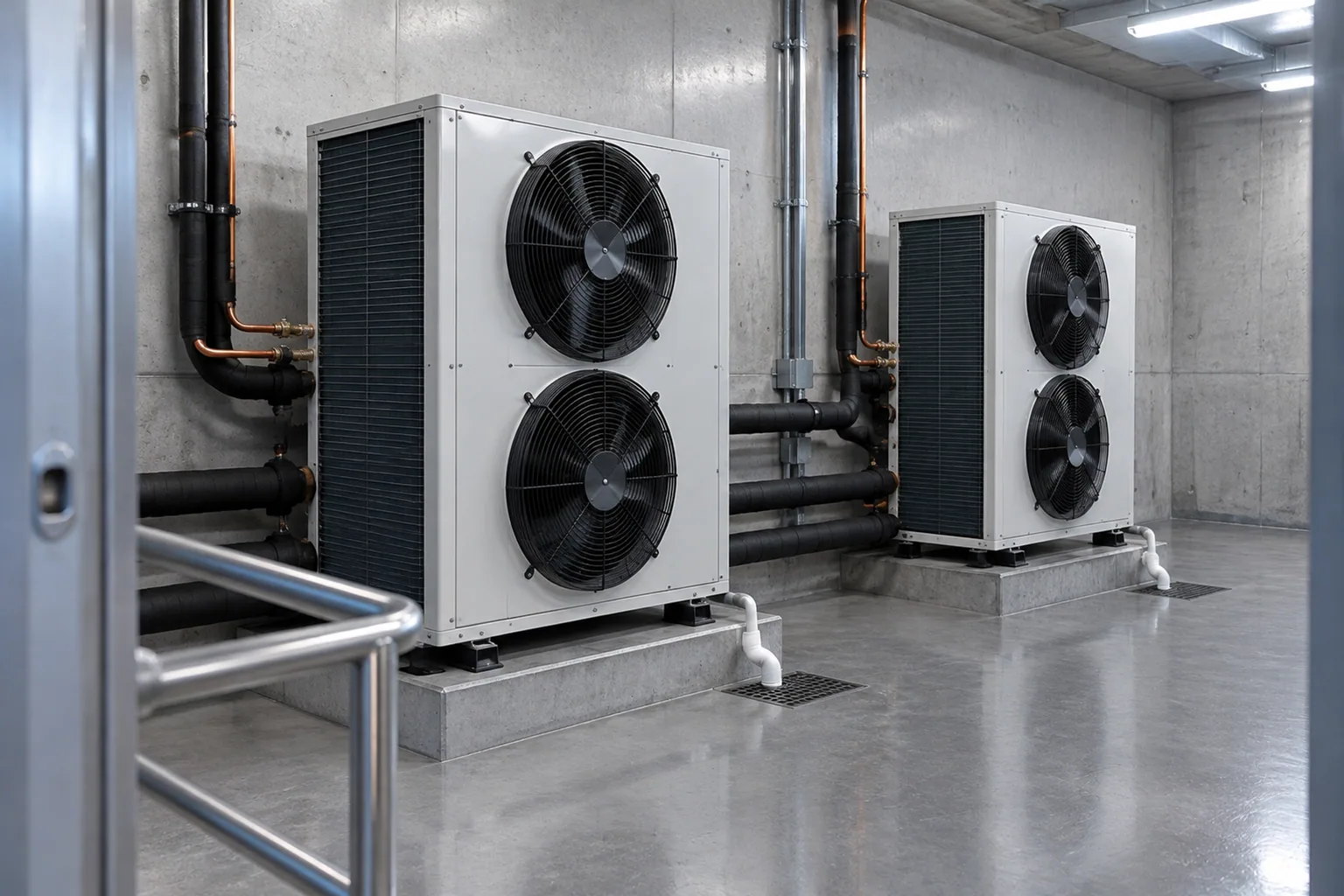
Every cabinet rejects the heat it removes plus the heat of compression. An integral condensing unit rejects it into the aisle the shoppers walk through; a remote unit rejects it wherever it stands. Compare the ambient range the model is rated for with your store's worst case, and keep the machine compartment, the coil and any grille clear of product, bins and signage.
The loading routine and what to confirm before ordering
The aisle performs on its stocking routine as much as on its refrigeration.
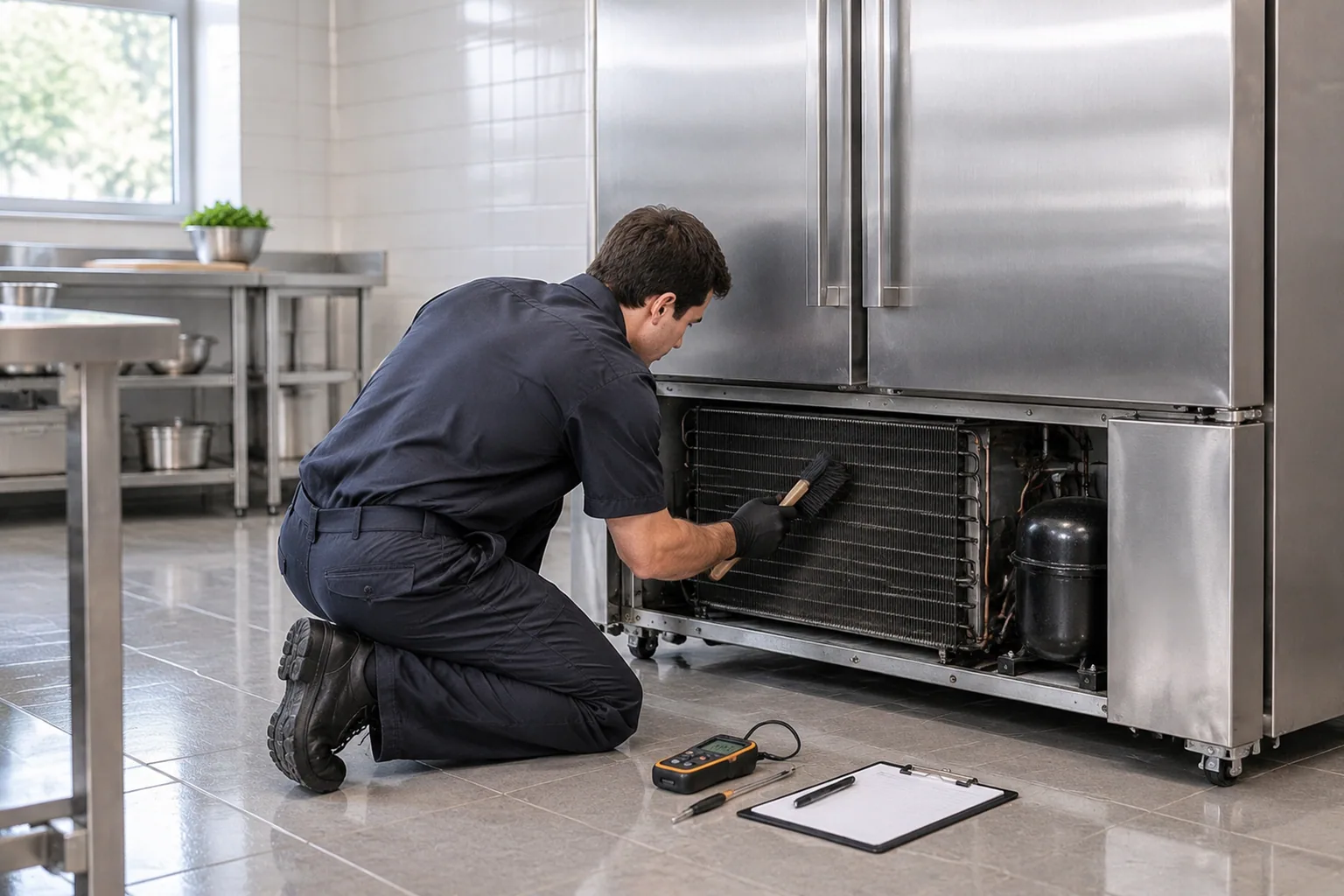
Loading time is the largest influence on how a frozen island performs. Loading outside trading hours lets staff work with lids open without shoppers waiting; whatever the schedule, work one section at a time and close each lid as that section is finished.
Pack product inside the well so the lid closes onto its frame; a lid resting on packaging stays open, and the cabinet then runs without holding the top layer. Rotate first in, first out, reduce the depth of a slow row instead of leaving stock at the back, and record product and air temperatures at the intervals your food safety plan sets.
- Load in one pass per section and close the lid behind you.
- Keep the load inside the well so the lid seals on its frame.
- Leave the coil, the grilles and the machine compartment clear of stock and displays.
Use the list below as the basis of the inquiry. Each line is a parameter to confirm, not a value to assume from a similar-looking cabinet.
| Case type and geometry | Straight cabinet, end cabinet, or a run of both, and how the cabinets line up. |
|---|---|
| Footprint and lid clearance | Cabinet dimensions and the space needed with the lids open, confirmed per model. |
| Aisle and circulation | The traffic the aisle must carry, the loading route and the turning space at junctions, checked against your layout standard. |
| Well layout | Lid configuration, basket and divider options, drawers, and which parts lift out for cleaning. |
| Temperature range | The range the exact model is configured for, matched to the frozen category displayed. |
| Defrost and condensate | Defrost type, where melt water goes, and the drainage to be provided on site. |
| Condensation control | What the model provides for lid condensation, compared with store humidity and season. |
| Ambient and heat rejection | Integral or remote unit, where it stands, the ventilation around it, and the ambient range the model is rated for. |
| Electrical configuration and refrigerant | Voltage, frequency and plug type for the destination market, and the refrigerant used by the selected model. |
| Compliance documents | The documents that apply to the model and the destination market, confirmed at quotation. |
SHEHOPE builds island display freezers alongside open display refrigeration, glass-door display freezers and the display cases used in bakery and deli departments. OEM and ODM projects can cover basket and divider arrangements, trim and lid details, logo marking, and the voltage, frequency and plug configuration for the destination market. The compliance documents that apply to a given unit are confirmed per model and per destination market.