
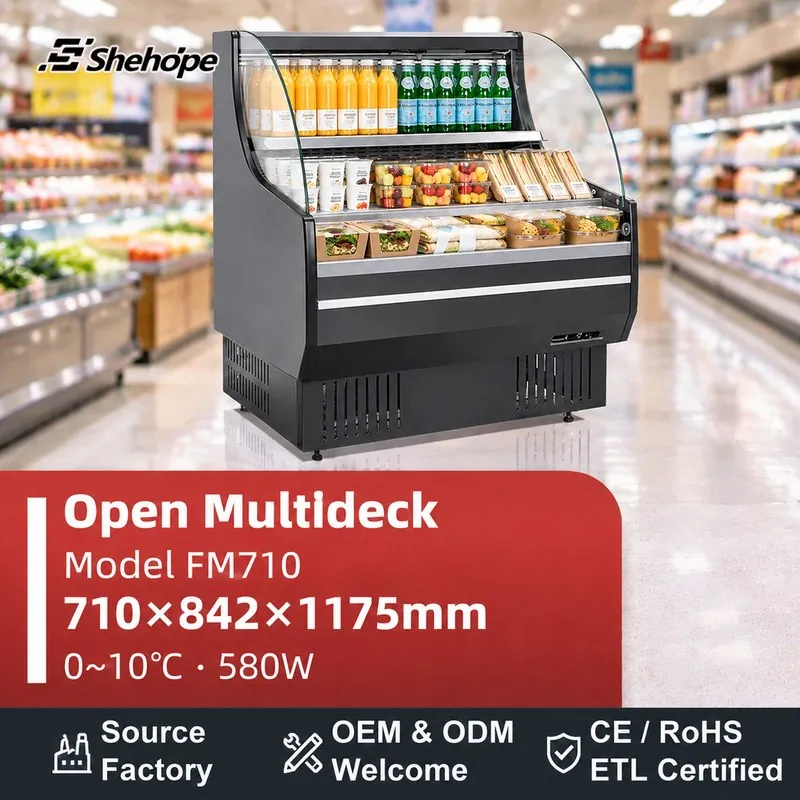
Open display refrigeration and multideck air-curtain coolers
Open display refrigeration keeps product visible without a door, using an air curtain to hold temperature across the open front. This family covers multideck open-front merchandisers, two-tier mother-and-baby units, and open walk-in display formats used for promotional and grab-and-go selling. Because the case is open, store conditions and loading discipline influence performance as much as the cabinet itself.
Typical use
- Supermarket and grocery aisles for produce, dairy, chilled drinks and packaged fresh food.
- Convenience and forecourt retail where grab-and-go product must be visible from the aisle.
- Promotional end-cap or seasonal displays that need a temporary chilled position.
- Two-tier mother-and-baby units used for high-turnover fresh product at customer height.
- Open walk-in display formats for stores that present large volumes of stock to shoppers.
- Chilled drink and snack displays positioned near checkouts or store entrances.
Confirm before ordering
- Format (multideck, two-tier or open walk-in display)
- Deck count, shelf pitch and product envelope
- Load line and stocking limits
- Design ambient class and store conditions
- Defrost method, anti-sweat heating and condensate handling
- Lighting and night cover arrangement
- Voltage, frequency and plug configuration
- Refrigerant and market compliance documents
Configurations we build in this family
Drawn from our own product catalogue. Final specification is confirmed per model and destination market.
| Catalogue items in this family | 10 (configuration confirmed per project) |
|---|
Model range at a glance
Every model in this family, sorted by size. Prices are FOB reference prices from our current listings.
| Model | Temperature range | Doors | Voltage | Reference price |
|---|---|---|---|---|
| cxfm896 | 0°C To 10°C | No Doors (Walk-In) | 110-120V (Single-Phase) | from US$1,920 |
| zmfm1290 | 0°C To 10°C | No Doors (Walk-In) | 110-120V (Single-Phase) | from US$1,740 |
| cxfm706 | 0°C To 10°C | No Doors (Walk-In) | 110-120V (Single-Phase) | from US$1,176 |
| FM710 | 0°C To 10°C | No Doors (Walk-In) | 110-120V (Single-Phase) | from US$1,020 |
| FM1290 | 0°C To 10°C | No Doors (Walk-In) | 110-120V (Single-Phase) | from US$1,575 |
| FM1150 | 0°C To 10°C | No Doors (Walk-In) | 110-120V (Single-Phase) | from US$1,725 |
| FM990 | 0°C To 10°C | No Doors (Walk-In) | 110-120V (Single-Phase) | from US$1,425 |
| zmfm1600 | 0°C To 10°C | No Doors (Walk-In) | 110-120V (Single-Phase) | from US$1,980 |
| zmfm710 | 0°C To 10°C | No Doors (Walk-In) | 110-120V (Single-Phase) | from US$1,260 |
| zmfm990 | 0°C To 10°C | No Doors (Walk-In) | 110-120V (Single-Phase) | from US$1,875 |
The highlighted row is this page. Confirm the configuration, voltage and documents for your market in the quotation.
Catalogue items in this family
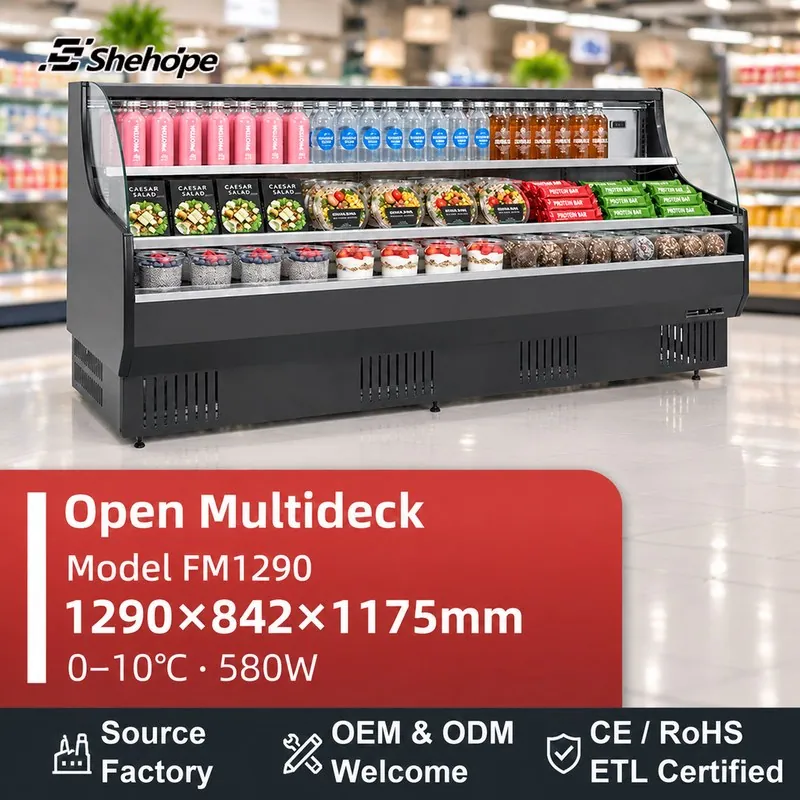
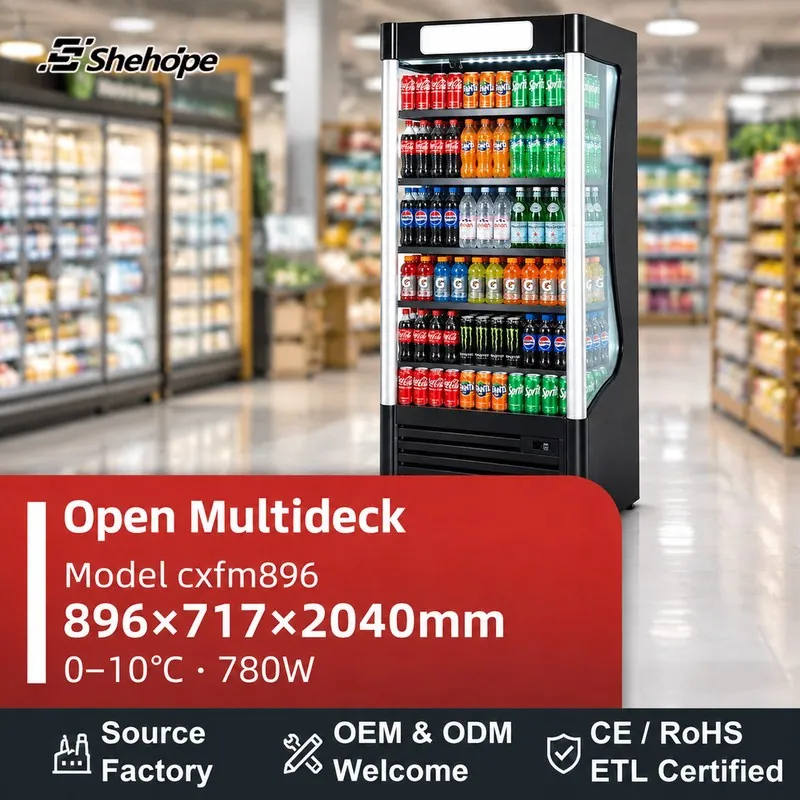
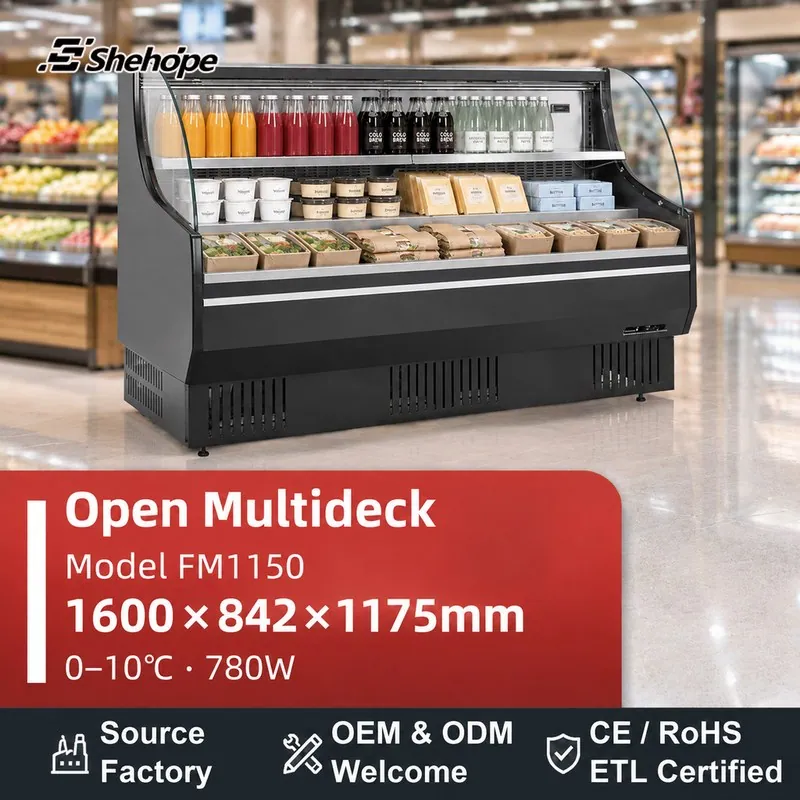
10 catalogue items photographed for this family.
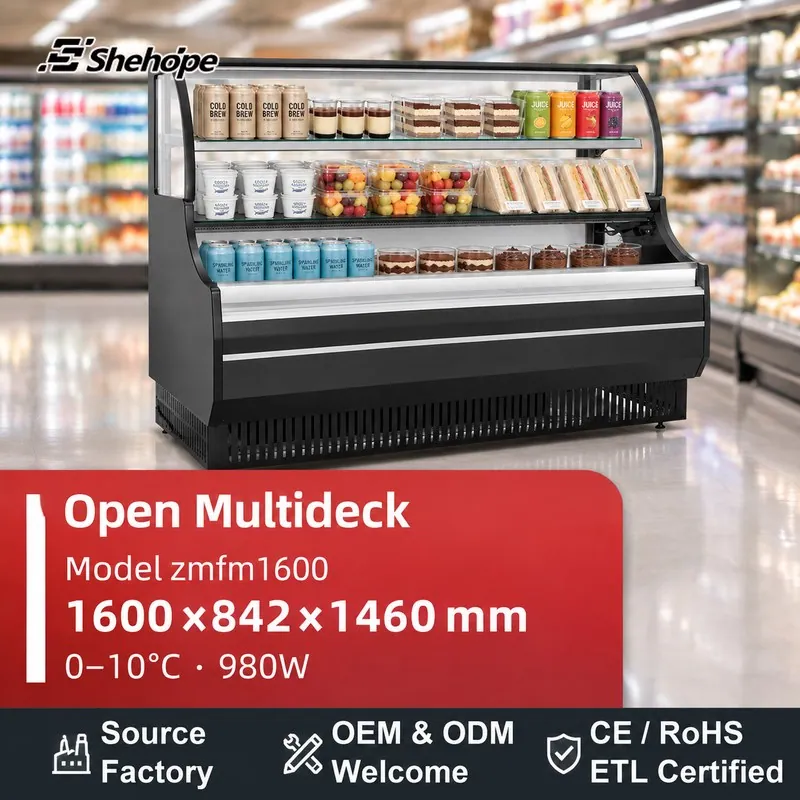
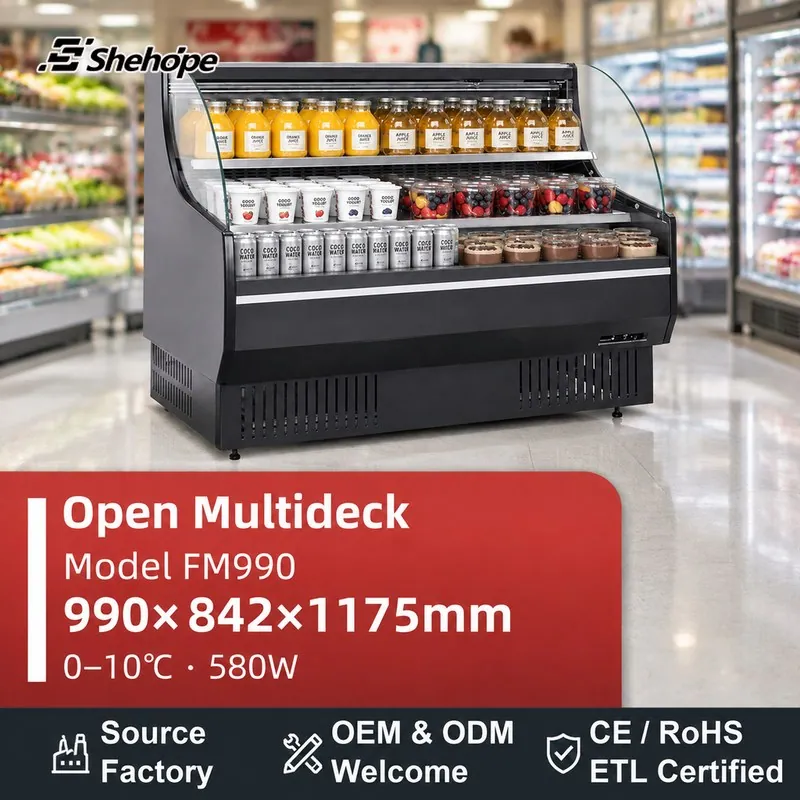
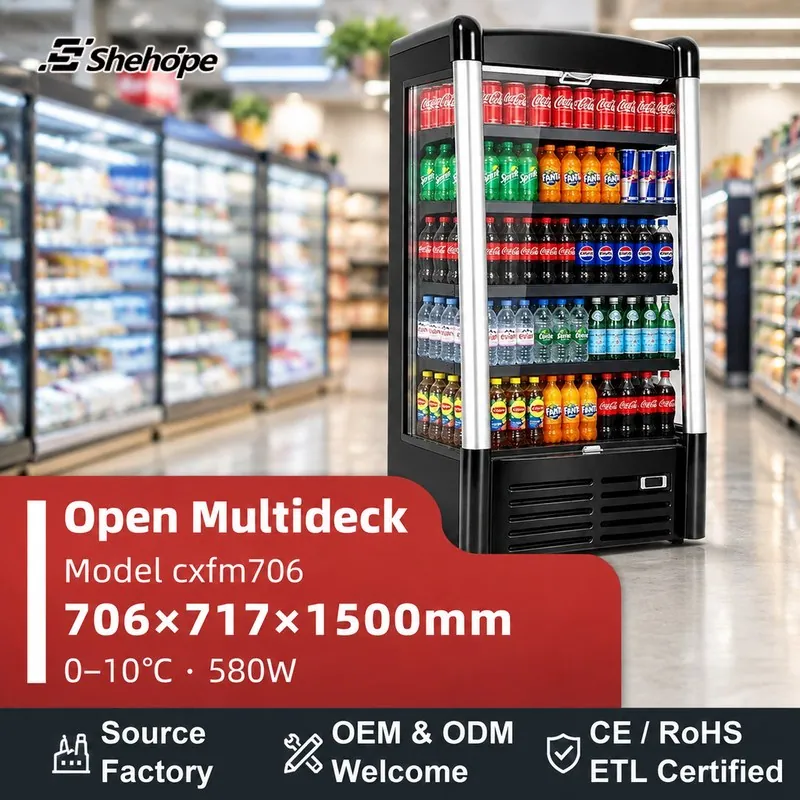
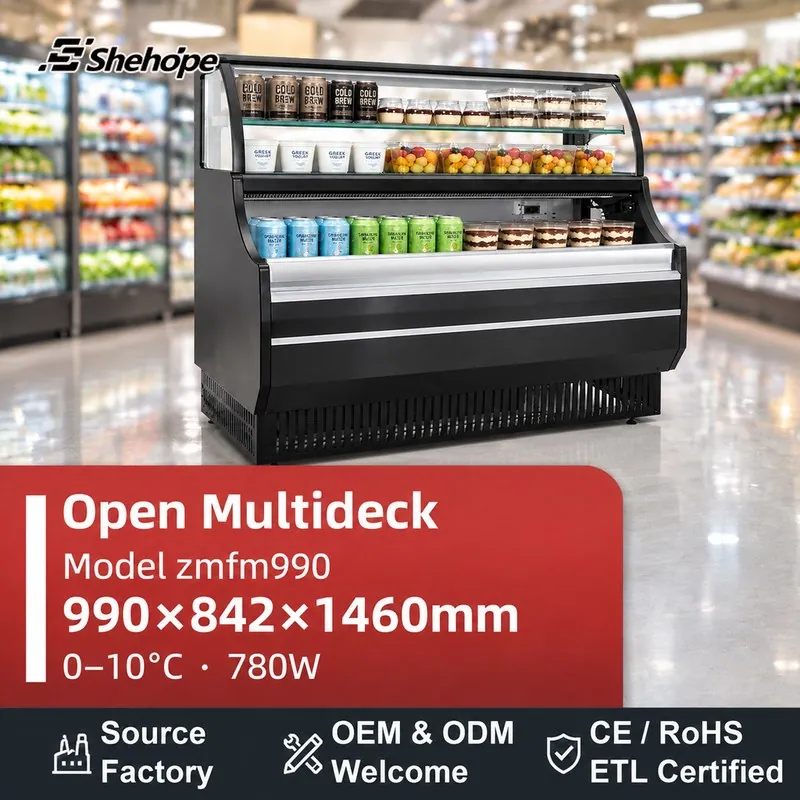
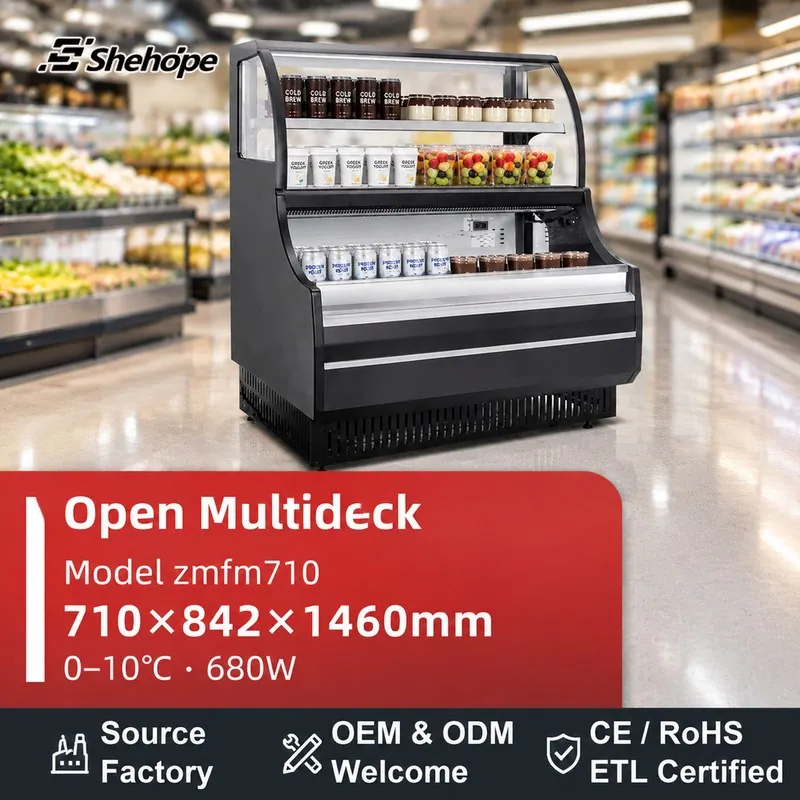
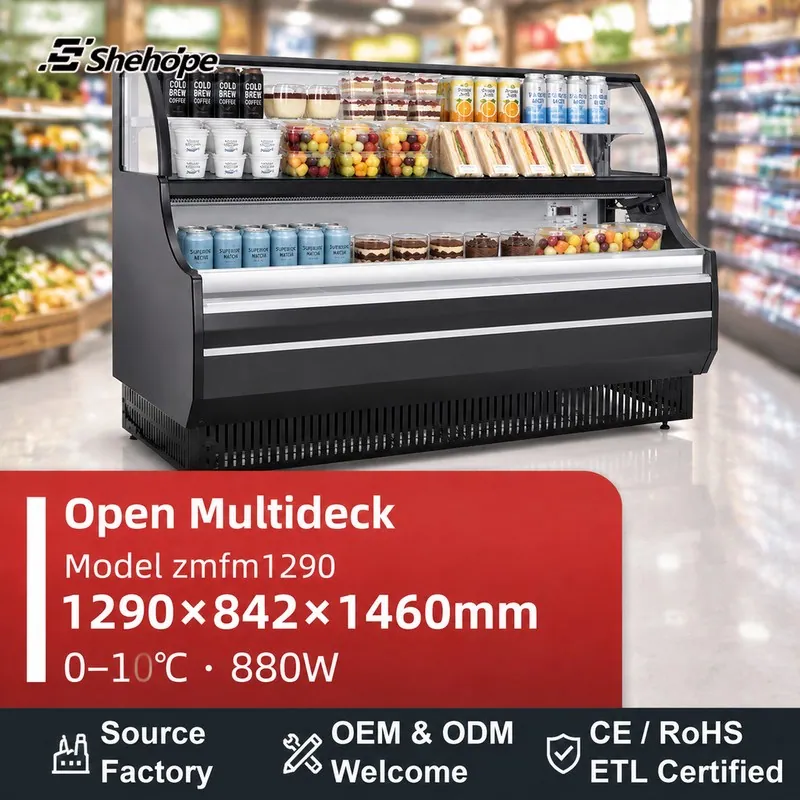
How this family is configured
Choosing a multideck by display run, not by shelf count
This family is ten open air-curtain units in widths of 706, 710, 896, 990, 1290 and 1600 mm. Work out the run first, then pick units that add up to it: for example two 990 mm cabinets plus one 710 mm unit gives a 2.69 m run with no leftover gap.
Two heights are used. The 1175 mm cabinets are the single-level air curtain for counter-height selling; the 1460 mm models are mother-baby two-tier units that put chilled drinks above and packaged chilled food below in the same footprint. Everything in the family runs 0 °C to 10 °C with no doors, R290 refrigerant, forced-air cooling and 580–980 W depending on width.
Because these cabinets are open, the run length and the store's ambient conditions decide the result more than the shelf count does. Tell us the run, the aisle width in front of it and the store temperature, and we confirm which width and height combination fits. Reference price from US$1,020 per unit, FOB.
Store conditions and ambient heat load
An open case works with the air in the store, not against it, so the store conditions belong in the specification. State the air conditioning set point, the humidity, and how close the case sits to entrance doors, open loading bays, drafts or direct sunlight. Confirm the ambient class the model is designed for and compare it with the real conditions on the shop floor at the busiest hour, not the average. Ask how the case behaves when the air conditioning is switched off overnight or during a shoulder season. Air curtains are sensitive to drafts from above, so check ceiling diffusers and any fan or door chiller nearby. If the store uses a night cover or roller blind, confirm whether the model supports one and how staff are expected to fit it. Site ambient conditions and the heat load the case rejects into the store are confirmed per project, because they affect both product temperature and store comfort.
Decks, shelf pitch and product envelope
Open displays are often overloaded, and the load line is the part that gets ignored. Confirm how many decks or shelf levels there are, the pitch between them, and the product height each level is designed for. Then compare that with the tallest and heaviest product in the range. Stocking above the load line breaks the air curtain, so product at the front of the shelf warms while the back stays cold; the same happens when tall items are placed on the lower decks. Ask how staff are expected to face up the display during the day and whether a front rail or fence limits how far product can be pushed forward. For two-tier units, confirm the height of each tier and whether the upper tier is loaded from the customer side. Shelf pitch, deck count and the designed product envelope are confirmed per model, and they should be matched against your range before the order is placed.
Air curtain, defrost and condensation control
Ask how the air curtain is formed, how far it projects, and what the manufacturer expects behind and above the case. Confirm the defrost method and how often it runs, because an open case in humid air collects frost on the coil and water on the surfaces. Condensate has to leave the case through a drain or an evaporation tray, and that path must be reachable for cleaning. In humid stores, condensation can form on cold rails and frames, so ask whether anti-sweat heating is fitted and where. Confirm how the case behaves during a defrost cycle: some models hold product temperature, others show a temporary rise that staff should not try to correct by turning the control down. Cleaning an open case means cleaning the air return and the coil area, so confirm which panels come off and how often the manufacturer expects that work to be done.
Placement, service access and merchandising
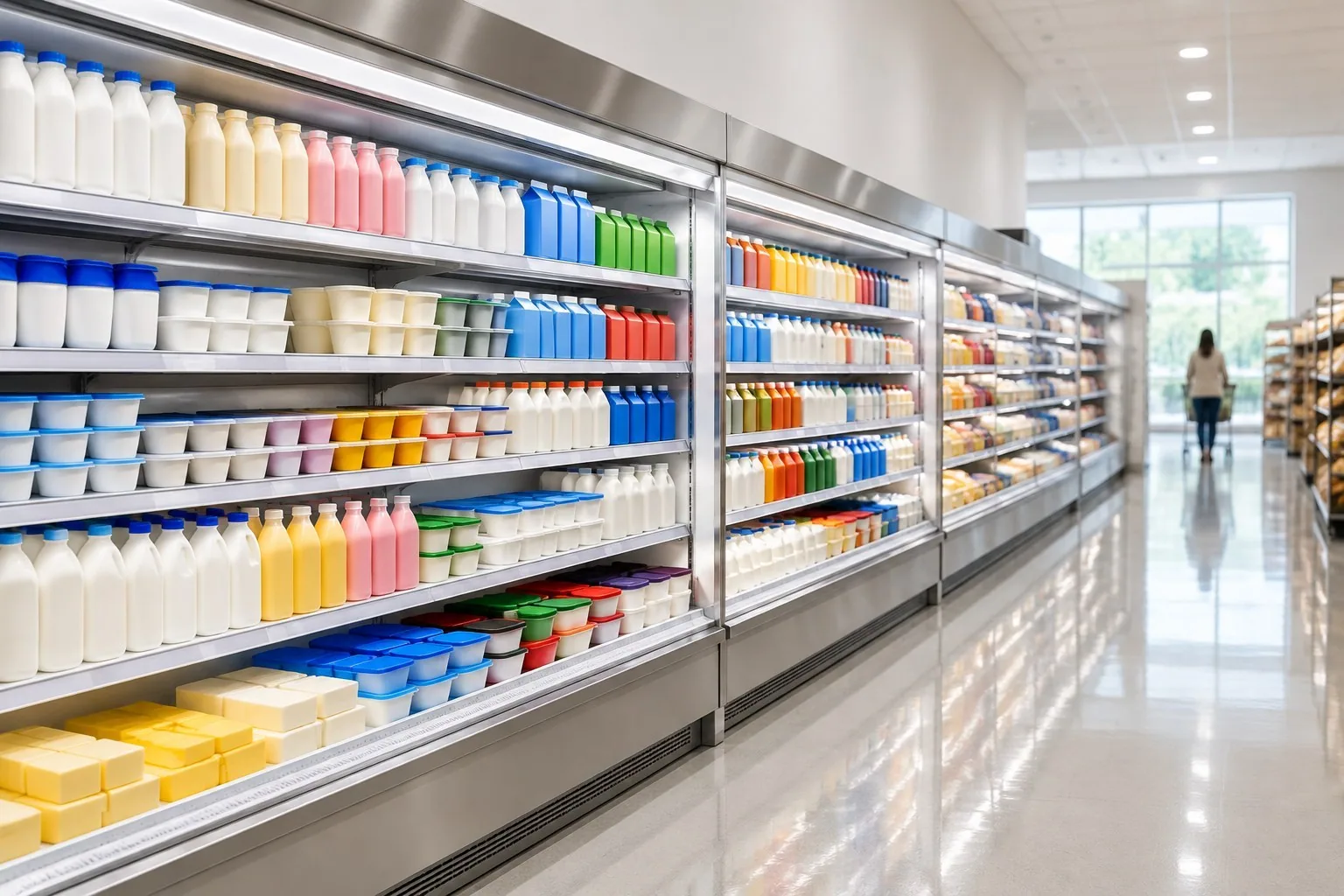
Placement decides whether the case performs as specified. Keep it away from entrance doors, air conditioning diffusers and direct sunlight, and leave the clearance the manufacturer requires above and behind the cabinet for heat rejection. Confirm whether the condensing unit is integral or remote, because a remote system moves noise and heat out of the sales area but needs plant space and pipe runs. Check that the case can be serviced without moving fixtures: which panels open, where the controller is, and how a technician reaches the coil. Lighting inside the case should be chosen with the product in mind, since warm light adds load and changes how fresh food reads. Plan how staff restock without blocking the air return, and how the display is faced up during trading hours. Electrical configuration, refrigerant handling and the compliance document set are confirmed per model and destination market.
Questions we ask before quoting
- What is the store ambient temperature and humidity at the position the case will occupy?
- How close is the case to entrance doors, diffusers or direct sunlight?
- What product range goes on display, and what is the tallest and heaviest item?
- How many decks or shelf levels are needed, and at what pitch?
- Who faces up the display during the day, and can the load line be respected?
- Is the condensing unit integral or remote, and where can it reject heat?
- Is a night cover required, and who fits it?
- Which voltage, frequency and refrigerant rules apply in the destination market?
Frequently asked questions
Why does product at the front of an open case feel warmer than at the back?
The air curtain holds temperature across the open front, and it is disturbed by overloading, cross-drafts or product stacked above the load line. Product pushed beyond the front rail or piled high breaks the curtain, so the display should be stocked to the marked load line and kept clear of drafts.
Can an open display run in an air conditioned store only?
No, but performance depends on the store conditions. Open cases are designed for a stated ambient class, and running one in a warmer or more humid space than that class changes product temperature and increases defrost and condensate load. Confirm the design class against the real conditions on site.
How do I choose between a multideck and a two-tier unit?
A multideck gives more shelf levels at a consistent height and suits packaged ranges. A two-tier unit presents product higher and closer to the shopper, which suits high-turnover fresh lines. Decide from the product envelope, the aisle width and the sight line from the entrance.
What temperature range do these cases hold?
Set points and the achievable range are confirmed against the selected model, the ambient class, the product load and the loading discipline. A single family figure is not published, because open cases respond directly to store conditions.
Send the application and we confirm the model
Share the food or product being stored, target temperature, ambient conditions, available space, voltage, quantity and destination market.