
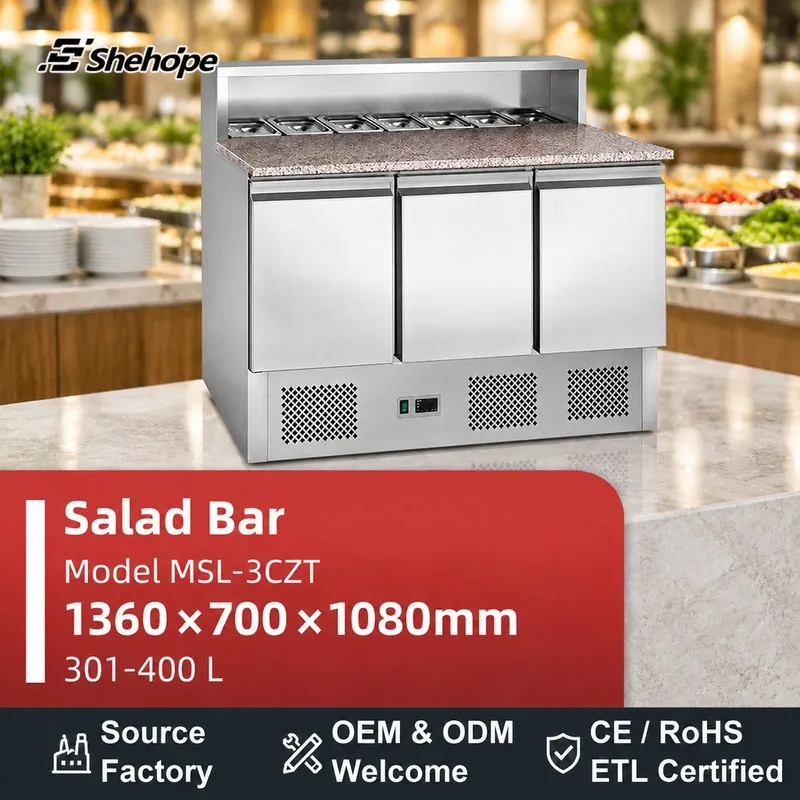
Refrigerated salad bars and salad workbenches
A salad bar holds open ingredient pans at chilled temperature inside a workbench, so guests or staff serve from the top while the cabinet below keeps back-up stock cold. This family covers salad workbenches with a flat or pan well top, salad display counters with a glass guard, and cylinder-style salad cabinets. Pan layout, guard height and the temperature the well must hold through service decide the model.
Typical use
- Hotel and resort buffets where guests self-serve salads, cold cuts and dressings.
- Restaurant and canteen salad counters served by staff from behind the bar.
- Supermarket delicatessen counters showing prepared salads in GN pans.
- Central kitchens that portion salad ingredients into pans before service.
- Pizzerias and grill houses running a chilled garnish and salad station beside the pass.
- Food halls and catering operations that need a chilled display that doubles as a workbench.
Confirm before ordering
- Counter length and working height
- Well type (pan well or flat top) and drain
- Pan sizes, pan count and well depth
- Guard type, height and fixing
- Cabinet duty below (back-up stock, plate storage or waste)
- Cooling format, defrost method and temperature range
- Voltage, frequency and plug configuration
- Refrigerant and market compliance documents
Configurations we build in this family
Drawn from our own product catalogue. Final specification is confirmed per model and destination market.
| Widths in this family | 1.2 m, 1.5 m, 1.8 m, 0.68 m, 1.22 m, 1.83 m |
|---|---|
| Capacity classes | 1600 L, 2100 L |
| Door / drawer formats | double door, three door |
| Temperature classes referenced | -10 °C |
| Catalogue items in this family | 15 (configuration confirmed per project) |
Catalogue items in this family
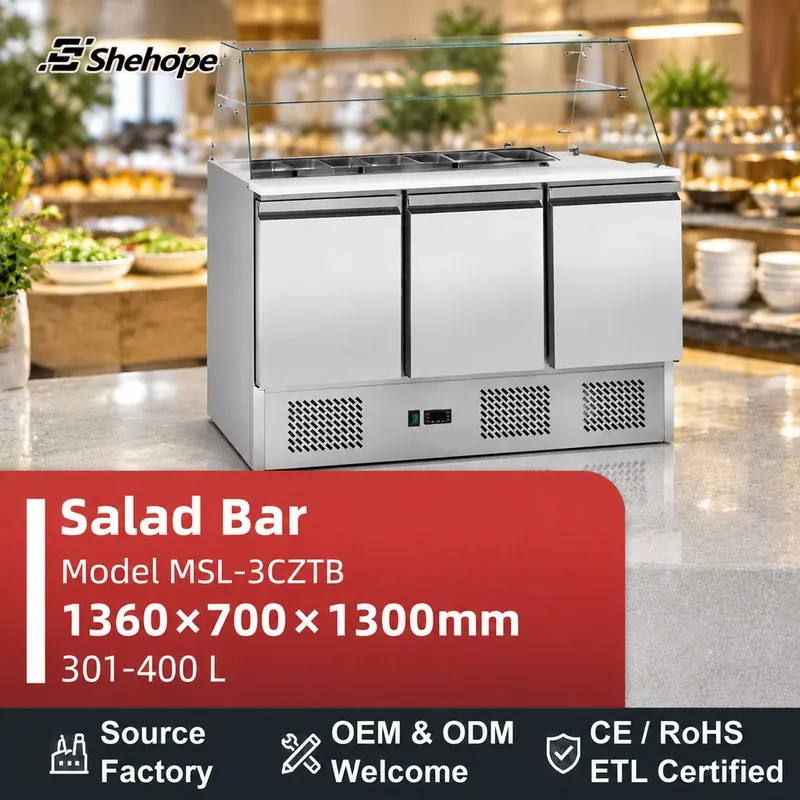
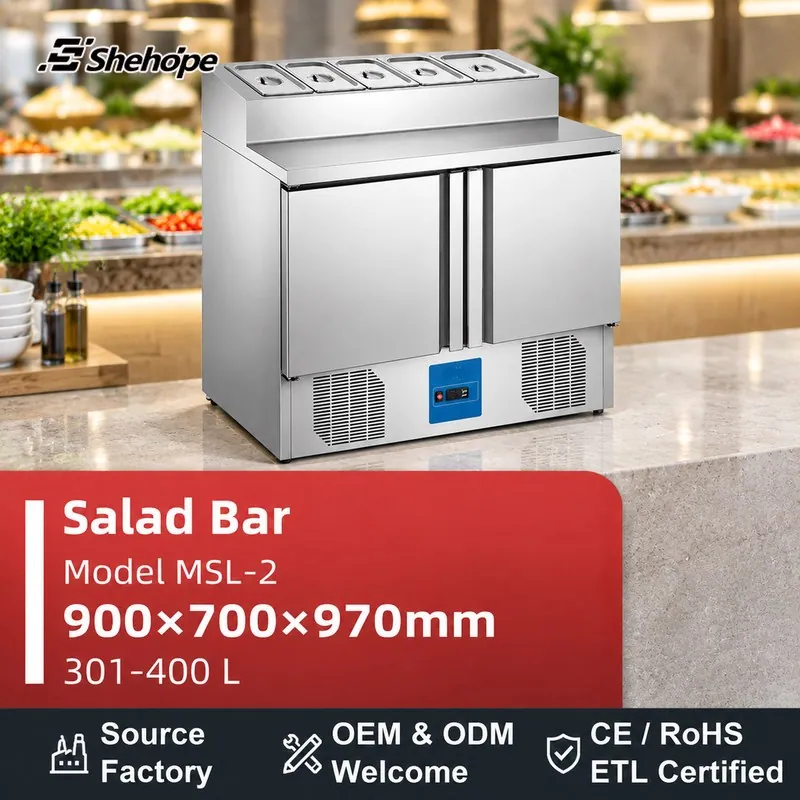
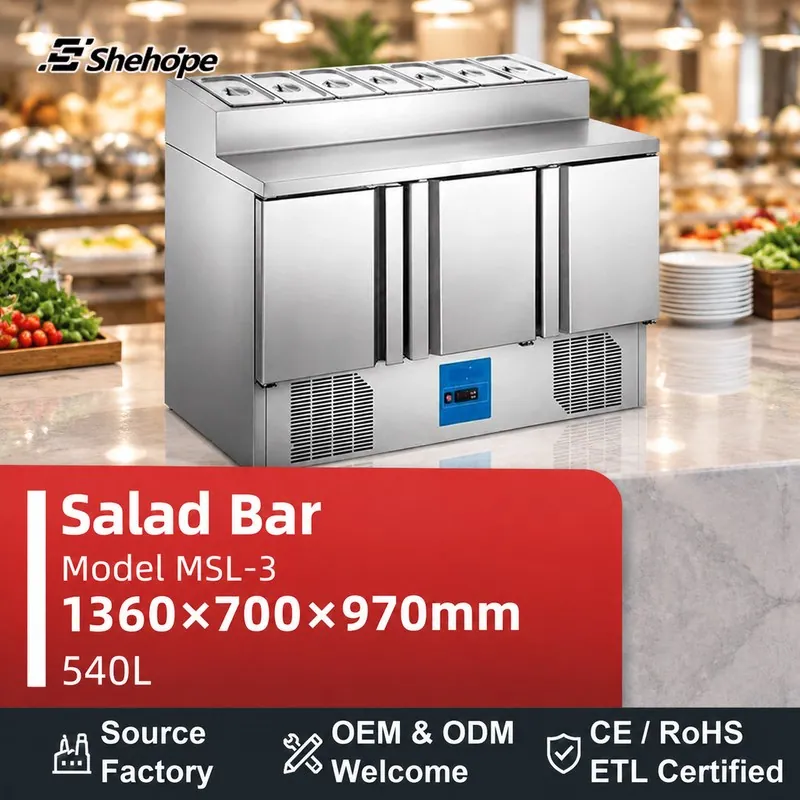
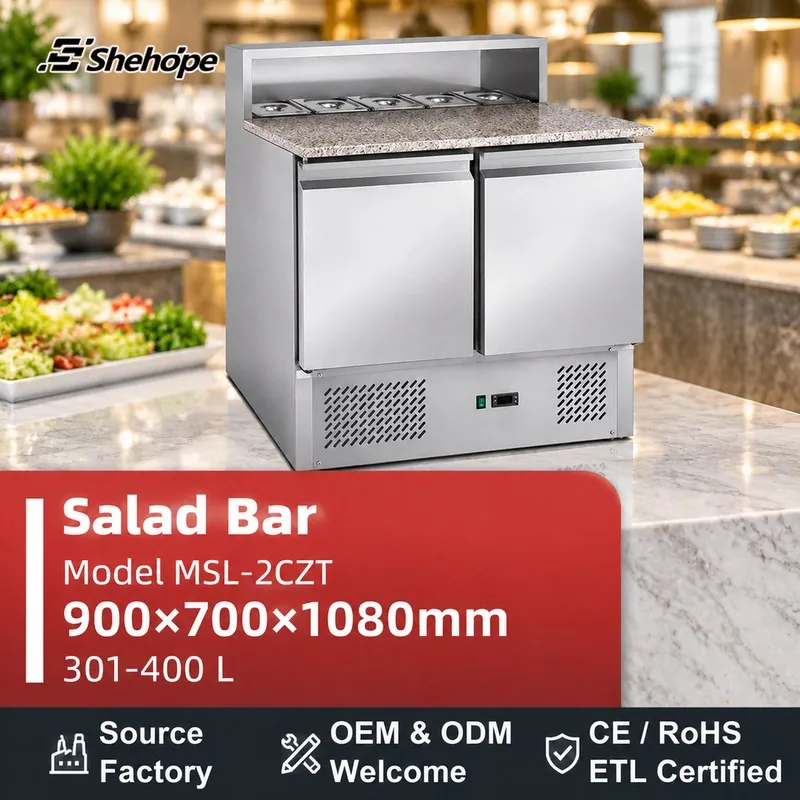
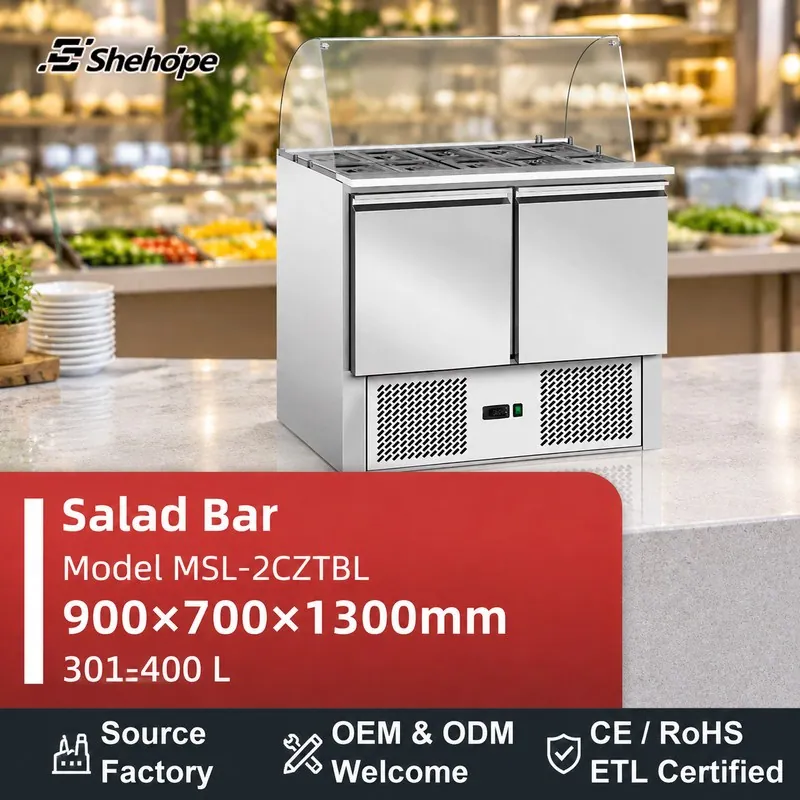
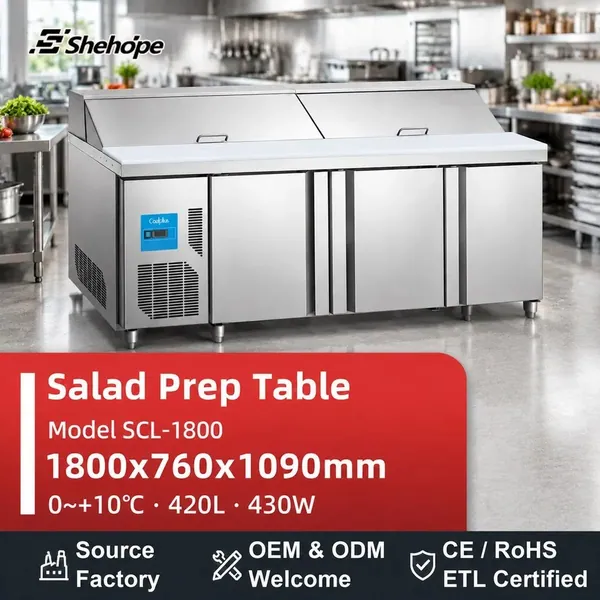
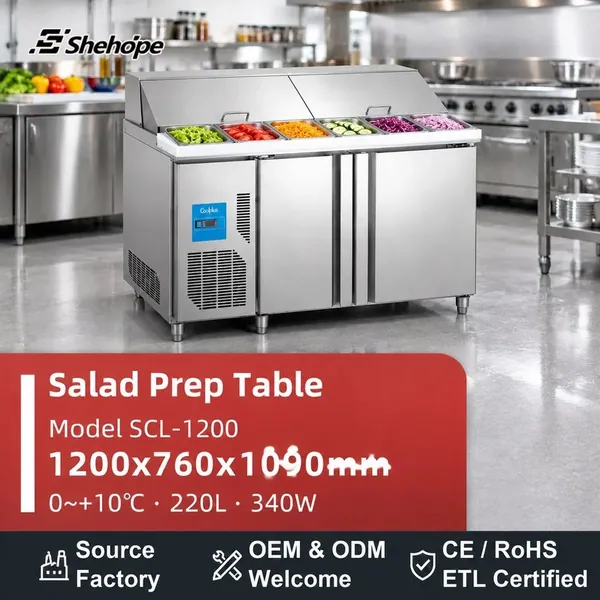
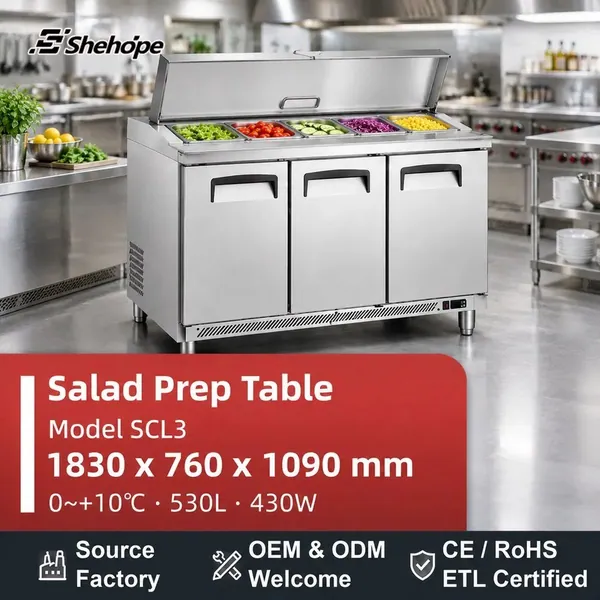
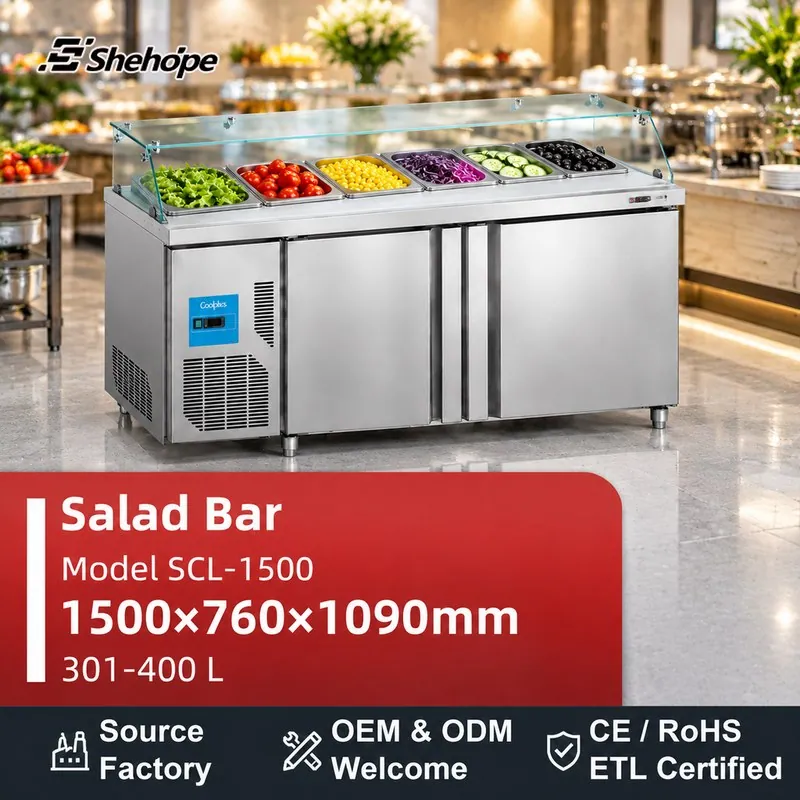
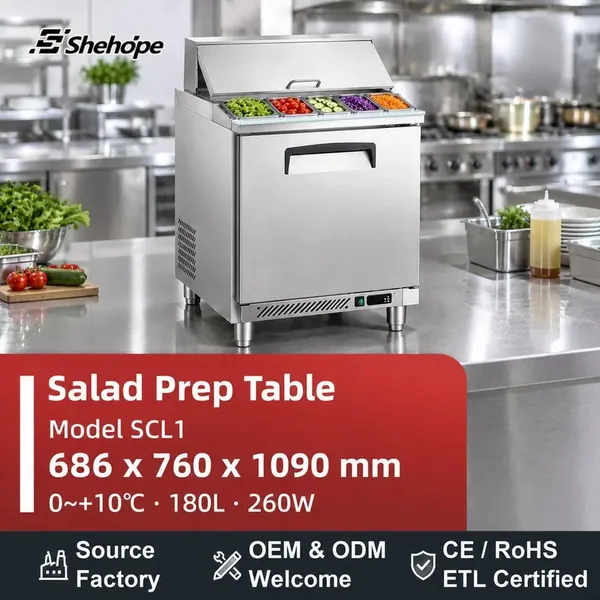
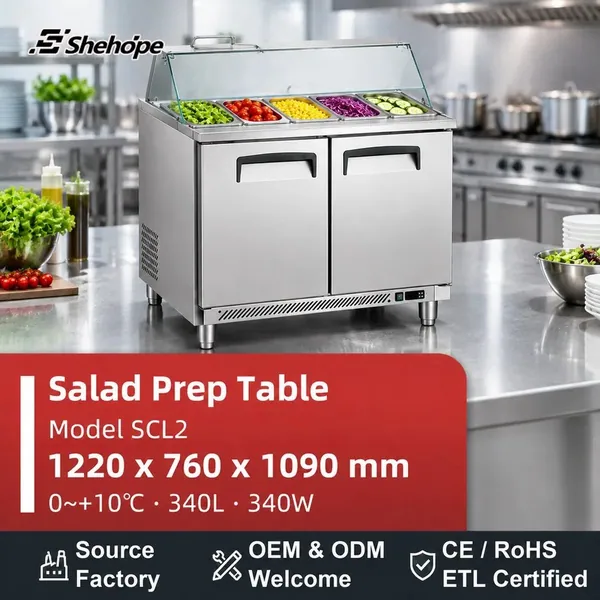
15 catalogue items photographed for this family.
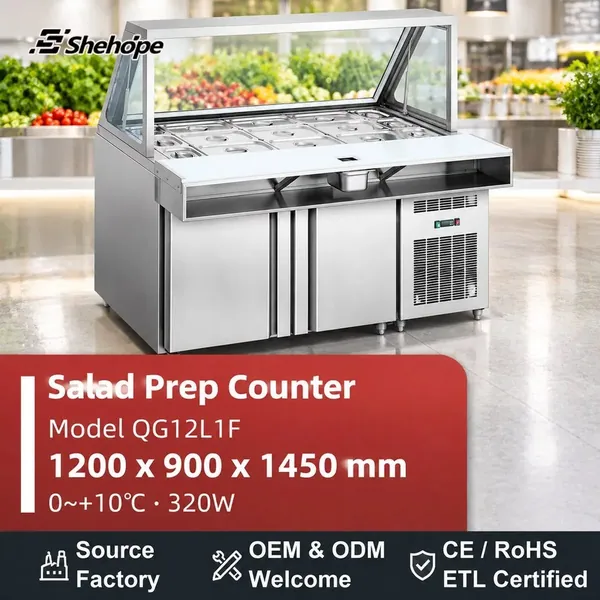
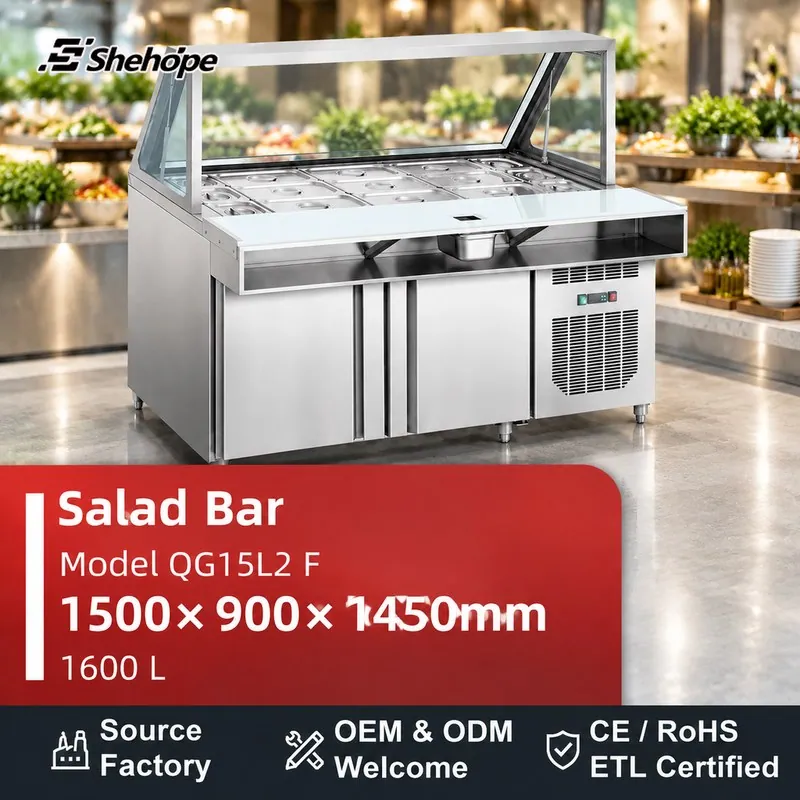
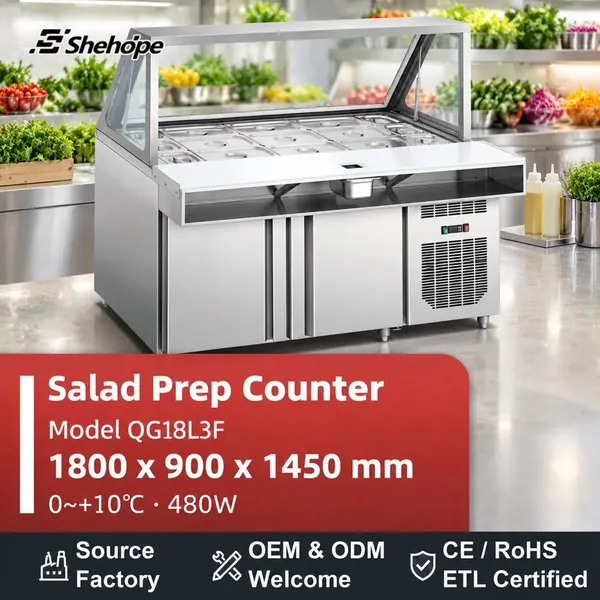
How this family is configured
Well depth, pan layout and guard
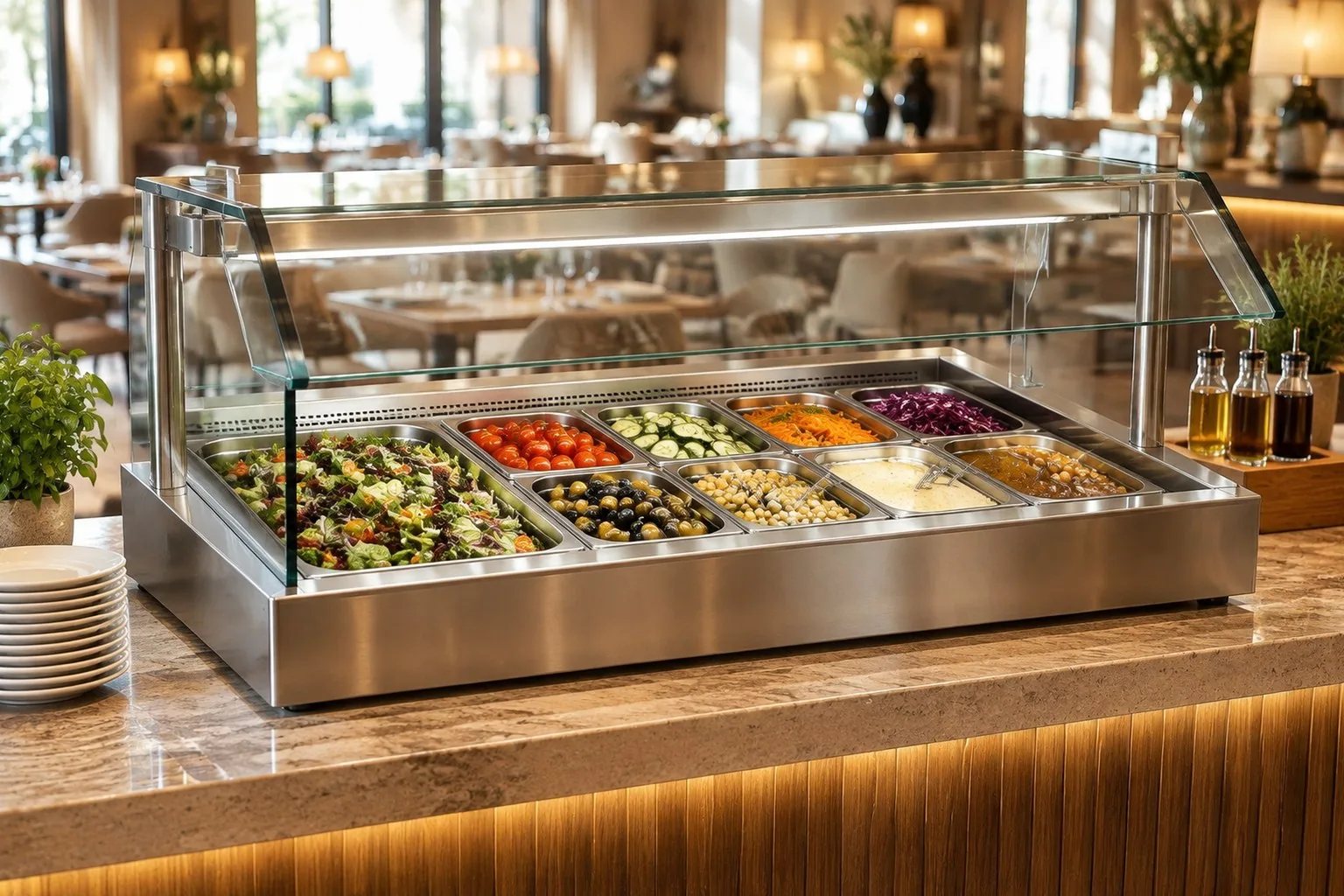
Start with the pan well, because it fixes the working height, the number of pans and how the bar is served. Confirm whether the well is cut for a standard GN set or for a specific pan, how deep the pans sit, and whether the well drains so it can be cleaned without bailing water out. The guard height then follows the serving method: a self-service buffet needs a guard that shields open product from the guest side, while a staff-served counter can often use a lower screen. Ask how the guard is fixed and whether it can be removed for cleaning or for loading the bar. State the pan sizes and count, the working height that suits the staff, and how guests or servers reach the far side of the bar, because the plan of the counter decides whether one long unit or two shorter runs work better.
Chilled well performance and cabinet below
The well and the cabinet under the workbench are separate duties and both have to be specified. Ask how the well is cooled, whether directly from the cabinet circuit or by its own evaporator, and how it holds temperature when the bar is open for a long service and pans are swapped. A salad bar that holds pre-chilled ingredients has a different duty from one that brings product down from kitchen temperature. Below, confirm whether the cabinet is used for back-up stock, plate or bowl storage, or waste, and confirm the door and drawer arrangement that suits that use. Confirm the achievable range against the selected model, and state the ambient temperature the room reaches at peak service, because a buffet room beside a hot line behaves differently from a cool back-of-house corridor.
Hygiene, drainage and materials
Ask how condensate and melt water leave the well and the cabinet, and confirm that the route does not cross a walkway or a food preparation surface. Where a well drains, confirm the connection point and whether an evaporation tray is used instead. State the cleaning chemicals and frequency the team uses: a salad bar is cleaned several times a day, and liner corners, gasket material, guard fixings and shelf finish all have to tolerate that routine. Ask which parts lift out without tools, how the pan supports are removed, and whether the interior has any crevice that cannot be reached. Confirm the surface finish for the work top area and the pan surround, because that is the part guests see and staff cut on.
Installation, utilities and export details
Confirm the power available at the position and whether a dedicated circuit is required, then confirm the plug type for the destination market. Leave clearance for air to enter and leave the condensing unit and confirm the direction it breathes, because a bar pushed into a recess or against a wall can starve its condenser. Check the floor for level, since a bar with a glass guard and a full well will show any movement. Decide between castors and fixed feet: castors help with cleaning and re-planning a buffet, but they need brakes and a firm floor. For export orders, confirm packing type, whether the unit ships assembled or knocked down, and the document set the destination market requires. Warranty terms and spare parts coverage are confirmed per project.
Questions we ask before quoting
- Is the bar self-service or served by staff from behind?
- How many pans, in which sizes, and must the well drain for cleaning?
- What working height suits the staff and matches the surrounding counters?
- Does the cabinet below hold back-up stock, plates, or waste?
- How long is the bar open at a time, and how often are pans swapped?
- What ambient temperature does the room reach at peak service?
- Which voltage, frequency and plug type does the destination market use?
- Who cleans the bar, how often, and with which chemicals?
Frequently asked questions
What is the difference between a salad bar and a salad workbench?
Both hold chilled product in a pan well set into a counter, and the working platform is very similar. A salad bar is arranged for display and serving, usually with a guard and an open well, while a salad workbench is arranged for preparation with the emphasis on the work surface and the cabinet below. The layout of your counter decides which fits better.
Can a salad bar hold hot food as well as cold?
Not as a single unit. Hot holding and chilled holding use different components, insulation and control, and a cabinet specified for one duty will not hold the other reliably. Where a counter needs both, the usual approach is separate sections specified for each duty.
Which temperature range can I order?
The range is confirmed against the selected model and the duty you describe rather than published as one number for the family, because the achievable set point depends on model, ambient conditions, loading and how long the well stays open.
Can the length, pan layout or logo be customized?
Custom work can cover counter length and height, well and pan layout, guard design, interior arrangement, and logo marking. Electrical configuration for the destination market can also be handled in an OEM project. Each request is reviewed against the model platform before it is confirmed.
What should be included in an inquiry?
Counter length and working height, self-service or staff-served, pan sizes and count, well drain requirement, cabinet use below, ambient conditions, voltage and plug type, quantity, and the destination market. A plan of the counter reduces the number of clarification rounds.
Send the application and we confirm the model
Share the food or product being stored, target temperature, ambient conditions, available space, voltage, quantity and destination market.