
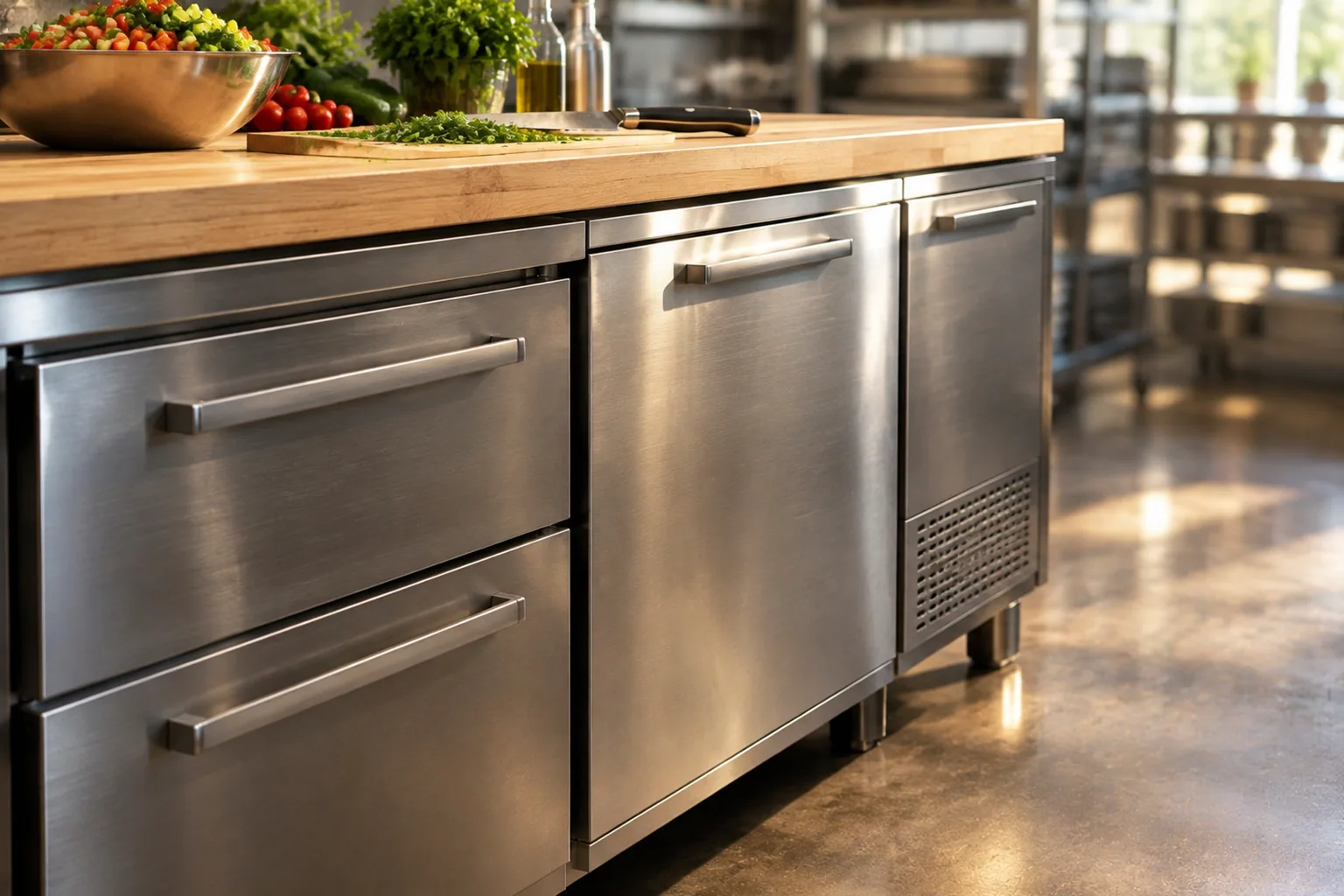
Undercounter refrigeration is bought for a gap that already exists, so the first problem is rarely cooling and almost always fit.
Measure the opening, not the nominal size
A unit sold as a nominal width is not the same thing as an opening that accepts it.
Counters are set out to nominal sizes, and the opening left for the appliance is whatever the fabricator allowed. Two counters of the same stated size can have different usable openings. Work from the opening on site and from the model's dimensioned drawing.
- Measure width, depth and height at more than one point, because counters are rarely square.
- Check whether the unit includes its own worktop, and what the counter above does.
- Confirm how the unit is supported: legs, castors or a counter frame.
- Allow for the door or drawer to open into the aisle.
- Check access to the controls and the condenser with the unit installed.
Where the opening is tight, resist ordering by nominal width alone. Ask for the dimensioned drawing and confirm the tolerance the platform is built to.
Doors, drawers and the duty of the cabinet
The section type changes how the cabinet is used every hour of service.
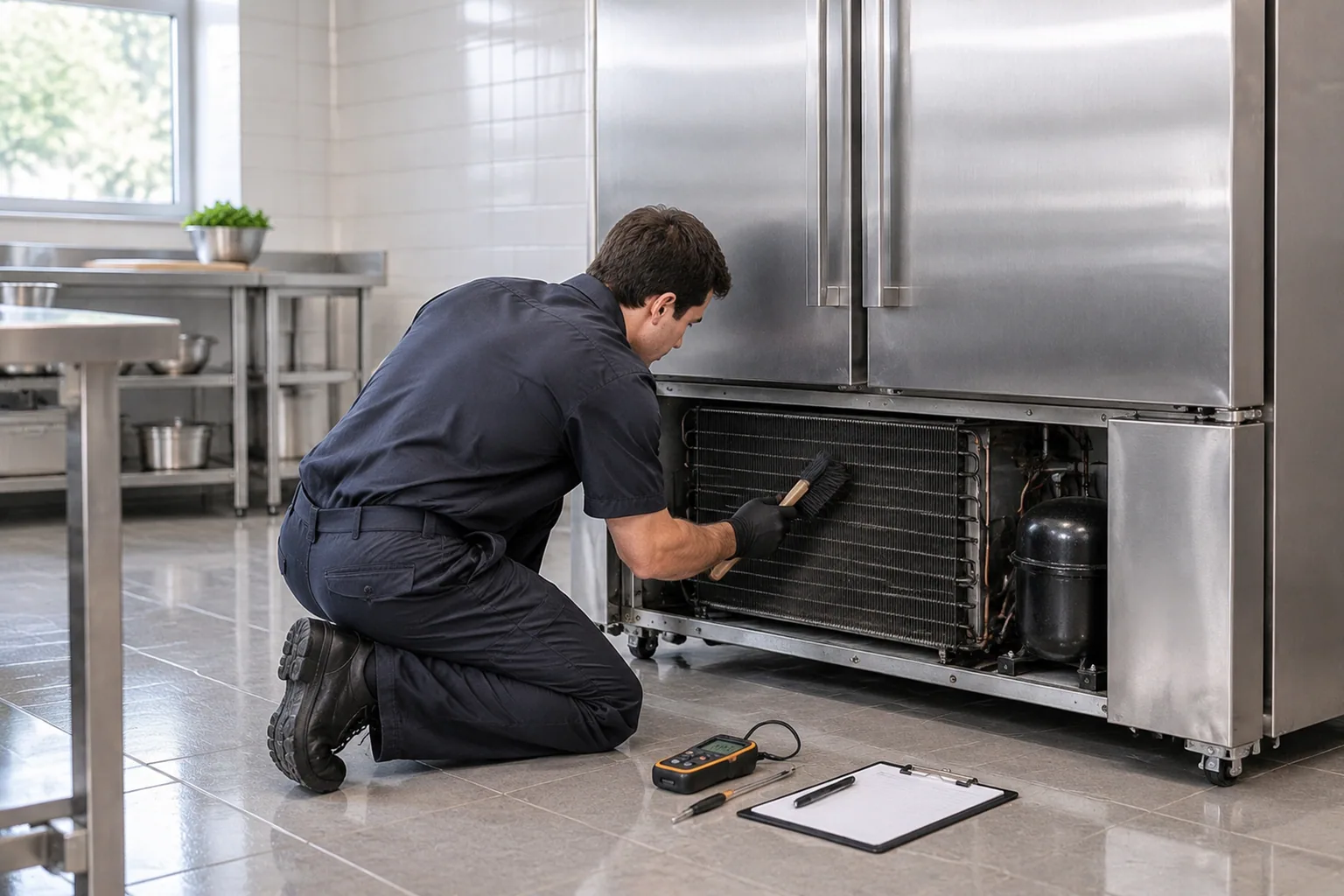
Drawers organize by ingredient group and expose only the section being used, so less cold air leaves the cabinet per access. They suit portioned items and small containers, and stations where staff reach down without stepping back. The trade-off is vertical space: drawer sections generally hold less tall product than a door section.
Doors give one continuous compartment, which suits trays and larger containers. Accessing a door section spills more cold air per opening, which matters on an undercounter unit because the interior volume is small. Many kitchens mix the two, and whether a model offers a mixed configuration is confirmed per model.
Duty is the other half of the decision. Frozen duty needs a colder holding range and a different defrost arrangement, and it normally comes with less usable volume in the same footprint. A dual-temperature unit gives two controlled compartments in one frame, but the volumes on each side are smaller than a single-duty cabinet.
Breathing clearance and where the condenser sits
The most common installation mistake on an undercounter unit is closing in the air path.

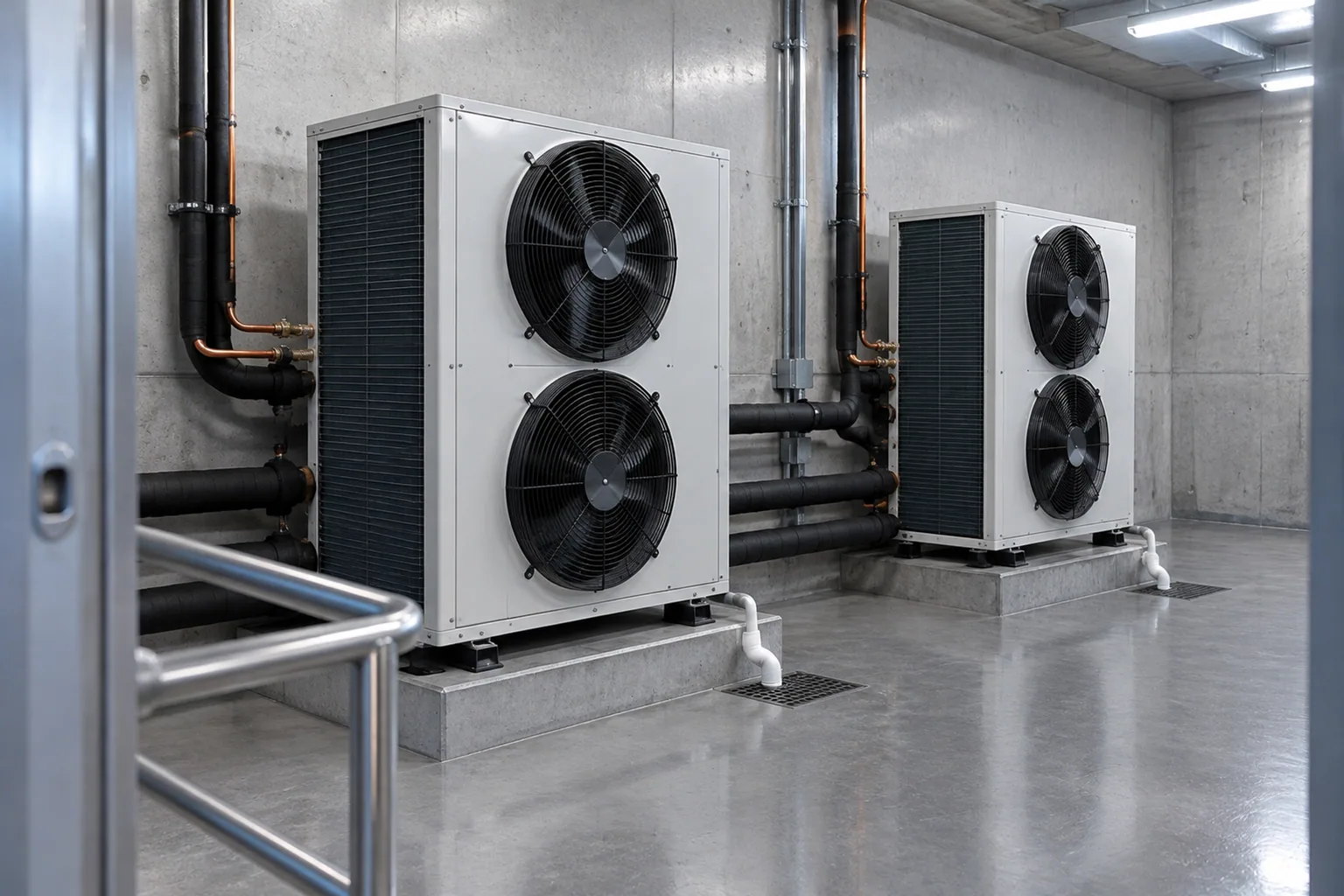
An undercounter refrigerator is an air-cooled machine in a confined space. Its condenser has to take in room air and reject heat into it without pulling that heated air straight back into the intake. A front-mounted condenser draws and discharges at the front; a rear or side arrangement needs a path behind or beside the cabinet.
- Confirm the condenser location and the clearances the installation drawing requires for that model.
- Do not block the front grille with a plinth, a panel or a closed cabinet door.
- Allow service access without moving a fixed bench.
- Account for the heat rejected into the room, especially across a run of cabinets.
- Keep the unit out of the hot zone beside ovens, fryers and dishwashers.
Cleaning the coil is harder when the unit is built in, and a blocked coil is the usual reason a cabinet stops holding temperature. Settle that before the counter is fabricated rather than after.
Recovery when the door keeps opening
An undercounter cabinet is opened more often than any other refrigerator in the kitchen.
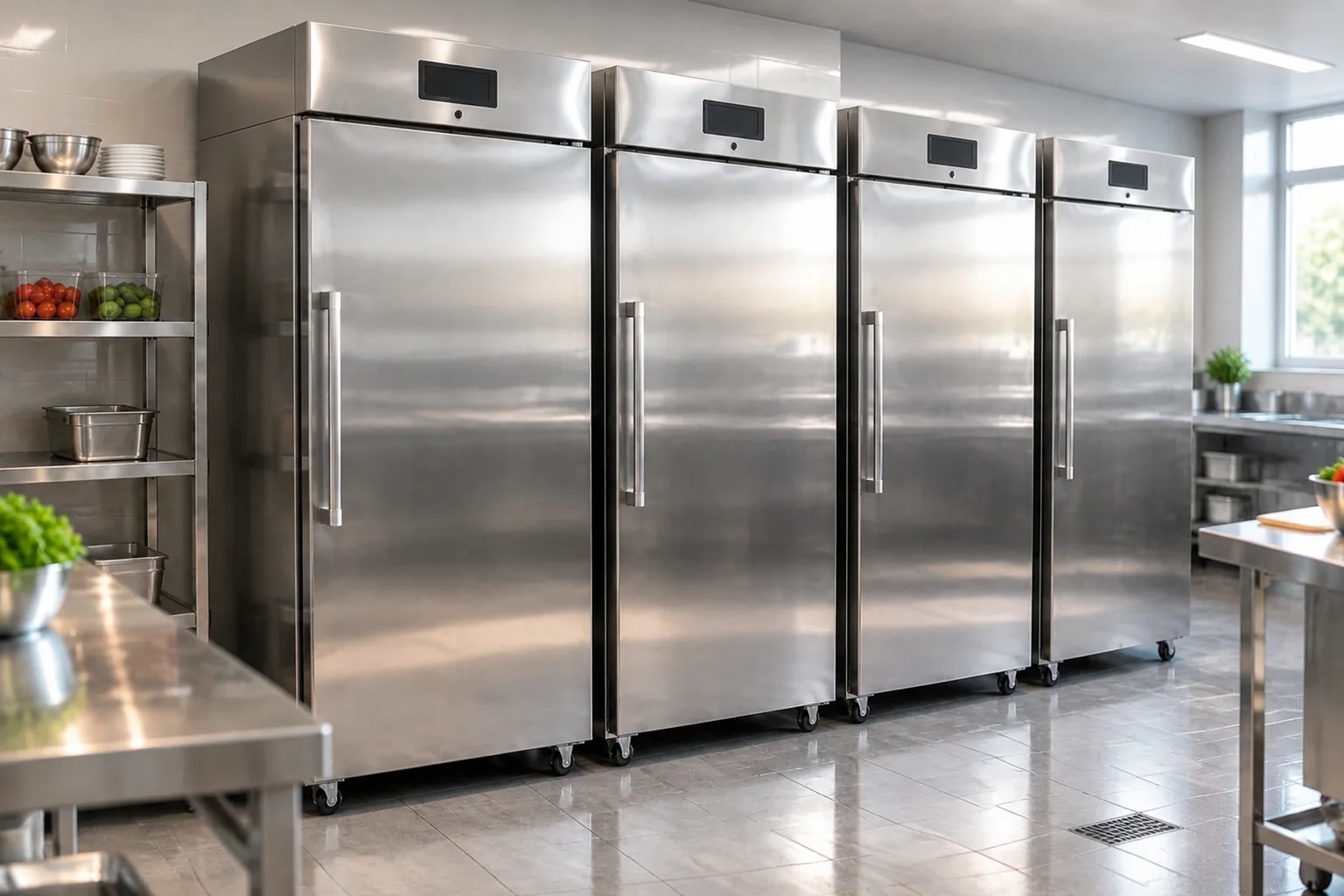
A cabinet at the end of a busy prep line can be accessed dozens of times per hour, and each access replaces cold air with room air. What keeps the food safe is recovery: how quickly the cabinet returns to its holding range once the door or drawer closes. That depends on the refrigeration system, the cabinet volume, the door seal and the ambient air the unit draws in.
Load the cabinet for service rather than for storage: a tightly packed cabinet cannot circulate air, and product against the evaporator will not hold temperature.
If the station is very busy or the room runs hot, say so during the inquiry and ask how the cabinet performs at peak ambient. Performance figures are confirmed per model against its rated ambient condition.
Service access under a fixed counter
Think about the day the unit needs repair before the counter is closed over it.

Undercounter units are installed early in a fit-out and then surrounded. The compressor compartment, the condenser, the controls and the drainage all have to stay reachable, so confirm on the drawing which side each is on.
- Check whether the unit can be pulled out on its own castors or needs lifting.
- Confirm that the counter above is not relying on the cabinet for support.
- Leave the plug or isolator reachable without pulling the unit out.
- Plan the drainage route so the defrost arrangement can be inspected.
- Decide how a replacement unit would be exchanged later.
A cabinet that has to be cut out of a counter for a routine repair is a false economy. Settle it with the counter fabricator and the supplier at the same time.
What to confirm before ordering undercounter refrigeration
Work through these parameters with the supplier and put the answers on the model datasheet.
| Opening dimensions | The measured opening, and the model dimensions against it. |
|---|---|
| Section configuration | Door, drawer or mixed sections, with shelf and bin layout. |
| Usable volume | Internal volume with the shelves and drawers you will use. |
| Duty and range | Chilled, frozen or dual temperature, with the range for the model. |
| Cooling and defrost | Cooling method, defrost type and how condensate is handled. |
| Condenser and clearances | Condenser position, plus airflow and service clearances. |
| Ambient rating | The condition the model is rated for, matched to peak kitchen temperature. |
| Materials | Stainless grade for food-contact and non-contact surfaces. |
| Electrical configuration | Voltage, frequency and plug type for the destination market. |
| Accessories | Castors or legs, locks, shelves, pan rails and dividers. |
| Documents and packing | Datasheet, drawings, export packing and the applicable compliance documents. |
Ask which parameters can be changed for your project. Custom interior layout, custom logo marking and market-specific electrical configurations fall within OEM project scope, while the refrigeration platform is usually fixed by model.
Customization, compliance and after-sales
Compliance paperwork belongs to a model and a market, not to a catalog.
Request the compliance documentation that applies to the exact model and destination market. Certificates and declarations are confirmed per model and per market; they are not uniform across a product family.
For buyers importing under their own brand, OEM and ODM projects can cover 3D CAD design and development, custom logo marking by silk screen or laser engraving, custom interior shelving and layout, and market-specific voltage and plug configurations. Final electrical configuration depends on the model and the applicable market approval. SHEHOPE manufactures commercial refrigeration, including undercounter and worktop refrigerators, in Foshan, Guangdong, China, within a shared manufacturing system with 20 or more years of experience.
Once the units are installed, write the maintenance routine into the kitchen's opening checks: condenser coil condition, gasket condition, door closure and the recorded temperature reading.
Frequently asked questions
Can an undercounter unit be pushed fully under a counter?
Only where the model is designed for it and the drawing allows the airflow and service clearances. A front-breathing arrangement can be closed in more tightly than a rear or side arrangement, so take the condenser position and clearances from the drawing.
Why does the opening matter more than the nominal size?
Because the usable opening is what the fabricator actually left, and two counters of the same stated size can differ once legs and finished edges are counted. Measure the opening at several points and compare it with the model's drawing.
Do drawers or doors suit a busy station better?
Drawers expose a smaller section per access, so less cold air escapes, but they hold less tall product than a door. Doors suit trays and larger containers. Many kitchens use drawers for working stock and a door section for back-up.
Can a small undercounter cabinet be used as a freezer?
Frozen duty is a different specification, with its own holding range and defrost arrangement and often less usable volume in the same footprint. Confirm the duty and range for the model, and ask how defrost water is handled.
What documents should we request before ordering?
Ask for the model datasheet, dimensioned and installation drawings, the accessory list, the packing specification and the compliance documentation applicable to the model and market.