
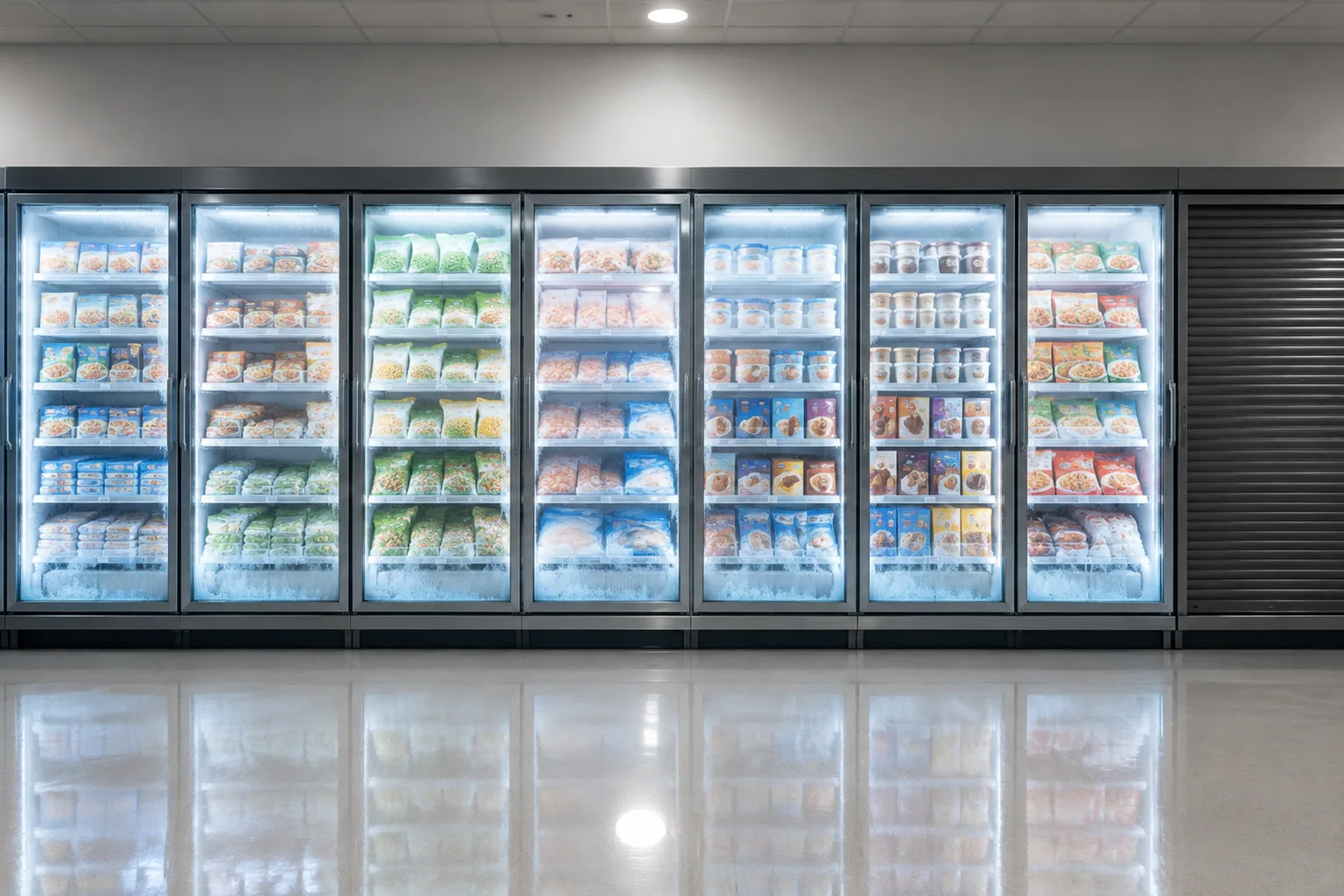
Running cost in frozen display is not a single number on a datasheet. It is the result of the format chosen, the position the cabinet stands in, how the store is ventilated, and how the cabinet is loaded and closed at night, so two cabinets of similar size can behave very differently in the same aisle. This guide explains what drives the cost and which parameters to confirm before ordering.
Where the cost of a frozen display case comes from
Everything that adds heat, or slows its removal, adds to run time.
A frozen display case removes heat from the product space and rejects it into the store. The compressor runs until the cabinet reaches its band, then cycles to hold it, so anything that raises the condensing side or lets heat in lengthens that run: warmer air, a soiled coil, a torn gasket, warm product or a draught across an air curtain.
Defrost adds heat deliberately, which the cabinet then has to remove again. Anti-condensation and door frame heaters keep glass clear in humid stores, and lighting adds heat into the display space.
A running-cost figure quoted without your ambient, your hours and your local tariff is an assumption rather than a result.
- Ambient air temperature and humidity around the cabinet
- Condenser condition and clearances actually left free
- Door or air-curtain losses across a trading day
- Defrost frequency, duration and what initiates it
- Hours of trading, plus what the cabinet does outside them
Open multideck, glass door or chest: the access trade
Format decides how exposed the display is to the room, so it is the largest single choice.
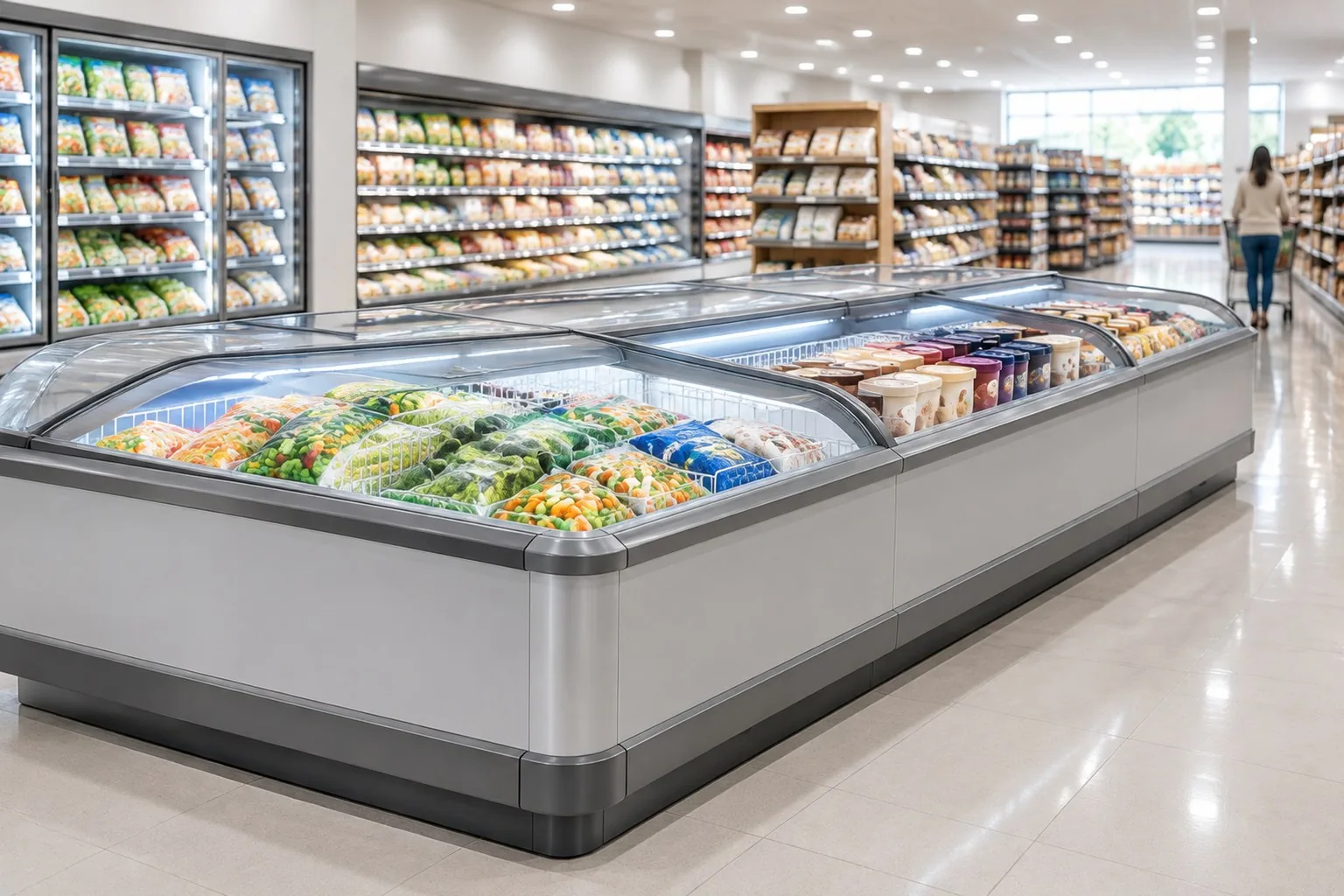
An open multideck presents product with no barrier, holding temperature with a moving curtain of cold air, so it works against the store environment continuously rather than only when a door opens. Shoppers reach in without thinking, and the same reach disturbs the curtain.
A glass-door display freezer holds its band with less effort because the air inside is protected from the aisle, and its losses concentrate in door openings, gasket condition and glass heaters. A chest loses least per opening, but the shopper looks down and digs, which suits bulk lines rather than browsed categories.
The trade is access against how much of the store the cabinet has to fight, so choose the format from the category and position.
- How accessible the category has to be to sell
- Ambient and humidity where the cabinet will stand
- Door openings per hour versus continuous curtain exposure
- Gasket, frame and glass heating on closed cabinets
- Floor area and fixture height available on the aisle
Night blinds and curtains: cutting the load after closing
Most of the difference between two identical cabinets is what happens after closing.
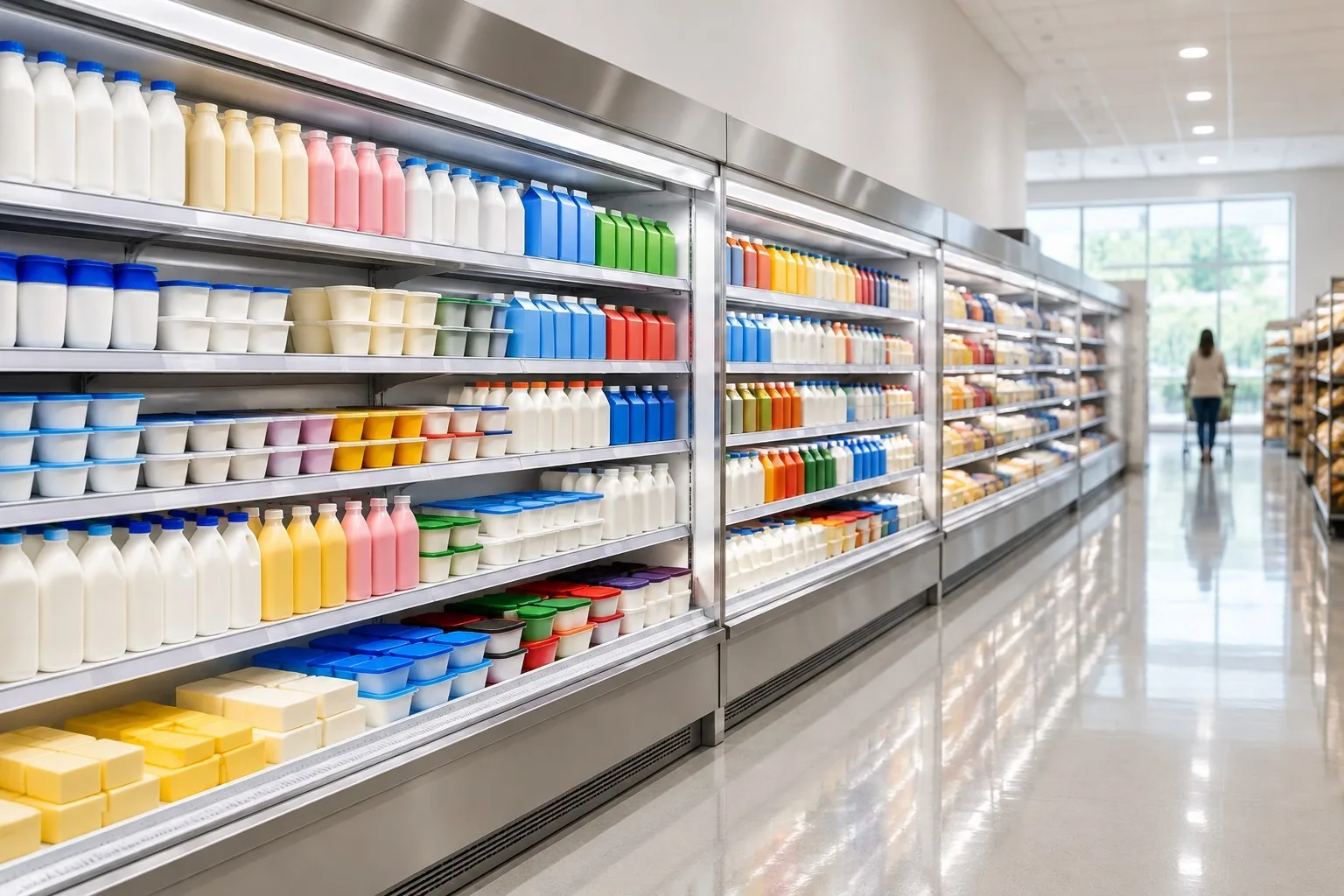
Outside trading hours there is no reason to leave a case exposed. A night blind, roller cover or curtain over the display opening reduces the load the cabinet sees overnight, which reduces run time when nobody is buying, and availability and fit are confirmed per model.
A blind that is not deployed is worth nothing, so it belongs in the closing routine with the shutters and the lights. Check whether it takes seconds to deploy, whether it interferes with cleaning, and whether restocking before opening conflicts with it.
Where the model allows lighting to be switched off outside trading hours, that removes a heat source from inside the display space. Where glass or frame heaters are fitted for a humid store, confirm how they are controlled, because running them when the store is closed and dry is cost with no benefit.
- Night cover availability, fit and handling for the model
- Whether lighting can be switched outside trading hours
- How glass and frame heaters are controlled
- Who deploys the cover, and at what point in the routine
Store ambient and humidity: the environment is part of the load
A frozen cabinet in a warm, humid aisle works harder than the same cabinet in a cool store.
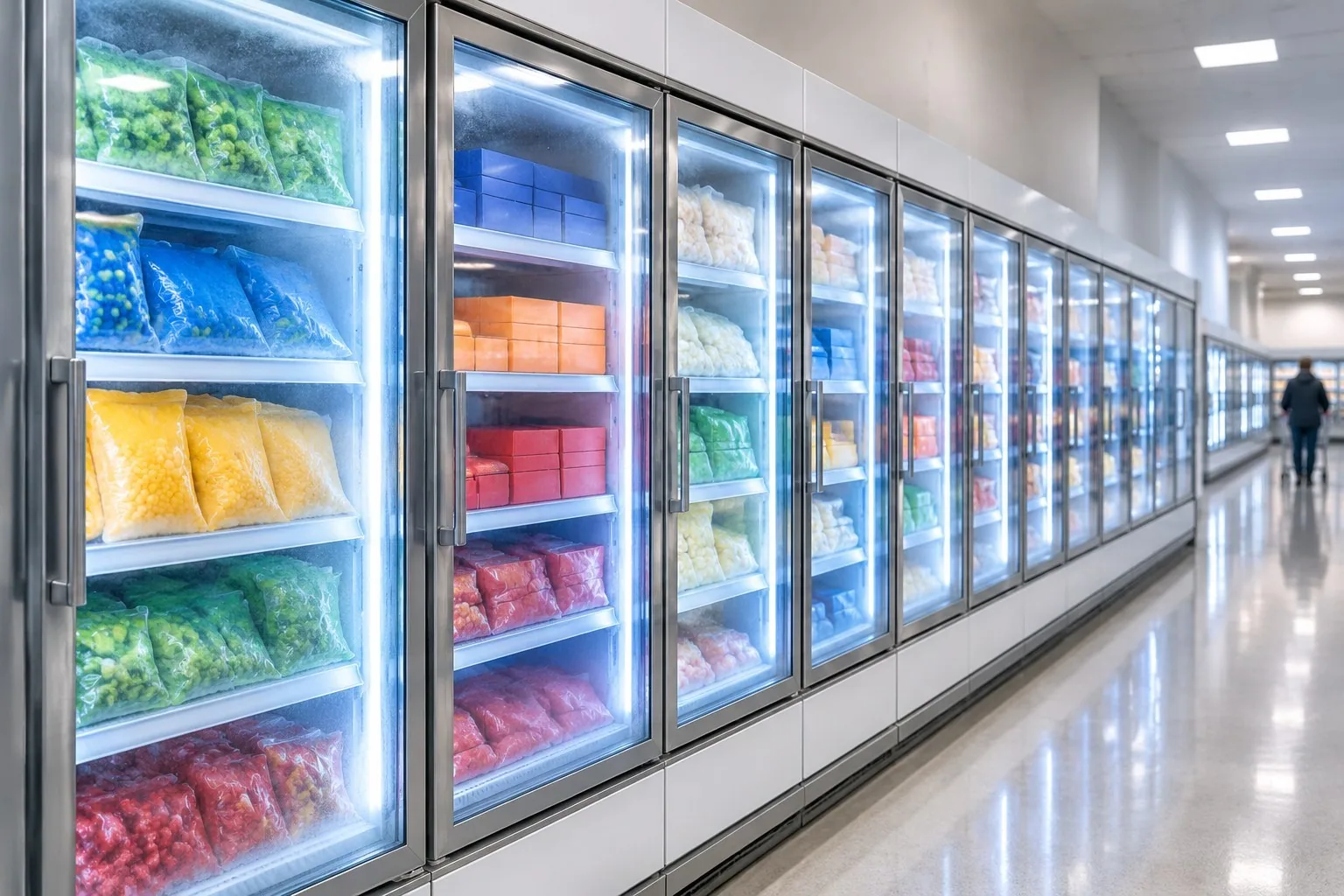
Store ambient is set by the air-conditioning strategy, the doors, sun on the glazing and where the cabinet stands. A case beside an entrance, under a diffuser, in direct sun or next to bakery ovens fights conditions the datasheet never sees, and the air temperature measured at the cabinet, at the hottest hour, is the number that should drive selection.
Humidity drives cost in three ways. Moisture becomes frost on the evaporator, so a humid store needs more defrost and each cycle puts heat back that the cabinet must remove. Moisture also condenses on cold glass, which is why doors and frames carry heaters, and humid air entering an open case adds latent load.
Ventilation and air conditioning that keep the aisle inside the range the cabinets are rated for reduce run time across the department.
- Measured ambient at the cabinet at the warmest hour
- Relative humidity in the store through the trading day
- Draughts from doors, diffusers and open loading bays
- Whether the aisle is inside the air-conditioned envelope
Defrost frequency and loading discipline
Frost is the store's humidity arriving inside the cabinet, and it is paid for twice.
Defrost melts frost off the evaporator so air can pass across the coil and the cabinet can hold its band. The cycle costs energy directly and interrupts cooling, so the cabinet works to recover afterwards, and frost accumulates faster in humid and busy stores.
Product should go in already frozen, because pulling a warm load down demands far more than holding it. Restock in batches rather than item by item, and never stack above the load line or across the air return, because a blocked return lets the cabinet run continuously without holding the front row.
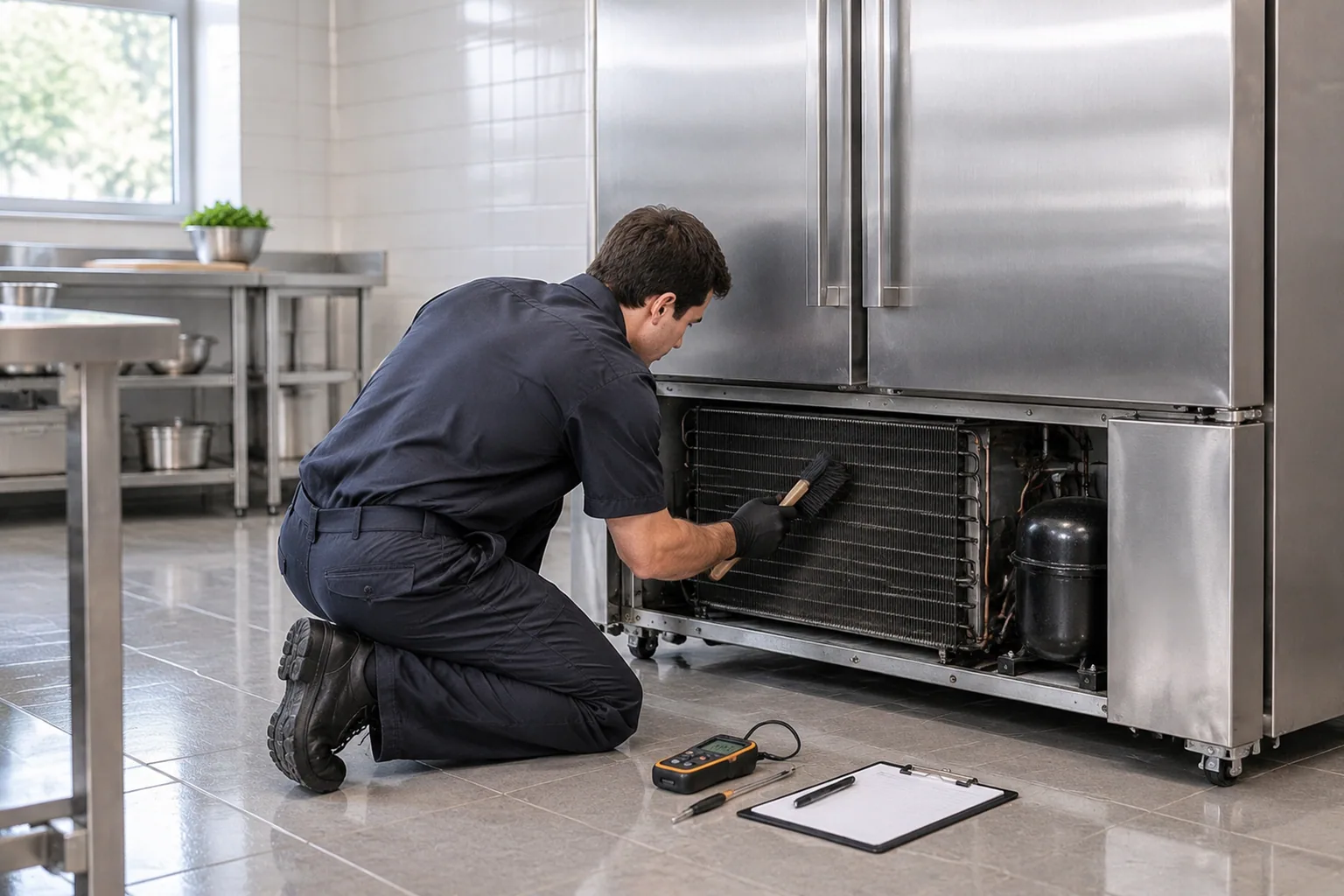
Maintenance decides whether the specification survives. A soiled condenser coil raises run time exactly as a hot aisle does, and the two effects add, so coil, gasket and drain checks on a schedule are the largest single saving available.
- Defrost type, initiation and duration for the model
- Whether defrost can be timed outside peak loading
- Product entering already frozen and below its band
- Load line respected and air returns kept clear
- Coil, grille, gasket and drain checks on a schedule
Compare cabinets by usable display area, then confirm the rest
Headline volume describes the box. Display area describes what can be sold.
Frozen cabinets are often compared on nominal volume, which says how much space exists inside the liner. Shoppers buy what they can see and reach on a shelf, so two cabinets with similar nominal figures can present very different amounts of product once shelf depth, shelf count and the load line are counted.
Then look at what that area costs to run. A wider cabinet with more display area per unit of length may need fewer fixtures on the aisle, which changes the total load and floor space, and more storage behind the display may reduce backroom handling.
| Format and access | Open multideck, glass-door or chest, and the shopper access the category needs. |
|---|---|
| Display area | Usable display area, shelf depth, shelf count and load line. |
| Rated ambient and humidity | The conditions the model is rated for, against the store measured at the cabinet. |
| Defrost and condensate | Defrost type, how it is initiated, and where melt water goes. |
| Night cover | Availability, fit and handling of a night blind in the closing routine. |
| Doors, gaskets and heaters | Door type, gasket design, and the anti-condensation options on the model. |
| Lighting and electrical | Lighting type and position, whether it can be switched off outside trading hours, and voltage and frequency for the market. |
| Documents and terms | Refrigerant confirmed per model, the compliance documents for that model and market, and production planning confirmed per order. |
- Usable display area compared, not nominal volume
- Fixture count and floor area across the whole run
- Defrost and condensate route agreed before installation
- Compliance documents confirmed per model and market
Send the format, the measured ambient and humidity at the position, the category and turnover, the trading hours and the destination market. Those inputs move the comparison from headline figures to a cabinet that holds its band in your store.
SHEHOPE manufactures commercial refrigeration in Foshan, Guangdong, China, inside a shared manufacturing system with more than 20 years of refrigeration manufacturing experience, a 20,000 m² production facility and four production lines. OEM and ODM projects can cover interior layout, shelving and custom logo marking.