
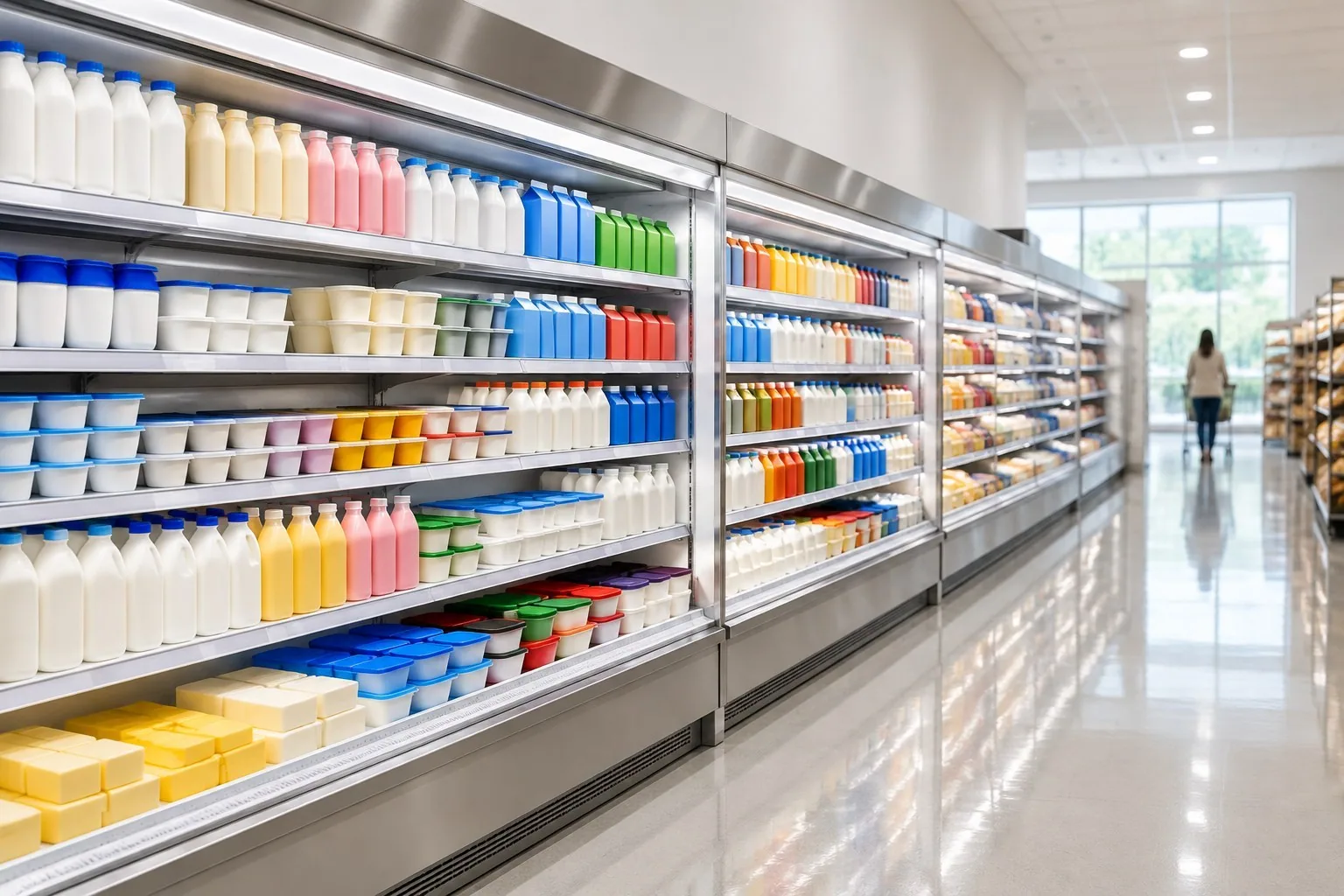
An open multideck sells product by making it visible and reachable, with no door between the shopper and the shelf. That convenience is bought with a refrigeration system that works harder than a closed cabinet in the same location. This guide explains how an open case holds temperature, where open display fits, how store conditions and loading affect performance, and what to confirm before ordering.
How an open multideck holds temperature
There is no door, so the case holds temperature with a moving curtain of cold air.
Cold air is discharged from the top of the case, travels down across the front of the product, and is drawn back into a return grille at the bottom. Product sits inside that moving curtain rather than in a sealed box. The case's geometry, shelf depth and airflow design exist to keep that curtain intact.
The practical consequence is that anything disturbing the curtain reduces performance: a draught from a door, an air-conditioning diffuser aimed at the case, staff reaching across the front, or product stacked past the load line. Open display is therefore a store-system decision, not a standalone equipment purchase.
Where open display fits, and where it does not
The right question is not which case is cheaper, but which case performs in your store.
Open display suits high-turnover categories in a store with controlled conditions: drinks, dairy, chilled ready meals, produce and impulse lines. Shoppers see the whole category at once with no door to hold them back.
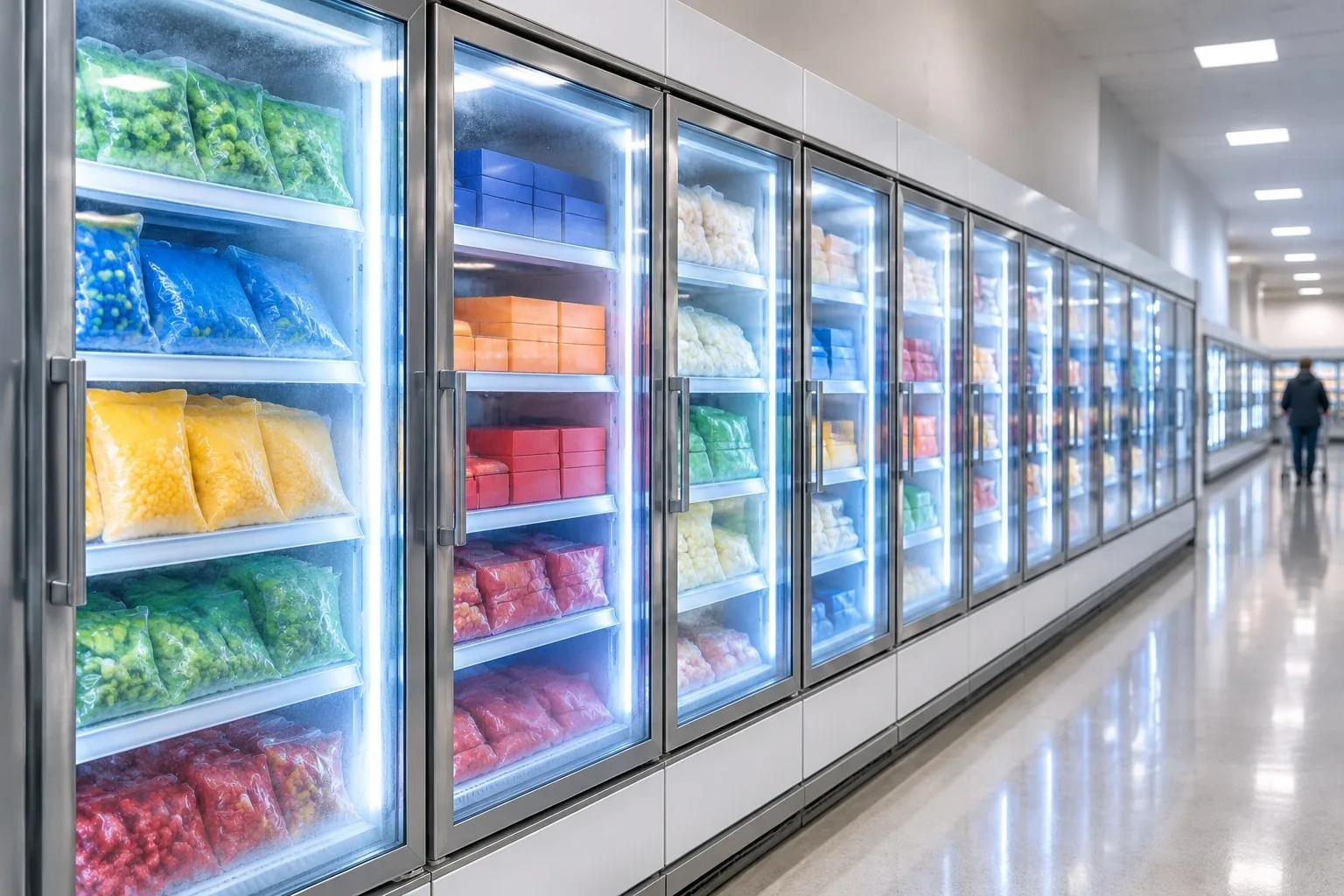
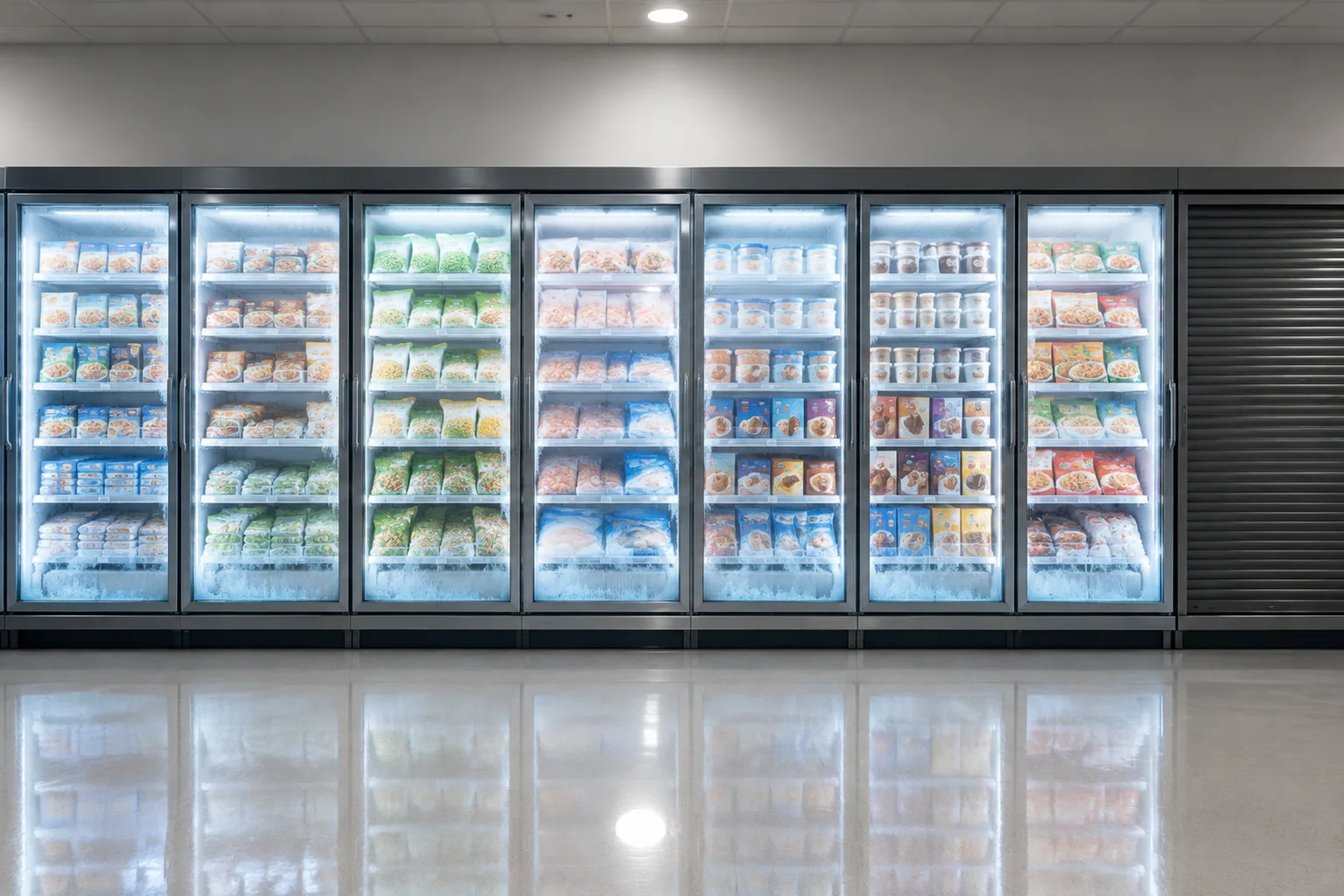
Closed glass-door display holds temperature with less effort and tolerates a warm or draughty location better. Where a store has strong foot traffic but limited environmental control, a glass-door cabinet is often the better decision. Many stores run both, using open multidecks on the main aisle and closed cabinets for backup stock.
Compare the two on the conditions you actually have: ambient temperature and humidity, opening hours, draught exposure, and how disciplined the loading will be.
Ambient conditions and store layout
An open case is sensitive to where it stands, and position is decided before the equipment arrives.
Avoid positions next to entrance doors, directly under air-conditioning diffusers, in direct sunlight, or beside hot equipment such as bakery ovens and coffee machines. A case near a doorway fights the outside air every time the door opens, and no shelf adjustment will fix a bad position.
Confirm the ambient condition the model is rated for and compare it with the store's worst case, not its average. If the store runs hot or humid, raise that at the inquiry stage and ask about wide-climate configurations; availability is confirmed per project and requires model-level ambient and test data before any performance figure is quoted.
Leave service access to the condensing unit, coil and drain, and plan the aisle so shoppers do not stand in the air curtain's return path. In long runs, confirm how adjacent units and end panels interact first.
Shelving, load lines and merchandising discipline
Most warm-product complaints in an open case trace back to loading, not to the refrigeration system.
A multideck has a manufacturer-set load line: the maximum height and depth to which product may be stacked. Loading past that line pushes product outside the air curtain, so the case runs continuously without holding the front row at temperature.
Adjust shelving so the front edge of the product stays behind the curtain, and keep the front row filled during trading hours: empty positions let air escape instead of returning. Rotate stock front to back and check that packaging stays behind the shelf edge.
Defrost, drainage and cleaning
Confirm these details before installation, because they are difficult to change afterwards.
Ask for the defrost type and where the melt water goes. Open cases typically run automatic defrost cycles, and the condensate must reach a drain or an evaporator tray sized for the store's humidity. A case that drips onto the sales floor is an installation problem, not a refrigeration one.
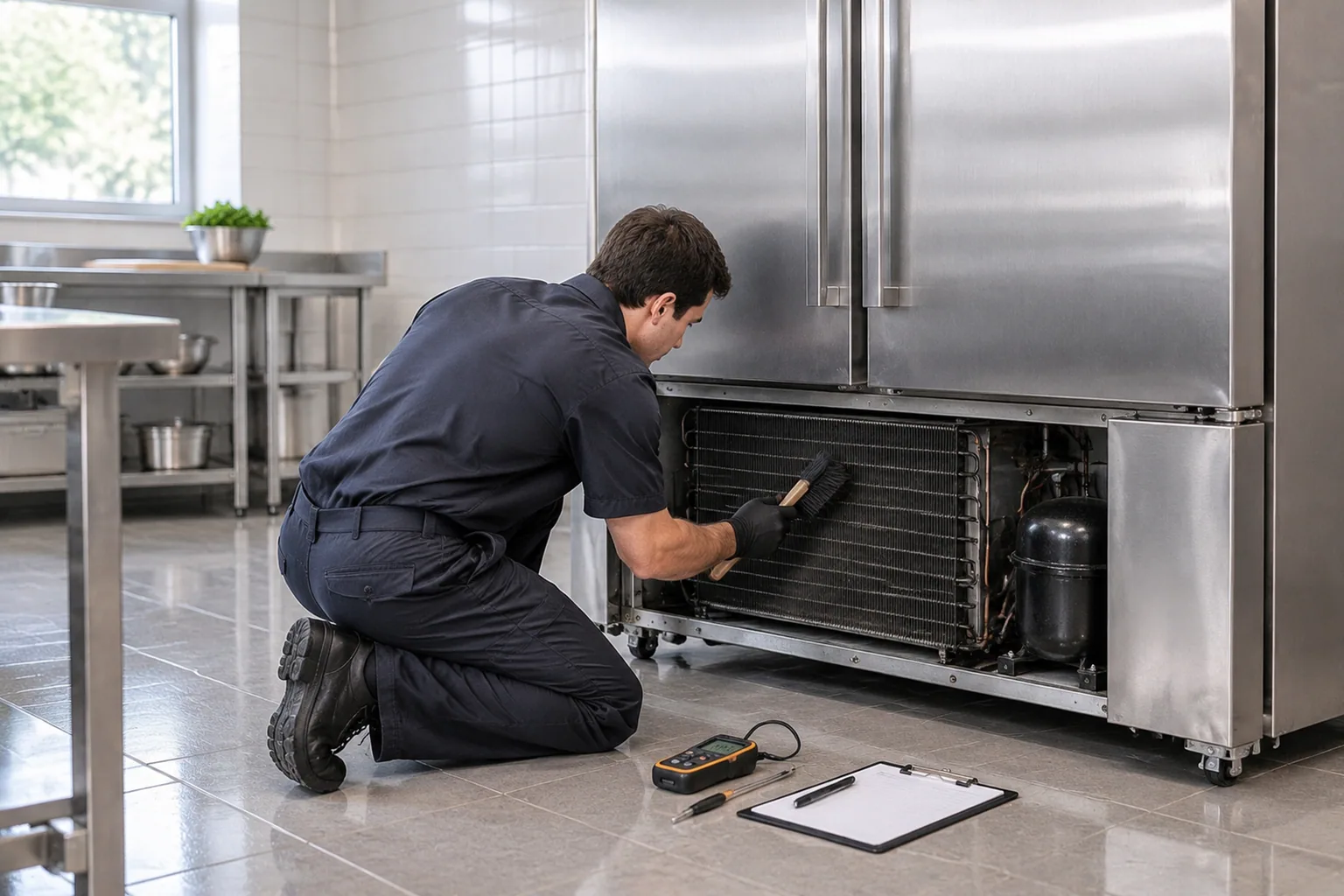
Clean the air return grille, the discharge grille and the shelves on a schedule: a blocked return disturbs the air curtain directly, and coil cleaning is what keeps the system able to reject heat. Night covers, where available, reduce the load outside trading hours; confirm fit per model.
What to confirm before ordering an open multideck
Use this list as the basis of the inquiry. Each line is a parameter to confirm, not a value.
| Case type and dimensions | Multideck length, depth, height and whether the unit joins a run. |
|---|---|
| Ambient rating | The ambient condition the model is rated for, versus the store's worst case. |
| Temperature range | The range for the exact model, matched to the category being displayed. |
| Cooling and defrost | Cooling method, defrost type and condensate handling. |
| Shelving | Shelf count, depth, adjustability and the stated load line. |
| Lighting | Lighting type, position relative to the air path and serviceability. |
| Electrical configuration | Voltage, frequency and plug type for the destination market. |
| Refrigerant | Refrigerant type and charge, confirmed on the model datasheet. |
| Night cover | Availability, fit and handling of a night cover for the model. |
| Compliance documents | CE, CB or RoHS documentation as applicable to the model and destination market. |
| Packing and lead time | Export packing, container loading plan and normal production planning of 20 to 30 days, confirmed per project. |
Ask which shelving and lighting options are available on the platform you are quoting, and whether the shelf layout can be adapted to your category plan; custom interior shelving and layout falls within OEM scope. Ask for the model datasheet, a dimensioned drawing and the installation clearances, so the layout can be checked before the order.
Monitoring and daily operation
A multideck holds temperature only while the routine around it holds up.
Record product and air temperatures at the intervals the food-safety plan requires, and take readings at the front of the case as well as the back, where an air curtain problem shows first. Define who checks the case, how often, and what follows a reading outside limits.
SHEHOPE manufactures commercial refrigeration, including open display refrigeration, in Foshan, Guangdong, China, within a shared manufacturing system with 20 or more years of experience, a 20,000 m² facility, more than ten production lines, annual capacity of approximately 50,000 units and an ISO 9001 quality system. OEM projects can cover custom logo marking by silk screen or laser engraving, custom interior shelving and layout, and market-specific voltage and plug configurations; final electrical configuration depends on the model and the applicable market approval.
Frequently asked questions
Is an open multideck harder to run than a glass-door cabinet?
An open case has no door, so it works against the store environment continuously and depends on an intact air curtain. Whether it is right depends on the store's ambient conditions, the category's turnover and how disciplined the loading will be. Confirm the rated ambient condition against your worst case.
Can an open case be installed near the entrance?
It is worth avoiding. Entrance doors bring in outside air and create draughts that break the air curtain, and the case will run continuously without holding the front row. If the layout leaves no alternative, raise it at the inquiry stage so the ambient rating and configuration can be discussed.
Why is product at the front of the shelf warmer?
The front row sits at the outer edge of the air curtain, so it is the first place to suffer when the curtain is disturbed. Common causes are product stacked past the load line, empty front positions, packaging extending past the shelf edge, or a draught from a diffuser or door. Check loading first.
What maintenance does an open multideck need?
Clean the air return grille, the discharge grille, the shelves and the condenser coil on a schedule. A blocked return or a soiled discharge grille disturbs the air curtain directly, and a coil that cannot reject heat limits the whole system. Night covers, where available, reduce the load outside trading hours.
What should we confirm before ordering?
Confirm the case type and dimensions, the ambient rating against your store conditions, the temperature range for the exact model, cooling and defrost with condensate handling, shelving and load line, lighting, electrical configuration for the destination market, refrigerant, night cover availability, and the compliance documents for that model and market.