
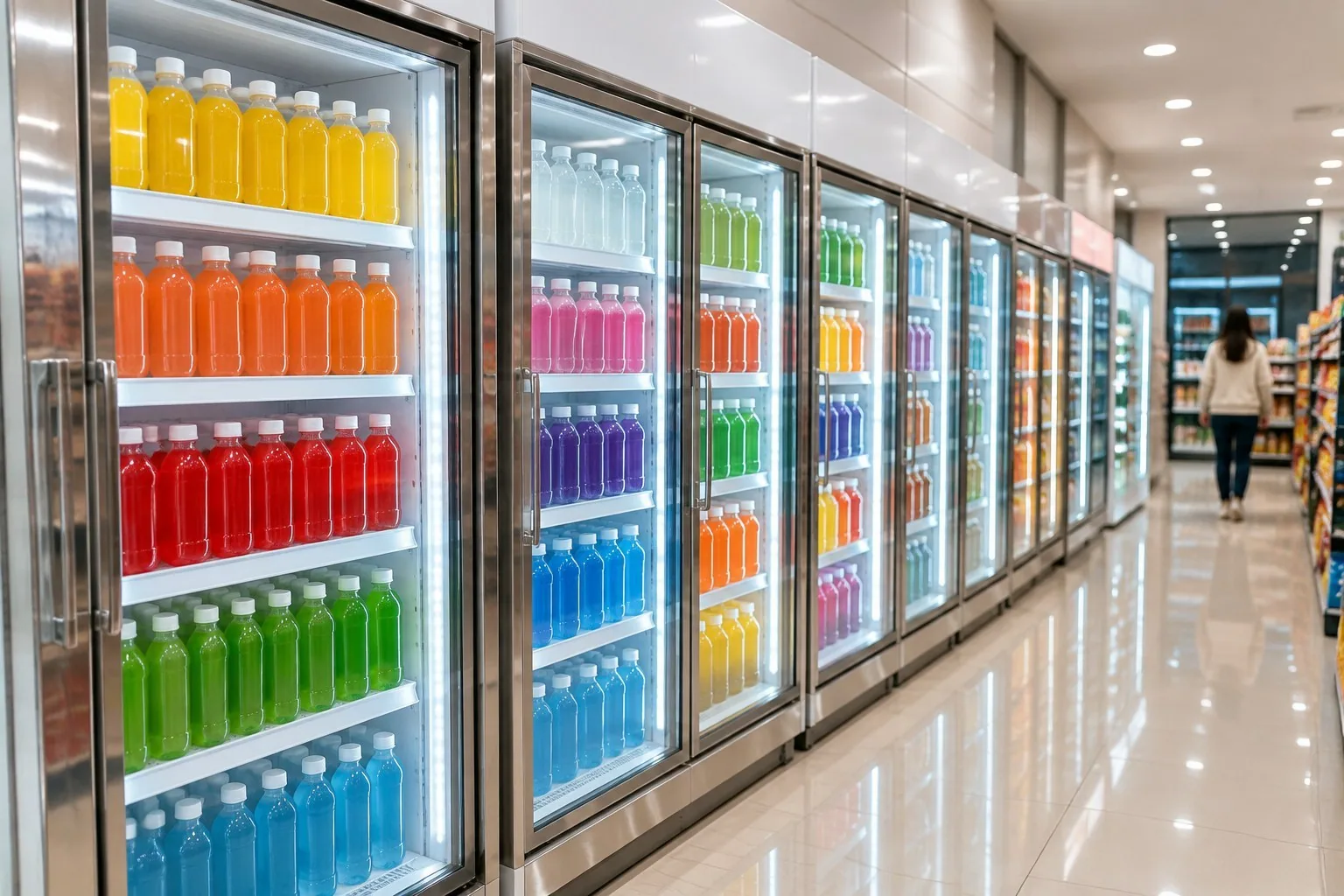
A beverage cooler is a merchandising tool as much as a refrigerator. Behind the glass it has to hold drinks cold and make the category easy to shop: the right pack sizes at eye level, a complete front row, and a door that opens without a fight. This guide covers the category and shopper decisions, door and shelf configuration, capacity planning, placement, and what to confirm before ordering.
Start from the category and the shopper mission
Two different shopping missions use the same fixture, and they need different layouts.
An impulse shopper wants one cold single-serve drink, quickly, and will take whatever is at eye level. A destination shopper is buying a multipack for home and will compare pack size and price. One cabinet can serve both, but the layout and capacity plan differ, so decide which mission the cooler mainly serves.
List the SKUs you intend to display with their pack dimensions, and note how much of the volume is single-serve against multipack. That list drives shelf depth and door count far more reliably than an impression of how busy the store feels.
Then match the cooler to its position: at the till it serves impulse; on the main aisle it serves planned purchase and needs more capacity.
Door, depth and shelf configuration
Configuration follows from the mission, the aisle and the pack sizes you sell.
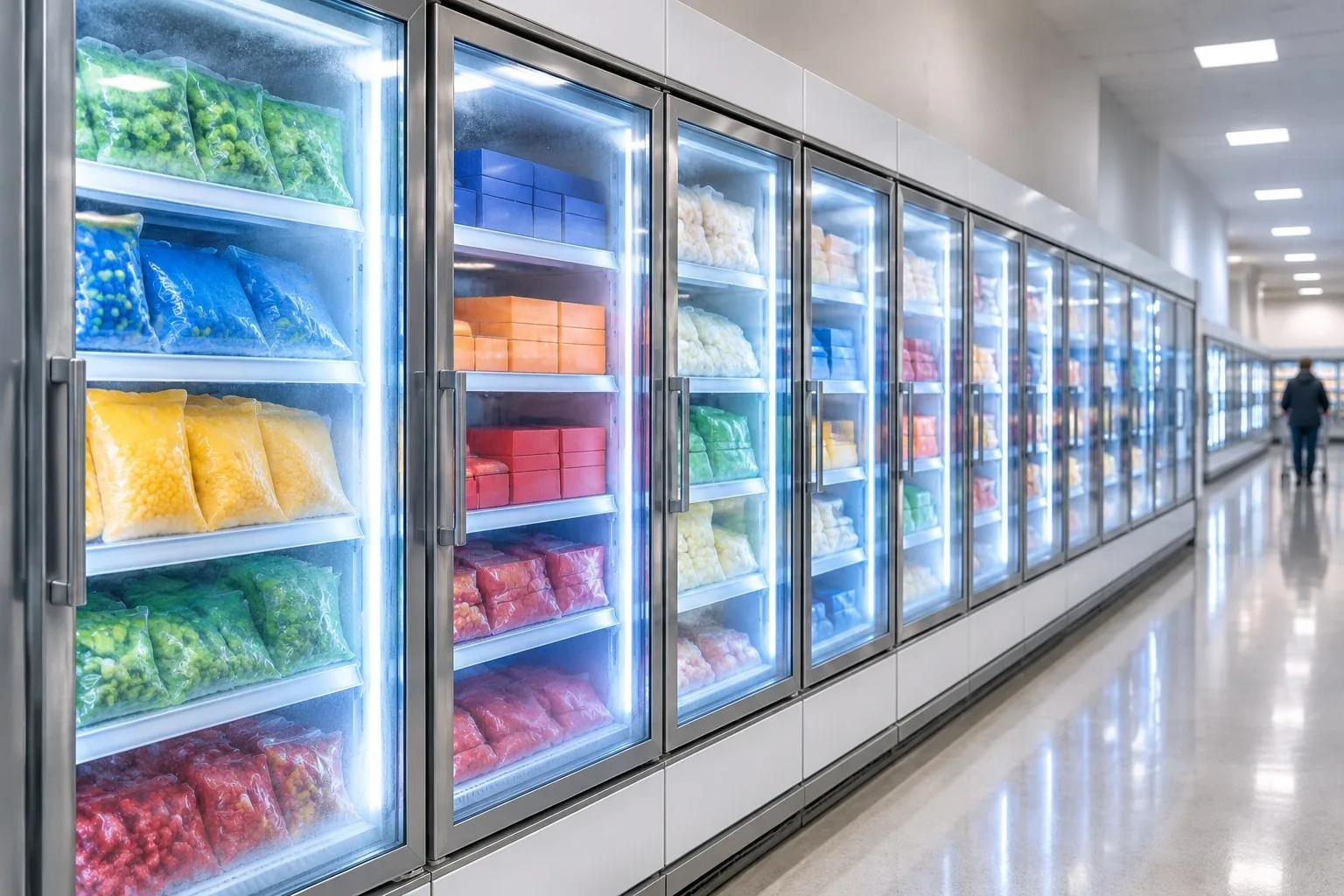
Single glass door
The standard choice for impulse and small-format stores. Confirm the door swing direction against the aisle before fixing the position.
Slim or narrow cabinet
A shallow footprint for tight aisles and small back areas. Capacity per door is lower, so check the facings you actually need.
Double glass door
Higher capacity for a main-aisle location. Confirm the aisle is wide enough for two doors to open with a shopper standing there.
Solid door storage
Not a display unit, but useful for keeping backup stock cold behind the counter. Display and storage duties differ, so confirm the temperature range per model.
Sliding or hinged doors
Sliding doors save aisle space; hinged doors give a wider opening for restocking. Availability depends on model.
Countertop and bar coolers
Small-format display for a till point, cafe counter or bar. Confirm the pack sizes they accept and the duty they are built for.
Capacity planning without guesswork
Capacity is not liters alone. It is facings against sales rate between deliveries.
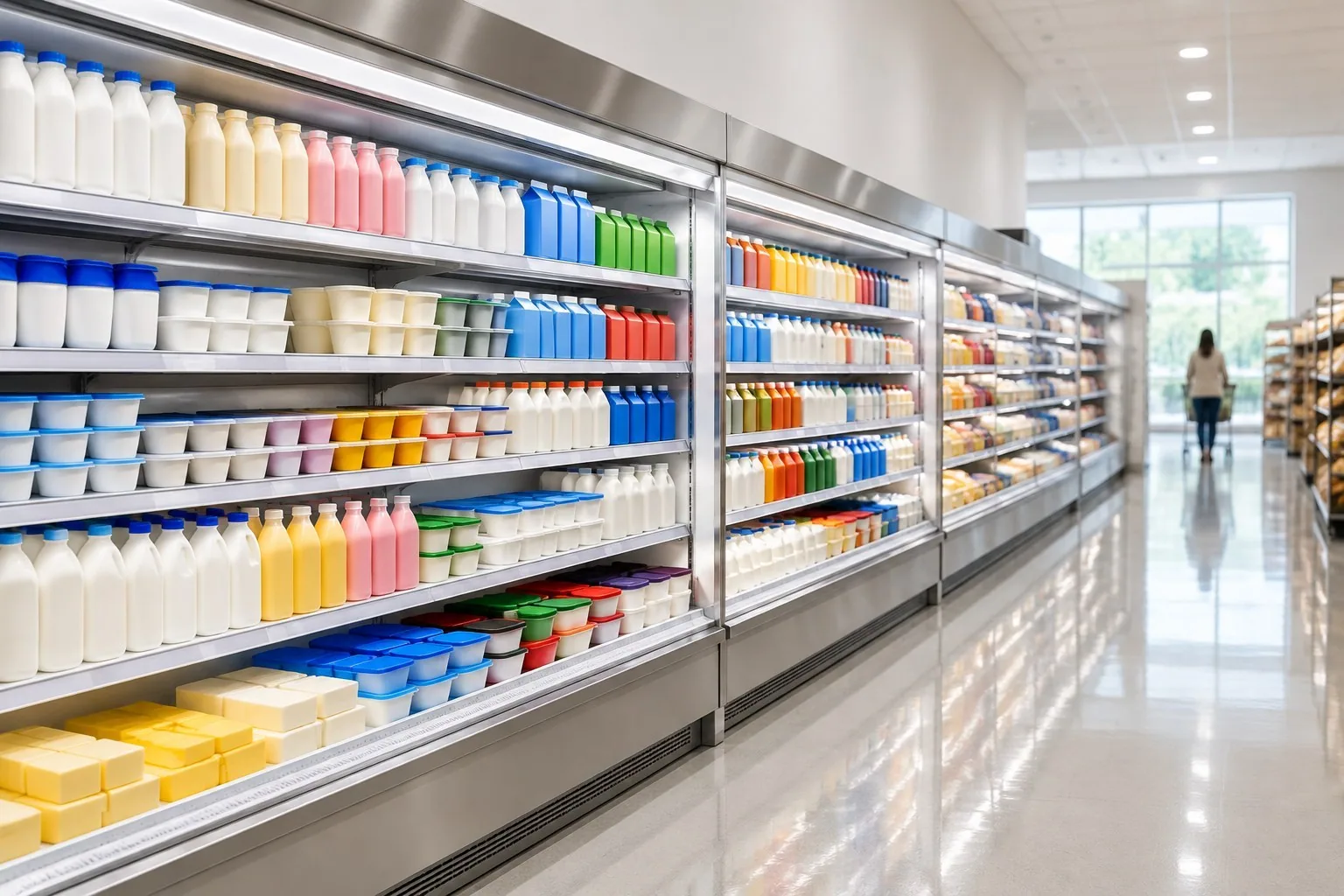
Count how many facings of each SKU the case can show at once and compare that with how fast the line sells. A cooler that empties its fastest SKU before the next delivery is under-specified, even when the total volume looks generous.
Work shelf by shelf rather than in total. Shelf depth must suit your tallest bottle with clearance above it, shelf spacing must suit the pack heights you carry, and shelves should be adjustable so the layout can follow a changing range.
Ask how many shelves are supplied and how many the cabinet accepts, because the difference is often where extra facings come from.
Placement, airflow and the store environment
A glass-door cooler is more tolerant than an open case, but it still rejects heat and still needs air.
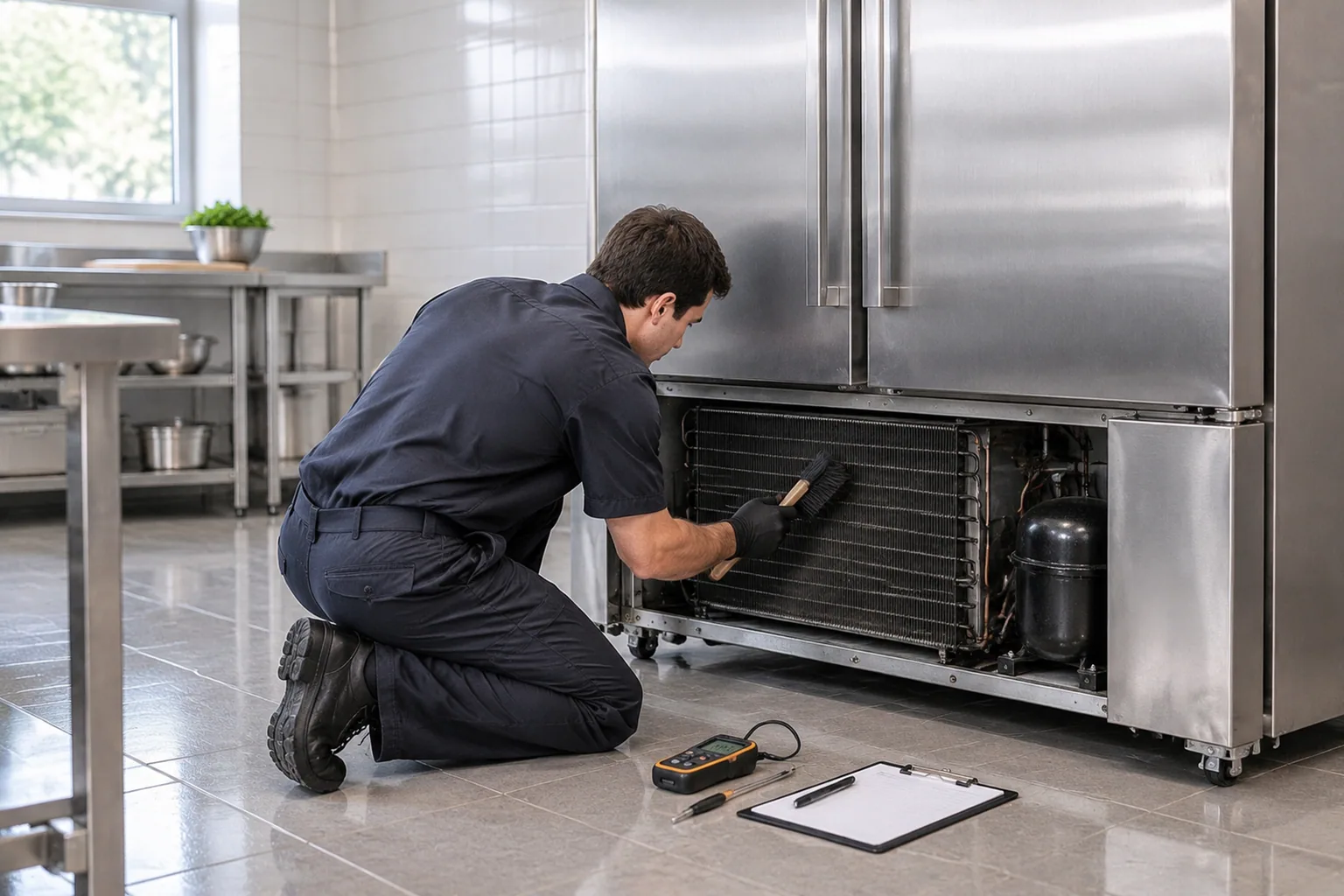
Keep the cooler out of direct sunlight and away from ovens, fryers and coffee machines. Leave clearance for the condenser coil and do not recess the cabinet into a sealed alcove, because trapped discharge air makes the unit work harder.
Plan the door swing and the shopper's standing position together: a cooler placed where a door cannot open fully will be left open, and an open door is both a temperature and a maintenance problem.
Confirm the ambient condition the model is rated for against the store's summer peak, not its annual average. If the store runs hot or humid, raise it at the inquiry stage and ask about wide-climate configurations; availability is confirmed per project.
Lighting and presentation
Lighting is what makes a glass-door cooler sell, and it is worth specifying deliberately.
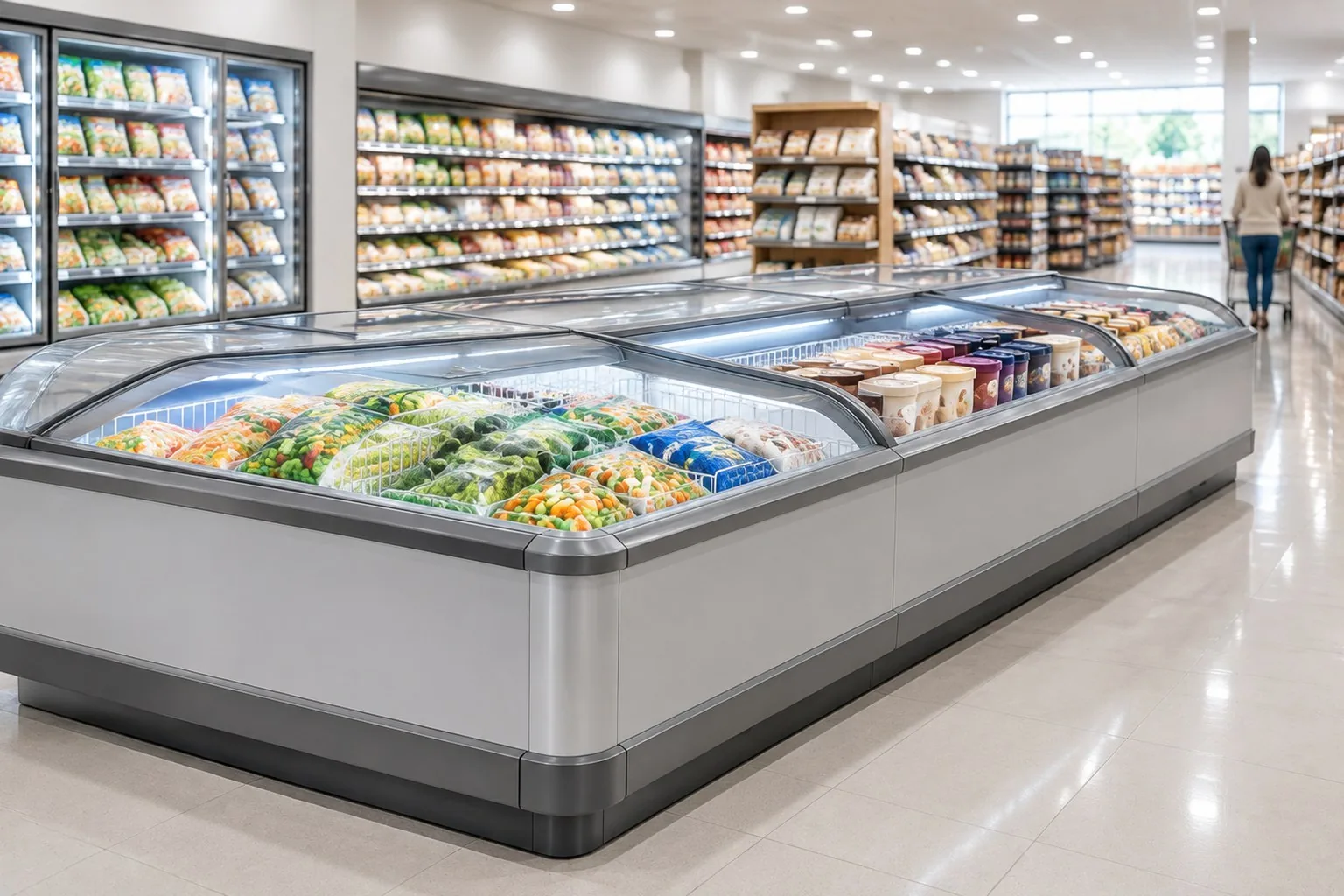
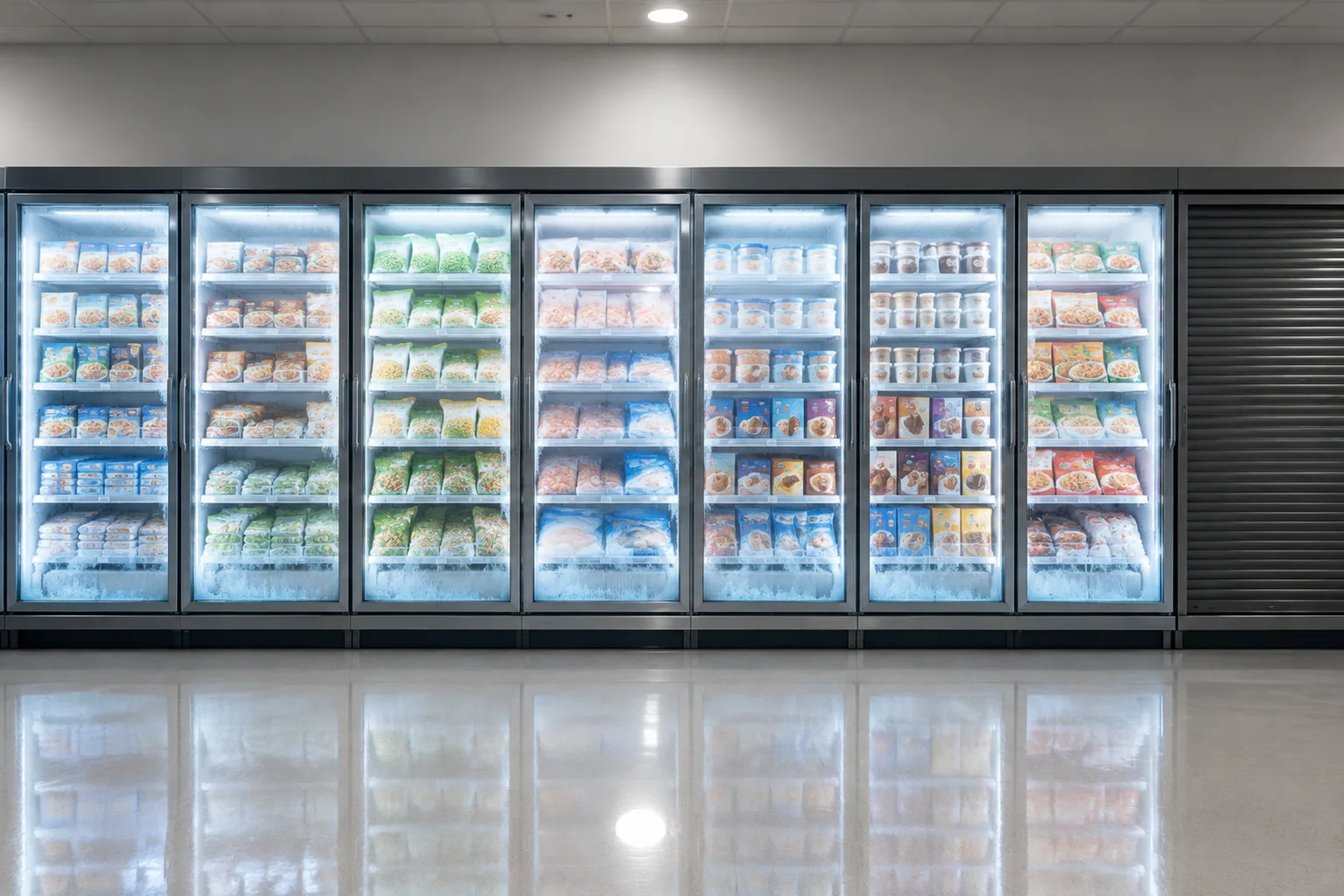
Vertical lighting along the door frame shows the front row evenly, while a single top lamp tends to leave the lower shelves in shadow. Confirm the lighting type and position, and that lamps can be serviced without dismantling the cabinet.
Keep the air path clear inside the cabinet. Overfilling against the evaporator blocks circulation, and a blocked return creates warm spots in the lower shelves that a door-mounted reading will not show. Leave the front row complete: gaps cost sales and disturb airflow.
Clean the glass on a fixed routine, and wipe the gasket at the same time so the seal keeps working. A smeared door undoes good merchandising faster than any layout change.
What to confirm before ordering a beverage display cooler
Use this list as the basis of the inquiry. Each line is a parameter to confirm, not a value.
| Cabinet type | Single or double door, slim cabinet, countertop or bar unit, glass or solid door. |
|---|---|
| External dimensions | Width, depth and height, plus the clearances needed for airflow and door swing. |
| Capacity and facings | Internal capacity, shelf count and the facings each shelf can display. |
| Shelf details | Shelf depth, spacing, adjustability and the tallest pack size accepted. |
| Temperature range | The range for the exact model, matched to the category being displayed. |
| Cooling and defrost | Cooling method, defrost type and how condensate is handled. |
| Ambient rating | The ambient condition the model is rated for, versus the store's summer peak. |
| Electrical configuration | Voltage, frequency and plug type for the destination market. |
| Glass and door details | Glazing, lock option, self-closing action and gasket replacement. |
| Lighting | Lighting type, position relative to the shelves, and serviceability. |
| Compliance and lead time | CE, CB or RoHS documentation as applicable to model and market, and production planning of 20 to 30 days confirmed per project. |
Ask for the model datasheet, a dimensioned drawing and the shelf layout, and which parameters are fixed by the platform. Custom interior shelving and layout, custom logo marking by silk screen or laser engraving, and market-specific voltage and plug configurations fall within OEM project scope; final electrical configuration depends on the model and market approval.
Daily operation and monitoring
A display cooler holds temperature only while the routine around it holds up.
Record cabinet temperatures at the intervals the food-safety plan requires, and check the front row rather than relying on the controller display alone. During the daily walk-round, look for condensation, ice build-up and damaged gaskets.
Clean the condenser coil on a schedule and keep the gasket clean and undamaged. A cooler that runs continuously is usually a coil, gasket or loading problem rather than a refrigeration fault.
SHEHOPE manufactures commercial refrigeration, including beverage display coolers, in Foshan, Guangdong, China, within a shared manufacturing system with 20 or more years of experience, a 20,000 m² facility, more than ten production lines, annual capacity of approximately 50,000 units and an ISO 9001 quality system.
Frequently asked questions
How many facings should a beverage cooler hold?
Enough to cover demand between deliveries for the fastest-moving lines. Count the facings each shelf can display, multiply by the shelves, and compare the result with your sales rate.
Glass door or solid door for drinks?
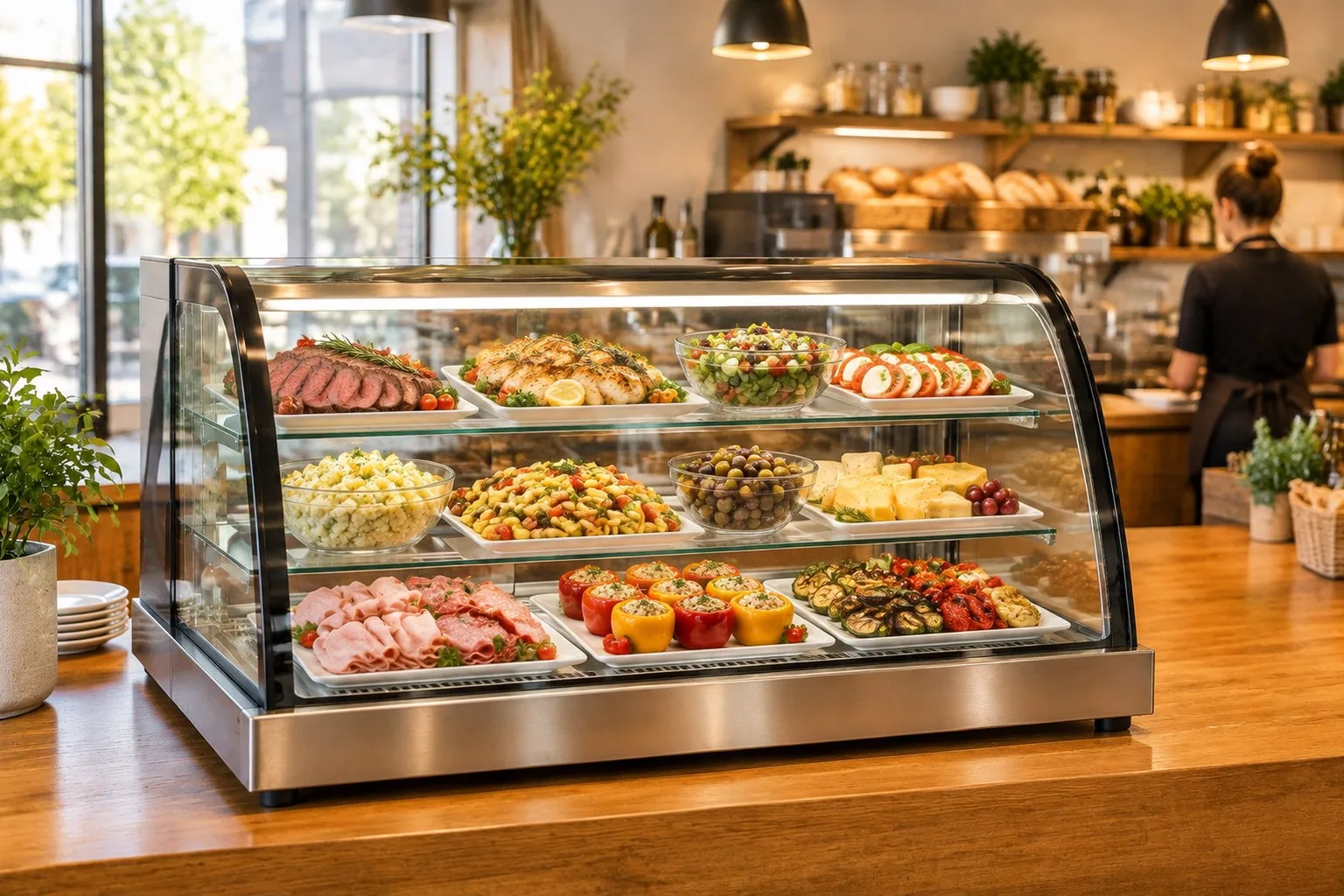
Glass doors are for display: shoppers see the product and the category sells itself. Solid doors suit backup stock behind the counter where visibility is not the point. The two duties also differ in temperature range, which is confirmed per model.
Why is the front row not as cold as the rest?
The front row is the most exposed position, so it shows problems first. Common causes are an overfilled cabinet blocking internal circulation, a damaged gasket, warm air from a nearby heat source, or a condenser coil that cannot reject heat. Check the coil and gasket first.
Can the cooler carry our own brand?
Yes, within OEM project scope, which can include custom logo marking by silk screen or laser engraving, custom interior shelving and layout, and market-specific voltage and plug configurations. Final electrical configuration depends on the model and market approval.
What should we confirm before ordering?
Confirm the cabinet type and dimensions, capacity and facings, shelf depth and spacing, the temperature range for the exact model, cooling and defrost with condensate handling, the ambient rating against your store conditions, electrical configuration, glass and door details, lighting, and the compliance documents applicable to that model and market.