
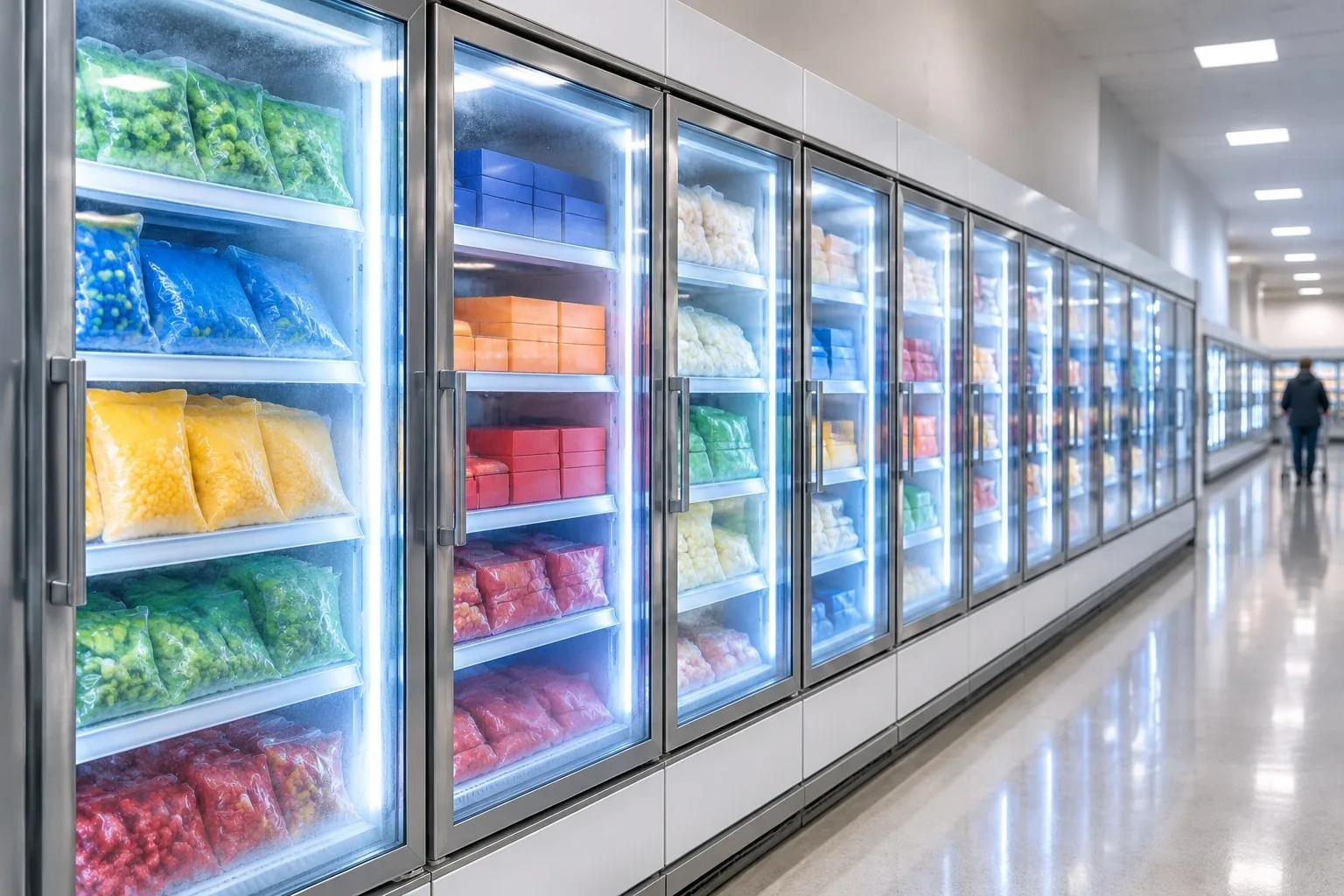
A glass-door display freezer has one job that a storage freezer does not: it has to keep product in band while customers open the door and look inside. That changes what matters in the specification. Door construction, glass treatment, defrost behavior and the ambient temperature of the sales floor influence real performance far more than the cabinet's external footprint. This guide covers what to look at before you buy.
Closed display or open display: pick the format first
The format decision comes before any cabinet comparison.
A glass-door cabinet is a closed display: product is visible through the door, but the cold air stays inside until someone opens it. That makes it the more tolerant option in a warm store, in a store with strong door traffic, and for products that need a stable frozen band rather than a browsing experience. It also suits smaller footprints, because product can be stacked on shelves in depth rather than spread along an open deck.
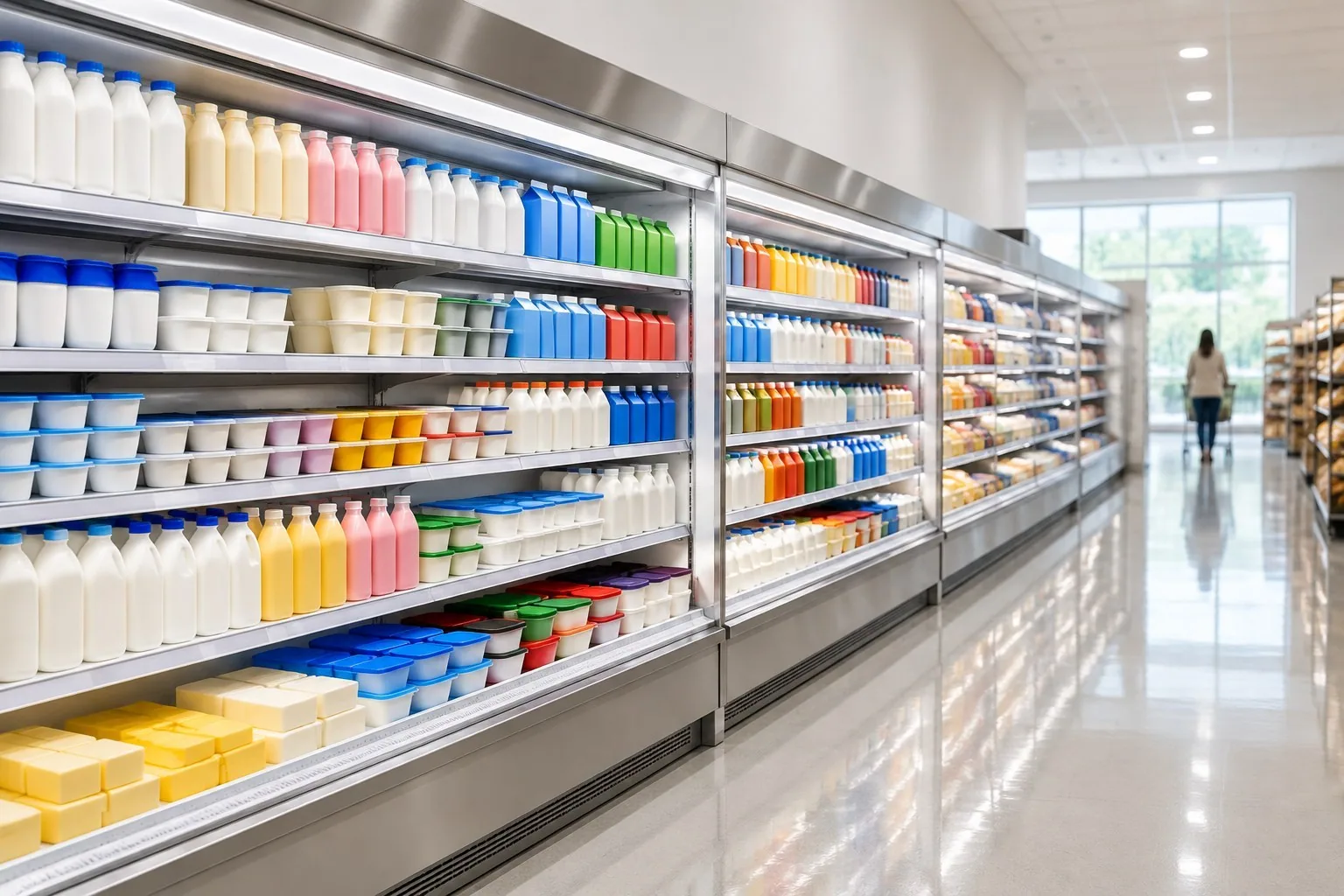
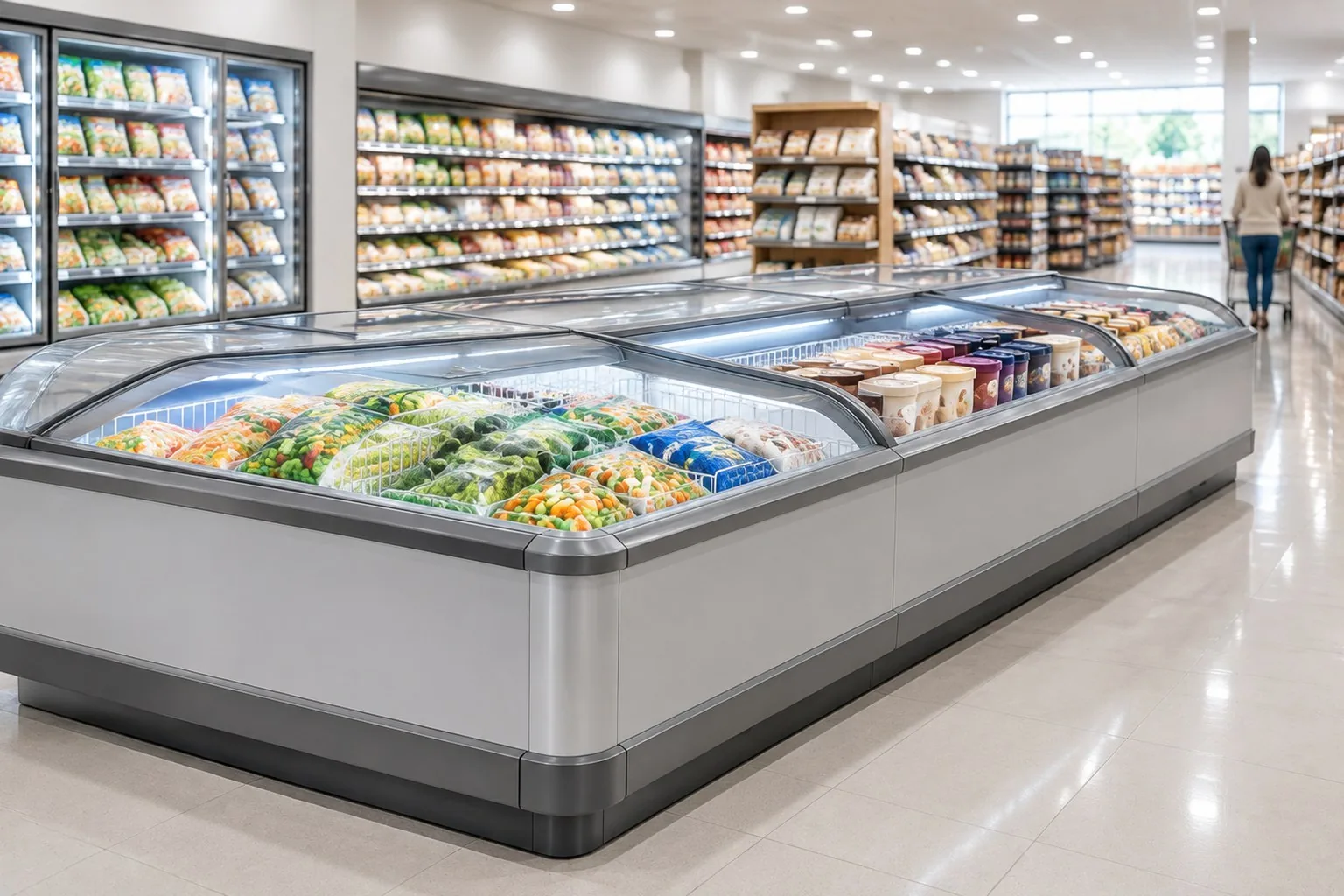
An open multideck removes the barrier between customer and product, which supports impulse purchase, but it depends much more on the ambient conditions of the sales floor and on how the store manages air movement. Many stores run both: open display for high-turnover impulse lines and glass-door cabinets for the bulk of frozen stock.
Decide from the product and the store, then move to construction. In a warm store with high door traffic and dense product, a closed cabinet does more of the work.
Doors, glass and frames
This is the part of the cabinet a customer touches every few minutes, and the part that decides how much cold air escapes.
Start with the number of doors and how they open. Hinged doors with self-closing hardware suit narrow aisles and lower traffic. Sliding doors suit wide cabinets and busy stores where a swinging door would block the aisle, but they need a track that stays clean and free of ice. Confirm the direction the door can be hung or reversed, and check that the open door does not obstruct the rest of the aisle.
Glass treatment and frame heating belong in the same conversation. In humid or warm conditions, condensation forms on the outside of cold glass and on the frame, which both obscures the product and creates a slip and hygiene problem. Heated glass or frame options address this, and availability varies by model and configuration, so confirm what the model you are considering includes.
Gaskets and handles decide how well the cabinet recovers after each opening. A hardened gasket or a handle that lets the door sit ajar costs more than any specification difference between two comparable cabinets. Interior LED lighting should be sealed and placed to illuminate product without adding heat inside the cabinet.
Defrost behavior and frost management
Every display freezer defrosts. The question is how, and how often.
As the doors open, humid room air enters the cabinet. Moisture condenses on the evaporator and around the door frame, and it has to be removed. Automatic defrost is standard on most display freezers, and the cycle briefly interrupts cooling. Ask how defrost is initiated, whether it is scheduled or demand based, how the controller handles it around trading hours, and how long a cycle lasts for the model.
Water has to go somewhere. Some cabinets collect condensate in a tray or an evaporating pan that has to be emptied or that relies on the compressor heat to evaporate it, and others can be plumbed to a drain. Confirm which arrangement the model uses and whether the store can support it, then decide who maintains it.
Also confirm the defrost implications for the product band. A cabinet that recovers quickly after a defrost cycle and after door openings holds a more stable band, which matters for temperature-sensitive frozen products.
Capacity, shelves and merchandising
Usable capacity is what the shelf layout lets you load, not the number in the model name.
Start from the pack or box you actually sell. Measure its footprint and height, then work out how many units fit on a shelf and how many shelves you need for a full facing. Confirm the shelf count the model provides, whether shelf positions are adjustable, and how much vertical space is lost to the evaporator and the light fitting.
Check the load line. Filling above the marked load line blocks the return air path, which raises the temperature of everything on the top shelf and lengthens recovery. This is the most common merchandising mistake, and it is a training issue as much as a cabinet issue, so make the load line visible and include it in the store's restocking routine.
Then plan the restocking route. A cabinet filled from a warm stockroom through a door held open performs worse than an identical cabinet filled from chilled back-of-house storage. Where turnover is high, plan back-of-house storage and the display cabinet together.
Ambient conditions and running-cost drivers
In retail, the room around the cabinet does much of the work.
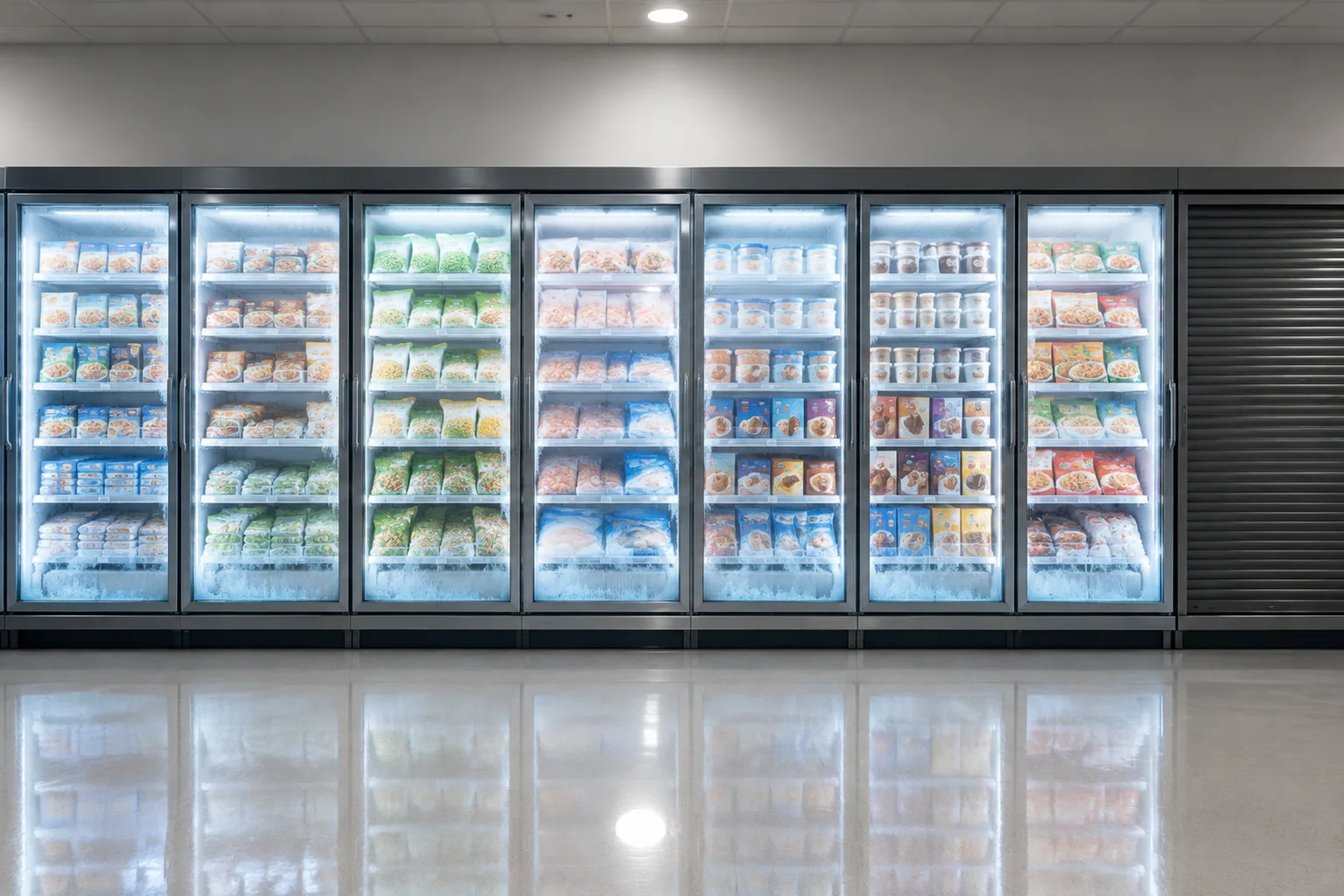
The ambient temperature of the sales floor is the biggest single variable. A cabinet specified for a comfortable, air-conditioned store behaves differently in an unconditioned space, near a delivery entrance, or under direct sunlight through a shopfront window. State the ambient temperature the store actually reaches in summer, not the average, and ask the supplier to confirm the model against that figure.
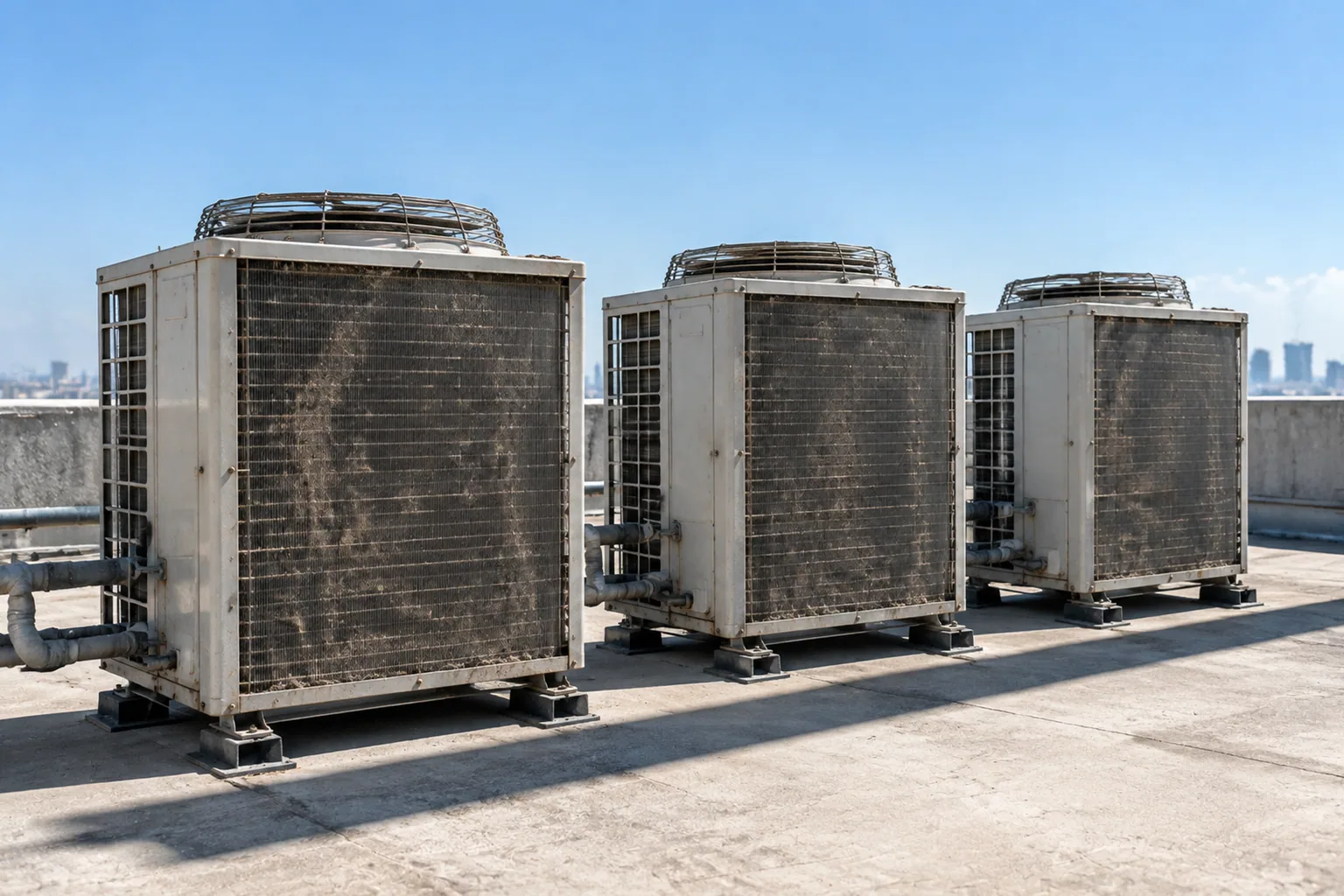
Air movement around the cabinet matters as much as air temperature. Avoid placing the cabinet next to heat sources, in the path of a door that opens to the street, or directly under an air-conditioning diffuser that blows warm air down onto it. Leave the clearances the supplier specifies around the condensing unit, and keep the space behind the cabinet free so rejected heat can escape.
The other drivers are behavioral: how long a door stays open, how often stock is loaded above the load line, whether a night cover is used outside trading hours, and whether gaskets are replaced when they harden. These affect running cost more than most buyers expect.
What to confirm before you buy
Bring these answers together with the store data and the model conversation becomes straightforward.
| Product and pack | Pack or box footprint and height, units per facing, product band and tolerance, and how much stock the cabinet must hold at peak. |
|---|---|
| Door configuration | Number of doors, hinged or sliding, self-closing hardware, door reversal, glass treatment and whether frame heating or heated glass is included on the model. |
| Interior | Shelf count and adjustability, usable height after the evaporator and lighting, load line marking, and whether interior shelving and layout can be customized. |
| Defrost and drainage | How defrost is initiated and scheduled, cycle behavior, and whether condensate is collected in a tray or plumbed to a drain. |
| Store environment | Summer ambient temperature of the sales floor, door traffic, direct sunlight, nearby heat sources and air-conditioning diffusers, and the clearances available around the cabinet. |
| Electrical and refrigerant | Voltage, phase and frequency for the destination market, and which refrigerant the model uses. Both are confirmed per model and per project. |
| Documentation | CE, CB or RoHS records apply per model and target market. Name the models and the destination country and ask for the matching file set, plus the specification sheet and manual. |
| Commercial terms | Typical production lead time is 20 to 30 days and is confirmed by model, quantity, season and customization scope. Warranty terms are confirmed per project, and export packing can be agreed by product family, quantity and route. |
SHEHOPE builds glass-door display freezers inside a shared manufacturing system with more than 20 years of refrigeration manufacturing experience, a 20,000 m² production facility, more than ten production lines and an ISO 9001 quality system. Sheet-metal parts are cut on precision CNC laser equipment and units are assembled on a standardized production line. OEM and ODM projects can cover 3D CAD design and development, custom logo marking by silk screen or laser engraving, interior shelving and layout changes, and market-specific voltage and plug configurations.
Send the pack sizes, the store's summer ambient temperature, the door traffic pattern and the destination market with your inquiry so the model recommendation starts from real conditions.