
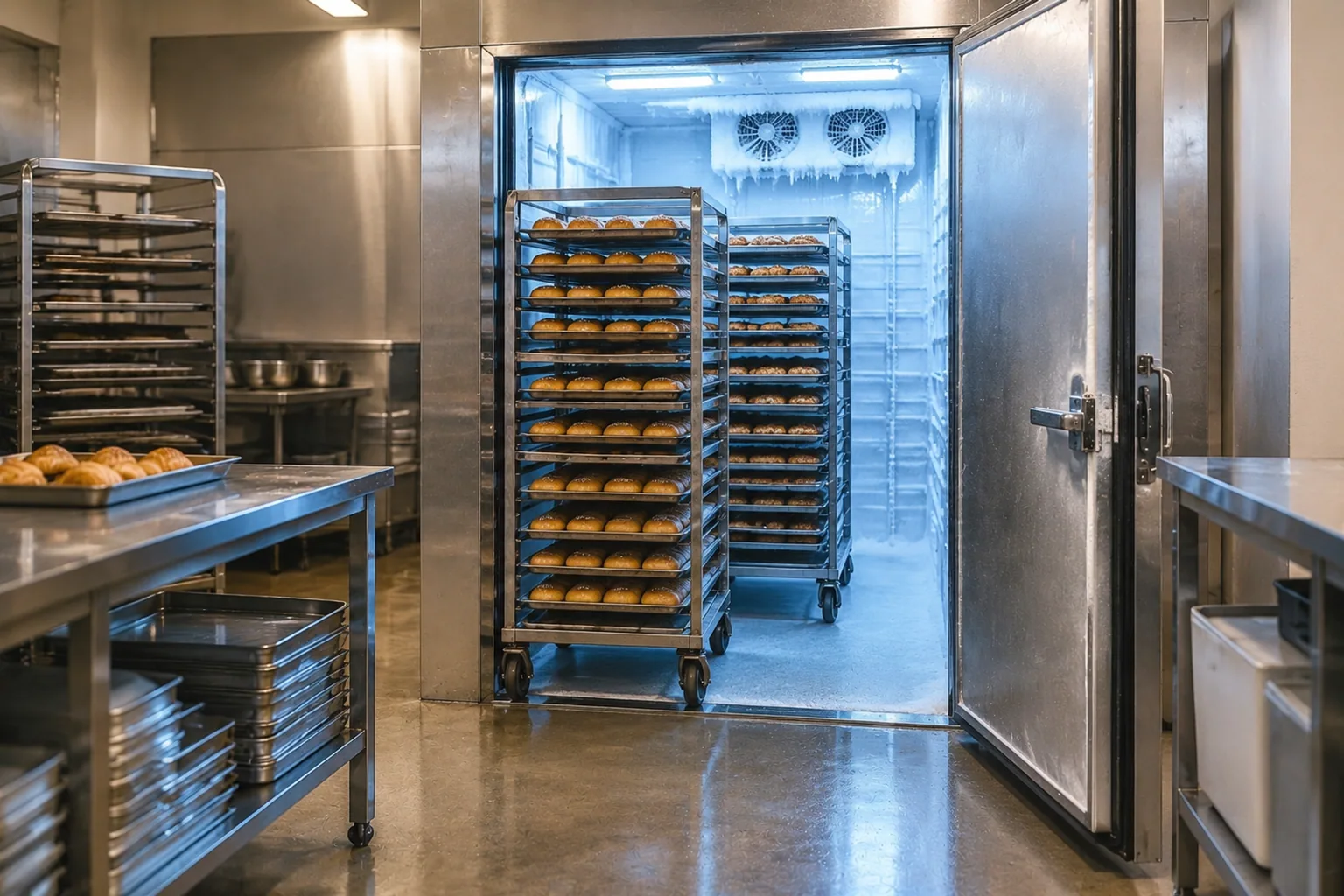
A blast freezer is the step in a bakery that decides whether a frozen product still behaves like the product you made. If the cabinet is undersized, loaded wrong, or specified for the wrong temperature duty, the symptoms show up downstream: slow freezing, large ice crystals, collapsed crumb in part-baked bread, and a packing line that waits on the freezer instead of feeding it. This guide covers how to define the process first, then match a cabinet to it, and what to confirm with a supplier before committing to a model.
Blast freezing is a process step, not a storage box
A storage freezer holds product that is already frozen. A blast freezer removes heat fast enough to change the structure of the product while it freezes.
Freezing speed matters because water in dough, custard and fruit fillings forms ice crystals of different sizes depending on how quickly heat leaves the product. Fast heat removal produces small crystals that leave cell structure and gluten networks in better condition. Slow freezing produces large crystals that rupture structure, so a part-baked loaf can bake out with a gummy crumb and laminated dough can lose the separation between fat layers.
That is why blast freezing is specified by three numbers that must be agreed before a model is chosen: the product, the core temperature target, and the cycle time allowed. A cabinet that reaches a low air temperature quickly with no load may still miss the cycle time with a full trolley of dense product. Treat published cabinet data as a starting point and confirm performance against your own test load.
Define the batch before you define the cabinet
Cabinet size follows batch geometry, not the other way around.
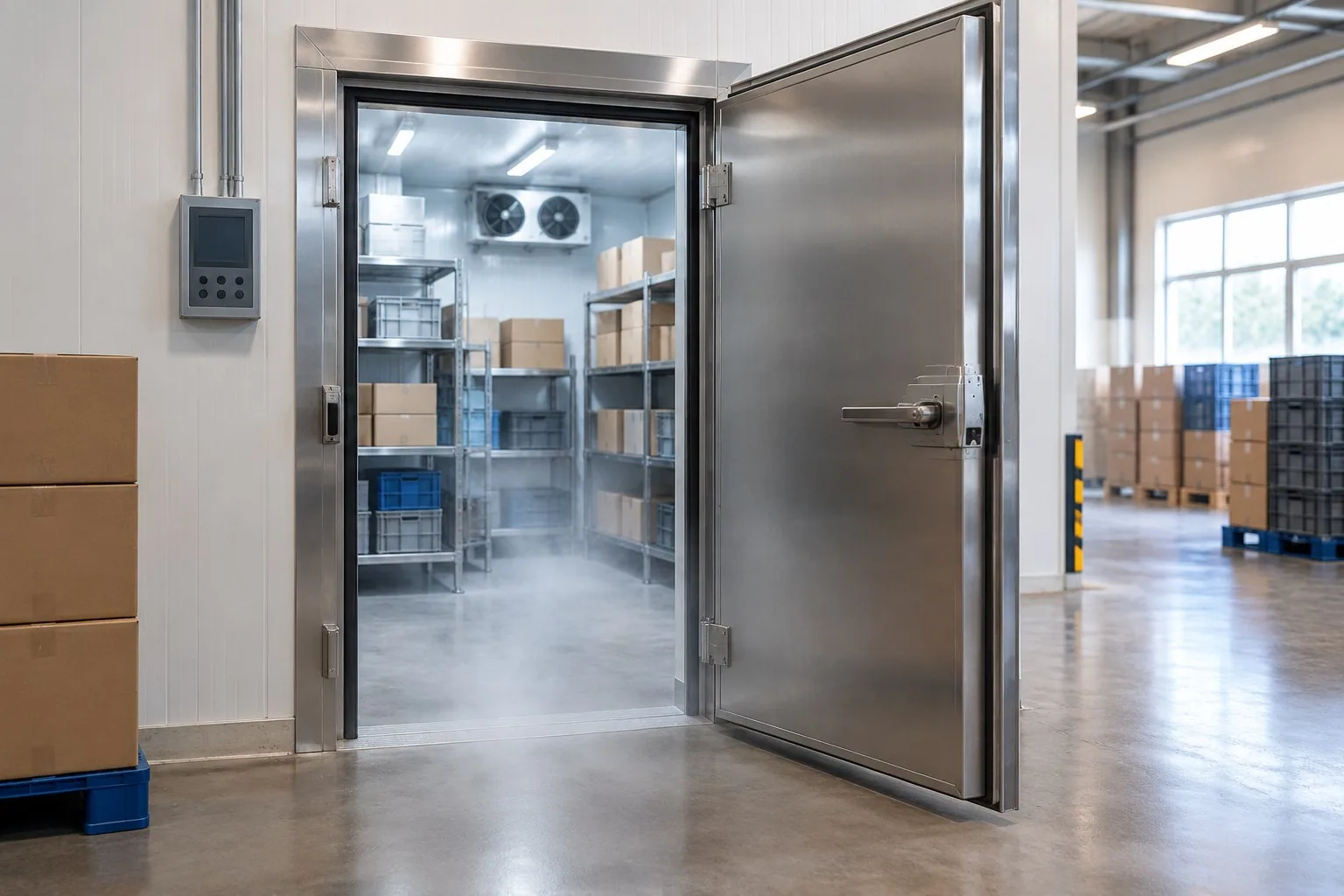
Write down the batch as it actually leaves production: product type, piece weight and thickness, pieces per tray or pan, trays per trolley or rack, and total batch weight per cycle. Thickness is the variable buyers underestimate most, because heat has to travel to the center of the piece. A thin cookie dough sheet and a dense filled cake of the same weight will not freeze on the same schedule.
Then work out the required cycle time from the line rate. If the line produces a fixed batch every shift, the freezer has to clear that batch inside the window between packing runs. If the line runs continuously, the freezer must absorb product at the rate it arrives, which usually means smaller, more frequent loads and a different airflow pattern.
Loading method matters as much as volume. Trolleys, roll-in racks and shelf loading all change how air reaches the product. Define the trolley or rack you already use, including its footprint and height, and confirm that the cabinet accepts it as configured. Interior shelving and layout can be customized on OEM projects, but the geometry has to be agreed before the cabinet is built.
Blast chilling, blast freezing, and combination duty
Chilling and freezing are different duty points. Decide whether one cabinet must do both.
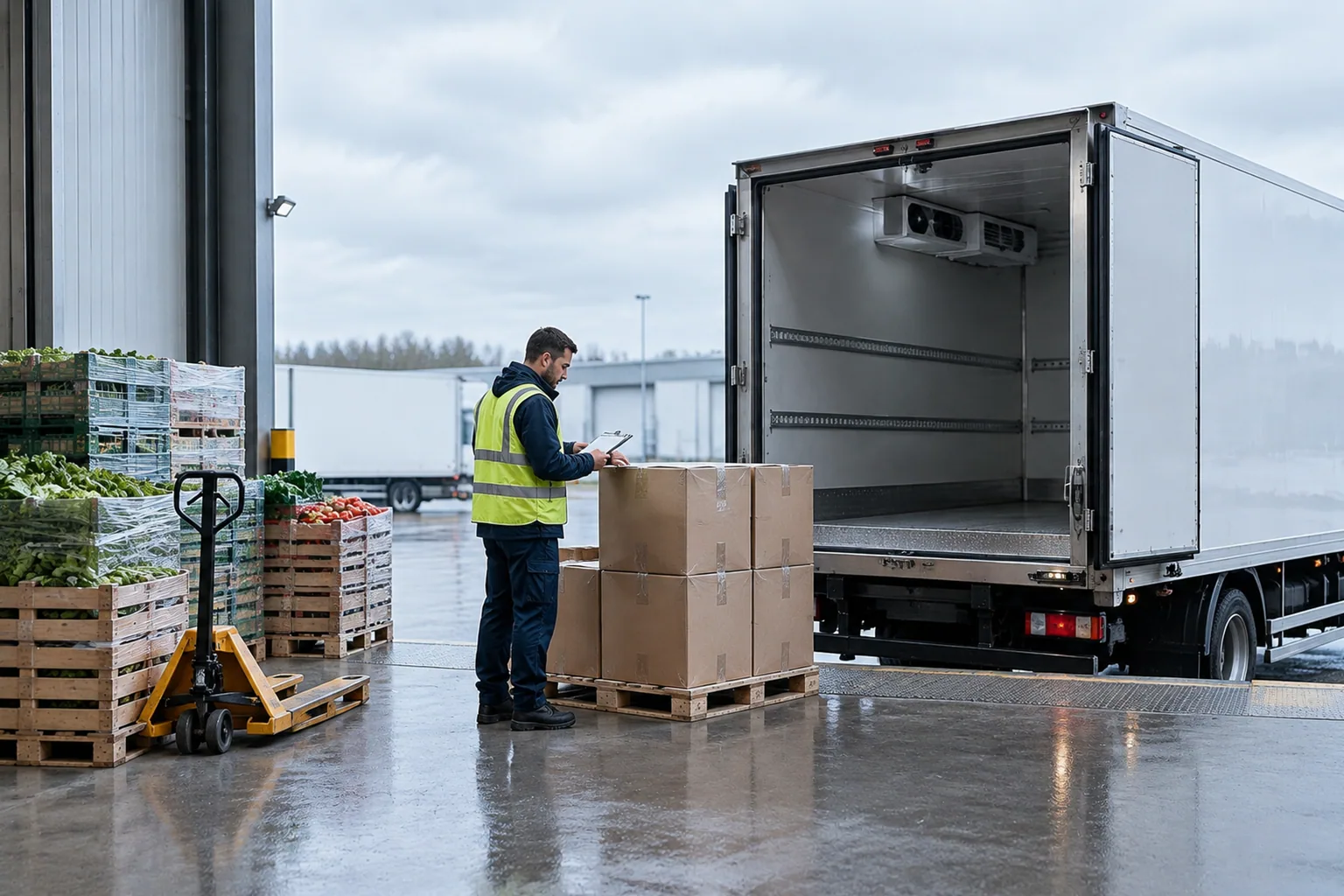
Blast chilling pulls cooked or freshly mixed product down to a chilled holding range for same-day or next-day use. Blast freezing takes product through the freezing point to a frozen core for storage and distribution. Bakery operations often need both: chilling for cream and custard fillings that will be finished the same day, freezing for part-baked bread and laminated dough that goes into stock.
Combination cabinets exist and they are useful where floor space is tight. The trade-off is that the compressor, evaporator and control logic have to satisfy two duty points, and performance is confirmed per model rather than assumed. If your volumes for each duty are large, two dedicated units usually give a simpler production schedule than one cabinet switched between modes.
For any frozen product, the storage step after the blast freezer also matters. Product should move into a storage freezer or cold room that holds the frozen range without a warm gap during transfer, so plan the two steps as one flow.
Airflow, spacing and defrost decide real cycle time
The fastest way to lose cycle time is to block the air path.
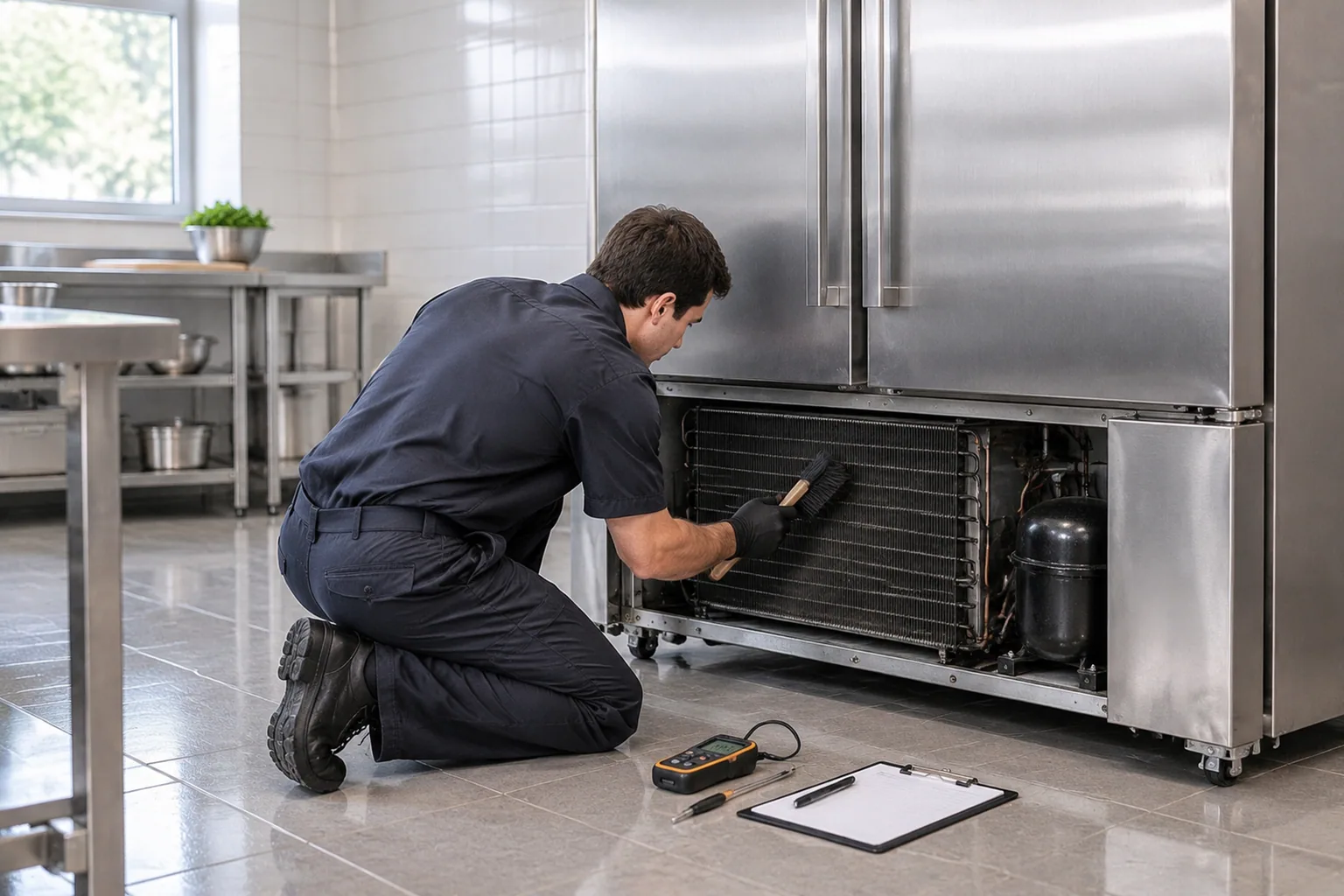
Air has to reach every product surface and return to the evaporator. Trays stacked tight, product wrapped in a sealed bag that traps an air layer, or a trolley pushed against the evaporator return will all extend the cycle. Leave gaps between trays, keep the return path clear, and avoid overhanging packaging that shields the product.
Door discipline is part of the specification. Every opening lets room air in and cold air out, and the ambient temperature of the room around the cabinet has a direct effect on recovery. In a warm packing area, a cabinet that performs well in a cool room can lose time on every door opening.
Defrost is the other routine factor. Frost builds on the evaporator as humid product and room air enter the cabinet, and defrost cycles interrupt freezing. Ask how defrost is initiated, whether it is scheduled or on demand, and how the cabinet drains. A floor drain or a removable drain tray, plus internal surfaces that can be washed down, keeps the hygiene routine practical.
What to confirm before you buy
These questions separate a workable specification from a cabinet that disappoints in production.
| Process | Product types, piece thickness, batch weight per cycle, target core temperature and the cycle time you will accept. Ask for performance to be confirmed against a test load rather than a catalog headline. |
|---|---|
| Geometry | Tray and pan footprint, trolley or rack dimensions, number of shelves or levels, and door clearance for loading. |
| Environment | Ambient temperature of the room, distance to walls, condenser air path, ventilation, and heat rejection into the space. |
| Electrical | Voltage, phase and frequency for the destination market. Electrical configuration is confirmed per model and per project. |
| Refrigerant | Which refrigerant is used for the model and whether it is accepted in your market. Confirm at model level. |
| Compliance | Which documents are needed. CE, CB or RoHS records apply per model and target market, so state the models and the destination country and ask for the matching file set. |
| Operation | Controls and temperature display, defrost behavior, cleaning method, alarms, and whether data logging or a remote probe is required. |
| Commercial | Typical production lead time is 20 to 30 days and is confirmed by model, quantity, season and customization scope. Warranty terms are confirmed per project, so ask for them in writing. |
Ask for the model specification sheet, the manual and the acceptance criteria in writing before the order. If a supplier cannot state the test conditions behind a performance figure, treat the figure as indicative.
Installation and layout notes for bakery rooms
Most disappointing installations are layout problems rather than refrigeration problems.
Leave service access to the condensing unit and the control panel, and keep the cabinet out of the hottest corner of the room. Plan the route from production to the freezer so product does not sit in a warm area before loading. If the cabinet drains to a floor drain, confirm the fall and the trap. If it uses a tray, confirm who empties it.
SHEHOPE builds blast freezers inside a shared manufacturing system with more than 20 years of refrigeration manufacturing experience, a 20,000 m² production facility, more than ten production lines and an ISO 9001 quality system. OEM and ODM projects can cover 3D CAD design and development, custom logo marking by silk screen or laser engraving, interior shelving and layout changes, and market-specific voltage and plug configurations. Export packing can use fumigation-free wooden pallets, with the final packing method confirmed by product family, quantity and route.
Send the process data with your inquiry: product, batch, tray and trolley dimensions, target core temperature, cycle time, room ambient and destination market. That is enough to start a model recommendation.