
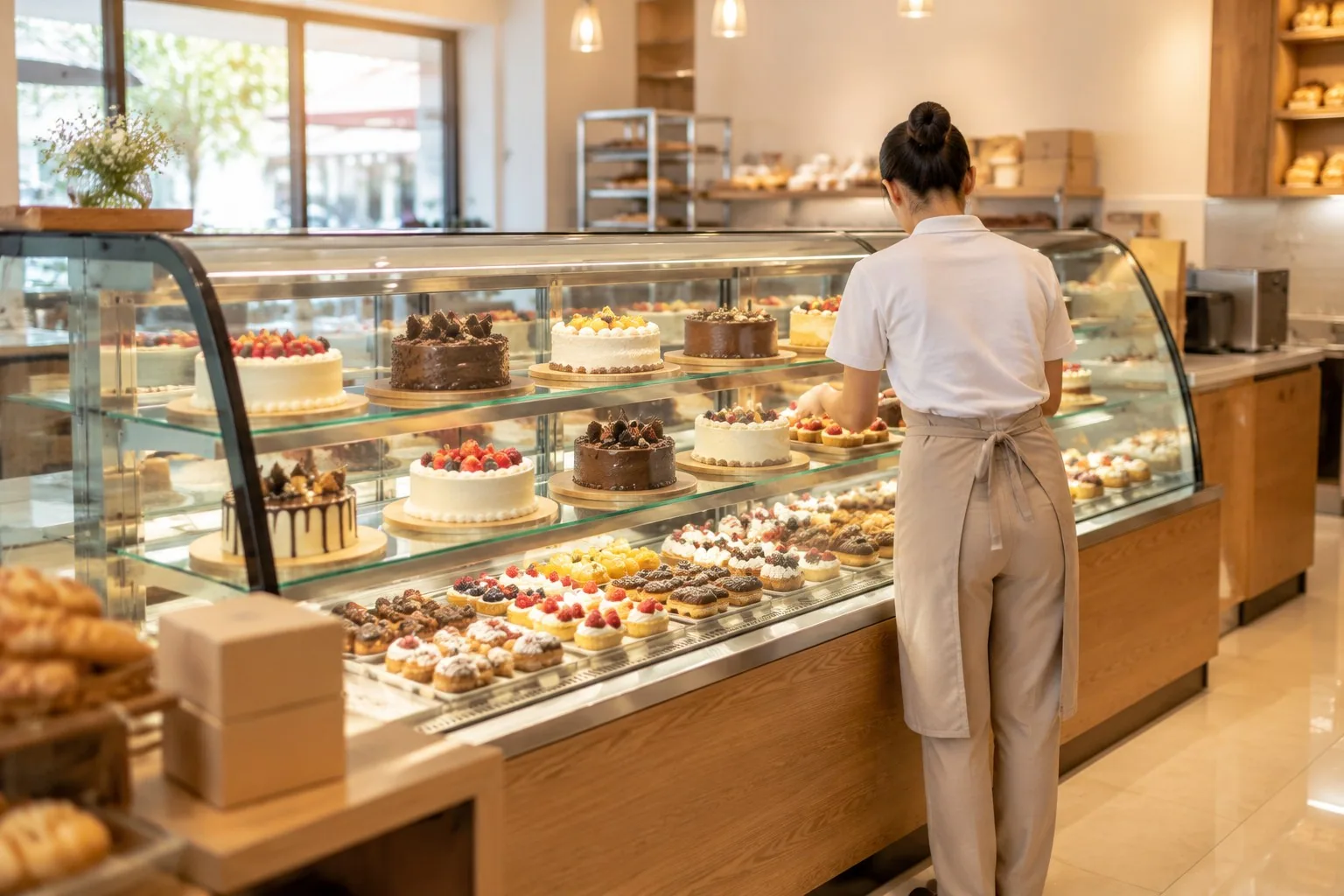
A cake display case has two jobs that pull in different directions. It must hold product at a safe temperature, and it must make that product look worth buying. A case that fails the first job creates waste and compliance risk; one that fails the second sits half empty while staff move stock to the service counter. This guide covers format, temperature duty, glass and lighting, airflow discipline, and what to confirm before ordering.
What a cake display case has to do
The product mix decides everything else, so start there rather than with the case.
Cream cakes, fresh cream fillings, mousse and dairy-based desserts need refrigerated display. Dry bakes such as bread, biscuits and many viennoiserie are usually shown at ambient temperature, where a refrigerated case would dry them out and dull the crust. Sorting the product list into chilled and ambient lines is the first specification decision, and it is often the one that gets skipped.
Decide early whether the shop needs one duty or both, because a single case rarely does both well. Many bakeries run a refrigerated case for chilled lines and a separate ambient unit or open shelving for dry bakes. Temperature range and duty are confirmed per model, so ask for that on the datasheet instead of assuming from the family name.
Match the case format to the counter and the shop
Format follows from where the case sits and who loads it.
Floor-standing case
The largest display area, suited to a main service counter with working space behind it for staff.
Countertop case
Sits on an existing counter for a secondary display point near the till or in a cafe seating area.
Rear-loading
Staff load from behind the counter, which keeps the customer side undisturbed and is common in full-service bakeries.
Front-loading
Staff load from the customer side. It suits self-service formats but needs clear access space in the aisle.
Multi-tier and angled display
More product visible in the same footprint. Check that shelf spacing suits your tallest product and the trays you actually use.
Combined counters
Display above with refrigerated storage below, where the counter has to serve selling and holding at once. Storage duty and temperature range are confirmed per model.
Glass, lighting and presentation
These choices change both how the product looks and how hard the refrigeration system works.
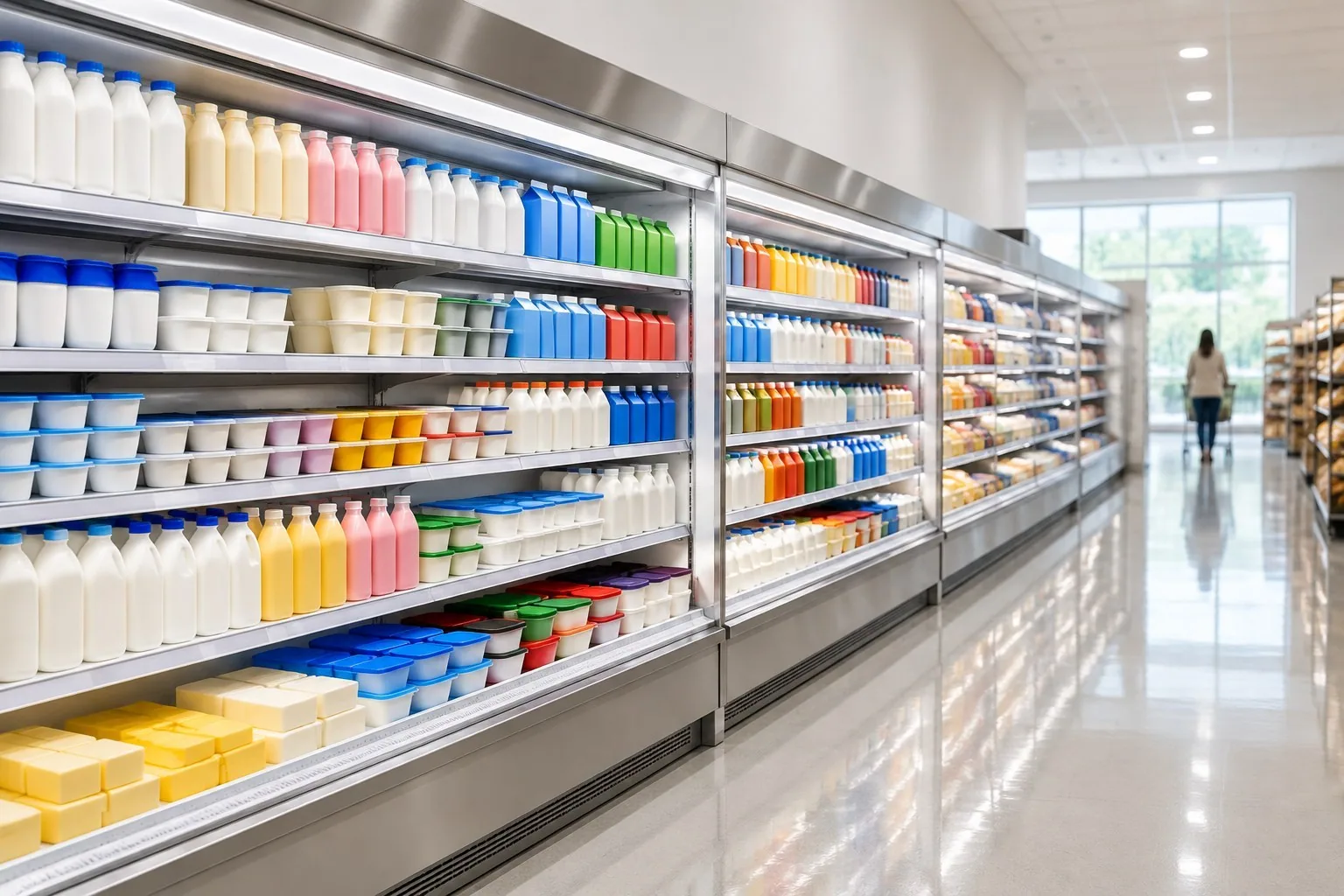
Glass configuration affects visibility and temperature at the same time. Curved or angled front glass shows product at a better viewing angle, while double glazing reduces condensation and heat gain but changes the footprint and the cost. In humid locations, anti-condensation or heated glass may be required; availability depends on model, so confirm it before the layout is fixed.
Lighting generates heat inside the case, and poor lighting makes good product look ordinary. Ask which lighting type is used and how it is positioned relative to the air path, because a lamp mounted in the discharge air stream works directly against the refrigeration system. Confirm the color temperature, whether the lighting is serviceable, and how it is switched.
Airflow and loading discipline
Most display cases that "stop holding temperature" are being loaded past their design limits.
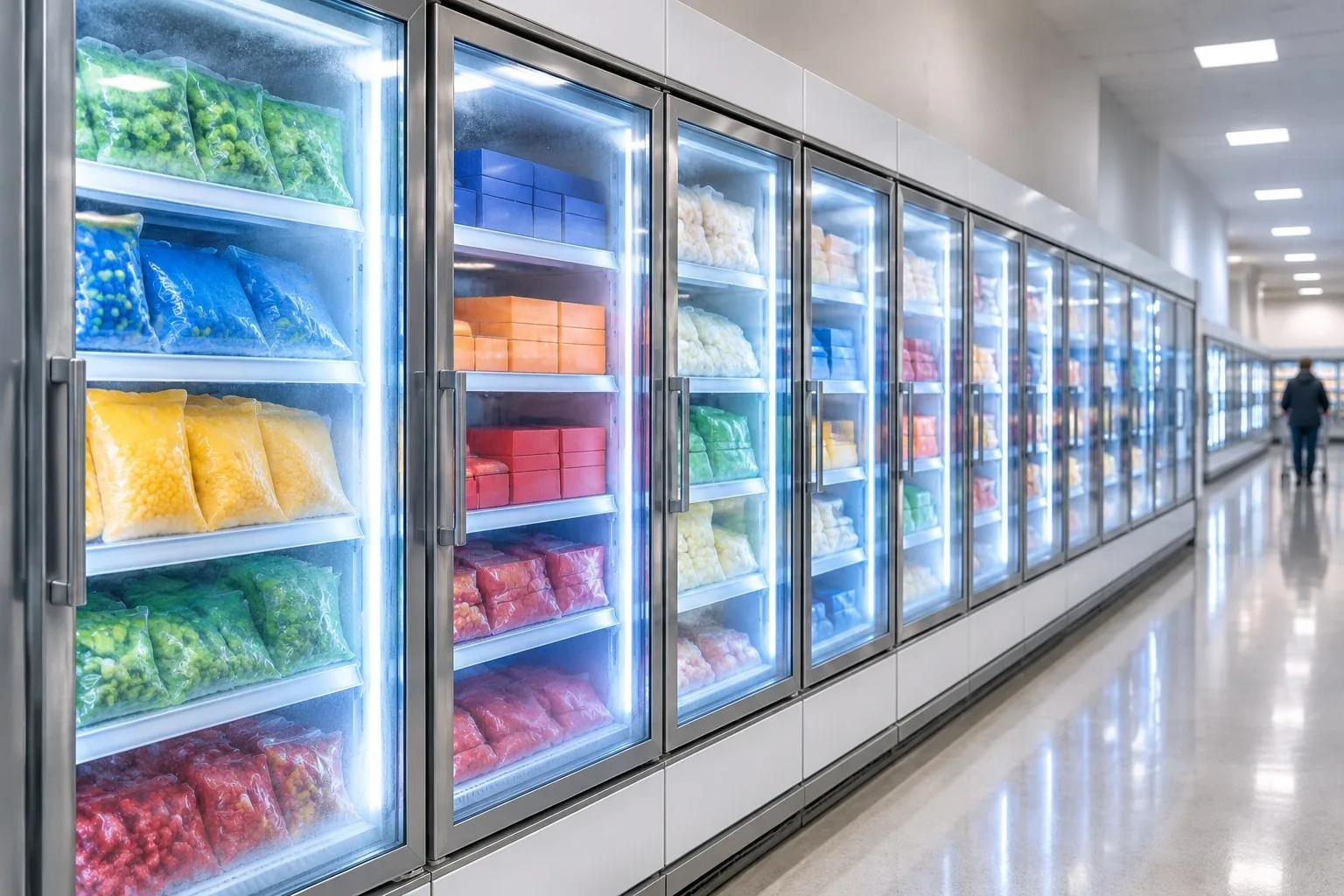
Refrigerated display depends on air moving along a defined path. Every case has a load line: the maximum height and depth to which product may be stacked. A case filled beyond that line stops holding temperature even though the compressor runs continuously, and the resulting complaint is usually reported as a refrigeration fault.
Train staff on the load line, keep product and packaging out of the air return, and never block a return grille with signage. Rotate stock front to back so older product sells first. These habits protect food safety and the case's performance at the same time, and they cost nothing.
What to confirm before ordering a cake display case
Use this list as the basis of the inquiry. Each line is a parameter to confirm, not a fixed value.
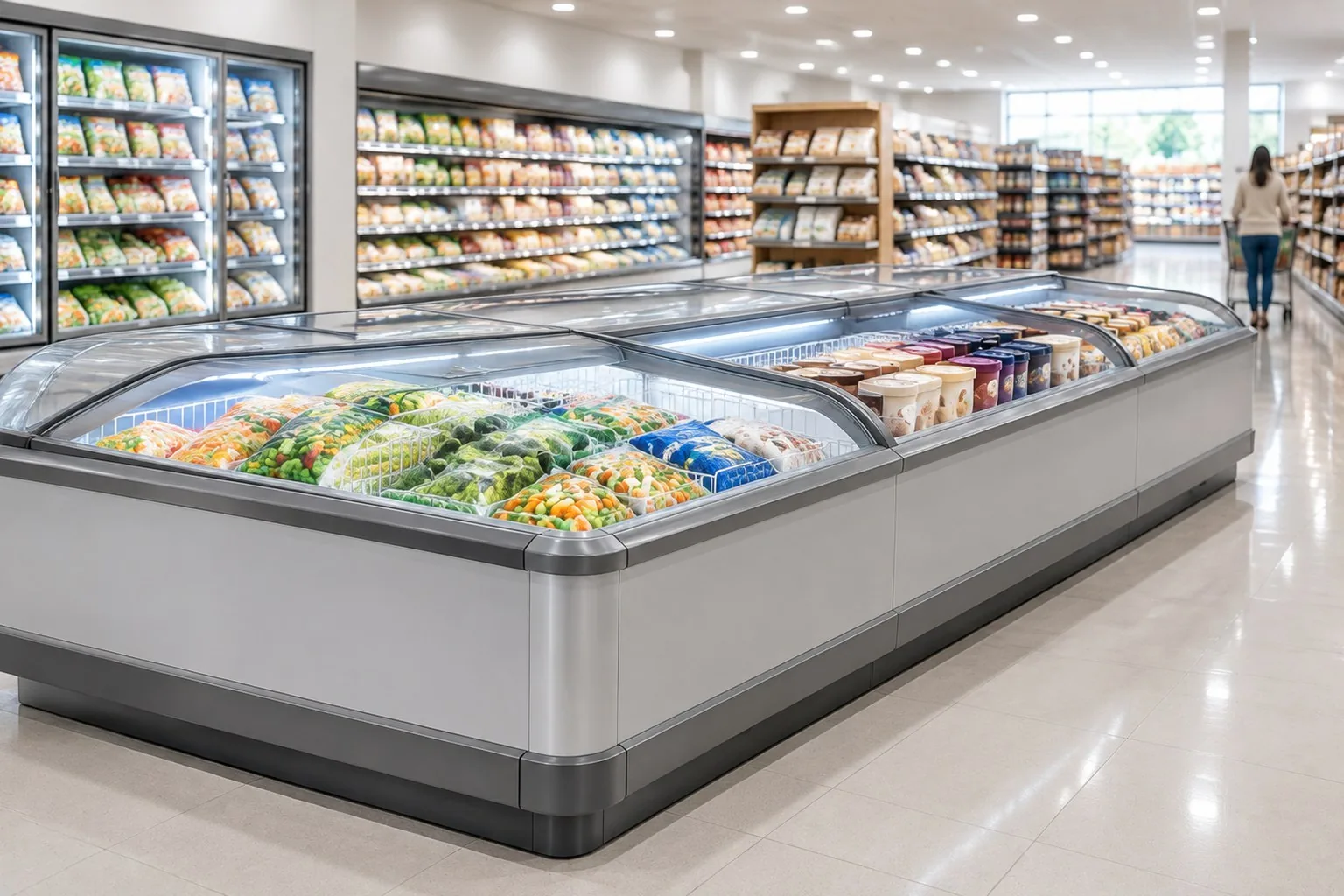
| Display duty | Refrigerated display, ambient display, or a combined counter, confirmed per model. |
|---|---|
| Case format | Floor-standing or countertop, front-loading or rear-loading, single or multi-tier. |
| External dimensions | Width, depth, height and counter height, checked against the real floor plan. |
| Display area | Usable display area, shelf count, shelf spacing and tray compatibility. |
| Temperature range | The range for the exact model, matched to the product list. |
| Glass configuration | Single or double glazing, curved or straight front, anti-condensation option. |
| Lighting | Lighting type, position relative to the air path, color temperature and serviceability. |
| Cooling and defrost | Cooling method, defrost type and how condensate is handled. |
| Electrical configuration | Voltage, frequency and plug type for the destination market. |
| Materials and finish | Stainless grade or finish for food-contact and visible surfaces. |
| Compliance documents | CE, CB or RoHS documentation as applicable to the model and destination market. |
| Packing and lead time | Export packing and normal production planning of 20 to 30 days, confirmed per project. |
Ask two more questions. First, whether the shelf layout can be changed for your product mix, because custom interior shelving and layout is within OEM project scope. Second, which glass and lighting options are available on the platform you are quoting, since those options change the appearance and the refrigeration load together.
Cleaning, monitoring and daily operation
Plan the routine before the case is installed, not after the first busy weekend.
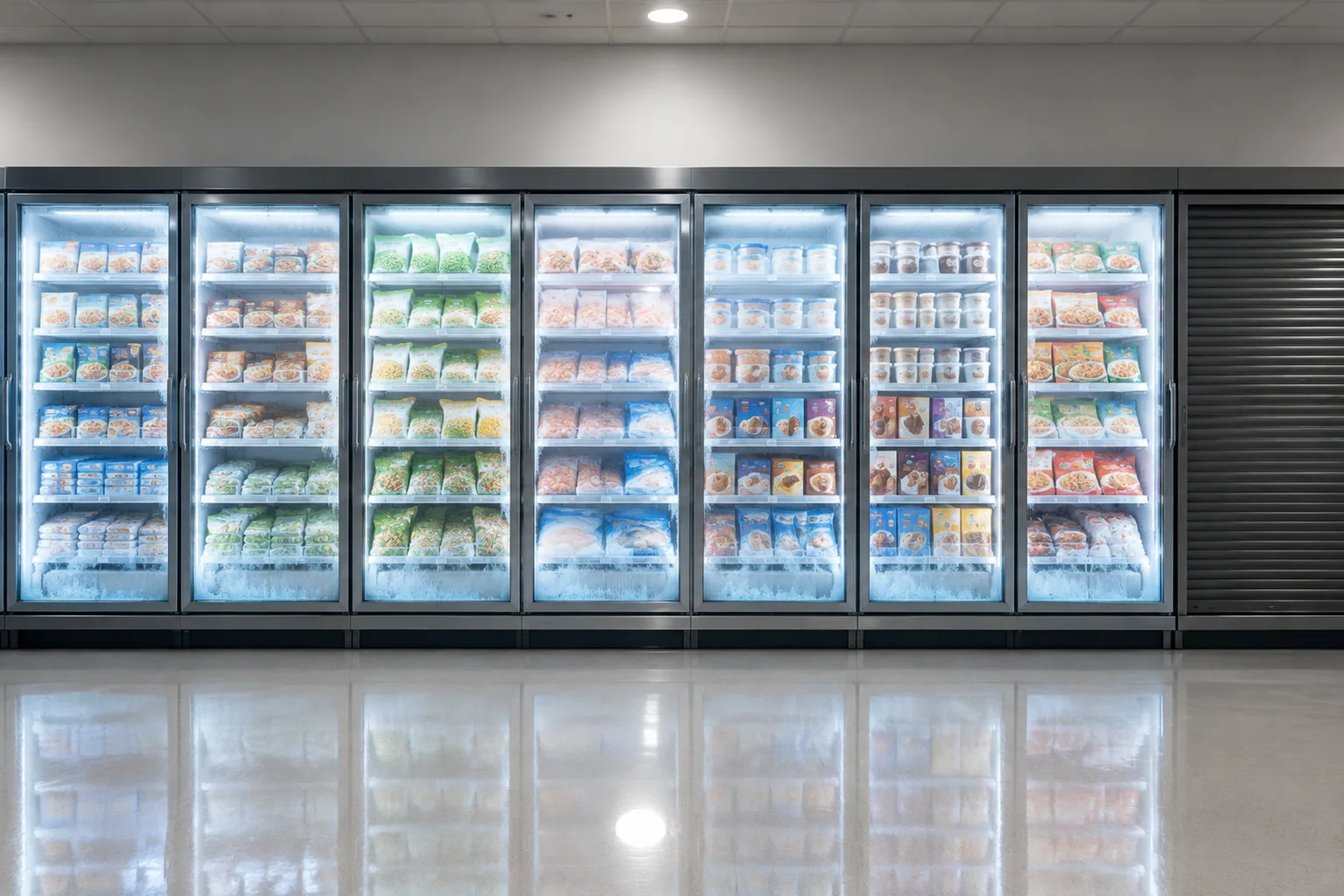
Decide who cleans the case, how often, and which parts come out. Confirm which shelves, trays and glass panels can be removed without tools and whether the condensate tray is accessible. A case that is difficult to clean will not be cleaned properly, and residue on shelves and gaskets is both a hygiene and a performance problem.
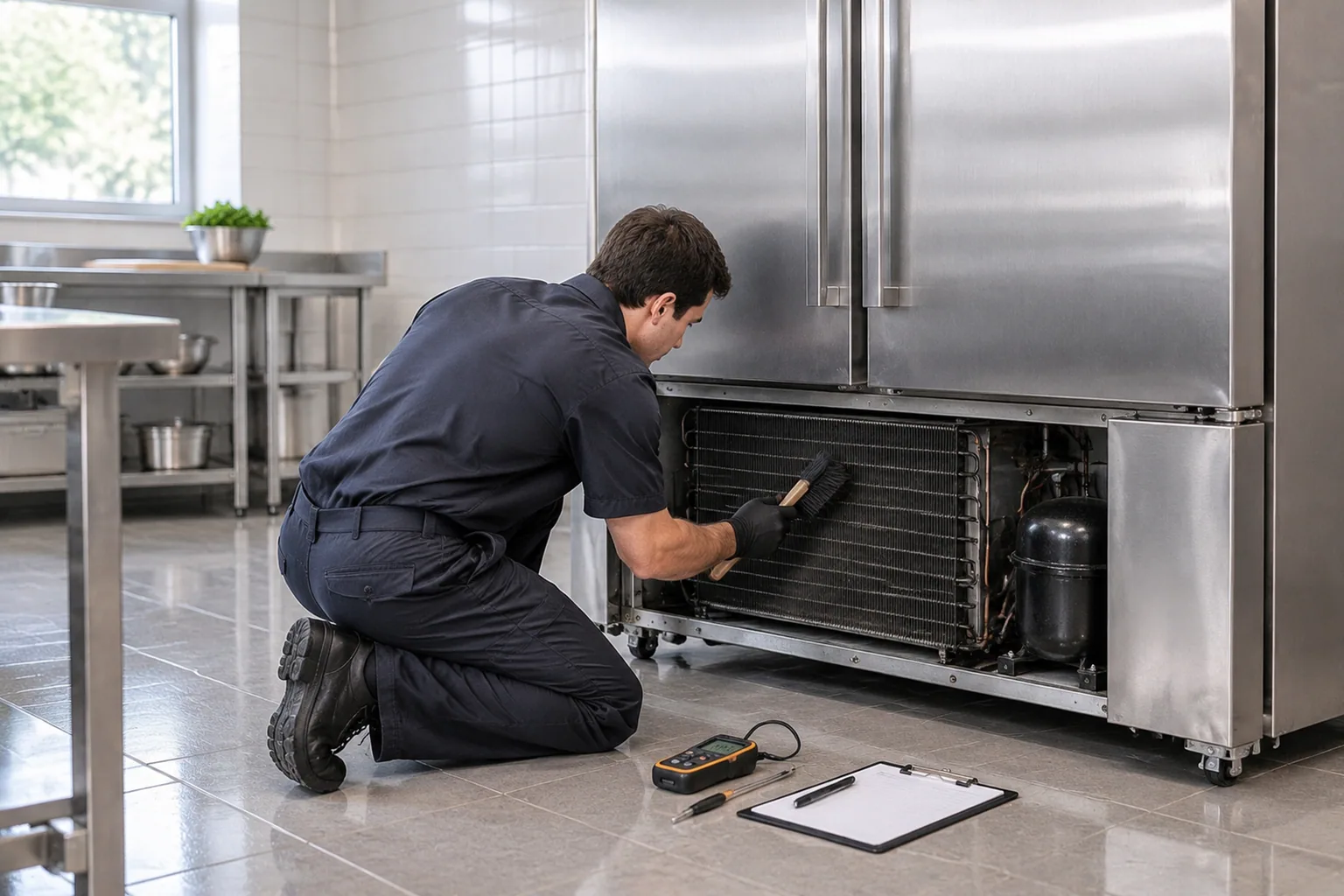
Record display temperatures at the intervals the food-safety plan requires. A display case is opened constantly during trading, so recovery after access matters more than the setpoint shown on the controller. If readings drift outside limits, check the load line, the air return and the condenser coil before assuming a refrigeration fault.
SHEHOPE manufactures commercial refrigeration, including cake display cases, in Foshan, Guangdong, China, within a shared manufacturing system with 20 or more years of experience, a 20,000 m² facility, more than ten production lines, annual capacity of approximately 50,000 units and an ISO 9001 quality system.
Frequently asked questions
Does every bakery product need a refrigerated display case?
No. Chilled lines such as cream cakes, mousse and dairy-based desserts need refrigerated display, while dry bakes are usually shown at ambient temperature. Working out which products fall into each group is the first step in specifying the case, and it usually points to more than one display solution.
Can one case display chilled and ambient products together?
Separate compartments in one frame exist, but the duty and temperature range must be confirmed per model. Where the mix is genuinely mixed, most bakeries find that a refrigerated case plus a separate ambient unit or shelving is easier to operate than a single compromise unit.
Why does the glass fog up?
Condensation depends on store humidity, the glass configuration, and how the air moves across the front of the case. Anti-condensation or heated glass options exist, and availability depends on model. Raise the humidity conditions at the inquiry stage so the right configuration is quoted.
How should staff load the case?
Respect the load line. Product stacked above the line or pushed into the air return blocks the air path, and the case stops holding temperature while the compressor keeps running. Keep packaging and signage away from return grilles and rotate stock front to back.
What should we confirm before ordering?
Confirm the display duty, format, dimensions, display area, temperature range for the exact model, glass configuration, lighting type, defrost and condensate handling, electrical configuration for the destination market, and the compliance documents that apply to that model and market. Ask for the model datasheet and a dimensioned drawing.