
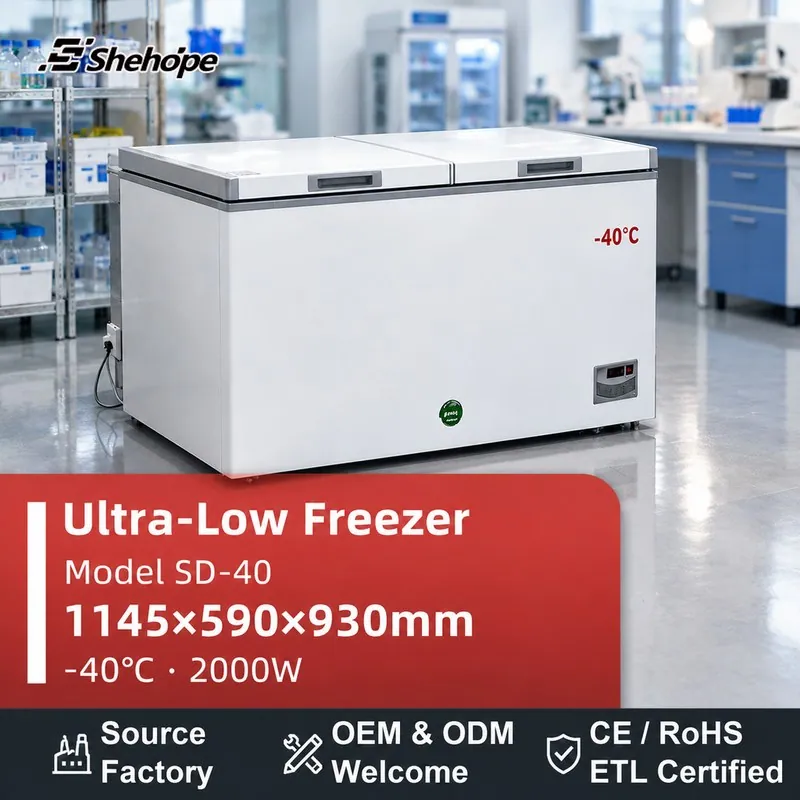
Ultra-low temperature freezers for demanding frozen storage
Ultra-low temperature freezers hold product below the range of a standard commercial freezer, for applications where texture, enzyme activity or sample integrity depends on a stable low set point. This family covers chest and reach-in cabinets in horizontal, multi-door formats. Because these units work harder than a holding freezer, electrical supply, heat rejection and room conditions are confirmed before a model is selected.
Typical use
- Long-term storage of seafood and premium proteins where quality depends on a deep set point.
- Ice cream and dessert holding in production and distribution operations.
- Specialty food processing where ingredients must be held well below standard frozen storage.
- Laboratory or sample storage where the buyer confirms the application and required protocol.
- Central kitchen reserve stock that must remain stable for an extended holding period.
- Distributor or importer stockholding where product waits for seasonal demand.
Confirm before ordering
- Required set point, tolerance and holding duration
- Cabinet format and compartment arrangement
- Usable volume and basket, drawer or shelf layout
- Electrical supply and dedicated circuit requirement
- Room ambient conditions and heat rejection
- Control, monitoring and alarm functions
- Refrigerant and market compliance documents
- Service access, cleaning routine and spare parts plan
Configurations we build in this family
Drawn from our own product catalogue. Final specification is confirmed per model and destination market.
| Temperature classes referenced | -40 °C, -65 °C, -85 °C |
|---|---|
| Catalogue items in this family | 6 (configuration confirmed per project) |
Model range at a glance
Every model in this family, sorted by size. Prices are FOB reference prices from our current listings.
| Model | Temperature range | Doors | Voltage | Reference price |
|---|---|---|---|---|
| SD-40 | -40°C | Double Doors | 220-240V (Single-Phase) | from US$259.20 |
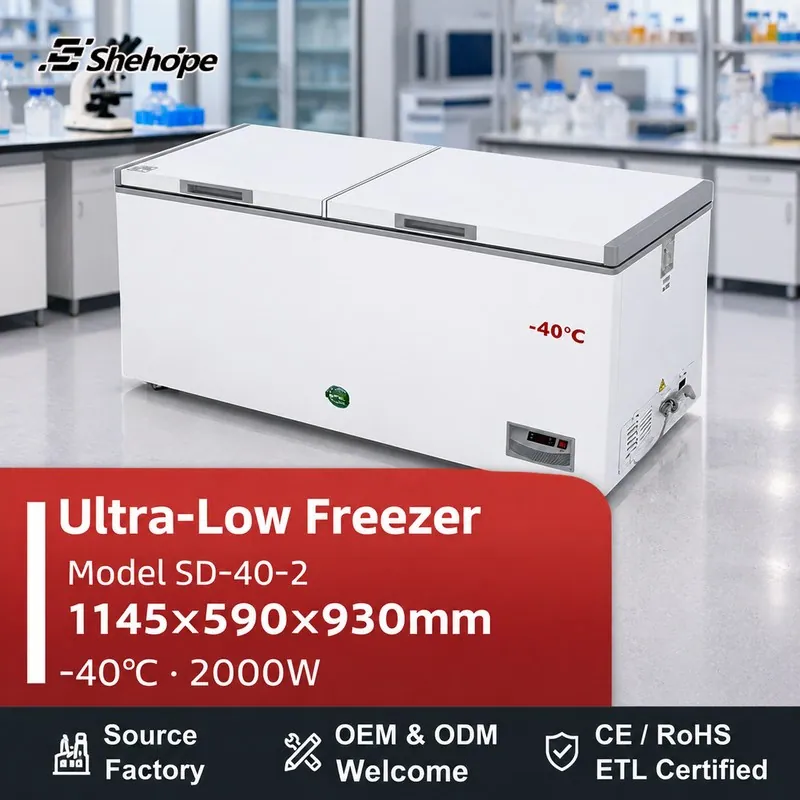
| SD-40-2 | -40°C | Double Doors | 220-240V (Single-Phase) | from US$600 |
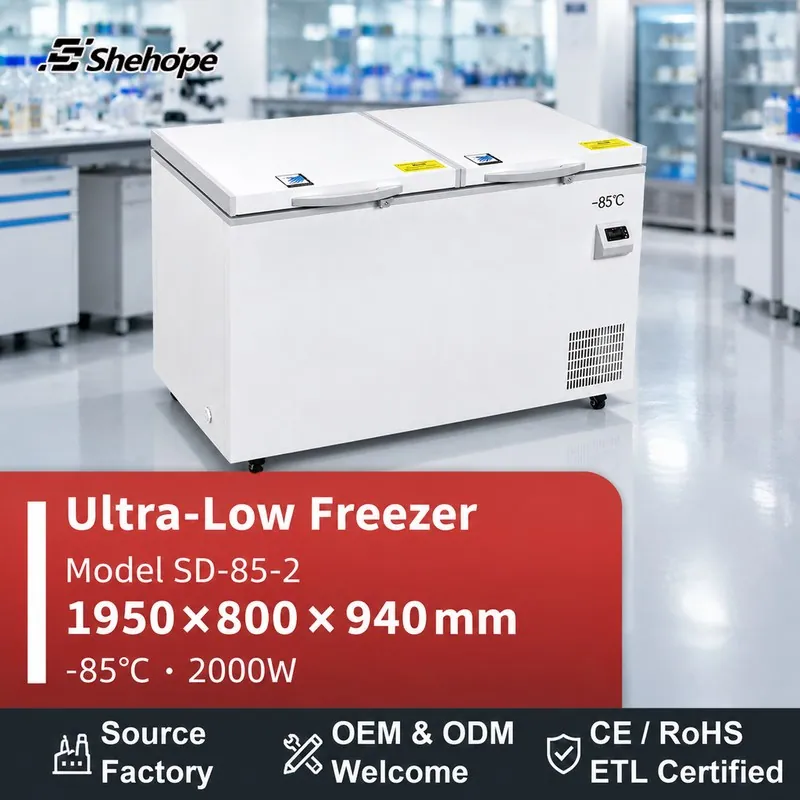
| SD-85-2 | -85°C | Double Doors | 220-240V (Single-Phase) | from US$1,776 |
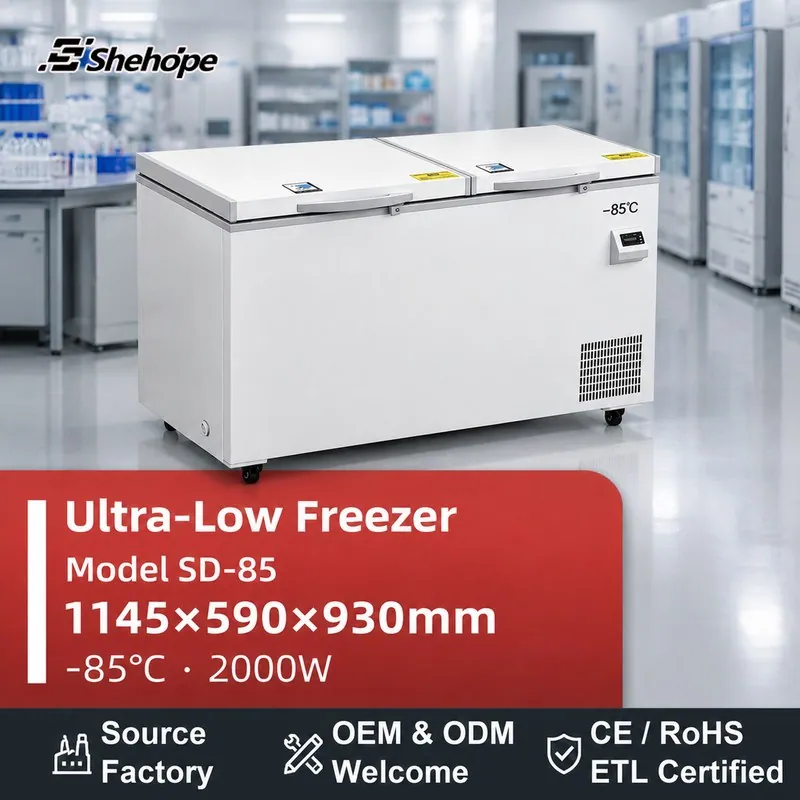
| SD-85 | -85°C | Double Doors | 220-240V (Single-Phase) | from US$936 |
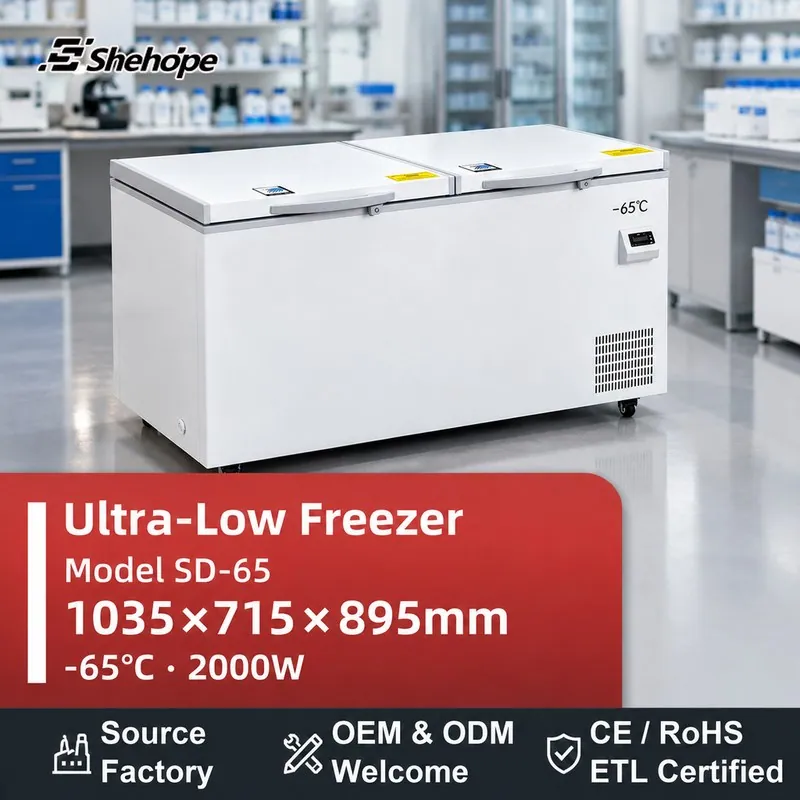
| SD-65 | -65°C | Double Doors | 220-240V (Single-Phase) | from US$624 |
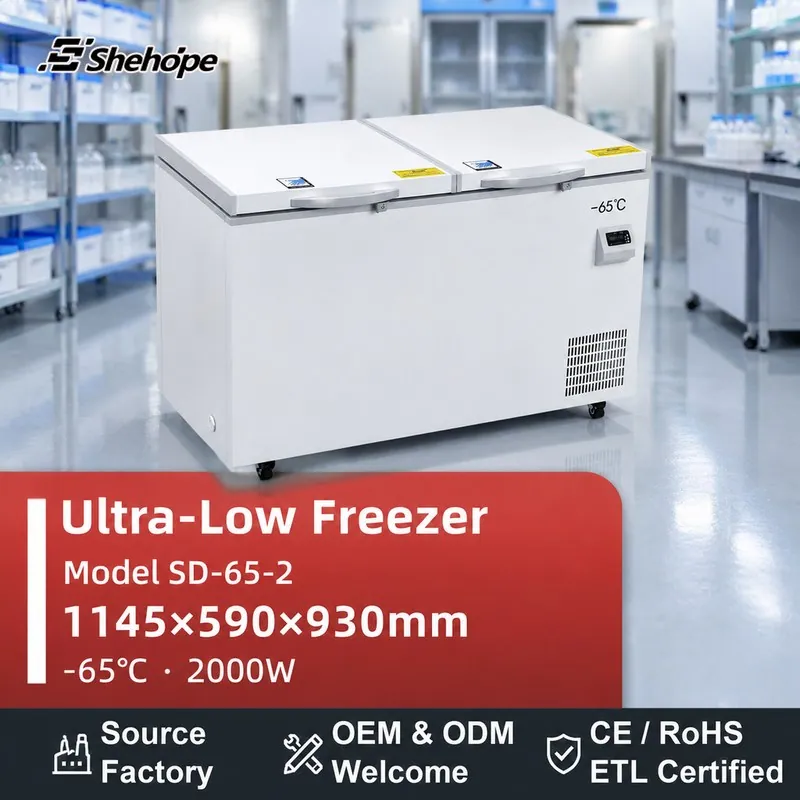
| SD-65-2 | -65°C | Double Doors | 220-240V (Single-Phase) | from US$1,176 |
The highlighted row is this page. Confirm the configuration, voltage and documents for your market in the quotation.
Catalogue items in this family
6 catalogue items photographed for this family.
How this family is configured
Application, set point and product envelope
Start with what is stored and why the set point matters. A deep frozen holding requirement is different from a process requirement, and the two lead to different cabinets. Confirm the product type, the package size, the holding duration and how often the cabinet is opened during a week. Then describe the set point you need and the tolerance you can accept, because stable holding is usually more important than the absolute figure. The achievable set point is confirmed against the selected model rather than published as a family number, since it depends on model, ambient conditions, product load and door use. Check how the cabinet is loaded: a chest unit is filled with baskets or dividers, and a reach-in uses shelves or drawers. State whether product is stored loose or in boxes, and how inventory is located, because poor visibility in a deep freezer leads to long door-open times and warmer product. Set point, tolerance and usable volume are confirmed per project.
Electrical supply, heat rejection and site preparation
Ultra-low temperature equipment places different demands on the site than a standard freezer. Confirm the available voltage, frequency and plug type, and whether the unit needs a dedicated circuit. Ask what the manufacturer expects in terms of supply stability, because the compressor works continuously at low evaporator temperatures. Heat rejection matters: state the room temperature, the room volume and whether the space is ventilated or air conditioned, since a deep freezer discharging heat into a small closed room will struggle and will also warm the room around it. Check the floor for level and load, especially for large chest cabinets, and confirm the clearance required around the cabinet. Ask whether the condensing unit can be remote if the room cannot handle the heat. Noise and vibration should be considered if the unit sits near a work area. Site conditions, electrical arrangement and refrigeration configuration are confirmed per model and per project.
Chest or reach-in format and access routine
Format follows the access routine. A chest cabinet holds cold air when the lid is open, which suits longer storage and less frequent access, but staff must lift product out and inventory at the bottom is harder to see. A reach-in cabinet gives eye-level access and better organization, at the cost of losing cold air every time the door opens. Confirm the door or lid arrangement, the number of compartments, and whether one section can be opened while the rest stays closed. Ask how baskets, dividers or shelves are arranged and how they are labeled, because inventory control inside a deep freezer decides how long the door stays open. For chest units, check the lift-over height for the staff who will use it. For reach-in units, confirm the door swing and the aisle needed. Format, compartment arrangement and access details are confirmed per model, and the routine your team will follow should be described in the inquiry.
Controls, monitoring and service readiness
Confirm how the cabinet is controlled and how a temperature excursion becomes visible. Ask whether the controller shows the set point and the actual temperature, whether it records data or only displays it, and whether an alarm can be routed to a person rather than only sounding locally. For regulated or traceable applications, confirm what documentation and logging the buyer must keep, since the equipment only provides part of the record. Ask which parts the operator should hold on site, how the condenser or filter is cleaned, and how a technician reaches the refrigeration circuit. Where the unit holds high-value stock, plan what happens during a power interruption or a service visit, including where product moves. Refrigerant type, electrical configuration and the compliance document set are confirmed per model and destination market, and warranty terms and spare parts coverage are confirmed per project.
Questions we ask before quoting
- What is stored, in what package, and for how long?
- What set point and tolerance does the application require?
- Is the requirement holding storage, or part of a process step?
- How often is the cabinet opened, and who has access to it?
- What voltage, frequency and plug type is available, and is a dedicated circuit possible?
- What is the room temperature and volume, and how is the heat rejected?
- Is temperature logging or an alarm output required?
- Where does product move during a service visit or power interruption?
Frequently asked questions
What is the difference between an ultra-low temperature freezer and a standard commercial freezer?
A standard commercial freezer is built for holding product at ordinary frozen storage conditions. An ultra-low temperature cabinet works at a deeper set point and runs its refrigeration system harder, which changes electrical demand, heat rejection and room requirements. The right choice follows from the product and the holding requirement.
What temperature can these freezers reach?
The reachable set point depends on the model, the room conditions, the product load and how often the cabinet is opened, so it is confirmed against the selected model for your application. We do not publish a single figure for the family.
Chest or reach-in: which is better for long-term storage?
A chest cabinet holds cold air better when opened and suits less frequent access and longer storage. A reach-in gives organized, eye-level access and is easier to inventory, but loses cold air on every opening. Decide from the access routine and from how the stock is organized.
Can the unit be configured for our market and application?
Market-specific voltage and plug configuration can be covered, along with custom logo marking by silk screen or laser engraving. Compliance documents are confirmed per model and destination market. For regulated applications, describe the protocol you must satisfy so it can be reviewed before quoting.
Send the application and we confirm the model
Share the food or product being stored, target temperature, ambient conditions, available space, voltage, quantity and destination market.