
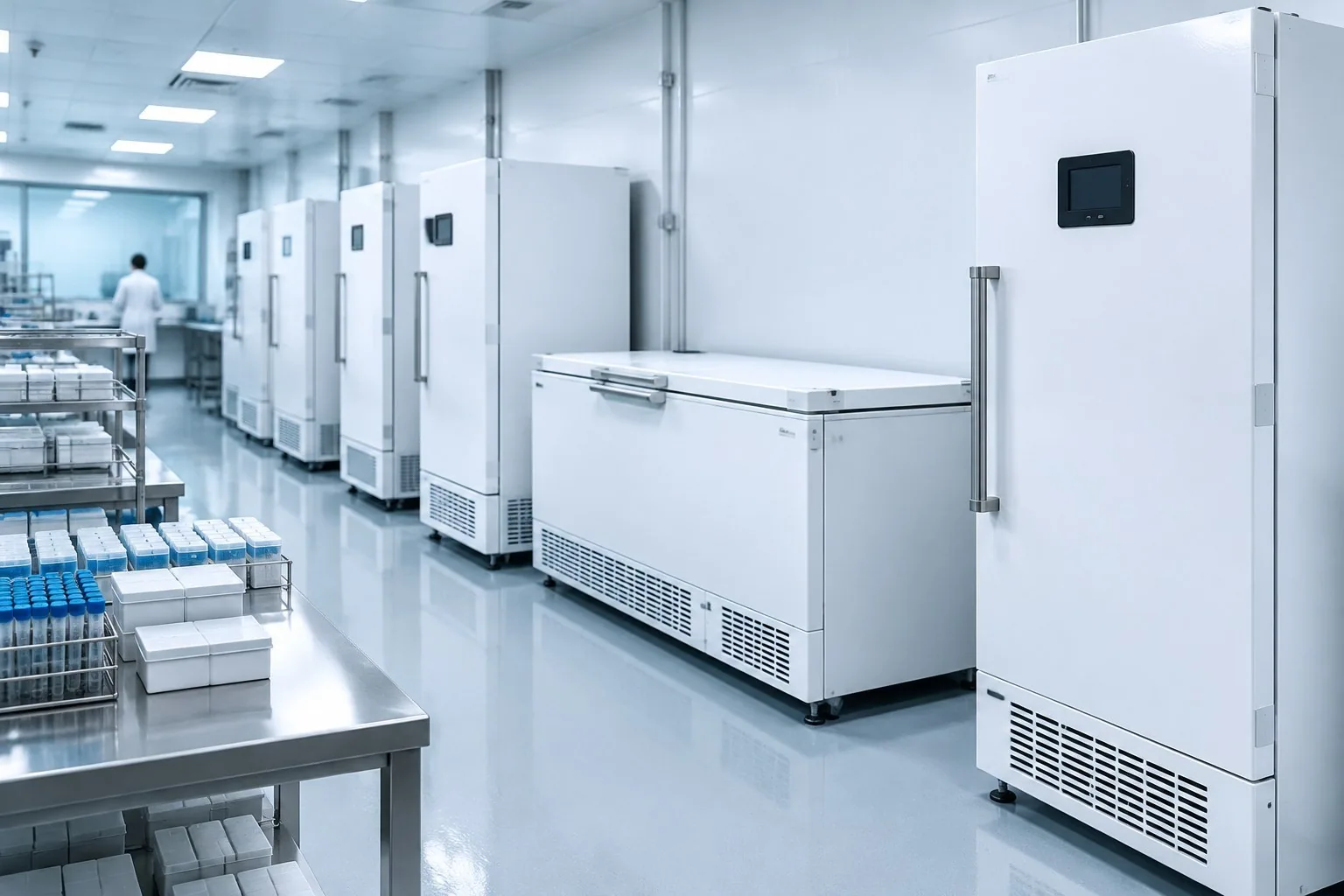
An ultra-low temperature freezer is a different procurement problem from a kitchen freezer. The purchase is usually driven by a storage protocol, a sample collection or a specialty process, and the cost of getting it wrong is measured in lost material rather than a warm cabinet. The technical questions are also less forgiving: heat rejection, ambient limits, recovery after a door opening and service access all matter more at lower set points. This guide covers the decisions to make before you buy, and what to confirm with a supplier at model level.
What separates an ultra-low temperature freezer from a storage freezer
Lower set point, longer pull-down, and a much larger footprint of heat and power behind the cabinet.
A standard storage freezer holds product in the frozen range. An ultra-low temperature freezer holds a band far below it, which changes the engineering in four ways. The compressor system has to work across a wider pressure ratio, insulation has to be thicker to reduce losses, defrost and frost management become a routine operating task, and the cabinet rejects more heat into the room for the same internal volume.
The practical consequences show up in daily use. Pull-down from ambient takes longer, recovery after a door opening takes longer, and performance is more sensitive to the ambient temperature of the room. Most disappointed installations trace back to a cabinet placed in a warm, poorly ventilated space, or a specification that assumed laboratory conditions in a warehouse.
Ask how the refrigeration system is arranged for the model you are considering, and what ambient range it is rated for. The answer should be model-specific rather than general.
Choose the temperature class from the application
The protocol sets the class. The model then has to hold that class with your load, in your room.
Start with the storage requirement: what is stored, what the governing protocol or standard requires, and how long it must remain in range. That defines the class. SHEHOPE catalog models are offered in more than one deep-frozen class, and the exact set point, control tolerance and performance at a given load are confirmed per model.
A class label on its own does not tell you whether the cabinet will hold the band in your conditions. Two cabinets rated to the same class can behave differently under a full load, a frequent door-opening pattern or a warm room. Ask how the class figure was established, what load and ambient it assumes, and how much recovery time the unit needs after a door opening.
Decide what tolerance the work needs: storage protocols may specify a narrow band, while industrial and specialty food applications often accept a wider one. State your tolerance so the supplier can confirm whether the model and its control system can hold it.
Upright or chest: how the shape changes daily work
The choice is usually decided by how people retrieve material, not by capacity.
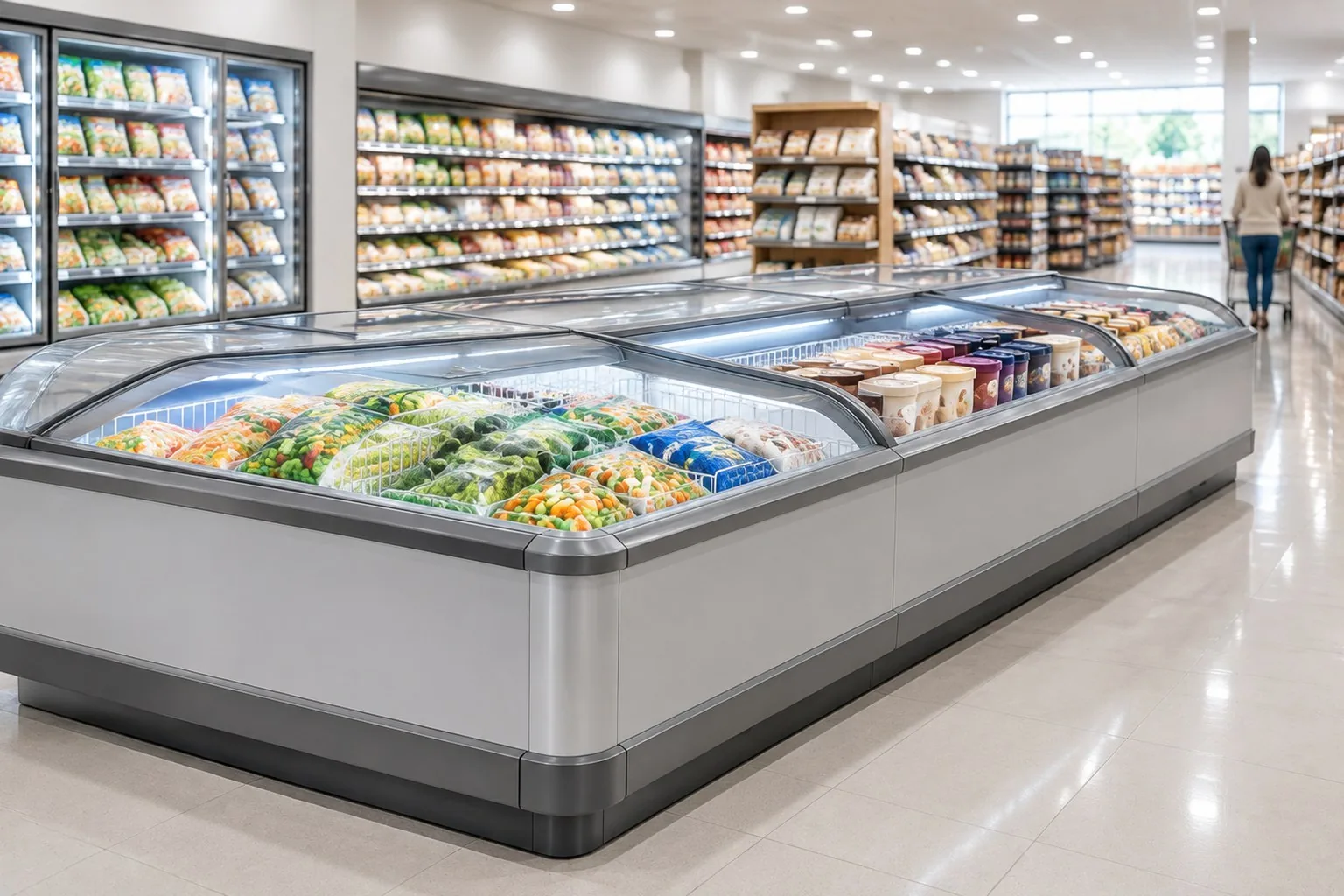
An upright reach-in cabinet puts inventory at working height, which makes checks, rack labelling and single-item retrieval practical. The trade-off is that cold air spills whenever the door opens, so recovery depends on door discipline and on the interior arrangement.
A horizontal chest cabinet keeps cold air in place because the cold mass sits below the lid, and it can be a good fit for bulk storage of material that is accessed in planned sessions rather than item by item. The trade-offs are floor footprint, the need to lift material out, and organizing inventory so items do not get buried.
Either way, plan the inventory system before the cabinet. Confirm the rack or box footprint the interior accepts, the number of levels, and whether interior shelving and layout can be customized. On OEM and ODM projects, interior shelving and layout changes are part of the scope, and 3D CAD design and development can be used to check the rack arrangement against the cabinet interior before production.
Placement, power and heat rejection
This is where ultra-low temperature projects fail, and it is decided by the room, not the cabinet.
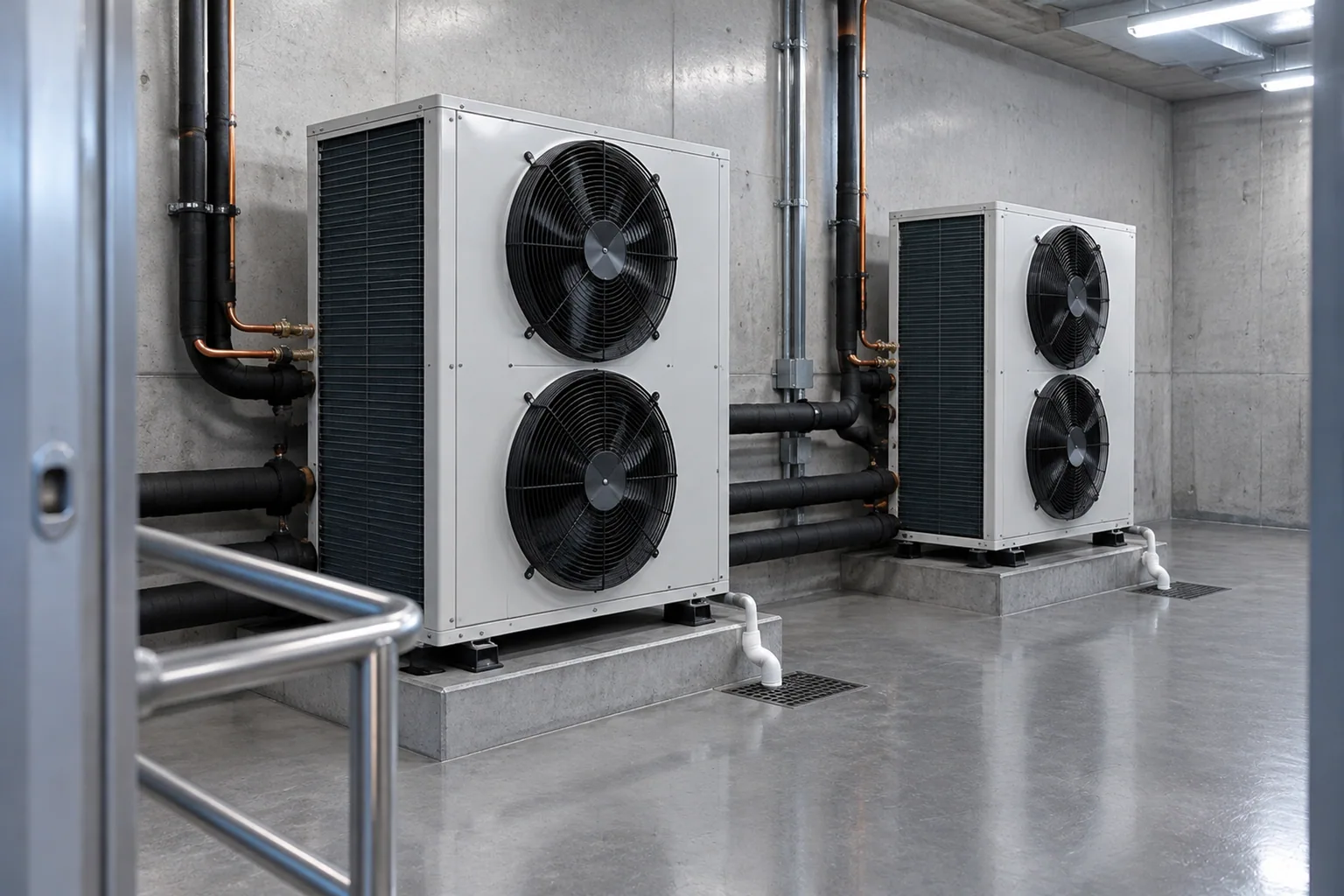
Every cabinet moves heat from the inside to the room. At ultra-low set points the amount rejected is large enough that a small, closed or poorly ventilated room will warm up, which pushes the cabinet harder and lengthens recovery. Plan ventilation or mechanical cooling in the space, keep the clearances specified for the model, and check the rated ambient range against real summer conditions.
Confirm the electrical supply for the destination market. Voltage, phase and frequency are confirmed per model and per project, and a dedicated circuit is often worth planning even where the model does not require one. Also check floor loading, the route the unit must travel to reach the room, door widths, and how service access to the compressor compartment will be maintained once the cabinet is in position.
Alarms, monitoring and protecting the contents
Decide what happens when the temperature drifts, and write it into the specification.
Confirm what the model's controller displays and records, whether an alarm output or remote contact is available, and how an out-of-range event reaches someone who can act on it. Sites with critical inventories usually combine a local alarm with remote notification. These features vary by model, so confirm them at model level rather than assuming them.
Frost and ice management belongs in the operating routine. Door openings bring humid air in, frost builds on the evaporator and around gaskets, and manual defrost or an automatic cycle has to be planned around storage sessions. Ask how defrost is initiated on the model and what the procedure is, then decide who performs the check and how often.
Finally, plan the inventory discipline: what goes in, where it sits, when it is removed, and what record is kept. A well-specified cabinet with an unmanaged inventory still loses samples.
What to confirm before you buy
Work through this list with the supplier and keep the answers in writing.
| Application | What is stored, the governing protocol or standard, required class, required tolerance, and how long material stays in the cabinet. |
|---|---|
| Performance basis | Set point, control tolerance, how the class figure was established, the load and ambient it assumes, and expected recovery after a door opening. |
| Configuration | Upright reach-in or horizontal chest, number of doors, interior rack or shelf geometry, and whether interior layout can be customized. |
| Environment | Room ambient range including summer conditions, ventilation or mechanical cooling, clearances around the condensing unit, and heat rejection into the space. |
| Electrical and refrigerant | Voltage, phase and frequency for the destination market, and which refrigerant the model uses. Both are confirmed per model and per project. |
| Monitoring | Controller display and records, alarm output or remote contact, data logging, and how out-of-range events reach a responsible person. |
| Documentation | CE, CB or RoHS records apply per model and target market. Name the models and the destination country and ask for the matching file set, plus the specification sheet, manual and operating procedure. |
| Commercial terms | Typical production lead time is 20 to 30 days and is confirmed by model, quantity, season and customization scope. Warranty terms are confirmed per project. Export packing can be agreed by product family, quantity and route, and service access and spare parts should be discussed before the order. |
SHEHOPE manufactures ultra-low temperature freezers inside a shared manufacturing system with more than 20 years of refrigeration manufacturing experience, a 20,000 m² production facility, more than ten production lines and an ISO 9001 quality system. Panels use high-pressure polyurethane integral foaming for insulation, sheet-metal parts are cut on precision CNC laser equipment, and units are assembled on a standardized production line. OEM and ODM projects can cover 3D CAD design and development, custom logo marking by silk screen or laser engraving, interior shelving and layout changes, and market-specific voltage and plug configurations.
Send the application, required class and tolerance, the rack or box format you use, the room ambient and the destination market with your inquiry. That is the minimum needed to recommend a model.